
Louis Roederer: late-release vintage vertical
Anne Krebiehl MW tastes five late-release vintage Champagnes from Louis Roederer, all from magnum, discovering that this is a house still at the top of its game.


Champagne Louis Roederer, one of the most forward-looking estates in Champagne, also learns from looking back.
The arrival of not one but five late-release vintage Champagnes from the 1990s redefines both heritage and vision, and reinforces the enduring style of the house’s vintage Champagnes.
Scroll down to see tasting notes and scores for five Louis Roederer late-release vintage Champagnes
Revisiting roots
‘We are launching something that goes deep into our tradition and our history. This is our DNA,’ said cellar master Jean-Baptiste Lécaillon as he presented the wines in London.
Those who know Lécaillon know this is not mere marketing speak. Few cellar masters in Champagne have Lécaillon’s scope or perspective.
He explained that this release focused on the house’s vineyards in the Montagne de Reims, where Roederer ‘has made vintages since 1832’ and that similar late releases of rosé and blanc de blancs vintages would follow.

A personal aim
Lécaillon started at Louis Roederer in 1989, with 1999 his first vintage being completely in charge – admittedly with stints abroad at other Roederer estates.
‘Roederer is a house that traditionally did not keep all vintages. When I started in the 1990s, it was so difficult to speak about ageing potential but then not being able to demonstrate it.’
He thus decided to put some wines aside from each vintage ‘to show ageability,’ he said. ‘20-25 years of age is what I call the “window of beauty” for our wines. I think they really show their full potential. I am very happy that this is finally coming to life.’
The vintages
Lécaillon decided which of the 1990s vintages to release and chose 1990, 1995, 1996, 1997 and 1999. Vintages were also made in 1993 and 1994 but are not part of the release. All wines are blends of Pinot Noir ‘softened’ by a smaller proportion of Chardonnay, depending on vintage character.
1990 A warm year, great for Pinot Noir which needed ‘freshening’ with Chardonnay.
1995 A ‘very classic year’ with a great balance between the two varieties, and the vintage with the highest proportion of Chardonnay.
1996 A year of high ripeness and high but ripe acidity, great for Pinot Noir. A vintage with ‘stamina’ that ‘shows its freshness intensely.’ At Roederer, 1996 was a year of change, ‘a transition to a reductive world.’
1997 ‘If 1996 was a gifted child, 1997 was the ungifted,’ Lécaillon said. ‘A difficult season which thankfully ripened at the end. It is firm, almost austere.’
1999 A hot year with lots of summer storms, rain and sunshine, resulting in lower acids and ‘juicy fruitiness.’
Beyond bubbles
‘These are original disgorgements,’ Lécaillon noted, stressing the difference between pre-and post-disgorgement ageing.
Ageing Champagne on lees acts like a tonic of youth for late-disgorged wines. Maturing wines without this tonic exposes their intrinsic ability to age.
‘With time, the bubbles are finer, creamier, softer and slowly disappear,’ Lécaillon said. ‘Then the magic happens. The wine shines and comes back. This is a good test for serious Champagne – is there any wine left when the bubbles are gone?’
However, Lécaillon noted that the longer-aged wines received a deliberately lower dosage. For instance, while being disgorged at the same time in 1997, the then-released portion of the 1990 vintage received 12g/L of dosage, while the 2022-release portion, which was left to age, received 8-9g/L.
An ode to energetic Verzy
Lécaillon explained the importance of one particular village in these vintages: ‘Our Pinot Noir fruit is mainly from Verzy,’ he said, where Louis Roederer himself had bought vineyards in the 1830s. ‘It has a singular position. It is at the highest elevation in Champagne and also is the village that has the most forest.’
For Lécaillon, this Pinot Noir has ‘the finesse of Chardonnay; it is more alive, more energetic. This kind of freshness from the forest is quite unique, we call it “le bouquet de la montagne”.’ The Chardonnay portion of the blends is mainly sourced from one plot in Chouilly in the Côte des Blancs.

Stupendous freshness and courage of colour
There was no doubt that these wines would be thrilling: few houses have been under such consistent and visionary stewardship as Roederer has been under Lécaillon.
Neither Roederer nor Champagne are strangers to late releases: Roederer’s own Cristal Vinothèque is usually late-disgorged, so is Bollinger’s R.D, Philipponnat’s L.V., and Dom Pérignon’s P2 and P3.
Releasing original disgorgements is different: you have to trust what was done decades ago without the final quality control afforded by late disgorgements where faulty wines can be discarded.
Charles Heidsieck has been doing it with its Collection Crayères, as has Piper-Heidsieck with its Hors Séries. These are courageous releases and a show of confidence that many others can only dream of – even if they had the means to hold bottles back.
This is a limited release with no more than 1,000 bottles and 500 magnums of each vintage. All vintages are priced equally at £270 per bottle and £550 per magnum and can be bought individually or as a set.
Tasted and rated: Five Louis Roederer Late Release Vintage Champagnes
Prices quoted are for 75cl bottles.
Related content
Don’t miss out tickets for the Louis Roederer Champagne Masterclass in June 2023
Charles Heidsieck masterclass at Decanter’s London Fine Wine Encounter 2022
Champagne Day: 96+ point wines to try
First taste: Champagne Ayala’s 2022 releases
Louis Roederer, Late Release Brut, Champagne, France, 1999
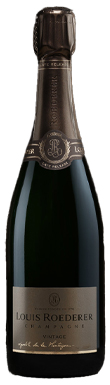

The merest touch of caramel pops up on the nose – or is it a tone of apple with a touch of maple syrup? Later...
1999
Louis Roederer

Louis Roederer, Late Release Brut, Champagne, France, 1997
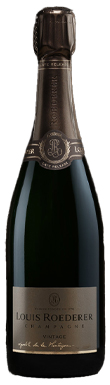
A touch of Mirabelle plum is framed by strident lemon on the nose. Smoky echoes seem to appear with more air, alongside freshly picked chestnut...
1997
Louis Roederer
Louis Roederer, Late Release Brut, Champagne, France, 1996
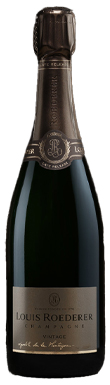
Just hints of smoky lemon play on the nose before a touch of grilled cashew appears, seemingly propelled by lifting scents of smoky lemon zest....
1996
Louis Roederer
Louis Roederer, Late Release Brut, Champagne, France, 1995
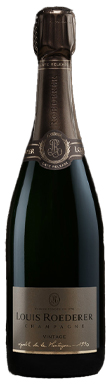
A most subtle hint of toastiness is expressed as grilled hazelnut on the rather shy nose. Later on, a hint of crushed lemon balm adds...
1995
Louis Roederer
Louis Roederer, Late Release Brut, Champagne, France, 1990
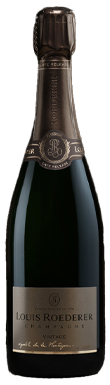
Golden colour. A clearly evolved nose of white field mushroom duxelles and white miso is backed by chalk and edged with candied lemon. The palate...
1990
Louis Roederer
