
Louis Roederer masterclass: DFWE New York
Attendees of Decanter's second fine wine encounter in New York were treated to a rare masterclass of Louis Roederer Champagnes, including four vintages of Cristal, led by executive vice president and chef de cave Jean-Baptiste Lécaillon.

With 34 Louis Roederer harvests under his belt, Jean-Baptiste Lécaillon is perfectly positioned to talk about the estate’s developments and shift in farming practises over the past few decades but far from being bored or lackadaisical he remains as passionate and ‘excited as ever’ about crafting Champagne and ensuring the future of this prestigious House.
During the 90-minute masterclass, Champagne lovers were treated to eight wines that showcased both the individual terroirs and climates of Champagne combined with the stylistic principles – and new direction – of Louis Roederer.
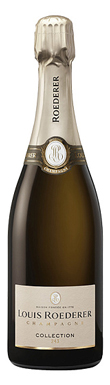
- Collection 243 NV
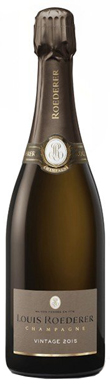
- Vintage 2015
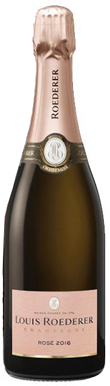
- Vintage Rosé 2016
- Blanc de Blancs 2015
- Cristal 2014
- Cristal 2008
- Cristal 2002
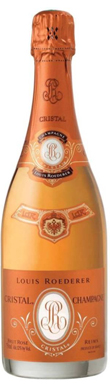
- Cristal Rosé 2012
Scroll down to see tasting notes and scores for all eight Louis Roederer Champagnes in the Decanter masterclass
Detailing the micro-, meso- and even nano- climates available in the region – and why they matter – Lécaillon spoke emphatically and effusively about what he believes makes Champagne the best white wine terroir in the world, why all Louis Roederer vintage Champagnes are made from vineyards they own, the importance of biodynamics and the particularities of their revered Cristal bottlings.

Starting out
Upon finishing university, Lécaillon recalled he was in demand from three different Houses but he just ‘couldn’t resist Roederer’. He joined in 1989 and by 1999 was appointed the ‘master’ of both the cellar and vineyard as chef de cave or chief winemaker as well as head of viticulture – the first to take on the dual responsibilities and jobs that even today remain quite separate in in the region. ‘I knew that if I didn’t perfectly control the vineyards I wouldn’t be able to deliver the best possible quality,’ he said. ‘I have full control of the fruit [Louis Roederer has 240 estate-owned vineyards] from beginning to the end and that’s very important.’
For Lécaillon, three critical ingredients comprise the uniqueness of Champagne’s terroir for making great white wines; the first being chalk on limestone with calcium giving natural freshness – ‘it’s not just about acidity, it’s about the feeling of freshness’ he said. The second being the presence of clay to give enough nutrients to the vine without too much stress and the third being water with Champagne benefitting from the combination of both oceanic and continental climates (that bring unfortunate storms and hail but beneficial rainfall during summer) as well as the largest underground reservoir in Europe feeding the Seine and Marne rivers underneath the region’s hallowed vines.
‘It’s not just because I live here, was born here and my children were born here,’ he said half-jokingly, ‘but it’s a beautiful territory’.
The House
Founded in 1776, and remaining as an independent, family-run business for more than two centuries, Louis Roederer is known for its commitment to producing high-quality, handcrafted Champagnes that depict the unique terroir of the region as well as being recognised for its commitment to sustainable viticulture with a focus on organic and biodynamic practises in the vineyards. It’s also known for being at the forefront of ‘what Champagne can do at its best’ as Lécaillon put it.
Referencing the estate’s reputation for pioneering practises, Lécaillon revealed the estate was the first to buy and use a press, one of the first to buy and manage their own vineyards and more recently one of the first to ‘deliberately adapt and make a cultural change to cope with climate change’.
Briefly referencing the phenomenon in relation to the just-cleared smoke from the Canadian wildfires, that lifted the day before the New York Encounter, Lécaillon revealed; ‘When I started out we were picking in October and now we’re picking at the end of August/ beginning of September – we’re picking 30 days ahead of 30 years ago. It means we have riper grapes and as such a different kind of ingredient to work with. We had to re-lean how to farm the vines and how to make the wines because the recipe of the 1960s and 1970s didn’t work anymore.’
The radical developments in the growth cycle and particularly the ripeness of grapes at harvest led to a shift to organic farming in the early 2000s, focusing on driving roots deep into the ground to get ‘the best of the terroir and not be influenced by any kind of pesticide or chemical that could change the behaviour of the vines.’
The idea and vision of the family was that ‘the more the vines are in balance with the soil, the more singular and characterful the wines become’. Work with indigenous yeasts also started around the same time to add to the harmony between the vineyard and the cellar with 20% of production now fermented this way.
Trials with biodynamics followed and by 2012 100% of vines for the Blanc de Blancs, Cristal and Cristal Rosé cuvées (50% of total holdings) were being farmed both organically and biodynamically with organic certification achieved in 2018. ‘Pinot Noir reacts faster than Chardonnay,’ Lecaillon revealed, ‘after three or four years it changes, while Chardonnay takes between six and eight to go to the next level where you get more freshness and concentration’.
With a production of more than 3.5 million bottles of Champagne annually, Louis Roederer is now the biggest biodynamic producer in the region.
‘Our goal is to be as concentrated and fresh as possible and biodynamics gives us that but plus plus for both’. The practise is credited with producing a lower pH in the resulting wines and reducing Lécaillon’s need for sulphur usage with Chardonnay.
Over the years the team has changed the canopy management particularly for the prestige cuvée Cristal, pursuing more of a ‘bonsai’ style of growth with low-trained vines at a high, 10,000 vine per hectare density driving competition between the roots and forcing depth. The magic of Cristal ‘happens underground’ Lécaillon says.

The tasting
The eight wines in the tasting were chosen to represent a journey through Champagnes terroirs and climates with their multi-vintage, numbered series using the power of micro-climates to mitigate the effects of different altitudes across the region as well as proximity to rivers and forests. ‘We want the full potential of chalky, clay and sand and the full power of south, north and east exposures. Because of the oceanic and continental weather, vintages can be wet, cool, warm or dry which all produce different expressions. We use the power of these micro-climates to make sure we give a consistent quality year in year out whatever the climate.’
Vintage wines showcase meso-climates with specific plots chosen to bring out different expressions of the grapes – the ‘bouquet of Pinot Noir from Verzy’ for instance. Any Champagne with a vintage on it also come solely from Louis Roederer vineyards with the team able to better control the results. ‘You can’t just take the grapes at harvest, you need to be ahead – to farm and control the yields, even the plantations, to make the cuvée you want’.
And Cristal benefits from what Lécaillon calls a nano-climate, where the weather is less of an issue and it’s all about what is underground. ‘What makes Cristal so different is the soil, the chalky bedrock’. Grapes come from ‘the best grand cru, mid slope and the chalkiest part’. The weather isn’t the issue, Lécaillon says, ‘because there is so much power in the chalk. It’s a special eco-system which is stable and doesn’t change if it’s too wet or too dry. The terroir is poor and high pH, roots are sitting on ‘slow life – they don’t care about the climate’. Such is the need for deep root systems for Cristal, none of the grapes produced in the first twenty years ever see the inside of the famed clear, flat-bottomed bottles. ‘After 20 years the roots are deep in the chalk not on the chalk then they can make Cristal’. The average age of the vineyards for Cristal is 42-45 years old with a range from 20 to 70 years old.
Collection 243 NV
The 243rd multi-vintage blend since Louis Roederer was created in 1776 – replacing the previous Brut Premier. This uses base wines from the early-ripening 2018 vintage which they had to work to make ‘fresh and light’. Created as an apéritif style, this has to be easy-drinking and refreshing. The collection also uses, since 2012, one third of ‘reserve perpétuelle’ akin to a Solera system, preserving mature wines and adding to them each year for ‘more complexity and more timeless Champagnes’.
Vintage 2015
A hot and uneven vintage where ‘a lot of people picked too early’ said Lécaillon who revealed he ‘loves these kinds of vintages because they’re challenging’.
This is a ‘singular vintage coming after the more classic 2012, 2013 and 2014. A typical climate change vintage and one in which you feel lucky to have been working for 15 years to try and handle with some tools to activate in order to cope better’.
Grapes come from Montagne de Reims in the village of Verzy, the highest elevation in Champagne surrounded by forests giving a fresh meso-climate. The vision of Louis Roederer in 1840 when the vineyard was purchased, this is designed to be a ‘gastronomic wine’ with a specific expression of Pinot Noir softened by lesser percentage of Chardonnay.
Vintage Rosé 2016
Moving south, grapes come from Éperney on both south-facing slopes (Pinot Noir) one side of the Marne river and north-facing slopes (Chardonnay) on the opposite side. 2016 is more ‘classical compared to 2015, being more delicate and saline’.
Blanc de Blancs 2015
Made from four plots in Avize in the middle of the Côte de Blancs, this cuvée was first created in 1930 and consumed at the end of family fox hunting trips. Bottles from the 30s, 40s and 50s will feature corks with a deer on the back referencing the pastime. The Champagne was eventually commercialised in 1950 due to the increasing popularity of Chardonnay. Made with a lower pressure than their other bottlings, at 4gk rather than 6gk, there is a creamier mousse and less CO2 for a softer toucher.
Cristal 2014
A ‘duel identity’ vintage for Lécaillon which had a wet summer until the middle of August and then a long, perfectly dry and sunny period until harvest. So both cool-climate but with ripeness too’.
The two expressions are ‘not yet communicating’ says Lécaillon but ‘they will come together in a few years and will be interesting to see the results’.
Cristal 2008
One of the ‘two monsters’ introduced Lécaillon with 2008 and 2002 the best vintages of the 2000s. A dry and cool year, 2008 was ‘1996 replayed’.
‘If 2008 is so good in Champagne in 2008 it’s because all the chefs de caves had made 1996 and learnt from their mistakes. In 1996 we picked too early and sticked to our recipes, in 2008 we adapted where nature and man worked hand in hand’.
2008 was the first year to include all 45 Cristal plots, where usually some would be eliminated.
Cristal 2002
Picked at the same date as in 2008 (10th September), Lécaillon described this a ‘beautiful wine’ in the ‘window of beauty’ at around 20 years old. It’s at a ‘perfect, magic point’.
Cristal Rosé 2012
Created in 1876 for the Tzar Alexander who wanted a ‘spectacular bottle’ for the Russian court, it was revitalized in 1974 to celebrate a century of the cuvée. Grapes are taken from the two earliest ripening plots of Aÿ, and two of the latest plots – one of Chardonnay from Avize, one from Le Mesnil-Sur-Oger to contrast the ripeness of Pinot with the freshness of Chardonnay. It’s ‘Cristal first’ says Lécaillon, with the same DNA and elegance. It was the first wine to be converted to organic and from 2007 the plots farmed biodynamically. Lécaillon likes the contrast of carbon dioxide, acidity and tannins and likes to release the Rosé iterations a few years after their white counterparts giving more lees integration.

Looking ahead
Approaching his 35th harvest in a few months, Lécaillon considers what is needed to be a great winemaker. There are three important stages he says, ‘when you trust yourself – self confidence is important, as is having your own long-term vision of what you want to do’. Secondly, to move from good winemaker to the beginning of craftsmanship you need to ‘trust your terroir – the moment you believe in it, let it play and don’t act too much you go the next level’. What follows is ‘artistry – where you have to trust your yeasts – they are the real winemakers. You have the juice, but they transform it into wine’.
While not drawn on how long this might take, Lécaillon seems to embody all three with a natural confidence and belief in what he’s doing. Even with a blend of Cristal, ‘sometimes the figures aren’t good – the pH isn’t what it should be for instance, but I remember the plots I visited during the spring and summer and the spirit at the time of the harvest. As a trained winemaker perhaps I wouldn’t continue but as a farmer having felt it I have belief. You need to touch, feel and smell. These are the main tools, then taste of course. Then look at the figures.’
I asked which of the recent vintages – 2018 to 2022 he was most excited about, Lécaillon calls the 2022 vintage ‘amazing’ and highlights 2019 as ‘really good too’.
Speaking of 2022, he said: ‘It’s great because it was so unexpected. There was so much heat, so much drought and yet so much freshness.’ The vintage reminds him of 2002 albeit in a different style ‘but perfection. A grand slam – I won the lottery with the 2022,’ he said with a smile.
With experiments, and the desire, to age their Champagnes even longer on the lees currently at around seven years though 10 ‘is more interesting’, we may be waiting a while for either the 2019 or 2022 vintages but there are plenty of exceptional wines to be enjoyed in the meantime as this wonderful masterclass showed.
See tasting notes and scores for all eight Louis Roederer Champagnes in the masterclass
Related content
Louis Roederer’s Jean-Baptiste Lécaillon on Champagne and The Big AppleIndependent Champagne producers: Top trends & names to look out forChampagne’s star winemakers of tomorrow
Louis Roederer, Cristal, Champagne, France, 2008
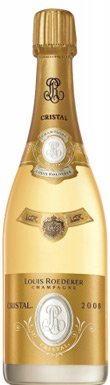

A sublime Champagne from Cristal from the famous and much praised 2008 vintage, which Jean-Baptiste Lécaillon calls a ‘dry and cool year that was a...
2008
Louis Roederer

Louis Roederer, Cristal, Champagne, France, 2002
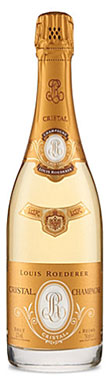
Twenty years is a sweet spot for Cristal said Jean-Baptiste Lécaillon during the Decanter masterclass in New York and this 2002 didn't disappoint. Floral notes...
2002
Louis Roederer
Louis Roederer, Cristal, Champagne, France, 2014
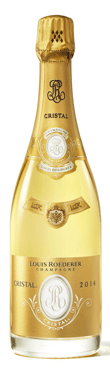
By 2014, all of the grapes made for Cristal were being farmed biodynamically and certified organic since 2012. So alive on the nose, bursting with...
2014
Louis Roederer
Louis Roederer, Blanc de Blancs, Champagne, France, 2015
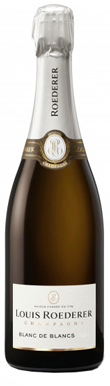
A wine that was reserved for enjoyment at the end of the family hunt from its inception in 1930 until commercialisation in 1950, this is...
2015
Louis Roederer
Louis Roederer, Champagne, France, 2015
From the hot 2015 vintage which produced uneven results across the Champagne region comes this bright and fruity Champagne which benefited from grapes at the...
2015
Louis Roederer
Louis Roederer, Collection 243, Champagne, France
Founded in 1776, Louis Roederer is the largest family-managed Champagne house, today run by seventh-generation Frédéric Rouzaud, with wines made since 1989 by chef de...
Louis Roederer
Louis Roederer, Cristal Rosé, Champagne, France, 2012
Strawberries, raspberries, lemon and salty stone notes on the nose. Round, thick, unctuous and filling, so juicy and mouthwatering. Still elegant and finessed but this...
2012
Louis Roederer
Louis Roederer, Rosé, Champagne, France, 2016
A nose full of rose petals with orange skin and berry fruits, not as expressive as some of the other Champagnes in the masterclass but...
2016
Louis Roederer