
Marqués de Murrieta: Ygay, Dalmau & Capellania all tasted
Marqués de Murrieta is one Spain’s most revered Rioja producers, so a masterclass of its flagship wines - including Castillo Ygay - with president and owner Vicente Dalmau Cebrián-Sagarriga was not to be missed. Simon Field MW reviews the wines.

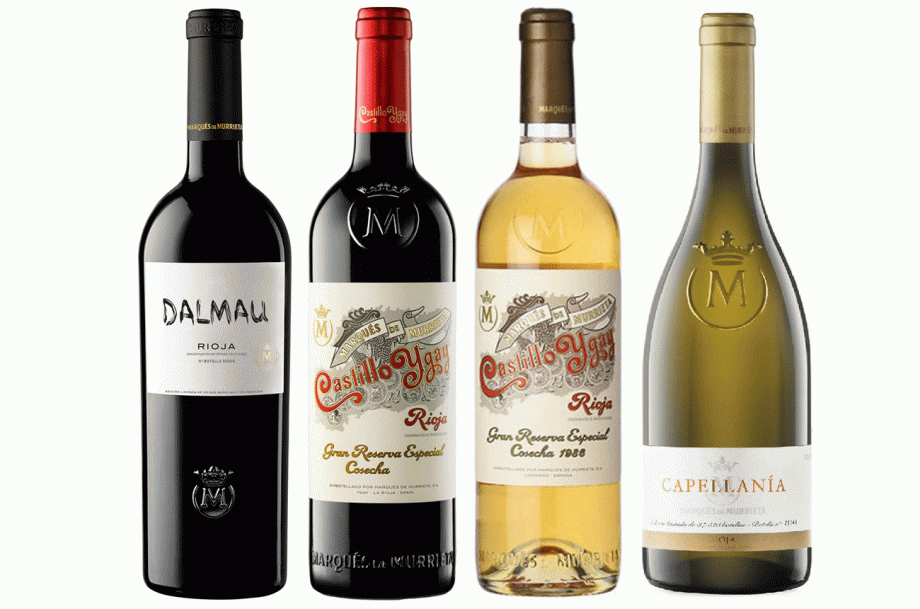
The Marquis of Murrieta was the first and most influential of the Spanish aristocracy who took it upon themselves to remodel the Spanish vinous template with a distinctly Bordelais flavour. All this started in 1852 and although the Bodega is no longer in eponymous hands the current owner, the deliciously flamboyant Vicente Dalmau Cebrián-Sagarriga, the tenth Conde de Creixell, is the perfect ambassador for the newly renovated property.
Scroll down for Simon Field MW’s Marqués de Murrieta tasting notes and scores
His presentation and masterclass at Decanter’s recent Fine Wine Encounter in the suitably plush and capacious Drawing Room of London’s Landmark Hotel drew a full house and gave full rein to both the traditional and the more modern face of this much-loved estate.
It begins in the ground
The key to understanding what makes Murrieta so special is that its entire production comes from one specific plot, a 300-hectare vineyard located just outside Logrono in the southern sector of the enclave of La Rioja Alta.
The majority of the vineyard, up to 85%, provides grapes for their flagship label, the Reserva, the balance made up of three specific sites, adjacent to each other, which have been singled out for their suitability for the premium labels, the Capellanía White, Dalmau, which is Vicente’s personal innovation, and, of course the most famous of them all; the legendary Castillo Ygay.
Finally, and almost ridiculously rare, Ygay’s white sibling, which is released after a mere 30 years in the winery. The current release is the 1986, described by Vicente as an ‘old rock star’. It certainly does give a lot of satisfaction to all those who taste it, including a certain Mr Robert Parker, who gave it 100 points!
Premium focus
The tasting focused on these four premium labels, and, to me, really underlined a holistic and entirely sensible philosophy, with all bases covered. The Capellanía, for example, changed its style in 2009, American oak replacing French, and the ageing regime shorted dramatically to 15 months, thereby giving a perfect foil to the resolutely traditional Ygay Blanco.
In the same vein the two reds complement each other perfectly. On taking over in 1996, Vicente decided to introduce a more modern style of red; he borrows the term ‘Vino de Autor’ to describe Dalmau. He is most definitely the author and describes the wine as ‘a key part of my own story; a necessity for me’, its new French oak elevage and use of both Graciano and (the now outlawed) Cabernet Sauvignon, serving to define a distinct, robust style, a terrific complement to the more traditional Ygay.
Ygay legacy
And what of Ygay itself? There was plenty of scope to find out, as the tasting took us from the hitherto unreleased 2010 all the way back to 1980. The legacy of one of Spain’s great names is clearly in very safe hands; once again the ageing period has been reduced, but only a little, and the wine will never actually leave the winery before the end of its first decade.
We will have to wait until next Spring at the earliest for the formal release of the superlative 2010. Two features stand out immediately; firstly, the beauty of the wine’s colour, rich and plush for sure, but in no way over-bearing, and still resonant after all these years with the 1980.
The second key feature is the inclusion of Mazuelo, a variety known as Carignan in France and which, although it only covers 3% of Rioja in general, can make up nearly 20% of Ygay; the 2009 has the highest component of the wines tasted with 19% in the final blend.
Freshness, colour, bracing acidity and poised tannins are all thus added to the wonderfully seductive core of fine Tempranillo. The wine is a worthy exemplar of great Rioja, its dignified warmth and the quiet intensity of its fruit a joy to behold. As indeed is the whole Bodega; there have been changes, for sure, and Vicente quotes Lampedusa when he says that things must change so that they may stay the same. The unsurpassed reputation of Ygay is thus confirmed, nourished and enhanced, as this wonderful tasting so eloquently demonstrated.
See Simon Field MW’s Marqués de Murrieta notes
Marques de Murrieta, Castillo Ygay Blanco, Rioja, Northern Spain, Spain, 1986

<p>The Ygay white is a somewhat rare beast, its previous manifestations 1919, 1932, 1940, 1946, 1950, 1962, 1970, probably all still delicious. There is a...
1986
Marques de MurrietaRioja

Marques de Murrieta, Capellania, Rioja, Northern Spain, Spain, 2015
The Viura plot covers 6 hectares, planted in 1945 on a plateau at an altitude of 485 metres. The wine has been aged for fifteen...
2015
Marques de MurrietaRioja
Marques de Murrieta, Castillo Ygay, Rioja, Northern Spain, Spain, 1980
All the Ygays have been darkly coloured; the greatest surprise is the extent to which the 1980 is also holding colour, with only the faintest...
1980
Marques de MurrietaRioja
Marques de Murrieta, Castillo Ygay, Rioja, Northern Spain, Spain, 2005
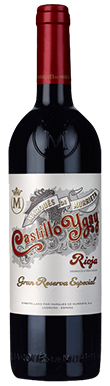
<p>In contrast to 2007, 2005 was a warm year and has bequeathed a wine of great power and pedigree; sweet and savoury notes accompany nose...
2005
Marques de MurrietaRioja
Marques de Murrieta, Castillo Ygay, Rioja, Northern Spain, Spain, 2007
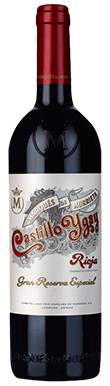
<p>2007 was a cooler year, the blend this time made up of 86% of Tempranillo and 14% Mazuelo, matured respectively in American and French oak....
2007
Marques de MurrietaRioja
Marques de Murrieta, Castillo Ygay, Rioja, Northern Spain, Spain, 2009
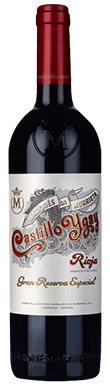
<p>2009 was a warm year, a good vintage to increase the Mazuelo component (up to 19%) in order to ensure balancing acidity next to the...
2009
Marques de MurrietaRioja
Marques de Murrieta, Castillo Ygay, Rioja, Northern Spain, Spain, 2010
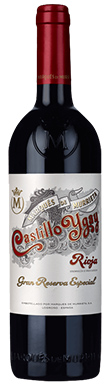
<p>Ygay these days is a blend of Tempranilo and Mazuelo, the later making up 15% in this vintage. 2010 will be remembered in the great...
2010
Marques de MurrietaRioja
Marques de Murrieta, Dalmau, Rioja, Northern Spain, Spain, 2012
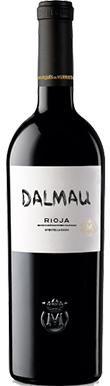
94
The most impressive of a most impressive quartet, the 2012 is staring to show how Dalmau develops, and all the signs are positive; the colour holds, the dark fruit does not lose its persuasive grip, yet we now evidence secondary notes such as tobacco, herbs and even hints of leather. Intimations of autumnal bonfires and great gastronomic potential, game perhaps, are all viewed through the glass darkly.
2012
Marques de MurrietaRioja
Marques de Murrieta, Dalmau, Rioja, Northern Spain, Spain, 2013
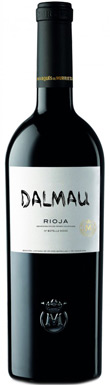
2013 was a cool year, its late cycle resulting in a harvest that finished in the final week of September. To me the ‘lighter’ style...
2013
Marques de MurrietaRioja
Marques de Murrieta, Dalmau, Rioja, Northern Spain, Spain, 2016
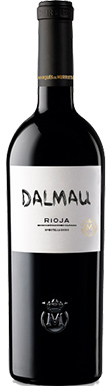
The 15% of Cabernet Sauvignon is the constant in Dalmau, the tweaking to the blend achieved by varying the proportions of Tempranillo and Graciano. In...
2016
Marques de MurrietaRioja
