
My Top 10: Single Quinta Ports
Visitors to the region are invariably stunned by the beauty of Portugal’s Douro Valley, with its deep but serene river and dramatically terraced slopes. Richard Mayson selects 10 great Port properties and explains what makes them and their wines so memorable.


Being asked to list my top 10 single quinta Ports is nearly as daunting as the prospect of having to choose my favourite tracks for Radio 4’s Desert Island Discs. With all the dramatic twists and turns of the Douro river and its tributaries, there are so many captivating properties: some prominent, others hidden. Some are tiny holdings (either subsistence- or hobby-farmed), others are more stately, and none more so than Quinta do Vesúvio in the Douro Superior that covers over 300ha.
The focus for this article is single quinta vintage Port (SQVP), but if the growing category of unfortified Douro wines were brought into the equation, I would have picked a different top 10 with some equally enchanting estates, such as Quinta do Vallado, Quinta do Crasto, Quinta do Vale Meão and Ferreira’s Quinta da Leda – all certain to be on my shortlist in that case.
Some of the properties below (such as Quinta do Noval, Quinta de la Rosa and Quinta do Vesúvio) have become shippers in their own right, producing a range of wines (both Port and Douro) as well as a Single Quinta Vintage Port nearly every year. Others are an important part of larger shippers such as Graham’s, Sandeman or Taylor’s, and in declared years their output contributes to their house vintage Port blends.
It goes almost without saying that all of these vineyards are registered Grade ‘A’ in the official classification system that determines how much Port each property can make in any one year.
At the time of writing, the Douro has just experienced one of its hottest years on record. After a succession of hot years (and looming climate change), it remains to be seen whether altitude may become an advantage in years to come (higher elevations being an adverse factor in the present classification system).

The quintas below are ordered geographically, starting in the heart of the Douro in the Cima Corgo near Pinhão and moving back upstream to the Douro Superior. And if asked, as they do at the end of Desert Island Discs, to pick just one quinta… Well, that would be an impossibility. However, I would happily take any or all of these wines to my desert island, along with fond recollections of time spent in the Douro!
Sandeman, Quinta do Seixo

Seixo occupies a prominent position overlooking the confluence of the river Torto with the Douro. I came to know this quinta rather well in the summer of 1982 when it was the basis for my undergraduate dissertation on vineyard microclimate. At the time it belonged to Ferreira, a pioneer of vertical planting (perpendicular up the face of the slope, known locally as vinha ao alto), which is favoured here on all but the very steepest slopes.
Bought as a Ferreira property, Seixo has now been rebranded as Sandeman by owners Sogrape. The house and adega (described by Henry Vizetelly in the 1870s as ‘commodious and well-arranged’ with ‘an air of pretension about it’) have been restored to make a stunning visitor centre. With commanding views over the Douro and Torto valleys, there is no more inspiring place to sip a glass of Sandeman’s scintillating tawny Port.
Seixo is now the basis for Sandeman’s much-improved vintage Ports (the 2018 looks really very promising), but it has only been bottled quite rarely as a single quinta vintage.
Ramos Pinto, Quinta do Bom Retiro
Torto means ‘twisted’: an apt name for this narrow, deeply incised tributary on the south side of the Douro. There are no fewer than three properties called Retiro (‘retreat’), one of which belongs to Warre’s, one to Krohn and this, the largest and most famous, belonging to Ramos Pinto. The company developed Bom Retiro in the early 20th century on profits generated by the sale of Port to Brazil. As a result, it boasts the earliest swimming pool in the Douro (cleverly disguised as an ornamental pond) and a level promenade shaded by palm trees designed for a gentle saunter after lunch or dinner. (This is, without doubt, a ‘good retreat’, as the name translates.)
But time hasn’t stood still here. From the 1970s onwards, Bom Retiro has been a crucible of experimentation, both in the vineyard and in the winery, under the aegis of João Nicolau de Almeida. Some of the first vineyard terraces (patamares) intended for mechanisation were built here.
Winemaking is now the responsibility of João’s younger cousin Ana Rosas, which keeps things in the family (although Ramos Pinto belongs to Champagne house Louis Roederer). Bom Retiro forms an important component in Ramos Pinto’s vintage Port (magnificent in recent years, including the 1994, 2000 and 2011) and is bottled as single quinta vintage in other good years, most recently 2018. However, I could not list Bom Retiro without including its utterly sublime single quinta tawny.
Quinta de la Rosa

There really can be no finer present than Quinta de la Rosa, which was given to Claire Feuerheerd for her christening in 1906. The Feuerheerds (then important wine shippers in their own right) called the property La Rosa after their brand of Sherry, hence the Spanish- sounding name. Although the Port firm was sold off in the 1930s, La Rosa still belongs to the same family. Having sold wine to a number of leading shippers in the interim, it was Tim and Sophia Bergqvist (Claire Feuerheerd’s son and granddaughter) who bravely decided to strike out on their own in the late 1980s.
The predominantly south-facing vineyards at La Rosa rise from the river at about 90m-400m above sea level, making for a wide range of meso- and microclimates. Built into the terraces just above the river and the railway line, the rather topsy-turvy house at La Rosa is one of the most appealing in the Douro. The Bergqvists have developed a small hotel, guest houses and restaurant (Cozinha da Clara) at La Rosa, making the most of this beautiful family property. After nearly four decades at the helm, Tim Bergqvist died in the summer of 2018. The wine I’ve selected, from his last vintage, is a fitting tribute.
Quinta do Noval
The narrow mouth of the river Pinhão belies the huge valley upstream, source of some of the finest vintage Ports. Noval’s vineyards have always been impeccably maintained and the whitewashed steps connecting one walled terrace to another are visible for miles around.
Since it was bought by AXA Millésimes in 1993, much of the vineyard has been replanted, with a big increase in the amount of Touriga Nacional vines. The estate now extends to 143ha, with the famous ungrafted ‘Nacional’ vineyard covering just 2ha at the heart of the property. Although Noval is the house name that appears on wines coming from outside the quinta, the name ‘Quinta do Noval’ is reserved for late bottled vintage, colheita and vintage Ports, all of which originate from the property itself.
Since 2011, Noval has declared a small quantity of vintage Port every year, most recently in 2018 amounting to 1,600 cases (or 7% of the estate’s total production).
I could have chosen any of those wines, but the wine I have selected here is a 2005, not a vintage but a colheita (dated, aged tawny), bottled after 14 years of nurturing in wood in a temperature-controlled wine lodge.
Dow’s, Quinta do Bomfim

The locality was known originally as Vale Bem Feito (‘well-made valley’) but the Quinta do Bomfim (‘good end’) does not seem to have had much of a history until it was bought by George Acheson Warre for Dow’s in 1896. Warre built a modest but comfortable residence at Bomfim, inspired by the tea- planters’ houses in Ceylon, and the shady verandah with its view over the river is one my favourite places to enjoy a glass of chilled 20-year-old tawny.
In 2015, the Symington family opened an excellent visitor centre at the entrance to Quinta do Bomfim, which is a short walk along the main street from the railway station at Pinhão. Wine from Bomfim continues to form the backbone of Dow’s solid and long-lived vintage Ports, which are deliberately made in a drier style. This works especially well in hot, ripe years such as 2009, a year fully declared by some other shippers.
Croft, Quinta da Roêda

The vineyard at Roêda interlocks with that at Dow’s Bomfim (above) and enjoys a similar south-facing aspect and exposure, though the wines the two produce are very different in style. The Roêda property belonged to the Fladgates (of Taylor, Fladgate & Yeatman fame) until it was acquired by Croft in 1889. A colonial-style house similar to that at Bomfim was built in the 1920s.
Roêda went full circle in 2001 when Croft was bought by Taylor’s, and Quinta da Roêda is now a key property in the Fladgate portfolio. The winery serves as the principal vinification centre for Croft and has benefited from significant investment in recent years, not least the restoration of the lagares abandoned under the old regime in the 1960s.
Recent Croft vintages have regained their stature: 1955, 1963 and 1966 were all magnificent wines and 2017 seems to be a worthy successor, made in the juicy, plump style that seems to be a hallmark of Croft – and of Roêda. The visitor centre at Quinta da Roêda is easy to access from Pinhão and offers vineyard tours, tastings and an opportunity to see grapes being foot-trodden during vintage time – as long as social distancing measures are not in force!
Churchill’s, Quinta da Gricha
Facing northwest and situated at 150m-400m above sea level, Quinta da Gricha has a magnificent exposure with a view over the river to match. It is named after a spring that rises on the hillside and, through a series of granite-lined watercourses, continues to supply water to the property. The vineyard was laid out in the 1840s and the adega built a decade later, with impressive granite lagares decorated by carved finials.
Port shippers Churchill’s was established by Johnny Graham in 1981, and Gricha was the first property the company acquired. Gricha now produces Douro wine under the Churchill’s label as well as being the basis for Churchill’s vintage Port. The Single Quinta Vintage Port produced in 2018 is an excellent one.
Graham’s, Quinta dos Malvedos
Malvedos is synonymous with Graham’s, having been a key part of its renowned vintage Ports for more than a century. The quinta briefly parted company in the lean years of the early 1970s but was repurchased by the Symington family in 1982. They replanted the vineyards and built a new winery, constructed sympathetically from local schist. Stainless steel robotic lagares tread the grapes, one of the old granite lagares having been retained.
Covering nearly 100ha, the property is predominantly south-facing and rises from the river up to 400m altitude. A few north-facing terraces, planted predominantly with Touriga Nacional vines, are now producing a super- premium vintage Port for Graham’s known as The Stone Terraces.
Malvedos produces opulent, balanced, lasting wines that always stand the test of time, with single quinta wines from the late 1950s and early ’60s still drinking well.
Taylor’s, Quinta de Vargellas

The late satirist Willie Rushton drew a cartoon of Quinta de Vargellas which he depicted as the ‘last outpost of the British Empire’. Vargellas even has its own railway station (the platform imagined by Rushton as being populated by bowler-hatted London City commuters), which gives this remote property a sense of self-sufficiency.
Vargellas was established in the early 1800s, and by the 1830s had gained a reputation for the quality of its wines. For much of the 19th century, a significant part of the property belonged to the Ferreira family until three quintas bearing the name of Vargellas were merged into one by Taylor, Fladgate & Yeatman between 1893 and 1896. Curving with the river, Vargellas forms an extremely impressive property and, although not the largest of its vineyards, is treated by the Fladgate Partnership as its flagship estate.
Vargellas produces strong, dark wines with a pronounced scented character often characterised as ‘violety’. Taylor’s launched its first SQVP in 1958. In declared years, Port from Vargellas forms a major part of Taylor’s vintage blend along with powerful wines from the company’s other estates, Quinta de Terra Feita and Quinta do Junco, in the Pinhão valley. The so-called ‘chalet’ at Vargellas has the feeling of a small, comfortable English country house.
Quinta do Vesúvio
Undeniably the most impressive quinta in the Douro, Vesúvio boasts the largest house, some of the biggest lagares and (like Lisbon, Rome, San Francisco and Sheffield) the estate covers seven hills. It was created in the early 19th century by António Bernardo Ferreira and remained with the Ferreira family until it was acquired by the Symingtons in 1989.
Predominantly north-facing (which is a considerable asset in hot years), the entire property covers an area of 32ha, of which more than one-third is now under vine. There are eight traditional lagares (equipped with their own pissoirs, should anyone be caught short while treading) with a capacity of 25 pipes each. These have been thoroughly revamped and equipped with temperature control and there is an air-conditioned lodge for ageing the wines. Since 1989, a Vesúvio vintage has been bottled nearly every year – 1993 and 2002 are the only exceptions to date.
Richard Mayson’s Top 10 Single Quinta Ports tasted
Sandeman, Quinta do Seixo, Port, Cima Corgo, Douro Valley, Portugal, 2013
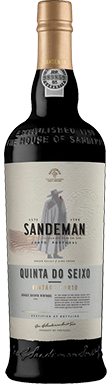

<p>Made up from around 30% centenarian vines with Touriga Nacional, Touriga Franca, Sousão and Tinta Francisca from younger vineyards: lovely deep crimson colour, still in...
2013
SandemanPort

Quinta do Noval, Colheita, Port, Cima Corgo, Douro Valley, Portugal, 2005
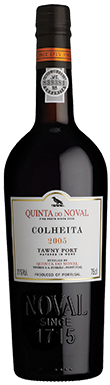
<p>The first bottling of a wine, foot trodden in lagar, from grapes picked after a hot dry summer: lovely brick red centre turning orange-amber on...
2005
Quinta do NovalPort
Quinta de la Rosa, Port, Cima Corgo, Douro Valley, Portugal, 2017
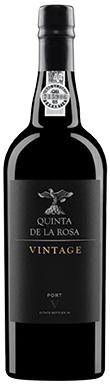
<p>From a hot, dry, generally declared year this wine has really flowered beautifully in bottle: deep in colour, restrained but with a lovely floral scent...
2017
Quinta de la RosaPort
Ramos Pinto, Quinta do Bom Retiro 20 Year Old Tawny, Port, Douro Valley, Portugal
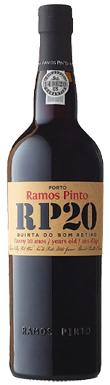
Produced with fruit from some of the oldest plots at Quinta do Bom Retiro, this is an elegant and complex tawny. Preserved red and blue...
Ramos PintoPort
Dow's, Quinta do Bomfim, Port, Cima Corgo, Douro Valley, Portugal, 2009
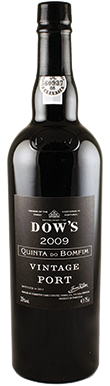
<p>Deep and youthful crimson in colour, with heady, liquorous kirsch-like aromas. Rich, dense and intense with a lovely bitter- sweet chocolatey core and a broad...
2009
Dow'sPort
Croft, Quinta da Roêda, Port, Cima Corgo, Douro Valley, Portugal, 2004
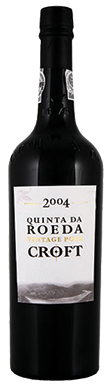
<p>The 2004s seem to have developed quite quickly and are drinking well now with 14 years in bottle: mid-deep in colour, just starting to show...
2004
CroftPort
Churchill's, Quinta da Gricha, Port, Cima Corgo, Douro Valley, Portugal, 1999
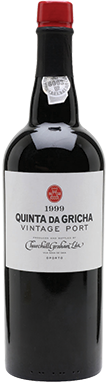
<p>The first vintage for Churchill at Quinta da Gricha, a wine from an old mixed vineyard aged 50 years and more at the time. Mid-deep...
1999
Churchill'sPort
Graham's, Quinta dos Malvedos, Port, Cima Corgo, Douro Valley, Portugal, 2008
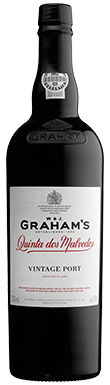
<p>A small harvest after a relatively cool summer in 2008 made this an excellent year for SQVPs. Lovely deep, opaque, youthful colour; dense, still a...
2008
Graham'sPort
Taylor's, Quinta da Vargellas, Port, Douro Superior, Portugal, 2005
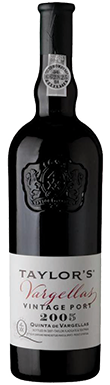
<p>Despite the arid summer of 2005, this wine has developed gracefully and shows the characteristic floral scent of wines from Vargellas. Retaining a youthful hue,...
2005
Taylor'sPort
Symington Family Estates, Quinta do Vesúvio, Port, Douro Superior, Portugal, 2003
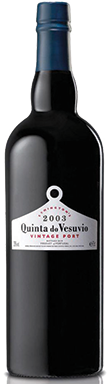
<p>This was a hot year throughout Europe, which made for a generally declared Port vintage. Retains a deep youthful colour, with super-ripe Morello cherry fruit...
2003
Symington Family EstatesPort
