
New faces of Beaujolais
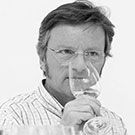

Beaujolais is currently enjoying a revival, thanks to improved quality and a run of great vintages. James Lawther MW profiles the young winemakers who are injecting new energy into the region
The rise in quality, authenticity and standing of Beaujolais these days begs the question: who is driving the revival? Beaujolais has never fostered a star-orientated culture but in the grey days of the 1980s and 1990s, when nouveau compromised the region’s reputation, names such Marcel Lapierre, Guy Breton, Jean Foillard and Jean-Paul Thévenet stood out as a beacon for characterful, complex Beaujolais.
One or two of this generation (Foillard, Yvon Métras) are still flying the flag, but in the new millennium the spirit of true Beaujolais has undeniably become more youthful. Mainly in their 30s, the young people leading the fray are often more travelled, open and worldly but they have adhered to the guiding principle of their elders and mentors, which is to maintain a respect for the land and terroir.
An in-depth soil survey of the 10 Beaujolais crus has helped to reinforce this sentiment and fomented the notion of complexity and uniqueness in the region. From this has stemmed the bottling of individual parcels and a strong organic or biodynamic culture for growing Gamay. While fermentation practices (whole bunch or destemming) and ageing (with or without oak) may vary, the idea of a natural expression prevails, which for many means no chaptalisation, natural yeasts and minimal use of sulphites.
Either home-bred or with their origins elsewhere, the younger generation has a belief in the region and a strong conviction that they are recapturing the true expression of Beaujolais. ‘The new generation are proud to be vignerons in Beaujolais and that changes everything,’ says Mathieu Lapierre, who along with his sister, Camille, now runs Domaine Marcel Lapierre.
Below are some of the men and women who are helping to restore the reputation of the region.
Richard Rottiers

Richard Rottiers has a viticultural background, but based in Chablis rather than Beaujolais. Following vintages in New Zealand and South Africa, and agricultural studies in Lyon, he worked for three years at one of the leading estates in Beaujolais, Château Thivin, before acquiring his eponymous 3ha domaine in Moulin-à-Vent in 2007. Why Moulin-à-Vent? ‘It’s the wine I prefer and the slopes where I have my vines are not quite as severe, so I can plough and work the soils in organic fashion,’ he explains. The camaraderie of like-minded vignerons such as the Thillardon brothers helped in the early days with shared tasks and equipment. His biggest problem has been hail; the domaine (now 7 ha) was hit to varying degrees seven times in the last 10 years. He produces three cuvées of Moulin-à-Vent: a generic blend of parcels, Dernier Souffle and Champ de Cour, the clay content in his sector giving a certain generosity to the wines.
Mee Godard

Mee Godard’s slight frame belies her inner strength. This is someone who doesn’t count the hours when it comes to running her eponymous property in Morgon and raising a family. Of Korean origin but adopted by a French couple when she was a baby, her road to the Beaujolais has been rich in experience but far from straightforward. Three years at Oregon State University were followed by an oenology degree at Montpellier then work in Champagne and the south of France. In 2007 she arrived in Burgundy where she worked for Domaine Chanson, Château de Corton-André and Comtes Lafon before setting up in Morgon in 2013. ‘I signed the contract for 5ha and started pruning the next day,’ she recalls. The wines are bottled according to parcel: Corcelette, Grand Cras and Côte du Py as well as a special selection Passerelle 577 (the name alludes to her origins and a lucky number) and since 2016, a Moulin-à-Vent. These are complex, structured wines; 2016 the best yet.
Mathieu Mélinand

Before joining the family-owned Domaine des Marrans in 2008, Mathieu Mélinand worked vintages at Pegasus Bay in New Zealand and Forester Estate in Western Australia. Two things struck him overseas: the absence of rules and the use of natural yeast at Pegasus Bay. ‘If it works there, then it should work in Beaujolais,’ he reflected. He now uses indigenous yeast at his 20ha, Fleurie-based property, has returned to ploughing the soils, and ages the wine in older foudres. ‘These practices used to be implemented at the estate before they were abandoned,’ he says. There’s also a steady move towards biodynamics, initiated by his wife, Pauline Passot, who worked at the biodynamically run Seresin Estate in New Zealand and at Domaine Michel Lafarge in Burgundy. Mélinand makes wines that are structured and traditional with expressive fruit and lively acidity.
Louis-Clément David-Beaupère

The 7ha Domaine David-Beaupère was originally purchased by Louis-Clément David-Beaupère’s grandfather in the 1960s then leased to a grower by his father, who was a doctor. When the latter declared he wanted to sell, David-Beaupère dropped his job in the financial sector and announced that he was going to take over. Following three years of viticultural studies, he installed himself at the property in 2008. ‘People thought I was mad at the time but that wouldn’t be the case today,’ he says. The vines are now cultivated organically or are under conversion, and another 2ha in Moulin-à-Vent have just been planted. The Juliénas is produced in three cuvées, a young vine and two individual parcels: La Bottière (70-year-old vines planted around the house) and Vayolette. Fruit and freshness mark the wines.
Mathieu and Camille Lapierre

A brother-and-sister duo from a Morgon estate with an established reputation, Mathieu and Camille Lapierre jointly run Domaine Marcel Lapierre. In the 1980s Marcel Lapierre championed unadulterated, natural wine (organic cultivation, natural yeast, no chemical additives) and both Mathieu and Camille continue to adhere to the same principle – albeit with a touch more pragmatism than ideology. Mathieu initially trained as a chef, working in restaurants in France, the US and Canada before joining his father in 2005; while Camille worked as a sommelier before arriving at the family domaine in 2013. The Lapierre Morgon is a blend of different parcels cultivated organically, some with a nod to biodynamics. A percentage of the wine is made without sulphur dioxide but clients are given the option of an addition at bottling if preferred.
Claire Chasselay

Claire Chasselay represents the continuity and durability on which the Beaujolais is founded. The Chasselay family can trace its history as vignerons back to 1464 and Claire’s work ethic follows her parents’ example. In 2008 she and brother Fabien Chasselay joined them at Domaine JG Chasselay in the southern Beaujolais following her viticultural studies and a stint in Australia. The domaine has been organically certified since 2006 and the Chasselays work with whole-bunch fruit, natural yeast and limited use of sulphites. Claire’s role is multi-tasking, including everything from work in the vineyard and winemaking to wine tastings at the cellar door and preparing dishes for customers at the domaine’s B&B. The style of the wines is fresh, fruity and appetising.
Nicolas Chemarin

If you haven’t heard of the commune of Marchampt, it’s not a surprise. Located in the far-flung eastern limits of Beaujolais, it is credited with about 100ha of vines planted on steep slopes that rise from 360m to 550m, and a dozen or so vignerons who supply the local cooperative. Nicolas Chemarin is the only independent grower in the village who makes wine. A fourth-generation vigneron, he acquired his first vines in 2006 and now has 10ha, mainly Beaujolais-Villages but with a little Régnié, Morgon and Brouilly. He is clearly motivated, as on the steeper slopes much of the work is done by hand, with the vines attached to wooden pickets as in Côte-Rôtie. Low yields and ripe fruit are customary; the expression of red fruit and spice prevalent.
Claude-Emmanuelle and Louis-Benoît Desvignes

The initial challenge for this sister-and brother team was to maintain the solid reputation of the eighth-generation family property, Domaine Louis Claude Desvignes. Their father, Louis-Claude, had already set the tone by highlighting the different parcels in Morgon and bottling his own wines as far back as the 1960s. Claude-Emmanuelle joined him in 2001, then in 2004 she and Louis-Benoît took over the reins on his retirement. Subtle changes have given greater precision to the wines: the soils are now ploughed, even greater emphasis is given to the parcels and in the winery a pneumatic press has been added and the grapes receive gentler handling. The wines are then aged in concrete tanks. ‘Our father passed on the idea of producing a that reflects and respects the terroir, and that’s what try to do,’ says Louis-Benoît. As president of the yearly tasting event, Bien Boire en Beaujolais, he’s also at the forefront of promoting Beaujolais’s new generation.
Charly Thévenet

A local boy through and through, Charly Thévenet was born and brought up in the region, nurtured in the credo of traditional winemaking by his father Jean-Paul and by Marcel Lapierre, for whom he worked for a while. ‘Their basic principles were the use of natural yeast (and consequently no chemicals in the vineyard) and to harvest ripe fruit – and for the wines I like it would be impossible to do anything else,’ he says. In 2007 he bought a 3ha vineyard in Régnié, running the tiny domaine separately from his father’s in Morgon, while at the same time working alongside him. From this year the two will be amalgamated as Jean- Paul retires. Charly now vinifies with whole bunches at low temperatures. ‘The technique works in the Beaujolais with our old vines as you get the fruit and the notion of terroir,’ he explains. Like his father he is a recognised figure in the region, but outside discreet and adverse to publicity.

Paul-Henri Thillardon
A single-minded spirit, that’s Paul-Henri Thillardon. Originally from the southern Beaujolais where his father was a vigneron, he gravitated north, falling in love with Chénas, where he settled with 3ha in 2008 aged 22. In this little-known appellation the early years were difficult, exacerbated by his biodynamic approach, even using horses to plough on some of the steeper slopes. Joined by his brother, Charles, in 2014, Domaine Thillardon has now grown to 12ha, principally in Chénas where four different parcels produce four distinct cuvées. Pigs, chickens, ducks and bees complete the picture of biodiversity. Paul-Henri favours fruit and supple tannins, but his wines also have a saline minerality. In terms of winemaking, a pre-fermentation cold soak and full carbonic maceration allow extraction on the fruit using indigenous yeast. Wines are then aged in 600-litre barrels or Burgundian pieces for six to eight months.
Domaine Richard Rottiers, Beaujolais, Moulin-à-Vent, Burgundy, France, 2016
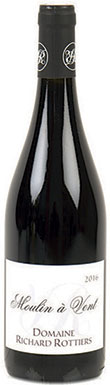

Perfumed and elegant nose, with floral and Burgundian Pinot notes. The palate is medium-bodied but harmonious with finegrained tannins and precise fruit. There’s lovely freshness...
2016
Domaine Richard RottiersBeaujolais

Domaine des Marrans, Beaujolais, Fleurie, Burgundy, France, 2016
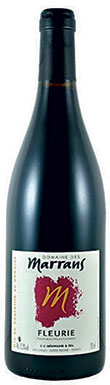
A blend of three terroirs. Bright and racy with red fruit and flinty, mineral notes. Finely textured palate, with a saline note on the finish....
2016
Domaine des MarransBeaujolais
Domaine Mee Godard, Côte de Py, Beaujolais, Morgon, Burgundy, France, 2016
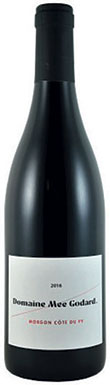
Youthful red-violet hue in the glass. Complex mineral, spice and cherry aromas on the nose, which are followed by a more punchy and full-flavoured palate...
2016
Domaine Mee GodardBeaujolais
Domaine David-Beaupère, La Bottière, Beaujolais, Juliénas, Burgundy, France, 2016
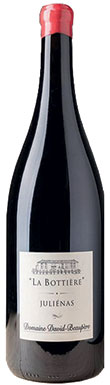
Produced from 70-year-old vines, this displays lifted, aromatic, red berry notes on the nose, leading to a juicy palate that’s fresh and gourmand with finely...
2016
Domaine David-BeaupèreBeaujolais
Domaine Marcel Lapierre, Beaujolais, Morgon, Burgundy, France, 2011
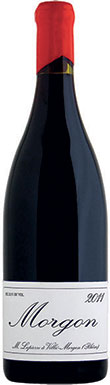
This is bottled without additional sulphites. A charming and expressive nose of forest fruits, showing raspberry, cherry and blackberry notes with a wilder nuance. On...
2011
Domaine Marcel LapierreBeaujolais
Domaine JG Chasselay, Les Grands Eparcieux, Beaujolais, Burgundy, France, 2016
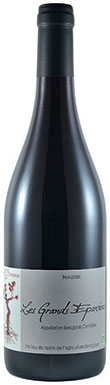
The average age of the vines is 75 years. This is what good Beaujolais is all about. Perfumed, with crunchy red fruit and thirst-quenching freshness...
2016
Domaine JG ChasselayBeaujolais
Nicolas Chemarin, Les Vignes de Jeannot, Beaujolais, Villages, Burgundy, France, 2016
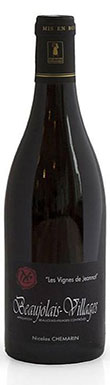
Ripe and fruit-driven. Spice and notes of cherry and raspberry compote. Almost a hint of Rhône Syrah. The palate is soft and round, the acidity...
2016
Nicolas ChemarinBeaujolais
Louis Claude Desvignes, Javernières, Beaujolais, Morgon, Burgundy, France, 2016
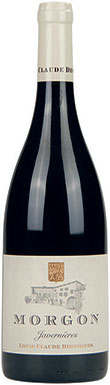
Made from grapes grown on an eastfacing parcel with clay soils on the Côtedu Py. Full and generous style withperfumed, red-berry fruit. The palateis rich...
2016
Louis Claude DesvignesBeaujolais
Charly Thévenet, Grain & Granit, Beaujolais, Régnié, Burgundy, France, 2016
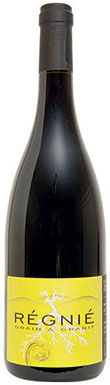
An old-vine wine, made from a vineyard with an average of 70 years, that is planted on pink granite soils. Pure and lifted with Pinot-like...
2016
Charly ThévenetBeaujolais
Domaine Thillardon, Chassignol, Beaujolais, Chénas, Burgundy, France, 2016
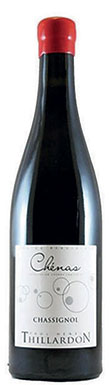
From a steep, northeast-facing vineyard, planted on a granite and quartz slope. The vines here produce a wine that’s rich, full and profound, displaying gourmand...
2016
Domaine ThillardonBeaujolais
