
New Zealand Chardonnay: Panel tasting results


It’s all a question of balance, says Rebecca Gibb MW...
New Zealand Chardonnay may have been out of the spotlight of late, but the wines are enjoying a revival of interest.
For a heady decade, Chardonnay was the darling of the New Zealand wine industry. The prolific German cross Müller-Thurgau was finally toppled from the top spot in 1993, following a government-sponsored vine-pull scheme encouraging growers to uproot such overproductive undesirables, and Chardonnay became the country’s most-planted variety.
Quick Link: View all 92 wines from this panel tasting
It held Sauvignon Blanc at bay until as late as 2003, when New Zealand was engulfed by a flood of green yet tropical wines. Sauvignon Blanc has continued to be the cause of all the chatter (good and bad), while Chardonnay producers have quietly been refining their interpretation of this non-aromatic white.
Scroll down for the results
They have nature on their side: New Zealand’s cool, maritime-influenced climate imbues its Chardonnay with an elegance and fine acidity that can’t be imitated in warmer locations.
A growing confidence to pick earlier, particularly in warmer Chardonnay regions on North Island, has also brought wines with lower alcohol and greater freshness without a loss of flavour ripeness.
However, the country’s high levels of ultraviolet light mean that sunburned grape skins can be an issue, which can result in hard phenolic compounds, so vine canopies need to be managed.
Stylistic direction
In the winery, winemakers are choosing to flex their muscles less often than in the past.
Since the first French oak barrels were imported into New Zealand in the 1980s, oak handling has become far more sensitive, with the more sympathetic method of barrel fermentation the standard for the finest Chardonnays. There’s also experimentation with larger oak formats and even concrete egg fermenters.
A major improvement in New Zealand Chardonnay since the early 2000s has been a reduction in buttery flavours.
Malolactic fermentation produces diacetyl, which creates an intense buttery aroma. Producers now understand that leaving a wine on its lees (dead yeast cells) and timing the addition of sulphur dioxide after malolactic can lessen the diacetyl influence.
The current stylistic debate revolves around sulphides. Allowing a high proportion of solids in the fermentation provides more nutrients for yeast but also risks reduction, so it’s a balancing act to find a level that suits the intended wine style.
A little bit adds a hint of flint and brings complexity, however there are far too many examples that are dominated by struck-match flavours, overpowering the fine fruit beneath.
Most New Zealand Chardonnays are best consumed within three to six years of the vintage for their brightness, but more mature wines from some of the country’s best Chardonnay producers prove that age and beauty aren’t incompatible.
The scores
92 wines tasted
Entry criteria: producers and UK agents were invited to submit their latest release, UK- or US-available, 85% minimum Chardonnays from any New Zealand region
Exceptional
Outstanding
2
Highly Recommended
18
Recommended
50
Commended
14
Fair
6
Poor
2
Faulty
The results
Nelson and Canterbury were the pick of the regions; elsewhere our panel would like to have seen more of the fruit and less of the winemaking, reports Amy Wislocki below.
View all 92 wines from this panel tasting
It was one of those tastings at which our experts arrived with high expectations, and ended the day feeling a little short-changed.
‘New Zealand has a fantastic climate. The country’s top wines have shown that its producers can consistently make cool-climate Chardonnay that is classic and fine, restrained and ageworthy,’ said Rebecca Gibb MW.
So why did tasters leave feeling disappointed? The main complaint seemed to centre on a lack of varietal character.
‘Before this tasting, I had a clear idea of what New Zealand Chardonnay is stylistically,’ said Roger Jones. ‘I thought of it as modern, very precise and very focussed on the grape. Today though, many wines tasted like Riesling, or like aged Sauvignon Blanc. We took the position that even if it was a great wine, if it didn’t taste like Chardonnay we wouldn’t give it more than 89 points.’
‘If I buy a New Zealand, or Chilean, or South African Chardonnay, I want it to taste like Chardonnay,’ said Mel Jones. ‘I don’t want something that tastes like sour lemon cheesecake – even if it is delicious.’
There was certainly a feeling that many wines lacked ripeness, or were overly citrus in character.
‘I’d like to see more of the fruit,’ complained Gibb. ‘I appreciate that Chardonnay is what they call “a winemaker’s grape”, because it’s not aromatic and it offers a winemaker the opportunity to show off their techniques, but that shouldn’t be to the detriment of the variety.’
On the plus-side, there were no negative comments about alcohol levels or use of oak.
‘New Zealand has moved away from a buttery style, and the oak was mostly well handled,’ commented Gibb. ‘However, my real bugbear is the struck-match character you can find; many producers are going too far with it. It should be a seasoning, but many of the wines were dominated by it.’
‘New Zealand is going down the linear, mineral route with its Chardonnay,’ observed Mel Jones. ‘It’s not overly oaky or reductive. But sometimes it’s too linear – the acid really sharp, and I’d like to see a bit more generosity.’
When the discussion moved to regional performance, there were clear winners and losers.
There were a few good wines from Martinborough, but the sample wasn’t wide enough to form a definitive judgement, said Jones.
It was Nelson that surprised and impressed him: ‘Suddenly we’ve got a bit of class; a bit of Puligny-Montrachet coming in.’ He also liked the wines from Canterbury: ‘Finally we lose all that acidity; these wines had real poise, texture and completeness.’
The generic Hawke’s Bay wines came in for some criticism: ‘Tinned rather than clean tropical fruits in some, and too much playing around with the wine – 2014 was the best performer there,’ according to Jones. Once you drilled down to sub-regions of Hawke’s Bay, the quality unsurprisingly increased.
Moving to Marlborough, the tasters were pleasantly surprised. ‘Because it’s so big and associated with “plonk”, it can be overlooked,’ said Gibb. ‘But some Marlborough winemakers are clearly treating Chardonnay with real sensitivity.’
Seek out the 2016s from here, said Jones, as opposed to the 2015s (too Sauvignon-like) or 2014s (too acidic).
The upshot, said our tasters, is that you must buy carefully. There are a lot of wonderful wines out there, but the category as a whole seems to be having a bit of an identity crisis.
My top 3
Melanie Brown
Resident in the UK for more than 10 years, Brown began her own specialist wine retailer, The New Zealand Cellar, online in 2014, setting up a wine bar and shop in Brixton soon after. Brown and her team curate tailored NZ wine events, and she aspires to create a unique wine buying experience showcasing the ever-evolving range of New Zealand wine to UK consumers.
Muddy Water, Chardonnay, Waipara, North Canterbury 2015
It’s no wonder North Canterbury is gaining momentum. The limestone soils allow the purity of the wines to shine, giving a lean and elegant style of Chardonnay. 92 Drink 2018-2020
Villa Maria, Keltern Vineyard Chardonnay, Hawke’s Bay 2016
I’m often cautious of the cult following of Villa Maria as a supermarket brand, but this wine shows its tenacious ability for quality. Tightly formed, the epitome of Hawke’s Bay Chardonnay. 92 Drink 2018-2021
Giesen, The Fuder Single Vineyard Clayvin Chardonnay, Marlborough 2014
Made in small quantities in this revered vineyard, the use of 1,000-litre German fuder barrels sets this wine apart, offering texture, oak integration and complexity. 88 Drink 2018-2021
Rebecca Gibb MW
Having spent six years living in New Zealand, Gibb has recently returned to her native northeast England. While in New Zealand, she became a Master of Wine, graduating top of her class and winning the Madame Bollinger medal for excellence in tasting. Her first book, The Wines of New Zealand, will be published in 2018 as part of the Classic Wine Library series.
Mount Riley, Seventeen Valley Chardonnay, Marlborough 2016
Mount Riley’s top Chardonnay, and the low yields are reflected in its high concentration. Savoury, almost wild with full solids providing just the right amount of flint overlaying white stone fruit and citrus, and a linear finish. 95 Drink 2018-2022
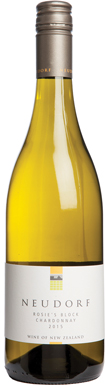
Neudorf, Rosie’s Block Chardonnay, Moutere, Nelson 2015
It may be half the price of Neudorf’s excellent Moutere Chardonnay but this had the edge today. Mid-weight style that is restrained, taut and nutty. Superb value. 95 Drink 2018-2025
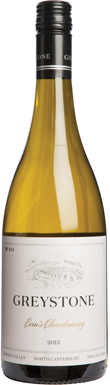
Greystone, Erin’s Chardonnay, Waipara, North Canterbury 2015
From a low- yielding, steep limestone slope, offering intensity and sumptuous texture. Strikes just the right balance between richness and freshness. 93 Drink 2018-2024
Roger Jones
Jones owns Michelin-starred restaurant The Harrow at Little Bedwyn. Consultant chef for Cardiff’s Park House Restaurant, he is also wine consultant to trade publication The Caterer. He sits on the Moët UK Sommelier of The Year panel and, with his wife Sue, he founded the Mamba Riedel Decanter Awards, which raises funds for The Benevolent drinks trade charity.
Greystone, Erin’s Chardonnay, Waipara, North Canterbury 2015
Classic white peaches, delicate acidity, fine use of oak, perfect matchstick vibrancy. This shone, highlighting Waipara as a top source for delicate fine wines. 96 Drink 2018-2024
Neudorf, Rosie’s Block Chardonnay, Moutere, Nelson 2015
I loved the elegance of this wine, with its gently perfumed and precise flavours. Sourced from Mendoza clones, which together with the clay-gravel soil helps to provide a mineral acidity to balance the ripe fruits. Will age gracefully. 96 Drink 2018-2025
Kumeu River, Kumeu Village Chardonnay, North Island 2016
This is Kumeu River’s excellent-value introduction to its range of world-class Chardonnays. Hand-picked, 25% oak-fermented, gives a fresh fruit-filled wine with a zesty aroma and great texture, hints of flint and spice, youthful now but will evolve beautifully in the short term. 92 Drink 2018-2020
New Zealand Chardonnay: the facts

3,116ha planted, representing 8.4% of total vineyard area
Most planted NZ variety 1993-2003
Third most-planted NZ variety 2017
Fourth most-exported NZ variety 2017
Vintage Overview
2016 Warm, often humid. But the April harvest was dry, sunny and large, with large berries. Excellent for white wines.
2015 Dry and warm. A small, low-yielding crop after early frost and cool flowering produced ripe, concentrated whites.
2014 A record early vintage (at both start and finish), as well as a warm, dry summer with little disease pressure. Did the winemakers speak too soon about 2013 being the vintage of a lifetime?
2013 Widespread drought, yet hailed as the vintage of a lifetime by many producers. Warm, dry summer and autumn produced ripe whites and reds.
2012 Cool summer and late harvest with slow ripening of whites resulted in low yields and intense wines with lively acidity. Ripe, warm Central Otago is the exception.
Top New Zealand Chardonnay from the panel tasting:
Related content:

Top wines of 2017 from Decanter Panel Tastings
Great wines from our panel tastings in 2017...

Cool-climate Australian Chardonnay: Panel tasting results
Diversity in both terroir and winemaking in Australia’s cool-climate regions is resulting in an exciting spectrum of premium Chardonnays, as

Premium New Zealand Sauvignon Blanc – panel tasting results
Is Marlborough still at the front of the pack? Read the Panel Tasting results to find out...
Greystone, Erin's Chardonnay, Waipara Valley, Canterbury, New Zealand, 2015
95
Greystone started life in 2000 when the Thomas Family purchased a farm on the Omihi hills. The winery’s name comes from the unique limestone conglomerate of fossils, seashells and small pebbles that are found on the bedrock where the vines grow. This soil profile offered a perfect opportunity for viticulturist Nick Gill to realise the full potential of the site, and in 2008, with winemaker Dom Maxwell, the first wines were created. Erin’s is made from Chardonnay grapes grown on the steepest, northwest-facing limestone block. Melanie Brown: A bold palate of tropical fruits and piercing acidity with a flash of a reductive tone. Minerality breaks through intermittently, and the gloriously silky texture provides warmth and authenticity. Rebecca Gibb MW: Smoky bacon and struck match spring to mind here. This is a savoury Chardonnay with plenty of personality. Heaps of concentration and just the right balance between richness and freshness. Roger Jones: A racy wine with perfectly ripe white stone fruit, minerality, spicy notes and lovely acidity. A struck-match quality gives a controlled, beautiful, evolving wine.
2015
GreystoneWaipara Valley
Neudorf, Rosie's Block Chardonnay, Moutere Hills, Nelson, New Zealand, 2015
95
Neudorf, based in Nelson on New Zealand’s South Island, was set up by Tim and Judy Finn back in 1978. After years of experimentation and development with differing grape varieties, Pinot Noir and Chardonnay became synonymous with the winery. They do produce excellent wines from other varieties too, and Rosie’s Block, a vineyard purchased in 1999 and named after the Finns’ daughter, is also planted to Riesling and Albariño. This block is north-facing, on clay-gravel soils, and is run organically. Impressively, this is also a dry-farmed vineyard (no irrigation), which makes it a real rarity in New Zealand. Melanie Brown: A beautifully curated example of Nelson Chardonnay. Layers of fine fruit meld with pure minerality. It is richly textured with bright acid and an enormous potential for further ageing. Poised and exciting to see. Rebecca Gibb MW: Creamy and nutty with a lovely silky texture; someone has handled their phenolics well. A medium-bodied style that is positively restrained, leading enticingly onto a taut and fine finish. Roger Jones: A charming, clean and fresh wine whose divine elegance shows clearly. The acidity brings this wine full circle and makes it a complete, delightful example of Chardonnay.
2015
NeudorfMoutere Hills
Neudorf, Moutere Chardonnay, Moutere Hills, Nelson, New Zealand, 2015
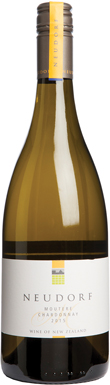

A great example of defined elegance; there are unfolding layers of creaminess, spice, nuts and a tantalising caramelised brioche note. This wine is evolving beautifully...
2015
NeudorfMoutere Hills

Jules Taylor, Chardonnay, Marlborough, New Zealand, 2016
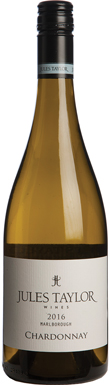
An exquisite, feminine style of Chardonnay, this is showing delicate lemony tones combining harmoniously with florals and stone fruits. The seamless oak gives a playful...
2016
Jules Taylor
Mount Riley, Seventeen Valley Chardonnay, Marlborough, New Zealand, 2016
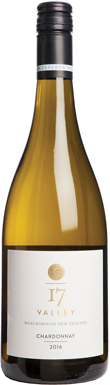
Intense and concentrated, this has vivacious nutty and flinty tones giving a savoury, almost wild element. Fresh green herbs and floral purity define the palate;...
2016
Mount Riley
Alpha Domus, Chardonnay, Bridge Pa, Hawke's Bay, New Zealand, 2015
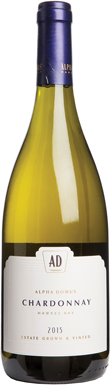
Texturally enticing and wonderfully ripe, this is a rich, buttery example. Honeycomb dances playfully across the palate along with toffee apples and butterscotch, while the...
2015
Alpha DomusBridge Pa
Stanley Estates, Reserve Single Vineyard Chardonnay, Awatere Valley, Marlborough, New Zealand, 2015
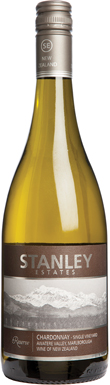
Reminiscent of lime marmalade on toasted brioche, with a peach and apple undertone. Round and creamy, with energy, concentration and balance.
2015
Stanley EstatesAwatere Valley
Te Kairanga, John Martin Chardonnay, Martinborough, Wairarapa, New Zealand, 2015
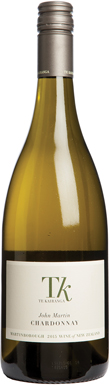
Bold and beautiful, this displays peaches and cream richness with supple layers of tropical fruit and the heady enticement of nuts and brioche. It has...
2015
Te KairangaMartinborough
Trinity Hill, Chardonnay, Gimblett Gravels, Hawke's Bay, New Zealand, 2016
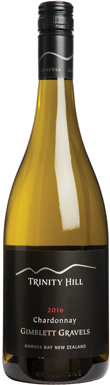
Just what New Zealand Chardonnay should be about; this has perfect white peaches, delicate florals and a wet stone quality. Walnuts and spice come through...
2016
Trinity HillGimblett Gravels
Escarpment, Kupe Chardonnay, Martinborough, Wairarapa, New Zealand, 2014
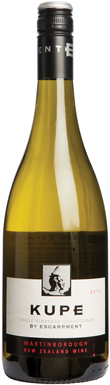
Fleshy peaches, lemon tart and crème brûlée, just the right amount of struck match for seasoning, with an oatmeal and mature cheese element that is...
2014
EscarpmentMartinborough
Kahurangi Estate, Mt Arthur Reserve Chardonnay, Nelson, New Zealand, 2016
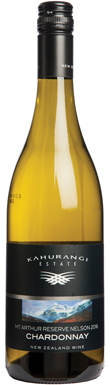
A clean and focussed example that has hints of soft pineapple and a tropical edge. It is lively and fresh thanks to those juicy white...
2016
Kahurangi Estate
Mt Beautiful, Chardonnay, Canterbury, New Zealand, 2016
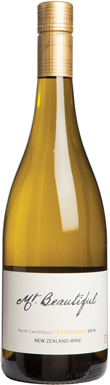
91
Lovely fruit concentration on the nose leads to a lingering palate full of stone fruit and moreish complexity. Good crispness and it will evolve with time, despite the touch of heat on the finish.
2016
Mt Beautiful
