
Reviving Napa Valley’s Newton Vineyard


This Napa Valley winery has had a rollercoaster journey since being founded in the 1970s. Elin McCoy reports on a visit to its Spring Mountain home and on recent work to improve the quality of the wines...
Glossy black dinner plates inscribed in glowing gold with Newton Vineyard’s iconic ‘Pino Solo’ logo graced the Napa winery’s official 40th anniversary event last spring, but the stars were in the glasses: three brand-new, stunning, single-vineyard Cabernets.
As we savoured Newton’s future, Jean-Guillaume Prats, the architect behind the winery’s new Cabernet direction and CEO of Moët-Hennessy’s Estates & Wines division, wore a pleased but slightly anxious smile.
Scroll down to see Elin’s top picks from the range
When he took on his LVMH role at the end of 2012, his biggest concerns were two projects: Ao Yun, a new winery in China, and Newton. ‘It needed a lot of help,’ he confided. ‘And it needed it in a year.’ Now that the 2014 vintage of these new Cabernets is on the market, I think Newton is on its way back.
One of California’s trailblazing estates in the 1980s and 1990s, Newton lost focus in the 21st century. As cult wineries and new projects in Napa grabbed attention, and prices of $200 and up became the new normal, the winery failed to keep pace.
Located in the middle of prime Cabernet territory, Newton had helped to fuel a Merlot craze and its most famous wine was a Chardonnay.
Winemakers came and went, as did various cuvées that were often stylistically clumsy, lacking flair and distinctive character. Despite its long (by California standards) history, Newton was no longer part of the Napa fine wine conversation.
It probably didn’t help that Newton was in the Spring Mountain District AVA, which has never enjoyed the renown of other districts such as Stags Leap, or the famous benchland vineyards of Oakville and Rutherford.
In fact, I’d long wondered how Newton’s reds and whites could sit with the LVMH upper-luxe model, heavy on perfectionist properties such as Château Cheval Blanc in Bordeaux and Clos des Lambrays in Burgundy.
So I headed to Napa last autumn to discover how Prats and Rob Mann, the young, much-buzzed-about Australian winemaker he recruited from LVMH’s Cape Mentelle in Margaret River, had turned it around.
Newton at a glance
Owner LVMH
Location Spring Mountain AVA, Napa Valley, California
Elevation 150m-490m
Vineyard size 69ha located in four appellations: Spring Mountain, Yountville, Mt Veeder and Carneros
Premium wines
Three single-vineyard Cabernets from Mt Veeder, Spring Mountain, and Yountville
The Puzzle a Bordeaux-style blend
Two single-vineyard Chardonnays from Carneros and Knights Valley
Second wines
Unfiltered Cabernet Sauvignon, Chardonnay and Pinot Noir
Dramatic setting
As I followed the twists and turns of Madrona Avenue in glitzy west St Helena and climbed to Newton’s steeply terraced vines, I reflected on how much the Prats-Mann duo had to build on. Let’s start with Newton’s truly magnificent setting in the spring Mountain District.
Its vineyards range from 150m to 490m in elevation. The view from the winery terrace takes in distant ridges, drifting wisps of clouds and rippling rows of vines hugging hillside contours like green ribbons.
Avid horticulturists are always wowed by the winery’s gorgeous formal parterre garden with its neat box hedges, more than 30 varieties of rose, tall Italian cypresses and juniper topiary trimmed like corkscrews.
Other landmarks – a red British telephone box, a red-lacquer Chinese gate, a cedar pagoda – reflect the founders’ English and Chinese heritage. Prescient British paper entrepreneur Peter Newton, who died in 2008, was the Napa pioneer who started Sterling Vineyards in 1964 and sold it to Coca-Cola in 1977. He and his Manchuria-born wife Dr Su Hua Newton bought the 219ha property that became Newton, and persuaded Sterling’s winemaker Ric Forman to join as a partner.
Their very grand vision was ahead of its time: it even included an intricate network of caves tunnelled into the mountain. The 45ha of Cabernet Sauvignon, Cabernet Franc, Merlot and Petit Verdot were planted in more than 100 separate blocks to mirror the property’s surprising variety of exposures and soil types. Sadly, Forman and the Newtons quarrelled, and the partnership unravelled.
Winemaker John Kongsgaard, who arrived in 1983, rewrote the rules for Californian Chardonnay with big, densely textured examples that owed a lot to Burgundy. One of the state’s first unfiltered whites, it quickly came to define the winery. (Several hotshot winemakers, such as Aaron Pott and Andy Erickson, got their start at Newton under him.)
Back then Newton was one of the star wineries of Spring Mountain, established as an AVA in 1993. But after Kongsgaard left in 1997, the style of the wines drifted, as winemakers stayed in the background, with Hua Newton out front, even after LVMH bought a majority share in 2001.
Bringing Newton back
When Newton died in 2008, LVMH took complete control, but revitalisation only started with Prats, who’d spent most of his working life running Bordeaux second growth Château Cos d’Estournel. He knew what was happening in Napa; before the financial crash in 2008, he was orchestrating the purchase of Chateau Montelena for Cos’s owner, but the deal fell through.
His diagnosis of Newton: ‘For 16 years, not enough attention had been paid to the core estate wines,’ he says. ‘The vineyards needed huge reinvestments, and the winery required a new vision and a dynamic new team.’
The first part of the transformation was about shifting wine style and repositioning the winery as a luxury estate. Prats pushed for a fresher, brighter unfiltered Chardonnay and refocused the estate on making top Cabernet Sauvignon. He spun off Newton’s lower-priced ‘red label’ wines to a separate new brand, Skyside, to be made elsewhere.
When he realised Domaine Chandon, also owned by LVMH, was selling grapes from its best Cabernet vineyards in Yountville (near Dominus) and Mt Veeder (near Mayacamas) to other wineries, he grabbed them for Newton.
Most importantly, he hired Rob Mann, a winemaker who shared his stylistic affinities. Mann had temporarily left Cape Mentelle in Western Australia to make the wine at Newton during the 2007 vintage and written a blunt report. ‘The wines were old-fashioned and stale in both packaging and style,’ Mann says. Prats agreed, giving him a brief: go and make great Cabernet at Newton.
Newton Vineyard – a timeline
- 1977 Peter and Dr Su Hua Newton buy land and found winery
- 1978 Winemaker Ric Forman joins as partner
- 1979 First vintage is made from purchased grapes
- 1983 Forman leaves; John Kongsgaard becomes winemaker
- 1990 Debut of Newton Unfiltered Chardonnay
- 1997 Kongsgaard leaves
- 2001 LVMH buys majority share
- 2003 The Pino Solo pine tree symbol debuts on Newton labels
- 2008 Peter Newton dies
- 2012 Jean-Guillaume Prats becomes president of Moët-Hennessy Estates & Wines
- 2014 Rob Mann joins Newton as winemaker
- 2016 Douglas fir that serves as the winery’s Pino Solo emblem topples
- 2017 Newton’s 40th anniversary and launch of three single-vineyard Cabernets
- 2017 Prats and Mann leave
The overhaul
Fortunately, LVMH had plenty of resources to underwrite a total revamp and Mann had definite ideas about what needed to be done. He’s a Cabernet classicist, not a fan of alcoholic, oaky fruit bombs – Philip Togni’s is his favourite Spring Mountain Cabernet.
‘Before the 2014 harvest, we tossed out 70% of the oak barrels in the winery,’ Mann says, as we hike up to look at Cabernet vines protected from the sun by shade cloths. He reduced the amount of new oak and the time wines spent ageing in barrels, and picked earlier for freshness and lower alcohol. But rethinking the vineyard was a bigger challenge.
By the end of 2017, Mann had replanted 70% of the Spring Mountain vineyard, pulling out the Merlot and vastly increasing the proportion of Cabernet Sauvignon. He changed to cane pruning so that the grapes would suffer less under the hot sun and also used his Australian experience to improve the supply of water. What’s more, all of the vines are now farmed organically.
Perhaps the biggest and best decision was to focus on terroir – part of a global trend – rather than on brand. ‘I see Napa moving away from the Bordeaux model towards the Burgundy model,’ explains Prats.
The three unfiltered wines now function as second wines. Newton’s iconic Bordeaux-style blend, The Puzzle – a hallmark of the winery for 20 years – originally incorporated the best grapes from the Mt Veeder, Spring Mountain and Yountville vineyards. But with the 2014 vintage, it’s all Spring Mountain.
‘2014 was a great vintage,’ says Mann. ‘Tasting the separate lots from each vineyard, they were so different I knew we had to start making three single-vineyard wines, and let the terroir shine through.’
They’re impressive, aiming at the very highest Napa level, but not quite there yet.
Plans for the future
The massive wildfires of 2017 took their toll; there will be no Mt Veeder Cabernet from the vintage. The end of the year saw the departure of Rob Mann, who returned to his family’s winery in Australia; and of Jean-Guillaume Prats, who left to become the CEO of Château Lafite-Rothschild.
But the direction for Newton, and its future quality, is set. A more elegant label design will debut with the 2015 vintage, while Alberto Bianchi, Mann’s assistant winemaker, has taken on his role. Two single-vineyard Chardonnays, one from Carneros and one from Knights Valley, will be available at the winery.
The woman taking Prats’ place, Margareth Henriquez, seems the right person for the next part of Newton’s transformation, changing its image with wine lovers, as she did so successfully at Champagne Krug. ‘I have visited Newton and have always loved this house,’ she says. ‘It has what you need to make great wines: a beautiful terroir, talented people and a place you will not forget.’
The next phase is about to begin.
Elin’s top picks from the Newton range:
Elin McCoy is an award-winning journalist and author who writes for Bloomberg News
Related content:
Newton, Mt Veeder Cabernet Sauvignon, Napa Valley, Mt Veeder, California, USA, 2014
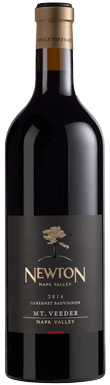

The most wild and tensile of Newton's 2014s, the Mt. Veeder Cabernet opens with notes of bay laurel, briary fruit, pencil shavings and spice. This...
2014
NewtonNapa Valley

Newton, Spring Mountain Cabernet Sauvignon, Napa Valley, Spring Mountain, California, USA, 2014
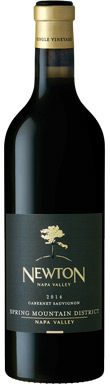
A youthful, primary bouquet of crushed red and black fruit, pencil shavings and mountain laurel leads into a full-bodied palate with a fine-grained chassis of...
2014
NewtonNapa Valley
Newton, Yountville Cabernet Sauvignon, Napa Valley, Yountville, California, USA, 2014
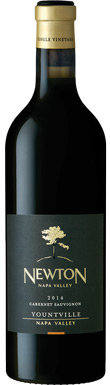
From a hillside vineyard above Dominus Estate, this is the most plush and open-knit of Newton's 2014s, featuring aromas of macerated red and black fruits...
2014
NewtonNapa Valley
Newton, Chardonnay, Sonoma County, Knights Valley, California, USA, 2014
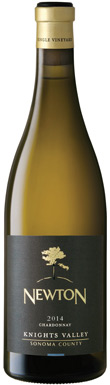
Of the winery’s two single-vineyard Chardonnays, this one comes from a north-facing volcanic slope in Sonoma’s Knights Valley and was my favourite thanks to its...
2014
NewtonSonoma County
Newton, The Puzzle, Napa Valley, Spring Mountain, California, USA, 2014
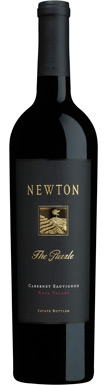
The grapes for this plummy, surprisingly soft and approachable Bordeaux-style blend are from the Spring Mountain estate. With 72% Cabernet Sauvignon, 23% Merlot, 4% Petit...
2014
NewtonNapa Valley
Newton, Unfiltered Chardonnay, Napa Valley, California, USA, 2014
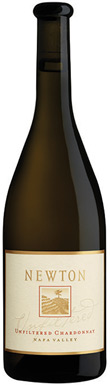
The Newtons pioneered unfiltered bottling in California in a quest for maximum fruit expression. The grapes for this Chardonnay are sourced from Carneros, Napa and...
2014
NewtonNapa Valley
