
Getting better with age: Old-vine Chenin Blanc in South Africa


Efforts to seek out and preserve old-vine Chenin Blanc are currently reaping rewards for South Africa’s winemakers. Tim Atkin MW finds out how one of the country’s oldest varieties has become its newest source of world-class wines...
The Cape winelands is one of the most beautiful vineyard regions in the world, all craggy peaks, sweeping vistas and cobalt blue skies.
By these dramatic, almost cinematic standards, the Mev (Mrs) Kirsten vineyard is something of a disappointment. Situated in the Jonkershoek Valley, close to the untidy urban sprawl of Stellenbosch, it has none of the grandeur of some of South Africa’s greatest crus.
And yet this 0.7ha parcel of Chenin Blanc is undeniably special, a distinction that’s reflected in its historical importance as well as the quality of its wine.
Scroll down to see Tim’s pick of the best South African old vine Chenin Blanc
‘It’s a small vineyard, but it’s the one that ignited my love of old vineyards,’ says Sadie Family winemaker Eben Sadie, whose Old Vine Series includes some of South Africa’s best whites and reds.‘I like the fact that I can’t predict what it’s going to do from one year to the next. It has a way of breathing in the city light. It’s like Stellenbosch is present in the wine.’
First made by Sadie in 2006, Mev Kirsten dates to 1905 and is the Cape’s most venerable Chenin block, even if vines have been added and replaced since. It is also, Sadie says, ‘the vineyard that created the wave’.
Three waves actually:
- for site-specific Chenin Blancs
- for old vines
- and (more of a ripple than a breaker) for more ambitious pricing of Cape wines
Sadie wasn’t the first in South Africa to take Chenin seriously. Ken Forrester’s The FMC – a self-confident attempt to ‘make the best wine in the world and sell it at the same price as a top Chardonnay’ – was released in 2000, two years after its eponymous owner had founded the Chenin Blanc Association of South Africa.
But Mev Kirsten ignited a new level of interest in one of the country’s oldest cultivars.
We don’t know for certain, but the variety known as Steen or Stein may have arrived in the Cape as early as the 17th century, although it wasn’t until 1963 that Professor CJ Orffer, of Stellenbosch University, identified it as Chenin Blanc.
Antiquity isn’t the same thing as nobility, however. For much of its history, Chenin was dismissed as a ‘workhorse grape’, good only for bulk wine production. Numerically at least, Chenin is the Cape’s leading grape, with 18.5% of its 95,775ha.
It overtook Semillon in the 1950s thanks to the KWV (Koöperatieve Wijnbouwers Vereniging), which controlled quotas and planting rights under the National Party and encouraged farmers to plant Chenin widely, often for brandy production.
That’s why it’s grown all over the Cape and why, almost by default, it accounts for a disproportionately large number of the 1,377 vineyards over 35 years old; the definition of a heritage vineyard, according to South African Wine Industry Information and Systems.
Heritage vineyards
It’s worth pausing here to say something about old vines in general and, more specifically, about the work of Rosa Kruger and her recently relaunched Old Vine Project (OVP).
By the standards of Spain, Italy or France, not to mention California, Australia and parts of South America, the Cape does not have a lot of ancient vineyards. Kruger estimates that there are only 2,644ha that ‘could make wine with a special character and purity’, although a further 4,000ha are between 30 and 35 years old.
There are two main reasons for this comparative paucity: viruses, especially leaf roll virus, shorten a vine’s lifespan and economics. Once a vineyard dips below a certain yield, farmers are tempted to pull it out in a country where grape prices are still low.
Old vines are a precious resource in South Africa, and one that the OVP is committed to preserving. Kruger has been cataloguing these special sites since 2002 and published her first list in 2014, adding to it as further parcels emerge.
‘As people have become aware of these heritage vineyards, they’ve stopped pulling them out,’ she says. The key is to encourage more cooperatives to join the OVP’s 35 members.
‘That’s where most of the old vines are,’ adds Kruger, ‘and many of the wines they produce disappear into blends. The encouraging thing is that the cooperatives are starting to put them aside and vinify them separately.’
How much of this is Chenin Blanc? André Morgenthal of the OVP believes that it’s about 53%, although no one knows for sure. The Cape’s most ancient blocks are planted with Cinsault, Muscat or, in the case of Sadie’s ’T Voetpad in the Swartland, a field blend of white varieties, including Palomino and Semillon, but Chenin is the largest source of old-vine wines overall.
It’s also significant that many of the best Chenin Blanc producers have joined the OVP, including Alheit Vineyards, Anthonij Rupert, David & Nadia, DeMorgenzon, Hogan, Huis van Chevallerie, Gabriëlskloof, Mullineux & Leeu Family Wines, Reyneke and The Sadie Family Wines.
Others, such as AA Badenhorst, Beaumont, Botanica Wines, Kaapzicht, Ken Forrester, Longridge, Mulderbosch, Patatsfontein, Raats, Rall, Spier, Spioenkop and Stellenrust are outside the fold, either because they don’t have vines that qualify for heritage status, or because they can’t face ‘another feast of paperwork’, according to Forrester.
The 35-year hurdle is arbitrary in some respects. Is Donovan Rall’s Ava Chenin less good because it’s made from 20-year-old vines? Not in my book, but you have to set the bar somewhere and 35 is still comparatively young.
Fine wine ethos
Chenin Blanc is a grape variety with many faces, capable of making wines in a variety of styles. In fact, one of its advantages as a workhorse grape is its versatility and drinkability. Chris Alheit of Alheit Vineyards says that Chenin is less forgiving than some people imagine – the picking window can be as narrow as two days in some sites – and that the best examples need to be handled like any fine wine. For that, in essence, is what top Chenin has become in the space of a decade.
Chenin now commands some of the highest prices (up to R20,000 a ton in the case of Alheit’s Radio Lazarus, which is more than twice the rate for Stellenbosch Cabernet Sauvignon) and is slowly changing the game. ‘People are all over old-vine Chenin Blanc like spider monkeys,’ he says.
Talking to some of the best Chenin growers, it’s clear that this is not before time.
South Africa’s wine industry is in a parlous state right now because of low yields (partly due to the drought of the last three years) and equally low grape prices. No wonder farmers are desperate or switching to other crops, such as citrus fruit or rooibos (redbush) tea. Even a famous grower such as Henk Laing, who sells to Botanica Wines, Fram and Savage from his farm on the West Coast, says, ‘I couldn’t survive from selling grapes alone’.
Christa von La Chevallerie, who is the most awarded grower in the Swartland, supplies grapes to Alheit, Rall, Chris and Andrea Mullineux, Peter-Allan Finlayson and Leon Coetzee of The Fledge & Co – as well as making a sparkling wine and (since 2017) a still Chenin Blanc called Nuwedam under her own Huis van Chevallerie brand.
She told me that one farmer in Villiersdorp in the Overberg makes more from windfall pears than grapes. Von La Chevallerie gets a much better price for her sought-after Chenin, of course, but even she says that what she’s paid barely covers her costs, so low are the yields on her farm.
People who buy from von La Chevallerie might disagree, but Kruger thinks Basie van Lill is the best Chenin grower in South Africa.
‘It’s like he knows each of his vines personally,’ she says. Small, wiry and devoted to his wife and business partner, Rita, Basie would be a millionaire if he lived in Napa or Burgundy, but here on the West Coast, he lives a simple life.
His 22ha on Citrusdal Mountain supply grapes for two of the country’s most celebrated whites: Sadie’s Skurfberg and Alheit’s Magnetic North Mountain Makstok. The celebrity hasn’t changed his approach: hard work, long hours, filigree attention to detail.
What makes this site so special? It’s partly diurnal variation, partly altitude (550m) and partly the marked ocean breezes. The soils here are sandstone over clay, the vines dry farmed, naturally fertilised and very old.
But taste the Sadie and Alheit wines side by side, produced from blocks that are a few hundred metres apart, and you can see that the hand of the winemaker plays a role too. Skurfberg uses grapes from two other sites, so it’s a less pure expression of the van Lill farm, but they are both remarkable old-vine whites.
Golden age
The quality of the best Chenin Blancs has never been better. I don’t think it’s an exaggeration to say that we are living in a golden age for this most distinctive South African import and that Chenin, along with Chardonnay, is one of the Cape’s two best white grapes.
The key areas, where many of the oldest vines are to be found, are Citrusdal Mountain, Stellenbosch and the Swartland, but I’ve had outstanding Chenins from Bot River, Breedekloof, Elgin, Montagu, Olifants River, Piekenierskloof and Robertson over the past 12 months.
Many of these are made from old vines – well, old for South Africa – but that’s not their only defining feature. Soil type (sandstone, granite, shale, ferricrete and clay among others), altitude, oak source and age, picking dates, proximity to the ocean, lees contact and residual sugar levels all have an influence too, as does the thumbprint of the winemaker.
And yet, all things considered, old-vine Chenin seems to have an extra dimension of flavour, focus and intensity. Mrs Anna Kirsten, who passed away in April 2015, will live on, both in the Stellenbosch vineyard that bears her name and in the timeless, world-class wine it produces.
Tim’s pick of the best South African old-vine Chenin Blancs
Tim Atkin MW is an award-winning wine writer and leading commentator on the Cape. He publishes an annual report on its wines at www.timatkin.com
You might also like:
Decanter travel guide: Stellenbosch, South Africa
Great value South African wines under £20
Luxury travel: top 10 wine hotels in South Africa
South Africa wine quiz – Test your knowledge
Alheit Vineyards, Magnetic North Mountain Makstok, Citrusdal Mountain, South Africa, 2016
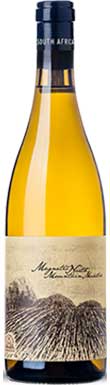

Another hit from Chris and Suzann Alheit. Two adjacent parcels of ungrafted Chenin vines: delicate pear and white blossom yet great persistence.
2016
Alheit Vineyards

The Sadie Family, Mev Kirsten Chenin Blanc, Stellenbosch, South Africa, 2015
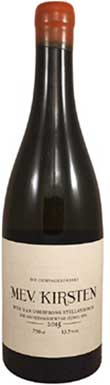
This suburban vineyard may not be as remote as some of Eben Sadie’s plots, but it still produces a very special wine. Made without skin...
2015
The Sadie Family
The Sadie Family, Old Vine Series Skurfberg Chenin Blanc, Olifants River, Olifants River, South Africa, 2016
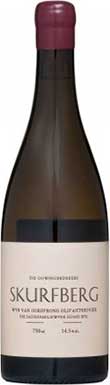
Made with fruit from three farms on the slopes of the Skurfberg, this is one of only two pure Chenins in Eben Sadie’s Old Vine...
2016
The Sadie FamilyOlifants River
Botanica, Mary Delany Collection Chenin Blanc, Citrusdal Mountain, South Africa, 2014
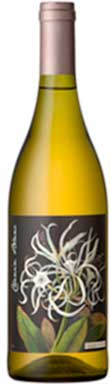
The addition of a second vineyard source beyond its Henk Laing base boosted quantities to all of 5,000 bottles in 2014, with no change in...
2014
Botanica
Kaapzicht, The 1947 Chenin Blanc, Stellenbosch, South Africa, 2016
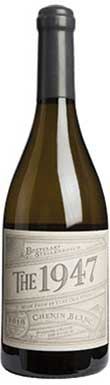
Right up there with the very best Cape Chenins of the 2016 vintage. Danie Steytler’s touch is very gentle here, marshalling a magical combination of...
2016
Kaapzicht
Reyneke, Natural Chenin Blanc, Stellenbosch, South Africa, 2016
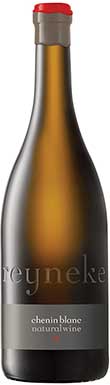
Unfined and unfiltered, this is a brilliant first release from this outstanding biodynamic domaine. Rich and deeply coloured, with dense, honeyed flavours, a leesy, savoury...
2016
Reyneke
DeMorgenzon, Reserve Chenin Blanc, Stellenbosch, South Africa, 2016
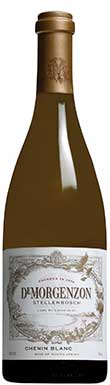
Produced from a wonderful array of slopes and aspects, this is an effortlessly complex wine: exotic yet refreshing, viscous yet bone dry, rich yet restrained,...
2016
DeMorgenzon
Alheit Vineyards, Radio Lazarus, Stellenbosch, South Africa, 2015
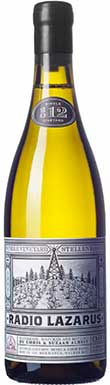
Radio Lazarus is sourced from two Stellenbosch vineyards – one at 400m, the other at 450m – and is a varietal Chenin of remarkable focus...
2015
Alheit Vineyards
Ken Forrester, The FMC, Stellenbosch, South Africa, 2015
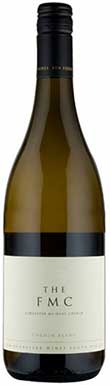
This just off-dry Chenin from the irrepressible Ken Forrester has really delivered the goods in this fantastic vintage, showing rich, spicy nutmeg and vanilla notes,...
2015
Ken Forrester
