
Panel Tasting: Brunello di Montalcino 2012


See which of the 123 wines came out on top after this blind tasting by our three-strong expert panel, with an introduction to the Brunello 2012 vintage by Richard Baudains and a report on the post-tasting discussion by John Stimpfig.
In the second half of the 19th century, Ferruccio Biondi Santi selected a biotype of Sangiovese and used it to make an innovative barrel-aged, monovarietal wine. To all intents and purposes he invented Brunello.
Others took it forward (notably the producers’ consorzio in the 1960s), but without the Biondi Santi family there would probably be no Brunello di Montalcino.
Scroll down to see the top wines from the panel tasting
Brunello di Montalcino is Sangiovese in its most intense, full-bodied manifestation, but in terms of specific textures and aromas there is variation on the basic theme.
Individual winemaking styles play a part. Estates that age in barrique or tonneaux (a minority, to be honest) make more immediate wines with a big initial fruit impact and smoother tannins. Long maceration and ageing in large Slavonian oak barrels create drier, initially more reticent wines.
More significant is the influence of soils and climate: to generalise, the further south you go, the fuller, softer and rounder the wines become. On the ridge to the east of Montalcino and in the area to the north, the wines have a more linear, savoury character and generally evolve more slowly.
Identifying specific crus is fertile ground for much discussion. From experience, most would agree that there are certain terroirs which give wines a very particular character, but pinning them down by name is difficult.Montosoli is one that is widely recognised, Sesta could be another, and the smaller sub-zone of Canalicchio another still.
Alcohol levels are also an issue of some debate. A string of scorching, dry summers combined with low yields and strict fruit selection have seen sugar contents soar. Many producers are starting to rethink their vineyard management to obtain more balanced alcohol, but once again it is terroir that makes the difference. Higher, cooler slopes have a great advantage in the ever more frequently torrid summers.
All in the timing
This was the case with 2012. The summer was long, hot and dry with temperatures that remained unusually high at night, increasing the risk of drought stress on south-facing slopes. Although September rain brought some relief, producers who picked early to keep acidity often made wines with under-ripe tannins. Fresher areas made wines that have the power and concentration of the vintage, but also good acidity and fresher fruit.
Brunello built its original reputation around the aura of old vintages and its legendary longevity, but the drinking window of modern wines starts much closer to the date of release than its reputation suggests. Six to eight years is a good rule of thumb for an average vintage, say 10 for a great vintage from a top producer.
The 2011s are drinking now, while the excellent 2010s would benefit from another couple of years.
Brunello: know your vintages
- 2016 (release 2021) Small vintage of 5-star quality. Powerful but balanced; good acidity.
- 2015 (release 2020) Hot summer saved by September rain. Five-star vintage, perhaps a little less balanced than 2016.
- 2014 (release 2019) Cool, wet, problematic. Wait and see, but it would be unrealistic to have high expectations.
- 2013 (release 2018) Good overall, although possibly mixed due to harvest time rain.
- 2012 (current) Hot, dry summer, record high temperatures mitigated to an extent by September rain. Powerful, tannic wines. Officially 5-star vintage, but inconsistent.
- 2011 Very hot in the run-up to harvest; led to concentrated wines with low acidity and a raisiny character in some cases. Probably not for long ageing.
- 2010 Great vintage for long ageing. Top quality wines combining power and elegance.
The scores
123 wines tasted
Exceptional 0
Outstanding 7
Highly Recommended 73
Recommended 42
Commended 0
Fair 1
Poor 0
Faulty 0
The results
A very good if hot vintage showed its qualities with plenty of high scores, good consistency and some new names to be discovered, as John Stimpfig reports below.
View all 123 Brunello di Montalcino 2012 tasting notes from the Panel Tasting
Going into this tasting, Michael Garner had high expectations. ‘2012 is quite a hyped vintage and, thus far, there haven’t been many words of caution around it. But even so, to come away with seven Outstanding wines and so many 90-plus rated wines clearly endorses that estimation. Without question, this is a really good vintage for Brunello.’
His fellow tasters were equally enthusisatic. Overall, said Susan Hulme MW, this was a positive showing: ‘Critically, there were lots of very good wines and very few low points.’ Bruno Besa noted: ‘Twenty years ago, you would never have had such a consistent result as this. Today’s Montalcino producers deserve credit for making such progress in a relatively short time.’
The 2012 growing conditions were certainly benign, if not entirely perfect. According to Garner, the season was hot, dry and occasionally torrid. As a result there were some big, high-alcohol wines, nudging 15% and more, which was clearly a concern for all three tasters.Yet despite that caveat, there was universal agreement that this is a quality vintage that consumers can buy with confidence – pretty much across the board.
But just how good is 2012 compared to the even more hyped 2010 vintage? For Garner, the main difference was that there weren’t the same number of
really top-flight wines: ‘Unfortunately, these 2012s didn’t make the earth move for me in quite the same way as the best 2010s. So I’d put it a notch or two below.’
While Hulme agreed that 2010 showed more exceptional quality and high points, she also felt 2012 was a more evenly balanced and accessible vintage: ‘That’s important, because not everyone is looking to store wine for 20 years.’
Two distinct styles or interpretations of the vintage also emerged. On the one hand, the fresher, nervier, ‘pure’ Sangiovese style; on the other, a more concentrated, richer, riper ‘show-stopping’ style. Consumers need to decide which stylistic approach they prefer, noted Hulme.
When should drinkers begin to broach the wines? ‘The best wines have medium levels of acidity, which is why 2012 probably won’t have the greatest future ahead of it,’ said Garner. Besa recommended three to five years for the bigger-style wines: ‘The more elegant, long-lived versions will last another 10-12 years at most.’ Hulme took a different tack on when to pull corks: ‘I would drink quite a few of them now, because they’re currently so approachable with food. There is sufficient freshness, and the best of these wines have refined tannins. In many instances, I’d open them sooner rather than later.’
Winemaking and fruit expression also drew positive comments from our panel. ‘You can easily ruin fruit in the winery, but very few people have done that,’ noted Garner. ‘Overall, the standard here is very high.’ As is often the case in these discussions, the topic of oak was touched upon, particularly in relation to fruit expression. In some cases, the wines were dominated by sweet oak spice, which Garner sometimes attributed to smaller French oak. ‘Personally I always feel that the charm of Brunello is best expressed through larger, older Slavonian casks rather than barriques.’
Another positive from the tasting is that it threw up some genuine surprises, underlining the excitement, diversity and dynamism in Montalcino. Not only did the relatively unknown and affordable Poggio Landi come top in this tasting, there are several other new names for wine lovers to discover and become acquainted with.
Brunello: the facts
Production zone: Entire area of the commune of Montalcino in the province of Siena
Area under vine: 2,100ha
Climate: Mediterranean
Soils: Sandy clay, marl, galestro, limestone in various combinations
Grape: 100% Sangiovese
Ageing: Four years, of which a minimum two years in oak
Top 20 Brunello di Montalcino 2012 from the Panel Tasting:
Poggio Landi, Brunello di Montalcino, Tuscany, Italy, 2012
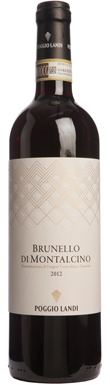

Poggio Landi is one jewel in Alejandro Bulgheroni’s crowned portfolio of family vineyards. Since 2013, when the 33ha property was acquired, an impressive transformation programme...
2012
Poggio LandiBrunello di Montalcino

Col d'Orcia, Brunello di Montalcino, Tuscany, Italy, 2012
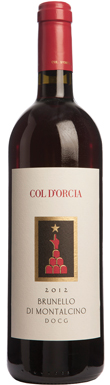
Col d’Orcia, meaning the hill overlooking the Orcia River, is located at the very edges of the Brunello di Montalcino geographical limits. It is the...
2012
Col d'OrciaBrunello di Montalcino
Poggio di Sotto, Brunello di Montalcino, Tuscany, Italy, 2012
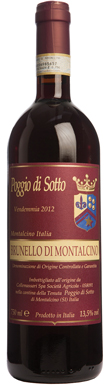
The growing season was dry until some welcome rainfall in September, delivering a small crop of well balanced wines. The sour-cherry nose is firm but...
2012
Poggio di SottoBrunello di Montalcino
Campogiovanni, Brunello di Montalcino, Tuscany, Italy, 2012
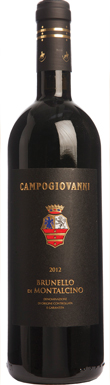
Set up by Agricola San Felice in 1980, located on the southwestern edges of the appellation, a 65 hectare estate, where 20 hectares are used...
2012
CampogiovanniBrunello di Montalcino
La Cerbaiola di Salvioni, Brunello di Montalcino, Tuscany, Italy, 2012
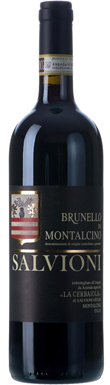
Quite closed on the nose, but intense and concentrated on the palate with confident progression, a subtle but tangy wild berry fruit vein, powdery tannins...
2012
La Cerbaiola di SalvioniBrunello di Montalcino
Martoccia di Brunelli Luca, Brunello di Montalcino, Tuscany, Italy, 2012
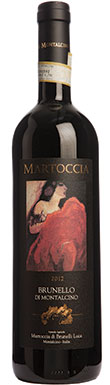
This small winery of 15 hectares dedicates only 5 hectares to the production of Brunello di Montalcino. Brunelli estate is located in the southwestern section...
2012
Martoccia di Brunelli LucaBrunello di Montalcino
Villa Le Prata, Brunello di Montalcino, Tuscany, Italy, 2012
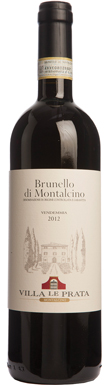
This winery was purchased in 1980 by Massimo Losappio, chief surgeon of the Montalcino hospital, who with his wife Marialuce, were driven by the passion...
2012
Villa Le PrataBrunello di Montalcino
Padelletti, Brunello di Montalcino, Tuscany, Italy, 2012
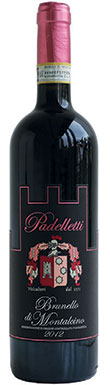
Medium-bodied and refined, with aromas and flavours of charred spice and liquorice joining fleshy black fruit, and persisting to a long, mineral finish. This has...
2012
PadellettiBrunello di Montalcino
Antinori, Pian delle Vigne, Brunello di Montalcino, Tuscany, Italy, 2012
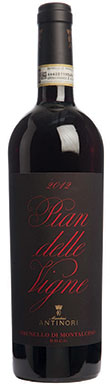
Warm, spicy, brambled fruit aromas lead to a full, firmly-structured yet juicy palate with powerful fruit flowing onto a long, nervy finish. Will improve further.
2012
AntinoriBrunello di Montalcino
Capanna di Cencioni, Capanna, Brunello di Montalcino, Tuscany, Italy, 2012
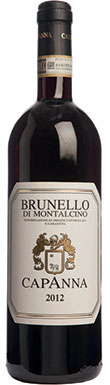
<p>A rounded yet firm and tightly-controlled style, with a black-fruited, mineral and herbal-imbued nose ceding to a full-bodied palate with intense, layered tannins and juicy...
2012
Capanna di CencioniBrunello di Montalcino
Collemattoni, Brunello di Montalcino, Tuscany, Italy, 2012
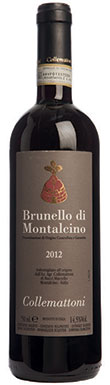
Effusively perfumed with heady notes of oak-spice and lavender accompanying ripe cherry fruit; a powerful style, with evident tannins, yet refined and well-managed, with plenty...
2012
CollemattoniBrunello di Montalcino
Fattoi, Brunello di Montalcino, Tuscany, Italy, 2012
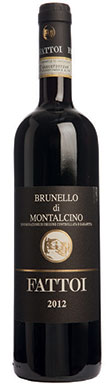
The Fattoi estate is located in Tavernelle, in Montalcino’s southwest. It’s a warm zone with lots of sun but the clay-based soil helped mitigate severe...
2012
FattoiBrunello di Montalcino
Il Paradiso di Frassina, Moz Art Wine, Brunello di Montalcino, Tuscany, Italy, 2012
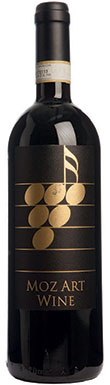
A more edgy, fragile yet appealing style, with an open nose of leather, tobacco and cedar-wood giving way to a tightly-knit, red-fruited palate lengthened by...
2012
Il Paradiso di FrassinaBrunello di Montalcino
La Gerla di Alessandro Rossi, Aisna, Brunello di Montalcino, Tuscany, Italy, 2012
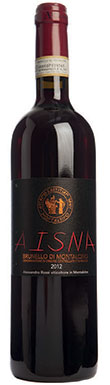
A classic old-school Brunello, with oaky and spirity red fruit aromas leading to a firm, dense palate with a slightly drying but enjoyable tannin profile,...
2012
La Gerla di Alessandro RossiBrunello di Montalcino
Le Chiuse, Brunello di Montalcino, Tuscany, Italy, 2012
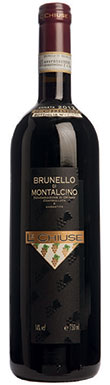
Cedar and sandalwood with a touch of eucalyptus on the nose. Densely packed ripe fruit on the palate, with a slightly figgy character and some...
2012
Le ChiuseBrunello di Montalcino
Podere Giodo, Brunello di Montalcino, Tuscany, Italy, 2012
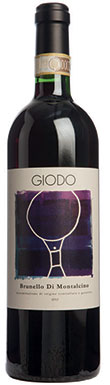
A firmly-structured and robust style, with seasoned oak embellishing a brambled fruit freshness on the nose, while finely-textured tannins deliver a satisfyingly dry, lingering finish....
2012
Podere GiodoBrunello di Montalcino
SassodiSole, Brunello di Montalcino, Tuscany, Italy, 2012
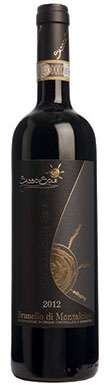
Open, complex, mineral-infused red and black fruit aromas introduce a medium to full-bodied palate with forward, fleshy cherry fruit and a long, mineral finish. Seductive,...
2012
SassodiSoleBrunello di Montalcino
Uggiano, Brunello di Montalcino, Tuscany, Italy, 2012
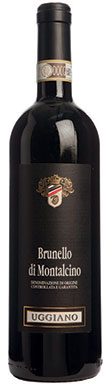
Delicate yet stylish, with aromas of plum, liquorice and dark chocolate leading to a rounded and fleshy palate brimming with spicy, brambled fruit.
2012
UggianoBrunello di Montalcino
Castiglion del Bosco, Brunello di Montalcino, Tuscany, Italy, 2012
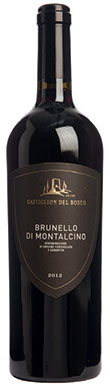
<p>Tightly-knit and still youthful, with enticing violet-suffused cherry aromas unfolding onto a tense yet free-flowing palate bristling with pronounced acidity and chalky, dry-edged tannins. Well-done.</p>
2012
Castiglion del BoscoBrunello di Montalcino
Centolani, Tenuta Friggiali, Brunello di Montalcino, Tuscany, Italy, 2012
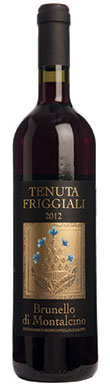
A pastiche of aromas, with spicy cherry fruit adorned by notes of salami, clove and black pepper, reinforced on the juicy and fleshy palate. Finishes...
2012
CentolaniBrunello di Montalcino
