
Patagonia: The pioneers
Patricio Tapia meets the men behind Noemía and Chacra, and discovers how their success has inspired other producers in the region and ensured the preservation of its ancient vines…


From the air, the Río Negro Valley looks like a narrow, misshapen strip of intense green, a fierce contrast to the thousands of square kilometres of desert that surround it. An oasis in the middle of the arid Argentinian Patagonia, 1,200km south of Buenos Aires.
Scroll down for Patricio Tapia’s top 10 wines from Patagonia, old and new
Once you reach General Roca, the most important city in the area, the contrast between desert and fertile valley becomes even more evident. The green strip hides large pear and apple farms, extensive vineyards and long rows of tall poplars, planted there to partially stop the constant wind which blows throughout the year, especially in spring.On both sides, flanking the valley, rises the barda, a wall of sand and stones that marks the beginning of the desert. Río Negro, that narrow, green strip, is nothing more than the ancient bed of what once was a mighty river on its way to the Pacific Ocean. The water that still flows underground is what allows the area to be historically one of the most important orchards in Argentina.It was here, in 1998, that the 26-year old winemaker Hans Vinding-Diers arrived. Raised in Bordeaux (his family owned Château Rahoul and Château Landiras in Graves), Vinding-Diers had been hired by an English company that had a joint venture with Humberto Canale, one of the region’s most traditional wineries. ‘When I was told I had to go to Argentina, I assumed it would be Mendoza. In 1998 nobody had any idea that people produced wine in Patagonia.’But, as in Mendoza, viticulture in Río Negro is an intrinsic part of the agricultural tradition. And that is reflected in the great legacy of old vineyards scattered among the orchards. That was one of the things that struck the young Vinding-Diers the most: ‘The place seemed incredible – especially because of the number of old, mass-selected, pre-phylloxera vineyards. It was a treasure!’
In addition to the old vines, the gravel soils of the Río Negro river bed reminded him of Bordeaux. And then there was the weather, with a permanent wind that ensures the vineyard remains healthy. ‘That still seems a luxury to me,’ he says.

With such ‘treasures’ and ‘luxuries’ to hand, it didn’t take long for Vinding-Diers to start planning a personal project. Two years later, he found a plot planted in 1932 in the Mainqué area, in the heart of the valley. It was just 1.5ha of a larger vineyard that had been totally abandoned. ‘But you know what? I tried those grapes and they stirred something deep in me. It’s hard to explain, but everything came together in my mind and I knew there was something special there.’
The birth of Noemía
The initial production of these Malbec grapes justified Vinding-Diers’ inkling. Just 1,300 bottles were made from them, but the wine excited the young oenologist so much that he invited his friend, Countess Noemi Marone Cinzano (former owner of Tuscany’s Tenuta di Argiano in Montalcino) to have a look. Like Vinding-Diers, she was also seduced by the landscape and the wine, so decided to invest in the project. Bodega Noemía was born in 2001.
This first vintage of Noemía, and those that followed it, attracted the attention of critics not only because the wines were very good, but also because they came from a virtually unknown wine region. The other two Malbecs that complete the porfolio – J Alberto, from a vineyard planted in 1955s, and A Lisa, the entry-level red made with bought-in fruit and younger vines owned by the winery – gave even more solidity to this project. ‘When I’m asked what the differences are between the Malbec of Río Negro and that of, for example, the Uco Valley in Mendoza, I always say that Uco fruit seems more austere, more black, with a menthol note in the middle. In Río Negro, it’s more fruity, floral and delicate in character, less tannic.’
There has been a long tradition of wine production in Río Negro, and yet the wines never managed to cross the Patagonian border, let alone that of Argentina due to the success of Mendoza. ‘Those were the times of volume not quality. A lot of wine was consumed, but no one really cared about improving them,’ says Oscar Ferrari, an engineer who helped Vinding-Diers find the vineyards for Noemía, and today is the winery manager.
That would begin to change with the first vintages of Bodega Noemía. Marcelo Miras, who until 2002 was Humberto Canale’s winemaker, said it was hard to quantify the influence Vinding-Diers had among other winemakers in the region. ‘What Hans did was to recognise the value of Río Negro’s old vineyards and then apply his own standards and experience as a winemaker. He had always a clear objective: to make great wines here. Not many others were thinking like that.’
The Chacra experiment
Vinding-Diers’ influence didn’t stop with Malbec at Noemía, but extended to Pinot Noir too, this time enthusing a young Italian from Tuscany. In 2001, Piero Incisa della Rocchetta, grandson of Mario Incisa, creator of Sassicaia, was at a dinner in New York with Countess Marone Cinzano and Vinding-Diers. There he blind tasted a Pinot Noir and, being a lover of Burgundy, was immediately fascinated. ‘The wine seemed to show the varietal characters of the grape, but had something more that at that time I interpreted as sense of place,’ he recalls. ‘The wine wasn’t particularly good, but it did have a lot of character.’
His enthusiasm was such that, some months later, he landed in Patagonia. But the landscape was not what he expected. ‘It wasn’t a disappointment as such, rather that I could not connect the desert and flat landscape with what I had tasted in that wine. In Burgundy or Barolo, you can understand the influence of climate, topography and soil in the wine you drink. But here I could not make that link.’
But since he was there, he thought he may as well look around. And then he found a property in Mainqué with a vineyard planted in 1932. ‘It was there that I began to marvel at the vines: knarled, twisted plants, like you’d see in a Tim Burton movie. I talked to the owner and he agreed to sell me some grapes to experiment with,’ he says.
With Vinding-Diers as a consultant, he took up a space in the Noemía winery and in 2003 and 2004 the pair made their first wines under the Bodega Chacra label. ‘The result was somewhat rustic, but we felt that there were the foundations that just needed to be deepened.’ With the help of partners, Incisa della Rochetta managed to buy the property and slowly began to oxygenate the soil, work the land, and restore balance in the vines. ‘As a result, this semi-abandoned vineyard today is an explosion of flora and fauna – armadillos, hawks, foxes, herbs of all species. What we aim for with our wines is to capture the energy that we have achieved in the vineyard,’

Ancient vine heritage
Suddenly, in the eyes of Incisa della Rochetta, the landscape of Río Negro began to change; he was starting to sense that connection he was seeking in the wine. His Pinot soon drew critical attention and people began to talk about the variety’s potential in Patagonia. Everything started to fall into place in the 2010 vintage. ‘It was a very tricky harvest,’ he said. ‘Due to the hail, we had to pick two weeks earlier than usual. The wine had 11% potential alcohol, but there was nothing green about it. Everything was fruit and freshness.’
The 2010 vintage taught Incisa della Rochetta that the time of ripeness in grapes coming from almost 100-year-old, ungrafted, pre-phylloxera vines was different. ‘I realised that it is possible to have complexity and sense of place with grapes picked earlier. Today we make a refreshing yet layered wine in a desert, thanks to one of the world’s most intense luminosities. It was then for me that everything made sense,’ he says.
Bodega Chacra makes three Pinot Noirs. The first is Treinta y Dos and comes from this original vineyard. The soils are rich in clay which, according to Incisa della Rochetta, gives a large, voluptuous wine. Cincuenta y Cinco comes from a vineyard planted in 1955 on soils rich in sand, pebbles and chalk that give the wine a more focused and vertical structure. Barda, meanwhile, comes mainly from a vineyard of 22 years and is the least complex, but the most refreshing of the trio.
Except for Humberto Canale, most Río Negro producers used their Pinot Noir grapes (including those from the century-old vines – something almost non-existent elsewhere on the planet) for sparkling wines. Chacra proved not only that it was possible to make still reds with them, but also some of the best Pinot Noirs in the New World.
The Patagonian wine scene today is still young, but it has changed. The success of Noemía and Chacra has prompted other producers to rescue and preserve the invaluable heritage of old vines in their region. They still have a long way to go to reach the heights attained by these two pioneers, but the potential exists. As with so many things, it’s just a question of time.
Neuquén newcomers
While there are still a few old vineyards in Neuquén, this region is defined by its youth. Towards the end of the 1990s, and with the support of the provincial government, a huge planting project began. According to Wines of Argentina, over the past 15 years more than 1,400 hectares of vineyards were created. ‘It was a bid by the government for a different activity to oil and gas, which is the economic driving force of the region,’ says winemaker Marcelo Miras, who was the project’s lead adviser.
Before too long, on the flat lands of San Patricio del Chañar, about 50km northwest of General Roca, wineries such as Schroeder, Secreto Patagónico and Patritti sprung up, as well as two of the best known names of Patagonia in the international market: Bodegas del Fin del Mundo and NQN – the latter now renamed Malma. Miras was the winemaker for these two wineries until 2015. ‘The main challenge, and the reason I was interested was starting something from scratch; designing the vineyard and also the wineries,’ he said. According to Miras, there are no fundamental differences between Río Negro and Neuquén. ‘In both cases it is a continental, semi-desert climate,’ he explains. ‘But a key difference is the inheritance of old vineyards that exists in Río Negro and that, for obvious reasons, does not in Neuquén.’

The other is the landscape. Río Negro, a valley created thanks to the Río Negro river, looks greener and more fertile. Viticulture there co-exists with orchards and the old, tall poplars which calm the heat in summer. Neuquén, by contrast, is planted over the barda (the wall of sand and stones that marks the beginning of the desert), whose influence is much more palpable. ‘All that changes the environment,’ says Miras.
See Patricio Tapia’s top 10 wines from Patagonia, old and new
Patricio Tapia is the DWWA Regional Chair for Argentina
You may also like
Top South American Cabernet Franc wines: Panel tasting resultsSouth America’s top 10 winemakersPatagonian lakes wine tourBeyond Malbec: Three wine styles only Argentina can offer the world
Bodegas Noemía, J Alberto, Río Negro, Patagonia, Argentina, 2015
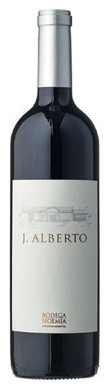

Sourced from vineyards planted in 1955 in Mainqué in the heart of Río Negro Valley, this is a Malbec that unfolds subtly in the mouth,...
2015
Bodegas NoemíaRío Negro

Bodegas Noemía, Noemía, Río Negro, Patagonia, Argentina, 2014
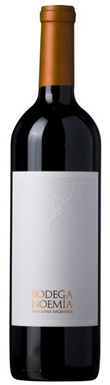
This Malbec comes from a 1.5-hectare vineyard planted in 1932. The first thing that captures your attention is its lifted, fruity and floral aromas, but...
2014
Bodegas NoemíaRío Negro
Bodegas Noemía, A Lisa, Río Negro, Patagonia, Argentina, 2015
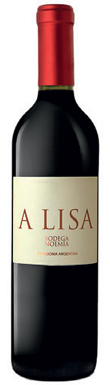
Noemía’s entry-level Malbec is a cascade of refreshing red fruits, spicy notes and subtle touches of violets, while the palate is driven by crunchy, juicy...
2015
Bodegas NoemíaRío Negro
Aniello, Viña 1932 Trousseau, Río Negro, Patagonia, Argentina, 2015
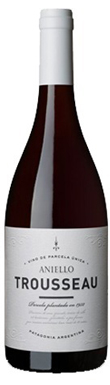
Trousseau is generally associated with France’s Jura region, but Patagonia has some old vines too. Here, the tannins are firm and the fruit refreshing, supported...
2015
AnielloRío Negro
Bodega Chacra, Cincuenta y Cinco, Río Negro, Patagonia, Argentina, 2015
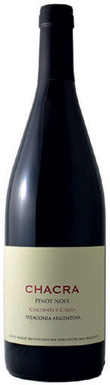
The second in the hierarchy of Chacra Pinot Noirs, this comes from limestone-rich soils that seem to give it a vertical structure, highlighting the acidity...
2015
Bodega ChacraRío Negro
Bodegas del Fin del Mundo, Special Blend, Neuquén, Patagonia, Argentina, 2012
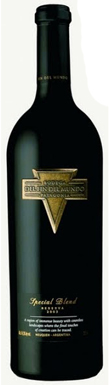
This blend of Malbec, Cabernet Sauvignon and Merlot is impressive in its size, filling the palate with its ripe and opulent flavours of black fruits...
2012
Bodegas del Fin del MundoNeuquén
Bodega Chacra, Barda, Río Negro, Patagonia, Argentina, 2014
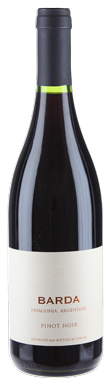
The definition of a Pinot Noir to quench your thirst, this is full of vibrant red fruit flavours, with acidity playing a fundamental role, refreshing...
2014
Bodega ChacraRío Negro
Bodega Chacra, Treinta y Dos, Río Negro, Patagonia, Argentina, 2014
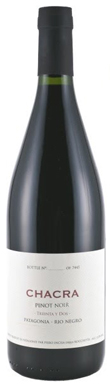
Compared to Cincuenta y Cinco, the Treinta y Dos Pinot Noir feels broader and less angular in style, with tasty and unctuous berry fruit and...
2014
Bodega ChacraRío Negro
Bodegas del Fin del Mundo, La Poderosa, Neuquén, Patagonia, Argentina, 2016
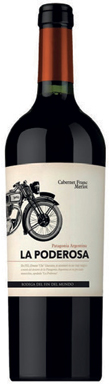
Terrific value, this is a simple Malbec focused on its fruity flavours, the freshness of its acidity and soft texture. This should be a regular...
2016
Bodegas del Fin del MundoNeuquén
Malma, Finca La Papay Malbec, Neuquén, Patagonia, Argentina, 2016
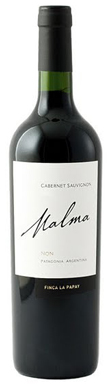
If you are looking for a sweet and friendly Malbec with a creamy texture and delicious, simple cherry flavours, then this is it. Ready now...
2016
MalmaNeuquén
