
Perrier Jouët: Producer profile
Simon Field MW meets Perrier Jouët's departing chef de caves Hervé Deschamps to explore the famous Epernay Champagne house...


Hervé Deschamps smiles a lot. He has, to be fair, rather a lot to smile about, having worked for the last 36 years at Perrier Jouët as its chef de caves. The smile slips a little only at the prospect of retirement – quite understandably, given the reputation of the range and the unrivalled beauty of the Maison Belle Epoque, its address, appropriately enough, right in the middle of Epernay’s imperious Avenue de Champagne.
Beyond the pang of anxiety, reassurance comes from the fact that the handover period is a lengthy two years and also from the unquestioned experience and ability of his successor, Séverine Frerson, whose impressive CV includes nearly two decades at Piper Heidsieck, working with – among others – Régis Camus. When one tastes with Hervé and Séverine, there is a clear unanimity of approach, the odd moment of playful disagreement underlining seriousness of intent and creative tension. Séverine is to be the first female chef de caves at PJ (as it is affectionately known) in its 209 years and, incredibly, only the eighth person to hold the esteemed position.
The prestige cuvée Belle Epoque has had 27 outings since its creation in 1964, the latest releases being 2012 for the Brut and Rosé and 2006 for the Blanc de Blancs, which Hervé introduced early in his tenure. To this he has now added a non-vintage Blanc de Blancs, completing a neat range which is compact and symmetrical: three Brut non-vintages and three Belle Epoques, and that is pretty much it. No Ultras or Extras or late this or late that; the message is pure, honest and simple to reflect, up to a point, the personality of the wines themselves.
Art Nouveau
To this natural simplicity may be added a floral flourish, and here the artistic backdrop, quite literally, completes the picture. The Maison Belle Epoque holds one of France’s most impressive collections of Art Nouveau from the eponymous period, which was sandwiched between the end of the Franco-Prussian War and the Great War, from 1871 to 1914, that is to say; a period of optimism and creativity, its artistic signature marked by a respect for the natural (in the Pre-Raphaelite mould) but also a holistic approach, covering all the applied arts. Beyond the wonderful paintings and sculptures, therefore, attention must be paid to door frames, mirrors, light fittings and bedside lamps. Oh, and also the famous design of anemones swathed in gold created to adorn glass by Emile Gallé, which provided inspiration for one of the most famous bottles in the world.
And, of course, one of the most famous wines in the world. With the characteristic reticence of a house under corporate ownership (Pernod Ricard in this case, but think Dom Pérignon), there is reluctance to reveal the Perrier Jouët production figures. To hazard an educated guess, based on the ownership of 65 hectares and contracts with a further 190 hectares, PJ probably makes somewhere in the region of 3.5 million bottles in total, of which no more than 500,000 are likely to be dedicated to the cuvée Belle Epoque. When I offer this estimate, Hervé smiles, but remains silent. Not the same scale as Dom Pérignon, for sure.
Chardonnay dominance?
Not the same scale, but what of the style? The idée reçue is that PJ is a soft, floral and elegant style, dominated by Chardonnay. This proves true in all but the last statement; Hervé reminds us that in 1811 Chardonnay was marginal in the region, but reveals that Perrier Jouët thereafter sought to make a point of difference by focusing on the Côte des Blancs, and especially the grand cru villages of Cramant and Avize. While these holdings are still a significant component in the 65ha owned, Chardonnay is dominant only in Belle Epoque itself (55% of the blend) and makes up only 20-25% of the Grands Bruts, which account for the lion’s share of the overall production. In the Brut, 80% is shared by both of the Pinots; in the Brut Rosé, Pinot Noir makes up 50% of the blend. Yet, for all that, there is a distinct house style discernible across the range; the sine qua non of the elegant aperitif with the Brut and, in Belle Epoque, we are treated to a paradox of precocious perfection, tinged with an almost unparalleled capacity to age.
Behind the apparently effortless aesthetic, attention to detail throughout the process is fundamental. The owned vineyards are all accredited by both HVE (Haute Valeur Environnementale) and, now, by the product-specific VDC (Viticulture Durable de Champagne). Séverine is working hard to encourage the contract growers to follow the same route, and thus far they are making great strides. Despite the trials of 2019 (hail, frost and heat spikes amongst them), both she and Hervé are very excited about the vintage – a Belle Epoque declaration looks virtually certain, less so, incidentally, for the voluminous but patchy 2018. A vital time, in any event, for a seamless handover to protect one of the great names in Champagne.
Simon Field MW’s Perrier Jouët selection:
See also:
Champagne and art: Inside the Maison Belle Epoque
What to expect from the Champagne 2018 vintage
Champagne Salon vertical: A retrospective
Perrier-Jouët, Belle Epoque, Champagne, France, 1982
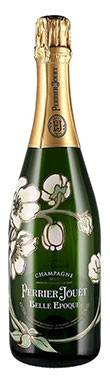

Favourite of the trio of magnums on the day (96 and 85 the others) a legendary wine from a legendary vintage; if Pinot Noir...
1982
Perrier-Jouët

Perrier-Jouët, Belle Epoque, Champagne, France, 1985
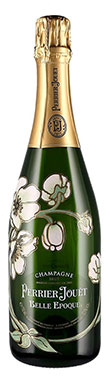
As with the magnums of 1996 and 1982, this has not been disgorged late in life, therefore has benefited from decades of bottle age, from...
1985
Perrier-Jouët
Perrier-Jouët, Belle Epoque Rose, Champagne, France, 2012
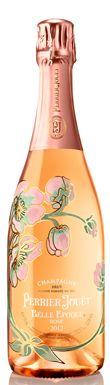
With 11% of red wine added by assemblage, mainly from the famous southern site of Les Riceys, the Rosé is a beguiling paradox, apparently...
2012
Perrier-Jouët
Perrier-Jouët, Blanc de Blancs, Champagne, France, 2004
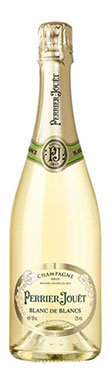
2004 was a large but somewhat underrated vintage; quality and quantity danced a rare pas de deux, most especially with the Chardonnay from the Côtes...
2004
Perrier-Jouët
Perrier-Jouët, Blanc de Blancs, Champagne, France, 2006
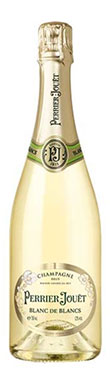
A little behind its siblings, in terms of release date at least, the Blanc de Blancs shows us how a little more bottle age shapes...
2006
Perrier-Jouët
Perrier-Jouët, Belle Epoque, Champagne, France, 1999
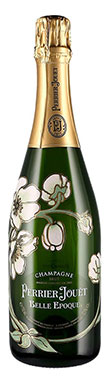
A sunny year and ripe fruit, the 40% of Pinot Noir shared equally by Mailly, orchard fruit and redcurrants still strident, and Ambonnay, its secondary...
1999
Perrier-Jouët
Perrier-Jouët, Belle Epoque, Champagne, France, 1996
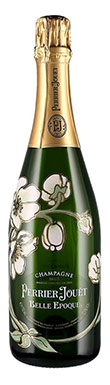
Hervé describes the enigmatic 1996 as ‘two wines in one glass’. Its nose - truffles and autumnal leaves - betrays its age; its palate is...
1996
Perrier-Jouët
Perrier-Jouët, Blanc de Blancs, Champagne, France
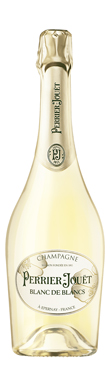
Hervé is, with reason, very proud of the two monovarietal Chardonnays that he has introduced to Perrier Jouët, one at each end of his career....
Perrier-Jouët
Perrier-Jouët, Blason Rosé, Champagne, France
87
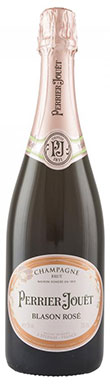
The Rosé maintains the traditional Blason nomenclature and shares with the majority of the PJ estate a dosage of 8 g/L and a full malolactic fermentation. Beyond that, however, it stands out as the most assertive and even outspoken member of the family, interpreted by Hervé as ‘gastronomic’. The red fruit from the Pinot Noir, 10% added by assemblage, is far from bashful with griottes, cassis and loganberry to the fore, the floral house style almost compromised by powerful generosity. High cheekbones and an arrogant swagger here.
Perrier-Jouët
