
Pessac-Léognan: Then and now – the story of an appellation


Pessac-Léognan has become a dynamic force among the Bordeaux appellations, despite only being around for 30 years. Read a history of the area, plus fresh reviews of how the early vintages taste now.
If you ever wonder about the human element in the creation of France’s appellation system, step into the history of Pessac-Léognan.
Celebrating its 30th anniversary in 2017, the appellation may never have been created if it wasn’t for two men.
The first was Pierre Seiglan, who back in the spring of 1964 was owner of Château St-Jérome in the southern Graves, and an active member of the local syndicate (he later became its president).
During the annual winemaker meeting, he made his hostility towards owners in the northern part of the appellation plainly felt, and the falling-out led, in a few months, to the establishment of a separate wine syndicate for what was known as ‘Haute’ Graves.
Scroll down for Anson’s top picks from Pessac, then and now…
This new association immediately sent a request to the French body responsible for appellations, the INAO (Institut National de l’Origine et de la Qualité), for its appellation, but it would take the considerable determination of a second man, André Lurton, to finally see it happen 23 years later.
North and south
It’s highly likely that the split between the two sections of Graves became a near-certainty back in 1953. This was when the wines of the Graves got their own version of the 1855 Médoc ranking. All estates in the region asked to be considered, but the final listing awarded the title Cru Classés de Graves to 14 properties that were all in the north of the region. The furthest south is Château Latour-Martillac, and even that is only 19km south of the city of Bordeaux, compared to 60km down to the far reaches of southern Graves.
‘It had been a long war between the north and south sides of the Graves,’ remembers Tristan Kressman of Latour-Martillac. As time went on, he says, ‘a divorce became inevitable’.
This unequal balance of power had deep roots. The southern Graves had the numbers – almost 500 winemakers, compared to 55 in the north. But the north had the power.
For a start, it had history on its side. Although the entire Graves appellation is known as the cradle of Bordeaux wine, it is very likely that the Romans first planted vines in the northern sector, as it is within the limit of the forest clearing that we know they carried out around Bordeaux (or Burdigala as it was at the time).
The sector also enjoys a geographic advantage, with a microclimate effect created by close proximity to the city centre that sees a harvest date of on average one week earlier than the rest of Bordeaux, and a geography that lends itself to quality winemaking thanks to the presence of gravels, slopes and natural streams, all of which help with drainage.
Then there’s economics. The average price of wines from the north has historically been around double that of those from the south (the gap is wider today). And where there were more winemakers in the southern Graves, they tended to farm a variety of other crops, whereas those in the north focused solely on vineyards, which helped to develop their financial muscle. Oh, and did I forget to mention that it is home to Château Haut-Brion?
This was all true before the arrival of Lurton upon his purchase of Château La Louvière in 1965. He didn’t even become president of the Syndicat Viticole des Hautes Graves de Bordeaux until 1974, but there is no doubt that he took up the cause with all the passion of the newly converted.
Relations between the two sides continued to sour, despite attempts at conciliation by the INAO, which no doubt was conscious of the anomaly of creating a situation where the Cru Classés de Graves would no longer be in the Graves AC (Appellation d’Origine Contrôlée, which was replaced in 2012 by the Appellation d’Origin Protégée or AP system).
Hélène Brun-Puginier, a historian who now works full time for Château La Louvière, says, ‘It took huge energy and tenacity from André Lurton and all the wine-growers of the region, but in the end the only way to clear the air was to recognise the AC Pessac-Léognan.’
Making an impact
The difference that it has made in the years following is both clear and stark.
If you are looking to buy land in Graves today, the average price you will have to pay is around €30,000 (£26,140) per hectare. Prices range from €55,000 (£47,924) in the most sought-after parts to €10,000 (£8,714) at the lowest end.
Head up into Pessac-Léognan and that becomes an average of €450,000 (£392,173), ranging from €250,000-€600,000 (£217,880-£522,913).
Look back 10 years and the average in Pessac-Léognan was €140,000 (£122,013) while Graves was unchanged at €30,000 (£26,140).
But it is unfair and unhelpful to make this a simple comparison between the two. If a comparison is to be made, it’s between the communal appellations of the Médoc and Pessac-Léognan, all gravel-dominant soils that major on Cabernet Sauvignon. Their wines gain complexity and finesse over time – and can achieve €50-plus (£44-plus) per bottle.
Pessac-Léognan also has a classification that rewards its white wines as well as its reds. This gives it considerable appeal – particularly as it is the only appellation to make serious whites.
Domaine de Chevalier, Smith Haut Lafitte, Carbonnieux… I defy anyone not to love these wines, which turn Sauvignon Blanc and Sémillon into something astonishing.
‘There was a palpable sense of wanting to push the possibilities of the appellation once it was made official,’ remembers Valérie Vialard, winemaker at Latour-Martillac. ‘It was a challenge to rise to – and an exciting one. There was a lot of exchange in the early years about how to push quality.’
Dynamic growth
There is still a way to go – for example, Pessac-Léognan sells only 20% of its production to export, compared to 40% for Bordeaux as a whole, and over 70% for appellations such as Pauillac.
But it has proved its worth, not least by providing a vital bulwark against the loss of vineyard land under threat from urbanisation. In Mérignac alone, where Bordeaux airport is now located, there were 700ha of vines in 1870 – and just 30ha in 1987. Back in the 19th century, the northern Graves had 5,000ha and 350 châteaux. By 1975 it had become 500ha.
‘Almost 1,000ha of vines have been replanted over the last 30 years,’ says Philibert Perrin of Château Carbonnieux, the current AP Pessac-Léognan president.
‘This is not an easy thing to achieve in Bordeaux, where there are strict rules over planting rights. But the new AC granted the right to plant wherever there had historically been vines and where the land was deemed worthy of production of highquality wine following a geological study.’
Much of this planting was done on former forest rather than urban land, but it helped to create an appellation that continues to be enormously dynamic.
In 1987, the Pessac- Léognan appellation comprised 55 estates over 813ha, with production of 75% red and 25% white wine. Today there are 70 châteaux across 1,791ha, producing 80% red and 20% white.
Among the new estates created in Pessac-Léognan since 1987 are Châteaux Haut- Lagrange, Lafont Menaut, Haut-Vigneau and d’Alix, while the owners attracted to the area include leading names such as Bernard Magrez at Pape Clément, the Bonnie family at Malartic-Lagravière, the Cathiards at Smith Haut Lafitte, the Wilmers family at Haut-Bailly and the Dillons at Château Haut-Brion (which makes Pessac-Léognan the only appellation in Bordeaux with a château classified in both 1855 and Crus Classés de Graves).
Achieving this over 30 years is impressive. To do it on the doorstep of one of France’s biggest cities, also in full expansion, is fairly remarkable.
As Jean-Paul Kauffman wrote in Voyage à Bordeaux back in 1989: ‘You have to see Château Haut-Brion, in the heart of (the town of) Pessac, to understand that making wine can itself be an act of resistance.’
Pessac-Léognan timeline
1964
The Syndicate Viticole des Hautes Graves de Bordeaux breaks off from the main Syndicate de Graves, although some winemakers from the southern section also join its ranks. Its first action was to send a request for a separate AC to the French appellations’ authority, the INAO
1966
André Lurton arrives at the syndicate after buying Château La Louvière
1968
Pierre Perromat, president of the INAO, begins looking into creation of AC Hautes-Graves de Bordeaux, but things stall for the next decade
1974
André Lurton becomes president of the Syndicat Viticole des Hautes Graves de Bordeaux
1978
The question of the new AC is relaunched by the INAO, and various conciliatory meetings are organised between north and south Graves
1980
To overcome the issue of having winemakers from the southern Graves in the syndicate, it is reworked to become a precise geographic region. This becomes the Syndicat Viticole de Pessac et Léognan. Its members remain within the overall Syndicat Viticole des Graves et Graves Supérieures, where they account for just six out of 42 seats on the board
1984
The INAO recommends the creation of Graves Pessac and Graves Léognan, two geographic indications that would be allowed on the label for the relevant estates
1985
Believing that this compromise doesn’t go far enough, the six members of the Syndicat Viticole de Pessac et Léognan resign from the Syndicat Viticole des Graves et Graves Supérieures. This brings events to a head
June 1987
The INAO agrees to the creation of the new AC for the 1987 vintage for whites and the 1986 for reds
September 1987
The creation of AC Pessac-Léognan (no longer Pessac et Léognan) is published in the government’s Journal Officiel. It includes wines produced in the 10 communes of Mérignac, Villenave d’Ornon, Pessac, Cadaujac, Talence, Léognan, Gradignan, Martillac, Canéjan and St-Médard-d’Eyrans, following a geological study by geologist Pierre Becheler
October 1987
Château La Mission Haut-Brion holds a celebration dinner, with 300 guests
See Anson’s top picks from Pessac, then and now…
More Premium articles that you may like:
How Bordeaux 2008 tastes now
Tasting 150 years of Lafite Rothschild wines
Read more Decanter magazine articles online
Domaine de Chevalier, Pessac-Léognan, Cru Classé de Graves, Bordeaux, France, 1987
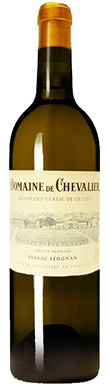

Excellent punch in the nose, lovely complexity, it is fairly closed even now, showing some austerity, with evident citrus, but it opens up and deepens...
1987
Domaine de ChevalierPessac-Léognan

Château Latour-Martillac, Pessac-Léognan, Cru Classé de Graves, Bordeaux, France, 1987
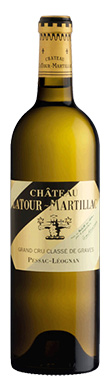
This remains extremely fresh, full of white pepper and verbena notes. There are lovely white flowers behind this and clear citrus. This was the first...
1987
Château Latour-MartillacPessac-Léognan
Château Malartic-Lagravière, Pessac-Léognan, Cru Classé de Graves, Bordeaux, France, 1987
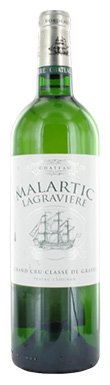
The texture here is extremely silky, almost buttery, with a kick of silky satin. Again markers of an older white in terms of bitter mandarin...
1987
Château Malartic-LagravièrePessac-Léognan
Château Carbonnieux, Pessac-Léognan, Cru Classé de Graves, Bordeaux, France, 1987
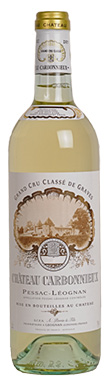
This has round, creamy citrus notes, balanced by a fresh twist in the finish that stretches out the flavours, in fact really an awful lot...
1987
Château CarbonnieuxPessac-Léognan
Château Carbonnieux, Pessac-Léognan, Cru Classé de Graves, Bordeaux, France, 2017
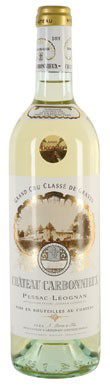
Right off the bat this has richness and concentration, with peachy creaminess through the mid-palate but without sacrificing tension and lift. It's a fine example...
2017
Château CarbonnieuxPessac-Léognan
Domaine de Chevalier, Pessac-Léognan, Cru Classé de Graves, Bordeaux, France, 2017
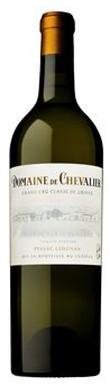
Slightly reticent on the nose, with subtle creaminess and savoury spice. Full-bodied and opulent in style with vibrant acidity.
2017
Domaine de ChevalierPessac-Léognan
Château Malartic-Lagravière, Pessac-Léognan, Cru Classé de Graves, Bordeaux, France, 2017
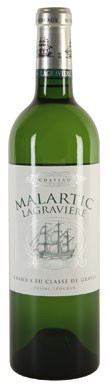
This is excellent quality, punching right off the bat with a mouthwatering blend of citrus and stone fruits, followed by a wave of rosemary and...
2017
Château Malartic-LagravièrePessac-Léognan
Château Latour-Martillac, Pessac-Léognan, Cru Classé de Graves, Bordeaux, France, 2017
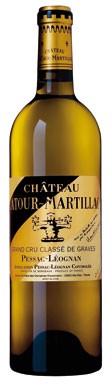
A touch of reduction on the first nose clears to reveal a tight and austere wine that gathers steam through the palate and finishes with...
2017
Château Latour-MartillacPessac-Léognan
Château Latour-Martillac, Pessac-Léognan, Cru Classé de Graves, Bordeaux, France, 1986
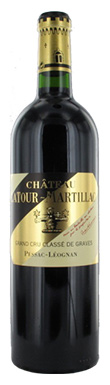
Beautiful deep rich red, this has really kept its structure and colour. Love the soft juiciness. These wines are savoury, balanced, really just a lovely...
1986
Château Latour-MartillacPessac-Léognan
Domaine de Chevalier, Pessac-Léognan, Cru Classé de Graves, Bordeaux, France, 1986
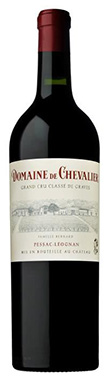
Here the wine has structure but also depth and the silkiest softest tannins laid against the cassis notes, again feel the Cabernet is taking precedence,...
1986
Domaine de ChevalierPessac-Léognan
Château Carbonnieux, Pessac-Léognan, Cru Classé de Graves, Bordeaux, France, 1986
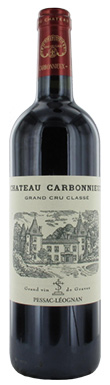
Smoky notes on the nose, gorgeous touches of cold ash - at this point in the wine’s life the Cabernet Sauvignon is taking over. This...
1986
Château CarbonnieuxPessac-Léognan
Château Les Carmes Haut-Brion, Pessac-Léognan, Bordeaux, France, 1986
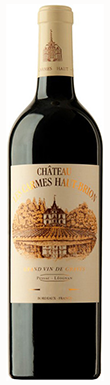
This has lost the flashiness of the fruit, but is rich in tertiary flavours. It’s not particularly long, but I love the toffee on the...
1986
Château Les Carmes Haut-BrionPessac-Léognan
Domaine de Chevalier, Pessac-Léognan, Cru Classé de Graves, Bordeaux, France, 2017
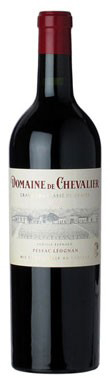
Rich, deep ruby in colour, and once again Chevalier proves that it has a better handle on difficult vintages than so many other chateaux. It...
2017
Domaine de ChevalierPessac-Léognan
Château Carbonnieux, Pessac-Léognan, Cru Classé de Graves, Bordeaux, France, 2017
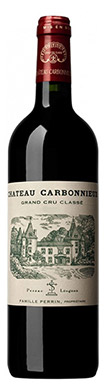
They have controlled the extraction extremely well here, and it has some lovely delicacy on the attack, with firm blackberry and blueberry fruits - the...
2017
Château CarbonnieuxPessac-Léognan
Château Latour-Martillac, Pessac-Léognan, Cru Classé de Graves, Bordeaux, France, 2017
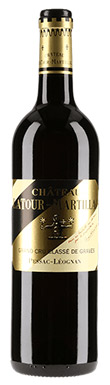
Clear blackberry brambly fruit character right from the start. The oak notes are evident but this is young and it feels like it has fattened...
2017
Château Latour-MartillacPessac-Léognan
