Philipponnat: Producer profile
Yohan Castaing profiles the Champagne producer and rates the new releases, including the coveted Clos des Goisses.


Standing on the chalky soil at the top of the Butte du Gruguet in Mareuil-sur-Aÿ, one has a breathtaking view of the surrounding vine-rich Champagne countryside. What catches the eye most of all, however, is one of the largest clos – designating an unwalled vineyard in the present or in the past – in the Champagne region: the Clos des Goisses.
Goisse, in old French, means very steep slope, and the term is very apt, all the more so in that in the distant past, it was also a local term for a difficult, arduous task such as the back-breaking work carried out on such a precipitous hillside. Indeed, the slope on which this south-facing clos is found dramatically rises above the Marne canal at an angle ranging from 30° to 45°.
Despite such a challenging terrain, its 5.5 hectares (3.5ha of Pinot Noir and 2ha of Chardonnay) is cultivated like a garden. A full-on southern exposure in this northern climate has proven to be beneficial for grape-ripening, as temperatures can rise to more than 1.5 °C above the average for the region.
This is not the only strategic factor for the stellar reputation of the Clos des Goisses, as it lies at the intersection of the three leading production zones, the Côte des Blancs, the Vallée de la Marne and the Montagne de Reims. This can thus be seen as a sacred place, one that owes its specificity not only to its south-facing geographical position, but also to its chalk-rich soil, as well as its thin topsoil allowing vine roots to extend deep below the surface. It was acquired in 1935 by the Philipponnat family of German origin whose own roots in the Champagne region date back to at least 1522.
As records from that era show, Apvril de Philipponnat owned that year a plot of vines in a lieu-dit – a patch of land having a site designation – named ‘Le Léon’. Over time, his successors became both négociants and producers, even supplying the royal court of Louis XIV. Despite these early beginnings in Champagne production, it was not until 1910 that Pierre Philipponnat made the move to create a Champagne house, Maison Philipponnat. Success soon followed.
In 1997, the house became part of the Lanson-BCC group (Champagne Lanson, Chanoine Frères, De Venoge, Boizel, etc.) but they soon appointed Charles Philipponnat – whose father, René, had been chef de cave for Moët & Chandon for three decades – to run the company and take charge of winemaking, alongside chef de cave Thierry Garnier.
Pinot precision
As head of this house bearing his family name since 2000, Charles lost no time taking Philipponnat to new levels of excellence and to the forefront of Champagne fame. He is an avid enthusiast for Pinot Noir, the house’s emblematic grape variety, which thrives on the steep, sun-drenched hillside of Clos des Goisses. He uses traditional winemaking methods (fermentation in stainless steel vats, carrying out malolactic fermentation depending on the year and the cuvée, low percentage of new wood) but in recent years has also brought a vision more focused on precision and fruit thanks to an increased proportion of Pinot Noir as well as the use of cold settling and pressing for the juice during vinification. Charles cunningly combines an undeniable love for tradition with an innovative vision to achieve real mastery of quality and pronounced personality for his Champagnes.
A case in point is the Royale Réserve offering, which pays homage to the family ancestors who were suppliers to the royal court. It is a Pinot Noir-dominant blend with premier cru and grand cru village provenance that is lively and fresh. The two 1522 cuvées, one being a Champagne rosé, are named after the year in which records show that Apvril le Philipponnat owned vines on the lieu-dit Le Léon. Both are produced with a majority of Pinot Noir wines from outstanding vintages, most of which is vinified in wooden casks.
The red wine used for the blend comes entirely from the home base in Mareuil-sur-Aÿ. As for the vintage cuvées, they are sourced from both premier cru and grand cru villages and do not undergo malolactic fermentation. Some of the wines are vinified in wooden casks, and the final blend remains in the cellar for a minimum of six years.
Only the four best plots among the 14 that compose the Clos des Goisses vineyard are included in the 2011 vintage of this site-specific cuvée, consisting mainly of Pinot Noir and undergoing eight years of cellaring before its release, while the current rosé version, aptly named Juste Rosé, is composed of 64% Pinot Noir and 36% Chardonnay and comes from the 2009 vintage.
Lastly, Philipponnat’s single-plot cuvées are all blanc de noirs made with 100% Pinot Noir. Produced in small quantities in a manner that depends on the quality of the harvest, each one receives an extra-brut dosage of just 4.5g/L. The Léon, produced so far only in 2006, comes from the site where the Philipponnat family owned vines in the early 16th century. The Rémissonne comes from a premier cru parcel that is adjacent to the Clos des Goisses, while Les Cintres comes from the warmest parcel within the Clos des Goisses itself.
Yohan Castaing reviews the new releases from Philipponnat
Philipponnat, Les Cintres, Champagne, France, 2010
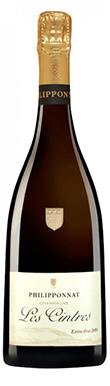

100% Pinot Noir from the first pressing of grapes from just two plots of Clos des Goisses, Les Grands Cintres and Les Petits Cintres. Well-integrated oak is perceptible on the complex and powerful nose, yet intermingled with delicate and fragrant notes of pear, spices, chalk and flowers. On the palate, this is a structured, sinewy Champagne with a creamy density and seemingly tannic framework. Notes of lemon, vanilla and menthol explode on the finish. A sensational, power-driven Champagne that will benefit greatly from cellaring for five to ten years. Dosage : 4.5g/L. Disgorgement: March 2020.
2010
Philipponnat

Philipponnat, L.V. Clos des Goisses, Champagne, France, 1995
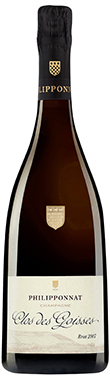
Philipponnat keeps back a small number of bottles of Clos des Goisses that are disgorged after a lengthy period of cellaring. The complex and magical nose reveals subtle resinous notes and scents of Mirabelle plum, pineapple, candied lemon, ginger, and a touch of curry spices. On the palate, this is a powerful Champagne balanced by impressive freshness and a beautiful expression of its Chardonnay component, so graceful and round. The Pinot Noir comes to the fore on the slightly chalky finish. A very beautiful Champagne now at its apogée. Dosage: 4,5 g/L. Disgorgement: March 2020. LV stands for Long Vieillissement (Long Ageing).
1995
Philipponnat
Philipponnat, Clos des Goisses, Champagne, France, 2011
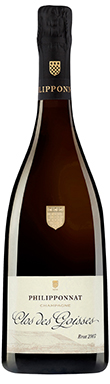
This is unusual as it’s the first release of Clos des Goisses to be made entirely of Pinot Noir. I’ve had positive experiences with this wine in the past, but this example is strongly marked by the vegetal character of the vintage, with savoury notes of green bean, celery and asparagus. It’s ample in body and forward in presence, and it feels long and harmonious on the palate, but in this tasting it’s marred by its vintage – as always, though, your response will depend on your sensitivity to the vintage character. Disgorged: October 2020.
2011
Philipponnat
Philipponnat, 1522 - Extra-Brut, Champagne, France, 2012
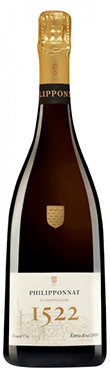
A bright and incisive nose offering notes of peach, citrus, herbs as well as a floral flourish after a bit of airing. The palate is underpinned by lively acidity that provides vivacity and thrust to a long finish for this Champagne that also has a delightful delicacy to it. Perfect example of an aperitif style with substance. Dosage: 4.5 g/L. Disgorgement: February 2020. 100% grand cru grapes with 70% Pinot Noir (from the Léon vineyard in Aÿ and Mailly) and 30% Chardonnay (from Verzy). No malolactic fermentation. 30% aged in wooden casks.
2012
Philipponnat
Philipponnat, Clos des Goisses, Juste Rosé, Champagne, France, 2009
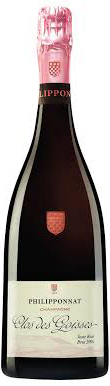
Along with the 2007, this is the deepest in colour among the Juste Rosés. It’s surprisingly youthful and tense, perhaps due to its late disgorgement, yet it’s so perfectly balanced, feeling crystalline and precise. Its taut core of red and citrus fruit flavours is harnessed and energised by both acidity and saline minerality, and its finish is racy and pointed, showing great length and poise. This will be superb, but it’s nowhere near ready, and really deserves more time in the cellar to show its best. Disgorged: April 2021.
2009
Philipponnat
Philipponnat, 1522 - Extra-Brut Rosé, Champagne, France, 2009
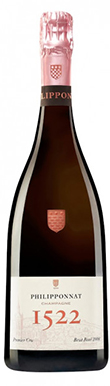
The complex nose expresses lovely scents of rose, blackcurrant, raspberry as well as a touch of spices, while also imparting a physical impression of limestone-driven tension. On the palate, we immediately feel the racy vinosity of a red wine endowed with remarkable length and those lively sensorial and structural sensations often described as minerality. This is a superb Champagne that gives the impression of aerial lightness on the long finish. Dosage: 4.5 g/L. Disgorgement: March 2020. 72% Pinot Noir from the Léon vineyard in Aÿ and 28% Chardonnay from Mesnil-sur-Oger. 9% red wine produced from the Clos des Goisses in Mareuil-sur-Aÿ. No malolactic fermentation.
2009
Philipponnat
