Piper-Heidsieck: Producer profile
Michael Edwards discusses the changes at Piper-Heidsieck and tastes some of its newest releases...


In approach and style, Piper-Heidsieck’s wines stand out for their striking freshness, dominated by up to 55% of Pinot Noir but joined by palate-filling Pinot Meunier and mineral, incisive Chardonnay. No oak is used, but reserve wines from older vintages across a broad sweep of the Champagne region add nuance, complexity and harmony.
In the 1950s and ‘60s, by contrast, it hadn’t been easy to rate Piper-Heidsieck high in the pecking order.Even though the USA was a prime market and Piper was a favourite of Hollywood movie legends, drunk with abandon in nightclubs, in truth the wines were pretty ordinary, often masked by sour green acids at a time when the benefits of harmonious softening by malolactic fermentation were still so poorly understood.The current eminence of wine supremo Régis Camus is due to his 35-year odyssey to change the character of Piper-Heidsieck from a sour sparkler into an aromatic and palate-caressing wine, as good as white Burgundy but with bubbles.A big step forward in response to more sophisticated market demand came in 2008, when the team started to think about a new Essentiel cuvée to show what the house stood for – complete transparency and a pared-down focus on the wine’s essential heart, expressing the same base as the Brut NV in a ‘more age and less sugar’ style.With an Extra Brut dosage of 5g/l, compared to 8-10g/l for the Brut NV, Essentiel is a food-friendly Champagne.President Descours is very clear that the EPI Group (Piper’s parent company) will only sell Essentiel to fine wine restaurants and independent merchants, saying firmly that ‘we are not going to let it fall into the hands of the multiples.’
The range of Piper-Heidsieck Champagnes extends from the entry-level Brut NV, which is consistently balanced, through the superior Essentiel and an excellent demi-sec, Cuvée Sublime, to the jewel in the crown, Rare, so called because it’s often produced in years of great challenge.
Although Camus has handed over the reins to Émilien Boutillat, the young chef-de-cave who was previously part of the Armand de Brignac winemaking team at Cattier, he remains at Piper as cellar master for the Rare prestige cuvée.
I vividly remember the first vintage of Rare, 1976 – a year of almost Saharan heat. Yet despite the cruel, arid conditions, it kept its freshness and balance for many years. Since then, only 10 other vintages of Rare have been bottled.
Piper-Heidsieck at a glance:
Heidsieck Champagne dynasty founded in 1785 by Florenz-Louis Heidsieck, who had come to Reims from Germany’s Westphalia region.
In 1839, a Piper married into the family business, this branch renamed Piper-Heidsieck.
In 2011, the Descours family’s EPI group bought both Charles Heidsieck & Piper Heidsieck from Rémy-Cointreau.
Officially, Piper-Heidsieck owns no vineyards in Champagne, relying on long-term contracts in over 100 villages, mainly in the top crus of the Montagne de Reims and the Côte des Bar (Aube).
Annual Production is 4.3 million bottles.
Tasting Piper-Heidsieck:
Tasting notes by Michael Edwards and Richard Juhlin
You may also like:
Insider tips for pairing Champagne with food
Tasting the latest releases from Laurent-Perrier
Introducing Coteaux Champenois: Champagne’s still wines
Piper-Heidsieck, Brut, Champagne, France, 2012
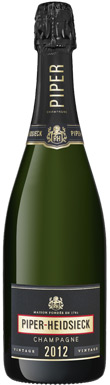

Chef de cave Emilien Boutillat supervised the sourcing of grapes for the 2012 from 12 different plots, two-thirds of which are designated as either premier cru or grand cru. In this vintage, the blend is made up of slightly more than half Pinot Noir with Chardonnay and 8g/L dosage. Simon Field MW: An accomplished, rigorous blend; persistent, complete and impressive length – nougat, lemongrass, finely etched finish. Alan Bednarski: Candied lemons and blueberry pie with some sweet citrus candies, the dosage leaving a touch of sweetness on the finish. Tim Hall: A creamy overlay to the citrus start. A cool continuation of fern and green forest and a good pure texture, too.
2012
Piper-Heidsieck

Piper-Heidsieck, Champagne, France, 2000
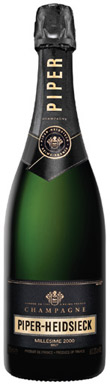
Well-constructed with enormous vigour and capacity for ageing. Piper- Heidsieck has a track record of producing Champagnes that develop slowly and beautifully over time, and this vintage is already worthy of a higher score than it merited on first tasting.
2000
Piper-Heidsieck
Piper-Heidsieck, Essentiel Blanc de Blancs, Champagne, France
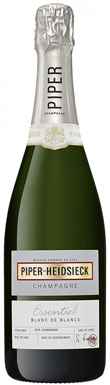
This 100% Chardonnay uses base wine from the excellent 2013 vintage, which is generally a better vintage for Chardonnay than 2012, with 35% reserve wines added. It has a lovely green-tinged hue with exceptional poise and depth - real complexities here from the late-picked fruit, harvested into October. It has enough nuance for gastronomy, especially roast turbot with cèpes but also sole. Still under-the-radar enough to be a bargain.
Piper-Heidsieck
Piper-Heidsieck, Essentiel, Champagne, France
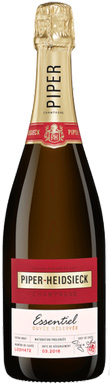
<p>Stylish pale gold in colour with a creamy mousse and wafting apple blossom aromas. It demonstrates model balance of Pinot weight, fruity and flowery Meunier, and the citrus span of Chardonnay. There's a nice saline palate, drawing from reserve wines. Serious yet friendly, it's an adaptable food wine to try with clam chowder, moules marinières or lobster bisque. Dosage 5g/l. Disgorged June 2018.</p>
Piper-Heidsieck
