
Port 2015: a buyer’s guide


Much of 2015 had the makings of a classic vintage in Port, but not all houses declared. Richard Mayson investigates the ups and downs and picks out some of his favourite wines from the sporadic declarations...
When an exceptional viticultural year comes to an end in the Douro valley, there is every prospect of a vintage declaration. As Paul Symington, chairman and joint managing director of the Symington Family Estates, wrote just as the last grapes were being picked, 2015 was such a year. His cousin and winemaker Charles added for good measure that 2015 ‘produced the best Touriga Franca grapes in memory’. But it turns out that ‘exceptional’ and the ‘best’ of the Douro’s most widely planted grape variety is not quite enough. Declared outright by a handful of shippers, 2015 has turned out to be one of those knife-edge, oh-so-nearly-but-not-quite years that punctuate more than two centuries of Port vintages.
For Dirk Niepoort, whose family firm declared both a classic and single quinta vintage port (SQVP) , 2015 was ‘as perfect as it gets’. The Symingtons, who declared Cockburn’s outright, were apparently ‘a whisker away from declaring across the board’. But David Guimaraens, head winemaker of The Fladgate Partnership (which includes Croft, Taylor’s and Fonseca) said: ‘To begin with we were on the fence when it came to a classic declaration of 2015, but we came to the conclusion that the wines just don’t have the dimension of a classic vintage.’
‘In 2015, it seems that whether to declare outright or not is largely a matter of house style’
Blowing hot, then cool
The 2014/15 growing season was an unusual one. Rainfall was 40% below average and if it hadn’t been for the heavy rain that fell in November 2014 and the cold winter that followed, 2015 wouldn’t have amounted to very much. Spring, when it came, was the warmest and driest for 36 years.
Fortunately there was a little rain in May, falling mostly in the Douro Superior which, being the most arid sub-region of the Douro, is just where it was needed most. June was the hottest for half a century. The hot, dry weather continued into July, but August was relatively cool, with low night-time temperatures helping to conserve the natural acidity in the grapes. In a region where dry farming is the norm, dehydration and consequent raisinisation of the grapes was just held off.
At the start of September, just before vintage, the crop looked to be in fine condition and on 8 September the pickers made a start. However, in Paul Symington’s view: ‘Some producers can be confused by the complex ripening pattern resulting from dry conditions such as 2015. Early picking before the grapes are fully ripe for the making of great Port is not a good option.’ Then on 15 and 16 September a substantial amount of rain fell, followed by a strong wind that helped to dry the grapes. After 10 weeks with no rain the vines lapped up the water, swelling the berries and helping the ripening process. For Dirk Niepoort this rain was ‘most beneficial. Although we temporarily halted the harvest, it allowed grape maturity to go through to completion’. For the remainder of the harvest, the weather was fine and mostly dry.
Mixed reception
The Port shippers give themselves 18 months or so to assess the wines as they rest in wood to see if the best lotes (batches) have the makings of a great vintage. By rule of thumb, classic vintage declarations tend to occur three times a decade, with the last universal Port declaration being 2011. On the other hand, SQVP declarations happen nearly every year. ‘The reason for the great rarity of a [classic] declared vintage Port,’ says Paul Symington, ‘is that for the greatest producers, all their vineyards must produce superb wines in order to have a declared year. These lucky circumstances happened in 2011 and in 2007, as well as previous declared years. In 2015 we had excellent conditions in most of our vineyards, but unusually the shortfall in rain was more severe in the Cima Corgo than in the Douro Superior, making the latter sub-region a standout in 2015.’

Carlos Alves, winemaker for the Sogevinus group that includes Barros, Burmester, Cálem and Kopke, agrees: ‘We declared a classic Cálem because the wine made in 2015 had an excellent structure and concentration… and the grapes for Cálem come from the Douro Superior. In the Cima Corgo, where Kopke’s Quinta de S Luíz is located, the year was not so good. We had irregular maturations that produced more slender wines with less intensity, which are the two essential parameters for a classic Kopke vintage.’
In 2015, it seems that whether to declare outright or not is largely a matter of house style. Cockburn’s has a long history of sourcing grapes from the Douro Superior, and in 2015 (when the firm happened to be celebrating its bicentenary), the grapes come from three Douro Superior vineyards, Quinta dos Canais and two much smaller quintas. ‘Hence a lovely Cockburn’s 2015 in the traditional house style,’ asserts Paul Symington.
For Guimaraens, whose family firm Fonseca also celebrated its bicentenary in 2015, a classic declaration is not just about quality. ‘There is no doubt 2015 is wonderful in terms of quality, but we need quality, depth and longevity for a classic vintage. For us 2015 just doesn’t have the dimension or structure of a classic vintage,’ he explained. Fonseca declared 2015 under its second label Fonseca Guimaraens, with SQVPs from Taylor’s Vargellas and Croft’s Roeda.
Famous split vintage declarations
1991/1992
In 1991, after six years without a vintage, the shippers were anxious for a declaration. The growing conditions were auspicious with a settled dry, spring and a long, hot summer. Most of the major shippers declared the 1991 outright and the North American market lapped up the wines at the time. However, Taylor’s and Fonseca (alongside Delaforce and Smith Woodhouse) famously held out, favouring 1992 with a declaration instead. At a Decanter panel tasting in 2003 we concluded that the wines from 1992 had more structure and longevity, which put paid to the rather far-fetched story circulating at the time that Taylor’s only declared 1992 because it coincided with its 300th anniversary!
1982/1983
I spent the summer of 1982 traversing the Douro for my undergraduate dissertation on the vineyard microclimates, so I vividly recall the fierce July and August heat. This is reflected in the rather soft, sweet, raisiny character of the wines from those that chose to declare (Croft, Delaforce, Churchill’s, Ferreira, Sandeman, Niepoort and Noval). Most 1982s need drinking up. The majority of shippers declared 1983, a year which produced much firmer, more structured wines, the best of which are standing the test of time. Niepoort declared both years.
1966/1967
A very hot, dry summer in 1966 and a harvest interrupted by welcome rain produced some stupendous Ports, the best of which will last a lifetime. Most shippers declared, with Cálem, Croft, Graham’s, Noval Nacional, Taylor’s and Sandeman all producing excellent wines. Dow’s and Fonseca are among my all-time favourites. However, Cockburn’s and Martinez (both under the same ownership and sharing a rather idiosyncratic approach to vintage declarations at the time) overlooked 1966 in favour of 1967, producing some excellent if slightly earlier maturing wines. Sandeman declared both years. With the weight behind them, both in style and the number of declarations, 1966 goes down as the better year.
Split vintage incoming?
It so happens that 2016 is also looking rather promising. In another unusual year, when the hottest day of the summer was recorded just before harvest in early September, Paul Symington summed up the growing season – somewhat enigmatically – as ‘a year with a special rhythm’. It was certainly a challenging year with cool, wet weather in April and May, which can encourage the spread of disease. But in his report at the end of harvest Symington wrote: ‘It is only necessary to see the lagares [treading tanks] of Touriga Nacional, Touriga Franca and old mixed Douro wines to see what an exceptional result awaited those who did the essential work and had the necessary patience.’

So could it be that 2015/2016 turn out to be split vintages – back-to-back years where one shipper favours one vintage with a classic declaration, only for another house to favour the other year ?
The Port shippers are notorious for keeping their cards very close to their chest until the second spring after the harvest. But Guimaraens describes 2016 as ‘a perfect year, producing wines with lots of quality – the question at this stage is how these wines will develop’. Guimaraens and his tasting team will make their final assessment in January 2018 with a view to a declaration (or not) on the following St George’s Day (23 April). The market seems healthy enough to support another classic declaration, so look to Decanter.com in April 2018 to keep up to date.
In the meantime, 2015 has produced some lovely wines for the medium to long term, many of which are available at a lower price than if the year had been fully declared.
Graham's, The Stone Terraces, Port, Douro Valley, Portugal, 2015
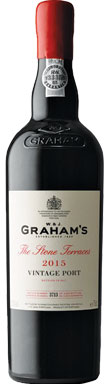

A site-specific wine from three small plots of northfacing terraced vineyard on the Malvedos estate: wonderfully aromatic (high percentage of Touriga Nacional) with a classic...
2015
Graham'sPort

Cockburn's, Port, Douro Valley, Portugal, 2015
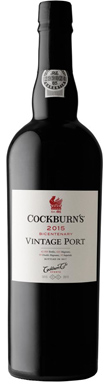
Blend dominated by Touriga Franca (41%) and Touriga Nacional (37%). Mainly picked eight days after the mid-September rain: initially deep, ripe and dense on the...
2015
Cockburn'sPort
Quinta do Noval, Port, Douro Valley, Portugal, 2015
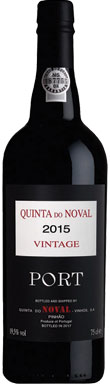
A cold, dry winter, followed by a warm, wet spring which set the vines up for a hot, dry summer and an early harvest -...
2015
Quinta do NovalPort
Dow's, Quinta Senhora da Ribeira, Port, Douro Valley, Portugal, 2015
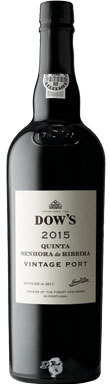
A small estate in the Douro Superior that has long formed part of Dow’s vintage blend. Deep, brooding aroma; initially rich and succulent with ripe...
2015
Dow'sPort
Fonseca, Guimaraens, Port, Douro Valley, Portugal, 2015
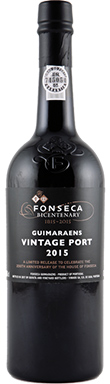
A blend sourced from three Fonseca estates all in the Cima Corgo. It’s closed and dense on the nose with underlying ripe fruit, and still...
2015
FonsecaPort
Quinta do Vesúvio, Port, Douro Valley, Portugal, 2015
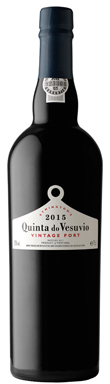
From a magnificent property in the Douro Superior, picked relatively late after the rain: rich and heady on the nose with ripe blackberry jam fruit...
2015
Quinta do VesúvioPort
Niepoort, Bioma, Port, Douro Valley, Portugal, 2015
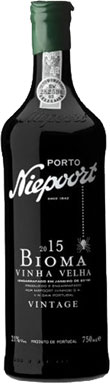
Made from organically grown fruit at Quinta da Pisca, high above the Douro downstream from Pinhão. Expressive wild berry character on the nose; ripe with...
2015
NiepoortPort
Ramos Pinto, Port, Douro Valley, Portugal, 2015
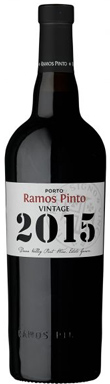
A blend from Quinta da Ervamoira in the Douro Superior and Quinta do Bom Retiro in the cooler Torto Valley: sullen on the nose but...
2015
Ramos PintoPort
Niepoort, Port, Douro Valley, Portugal, 2015
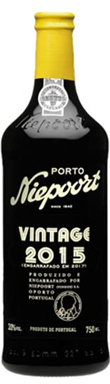
A Cima Corgo blend from Vale de Mendiz in the Pinhão valley and Quinta da Pisca downstream: ripe and focused on the nose, though not...
2015
NiepoortPort
Taylor's, Quinta de Vargellas, Port, Douro Valley, Portugal, 2015
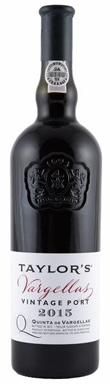
Vargellas in the Douro Superior picked early in 2015 with most of the grapes harvested before the rain. Initially closed with underlying ripeness on the...
2015
Taylor'sPort
Cálem, Port, Douro Valley, Portugal, 2015
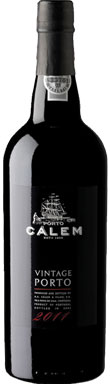
An equal blend of Tinta Roriz, Touriga Franca and Touriga Nacional grown in the Douro Superior. Restrained on the nose with some underlying opulence; firm,...
2015
CálemPort
Croft, Quinta da Roeda, Port, Douro Valley, Portugal, 2015
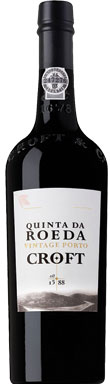
Tight-knit and minerally on the nose opening up quite rapidly to reveal very pure, expressive berry fruit; sweet and succulent in style, not especially big...
2015
CroftPort
