
Château Montrose: Profile and top wines


Bought in 2006 by the billionaire Bouygues brothers, Château Montrose has been transformed at huge cost and its wines have shone particularly brightly in recent vintages.
Updated in 2018 with fresh wine reviews
The most romantic creation story in Bordeaux could arguably be that attached to St-Estèphe second growth Château Montrose.
While most 1855 classified properties have a naming formula of important former owner + name of nearby village or landmark, the name ‘Montrose’ means pink hill and refers to the pink-purple bloom of heather that once covered the place where it stands.
Château Montrose: Need to know
- Appellation: St-Estèphe, second growth
- Vineyards: 95ha, including 60% Cabernet Sauvignon, 32% Merlot, 6% Cabernet Franc and 2% Petit Verdot
- Wines: Montrose, La Dame de Montrose, Le St-Estèphe de Montrose
- Owner: Bouygues brothers
- CEO: Hervé Berland
View all of Decanter’s Château Montrose tasting notes
See Jane Anson’s report on tasting 40 years of Montrose wines
Text continues below tasting notes
Montrose wines from recent vintages reviewed:
How did all of this begin?
Original copy by Jane Anson. Editing in 2018 by Chris Mercer.
Montrose started life as part of Calon Ségur’s garden, until Etienne Dumoulin, the owner in the early 19th century, noticed a gravel outcrop sloping down to the Garonne river that stood out for its dusky beauty.
He marked it out as a separate property, building a château and planting vines. In 1824, Etienne’s son Théodore sold Calon, but kept Montrose. This turned out to have been a smart move, because only 30 years later Montrose beat Calon to second growth status at the Paris exhibition. Calon had to make do with third growth status in the subsequent 1855 Classification.Martin and Olivier Bouygues, billionaire owners of the global Bouygues construction and communications group, are currently in charge of Montrose after buying the estate in 2006 in a deal believed to total around €140m at the time.The Bouygues brothers are among the most influential and powerful owners in Bordeaux’s 1855 ranking. They had a joint-estimated worth of 3.4bn euros, putting them 28th in the 2018 French rich list compiled by the country’s Challenges magazine.Montrose was a favourite wine of the brothers’ father, and Martin had been buying it for his own cellar for several years. Melissa Bouygues, Martin’s American wife and president of Montrose says, ‘My husband first drank Montrose in Santa Barbara in 1995, when friends we were staying with served a bottle of the 1990.’As the story goes, he tasted it, loved it and called his wine merchant Jean-François Moueix with a request to buy as many cases as possible. It is believed that he also vowed to buy the château itself, if it ever came on the market. When he heard 10 years later that it was up for sale, he flew immediately down to Bordeaux and sealed the deal.
Statement of intent
The brothers signalled their intention to make an impact on this St-Estèphe property by securing the services of ex-Haut-Brion director Jean-Bernard Delmas.
Delmas stayed on as a consultant after his retirement in 2012, when Hervé Berland joined Montrose after 35 years down the road in the neighbouring Pauillac appellation, at Mouton Rothschild. Berland is now CEO of Montrose.
Bearing in mind the limited pool of people with that kind of experience in Bordeaux, you get an idea of how persuasive the Bouygues must be.
There are no first growths in St-Estèphe – Montrose and Cos d’Estournel are the only seconds – but the arrival of Delmas and then Berland could not have been a clearer expression of the Bouygues’ desire for Montrose to be judged in the same breath.
Figureheads sorted, the Bouygues turned to what they do best; lavishing a reported €20m on renovations, new installations and refurbishing the château.
These renovations began in 2007, a year into their ownership, and took several years to complete. Technical installations were finished by the challenging 2013 harvest, but landscaping and other final details continued until the en primeur tastings for that vintage in April 2014.
Changes to the Montrose wine style
Even before this, however, changes to the style of the wine had been evident.
Montrose has long been known for its ageing ability and its classic, slightly tight, austere style when young.
This has been fleshed out, polished and given every chance of success through geological terroir studies, smart vineyard practices and one of the most advanced, dazzling wineries in the region.
Renovations
Upgrading the cellars was almost certainly one of the biggest projects of its kind in Bordeaux at the time – no mean feat among the forest of recent architectural works in this region.
This was achieved using local architect Bernard Mazières and historic monument specialist Yves Grémont, brought in to respect the 18th-century origins of the château.
Overseen by Bouygues Rénovation Privée, a specialist arm of Bouygues Construction, Montrose was rebuilt using 95% local workers, wherever possible from the Médoc itself.
Pretty much the only non-Bordeaux company involved was Les Pierreux de l’Ile de France, specialists in marble and historic stone work responsible for much of the marble detailing (a considerable amount was designed to resemble Leonardo da Vinci’s Italian summer villa).
All existing walls were reinforced and insulated, while inside the cellars every square inch was either restored or rebuilt.
Green energy
The estate’s aim is to be entirely energy self-sufficient, something re-iterated by Berland at a recent masterclass at the Decanter Fine Wine Encounter in London.
Thousands of metres of solar panels, plus geothermal energy, water and wind power have been employed. And Berland says that the 1,000m2 barrel cellar benefits from the geographic position of Montrose.
‘We are lucky to have plenty of natural ventilation from being so close to the river, so can ensure good movement of air and full aeration in the cellars.’
All of this has been done alongside elaborate design work, such as hiding pipes, wires and cables inside elegant Roman villa-style pillars within the winery, an abundance of elegant arches inspired by those at Bordeaux’s Opera House, interior decoration by the renowned designer Jacques Garcia and a helicopter pad for two.
Vineyard make-up
There are around 95ha of vineyards at Montrose, which are planted to 60% Cabernet Sauvignon, 32% Merlot, 6% Cabernet Franc and 2% Petit Verdot.
Berland has said that there are plans to slightly increase the amount of Cabernet Sauvignon in the coming years.
At the other end of the spectrum, he has expressed his admiration for Petit Verdot, telling an audience at Decanter’s Fine Wine Encounter in November 2018 that, ‘whenever possible I always use Petit Verdot, because it adds additional spiciness’.
Fresh acquisitions by Montrose owners
In 2017, the Bouygues brothers expanded their wine portfolio by acquiring Clos Rougeard, the cult estate in the Loire, ending months of speculation about a possible deal.
Then, in 2018, they began a partnership in Burgundy by acquiring a controlling stake in Domaine Henri Rebourseau.
It was understood that Berland would oversee winemaking at both newly acquired estates.
Château Montrose at a glance
Location
St-Estèphe, next to Châteaux Phélan Ségur, Meyney and Haut-Marbuzet
Area under vine
95ha, one single block of large gravels, sloping down to the river Garonne
Soils
Subsoil is sand and clay – but far less clay here than many St-Estèphes, marking it out stylistically
Grapes planted
Cabernet Sauvignon (60%), Merlot (32%), Cabernet Franc (6%) and Petit Verdot (2%), planted to 9,000 vines per hectare. Average age of vines is 40 years, with the oldest dating to 1932. Berland stated in November 2018 that the intention was to increase planted area for Cabernet Sauvignon, with one eye on a warming climate.
Oak policy
The first wine spends 18 months in around 60% new French oak barrels. This falls to 12 months in 30% new oak for the second wine, La Dame de Montrose, with racking every three months, and fining in barrel with fresh egg whites. The third wine, St-Estèphe de Montrose, is aged for 12 months in 20% new French oak.
Second wine
La Dame de Montrose was named after Yvonne Charmolue who ran the estate from 1944 to 1960. Introduced in 1984 by Jean-Louis Charmolue, who named it in honour of his mother.
Third wine
A third wine Le St-Estèphe de Montrose was introduced in 2014, starting with the 2010 vintage, from 15% of the overall production, so 30,000-50,000 bottles.
Consultants
Aside from Jean-Bernard Delmas, the estate has consulted Jean Cordeau (vinegrowing), Eric Boissenot (winemaking) and Pierre Becheler (geologist).
Château Montrose: a timeline
1778 Etienne Dumoulin buys Calon Ségur from Nicolas de Ségur. He clears a part of the grounds near the river called La Lande d’Escargeon to build a château and plant vines. This becomes Château Montrose
1814 Théodore Dumoulin sells Calon Ségur but keeps Montrose
1855 Montrose named a second growth in Paris classification
1861 Théodore Dumoulin dies, having taken Montrose from just a few hectares to a full 50ha of vines
1866 The Dumoulin family sells to Mathieu Dollfus, a visionary owner who built houses, streets and squares for the workers, sharing 10% of the profits with them
1887 Dollfus died childless, and Château Montrose is sold to the Hostein brothers, owners of Cos d’Estournel
1896 Louis-Victor Charmolue, owner of Cos d’Estournel, becomes Jean-Jules Hostein’s son-in-law and then owner of Montrose. The Charmolue family remains at Montrose for 110 years
1942 An RAF bomber overshoots its target in Pauillac and mistakenly bombs Château Montrose, destroying large sections of the vineyard, later rebuilt by the Charmolue family
1976 During the infamous Judgement of Paris tasting, the 1970 vintage of Château Montrose comes third (or second, depending on your statistical analysis)
2006 Martin and Olivier Bouygues become owners, hire Jean-Bernard Delmas and start a 40-year replanting programme
2010 The estate buys 22ha of Phélan Ségur vines, from a plot adjacent to the estate’s own vines, which was part of Château Montrose in the 19th century
2012 Former Mouton Rothschild director Hervé Berland joins Montrose after 35 years with the Rothschild family
2014 New winery and cellars opens after seven years of works
This profile of Château Montrose was originally published in 2014, but has been updated in November 2018 with fresh information and tasting notes on Montrose wines.
Château Montrose, St-Estèphe, 2ème Cru Classé, Bordeaux, France, 2017
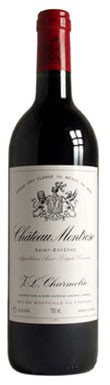

Montrose has solar panels and uses geothermal energy to manage temperatures in the barrel halls and vats. The 2017 is 76% Cabernet Sauvignon (with 20%...
2017
Château MontroseSt-Estèphe

Château Montrose, La Dame de Montrose, St-Estèphe, Bordeaux, France, 2017
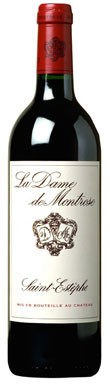
A good year for Dame de Montrose, showing extremely well balanced plum and damson fruits, and a lovely texture. There was no frost here, as...
2017
Château MontroseSt-Estèphe
Château Montrose, St-Estèphe, 2ème Cru Classé, Bordeaux, France, 2016
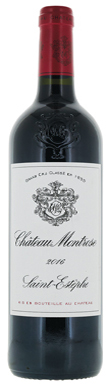
Founded in 1815, Château Montrose is a St-Estèphe icon revered for ageworthy reds. Under the Bouygues family's ownership since 2006, major investments in the 95ha...
2016
Château MontroseSt-Estèphe
Château Montrose, La Dame de Montrose, St-Estèphe, Bordeaux, France, 2016
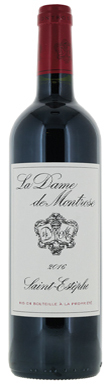
A gorgeous second wine in this vintage. It’s almost seductive, with deep, rich spice and fruit flavours on the palate, along with plenty of vibrancy...
2016
Château MontroseSt-Estèphe
Château Montrose, St-Estèphe, 2ème Cru Classé, Bordeaux, France, 2015
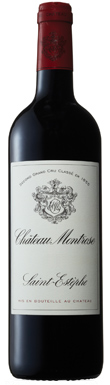
Deep florality and wonderful black fruit. Surprisingly smooth and silky at first then the classic firmness becomes plain towards the finish. It has more natural...
2015
Château MontroseSt-Estèphe
Château Montrose, La Dame de Montrose, St-Estèphe, Bordeaux, France, 2015
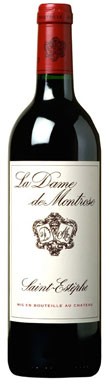
<p>Dense floral and cassis nose with a minerally graphite base. Very good natural richness of fruit and great purity of expression. A very serious, very...
2015
Château MontroseSt-Estèphe
Château Montrose, St-Estèphe, 2ème Cru Classé, Bordeaux, France, 2014
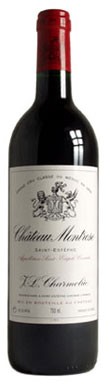
Floral rose and raspberry scents on the nose. Supple and agile, this is bright and tangy, with the focus on the acidity and the purity...
2014
Château MontroseSt-Estèphe
