
Producer profile: Chateau Musar
Pedro Ballesteros Torres MW considers the concept of 'timelessness' in terms of the wines from this landmark Lebanese winery, tasting 16 wines – back to 1961 – over the course of a week to test their mettle


Timelessness is the status of iconic wines; they can stick in our minds and make us constantly want to revisit them. Time is often their ally, and they need a lot of it to achieve their full expression. The few wines that achieve this status are indifferent to the vagaries of fashionable taste; they will last much longer than any trend.
Rich history
The visionary Gaston Hochar founded Chateau Musar in 1930, creating the first vintage in 1933. Still family-run today, it is only in the third generation – a short time span compared to other legendary estates. That Musar achieved excellence in just 90 years is testament to Hochar’s individual genius and his strong will to succeed.
Chateau Musar is based in Lebanon, the cradle of mankind – a place that has seen some of the most powerful cultures throughout history. It is a melting pot of cultural development, yet has suffered terribly from conflict and war.
The Hochars are very aware of their Lebanese culture and express it in their wines. They are all too aware that peace is precarious and short lived – this helps them focus and strive to make wines that will last forever.

Grapes and vineyards
Most of the family’s vineyards are in the Bekaa Valley. Natural conditions here are optimal for grape growing: high altitude, little rain for non-irrigated bush vines, naturally organic vineyards, a diversity of soils and exposures and very low yields.
Gaston Hochar planted a unique combination of Atlantic and Mediterranean red grape varieties that have been refined through the years to the present mix. Cinsault, Cabernet Sauvignon and Carignan for the red Grand Vin, and Grenache, Mourvèdre and Syrah for setting the character of the other red wines.
For white wines, he kept the native Lebanese grape varieties already in the vineyards: Obaideh and Merwah, planted at high altitudes up to 1,200m. Vermentino, Chardonnay and Viognier planted in newer vineyards are blended in the young wines.
The Bekaa Valley is home to religious and factional conflict that blights the region. Sunnis, Shias and Druze Muslims through to Christian Maronites and Greek Catholics have all clashed here. Because of ongoing threats, the Musar winery was built far from the vineyards, in a castle overlooking the Mediterranean.
Harvest
At harvest, the grapes undertake a trip over winding roads towards the sea. In peaceful times, the journey may take a few hours, but in times of war it can be up to five days, as was the case in 1984.
Gaston Hochar may have started Musar but it was the next generation, his sons Serge and Ronald, who introduced and created Musar’s timeless style. It was Serge’s decision to make wines that last forever: only releasing them after they had aged in the cellars for at least seven years and crafted to improve in bottle over decades.
The family had created a mythical style, but needed a discoverer – a champion to promote Musar to the world.
While much of the world’s critics, such as Robert Parker, sought out pristine fruit definition and technical perfection, it was the master of old wines, Michael Broadbent, who became Musar’s champion in 1979, seeing the complexity and uniqueness in these wines.
Not just great reds
Chateau Musar is not a singular style, but a philosophy of life and the essence of a place. Because of that, Musar is not only about red wines. The white wines convey, if not more acutely, something exceptional and inimitable. And the rare Musar rosé is the delicate, understated and complex hymn to peace and joy in the Mediterranean.

The future
The third Hochar generation – Serge’s sons – is now at the helm: Gaston runs the winery and Marc is in charge of sales.
Their aim is to honour a noble 90-year heritage and preserve the winemaking attitude founded by Serge Hochar. But wineries must evolve, so they’ve also started exploring other avenues to convey their land through their wines. Recent bottlings include single-vineyard wines labelled under Hochar Père et Fils, the Levantine blends, and Musar Jeunes in three colours.
Tasting with a twist
The Musar red 1961 and white 1975 died like classic heroes
As we’ve seen, Musar is all about timelessness. So for my tasting of 16 wines in the range, I really wanted to find a way to test ‘timelessness’.
I tasted all wines at least once a day over a whole week. I tasted from the same opened bottles, which were not stoppered with any protective devices: I wanted the wines to go through the ultimate hardship – exposure to the ravages of oxygen.
They passed that test. Some wines faded more or less slowly, yet never quickly. Others, the best ones, benefited from several days’ exposure.
The Musar red 1961 and white 1975 died like classic heroes, devoured by the monster (me) but not surrendering. The last drops, after 10 days, were still delicious.
Historical highlights and new releases from Chateau Musar
More facts about Musar
- Vineyard: about 180ha
- Production: about 600,000 bottles a year (200,000 of the estate red, 20,000 of the estate white and 80,000 of the Hochar Père & Fils)
Learn more about the heritage and culture of the producer from Chateau Musar, the Story of a Wine Icon.
Chateau Musar, White, Bekaa Valley, Lebanon, 1975
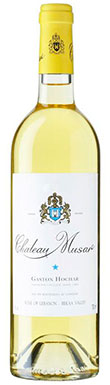

<p>The wine is delicious from the first moment of opening, boasting exotic spices, honey, orange peel and curry aromas and a luscious sensual texture on...
1975
Chateau Musar

Chateau Musar, White, Bekaa Valley, Lebanon, 1992
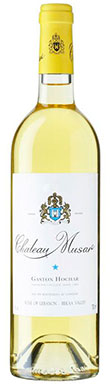
<p>You can't judge this wine too quickly; it needs to be tasted with an open mind over a long period. The initial aromas are delicate:...
1992
Chateau Musar
Chateau Musar, White, Bekaa Valley, Lebanon, 2003
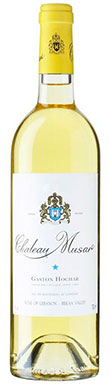
<p>This shows class on the nose: dried apricots, wax, honey, cedar and caramel. The aromas might remind you of a Bordeaux Blanc but it is...
2003
Chateau Musar
Chateau Musar, White, Bekaa Valley, Lebanon, 2012
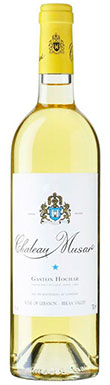
<p>This wine has gone through some oak ageing in a style reminiscent of Bordeaux Blancs from the 1960s, although slightly warmer. On the palate it...
2012
Chateau Musar
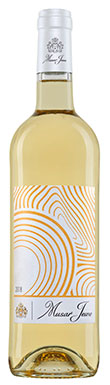
Chateau Musar, Musar Jeune White, Bekaa Valley, Lebanon, 2019
91
<p>An outspoken wine with flavours of lychees and guava on a gentle but full body that is quite suave and silky, with a long, tense finish. It is at its best when just opened: it keeps well but does not improve over three days, and fades slowly over the course of a week. The blend of Vermentino and Viognier is a smart one: fruit is the most important quality of this wine, but its amazing texture is also impressive. This is definitely a wine to enjoy with food.</p>
2019
Chateau Musar
Chateau Musar, Rosé, Bekaa Valley, Lebanon, 2017
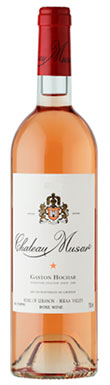
Intriguing nose with some dusky, autumnal fruit and a touch of leaf. The oak is quite prominent on the palate there is a lot of...
2017
Chateau Musar
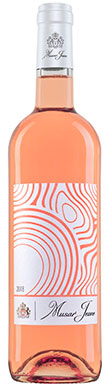
Chateau Musar, Musar Jeune Rosé, Bekaa Valley, Lebanon, 2019
89
<p>Quite restrained on the nose, with aromas of red berries and citrus. The palate is solidly built but juicy, with similar fruit flavours and a hint of hazelnuts. It is more a suave Spanish clarete than a fashionable Provence rosé. It is made to be drunk young; within two years of the vintage, as it loses its fruit a day after the bottle is opened. But it kept a nice structure, with much freshness and no faulty odours. </p>
2019
Chateau Musar
Chateau Musar, Bekaa Valley, Lebanon, 1961
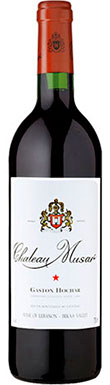
<p>An unforgettable experience! This wine looked dead as its colour was so rusty, yet while it was restrained on the nose, there were notes of...
1961
Chateau Musar
Chateau Musar, Bekaa Valley, Lebanon, 1979
<p>Different from most other wines in this tasting, this vintage should be drunk immediately. At the first taste the wine is full of elegance and...
1979
Chateau Musar
Chateau Musar, Bekaa Valley, Lebanon, 1998
<p>A rollercoaster of a wine over the week of tasting; very difficult to judge. At the first taste it seems quite developed – even over...
1998
Chateau Musar
Chateau Musar, Bekaa Valley, Lebanon, 2000
<p>At first taste, it seems quite developed, with notes of forest floor and a bit of chocolate. But then it opens up and shows unexpected...
2000
Chateau Musar
Chateau Musar, Bekaa Valley, Lebanon, 2001
<p>Developed, quite meaty and earthy on the nose, it gets better on the palate. Surprisingly tannic, which is what the makers refer to as 'the...
2001
Chateau Musar
Chateau Musar, Bekaa Valley, Lebanon, 2002
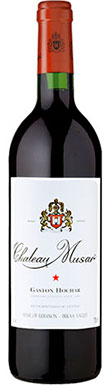
<p>A wine with rare concentration and atypical finesse, it gets better and better after the bottle is opened. It desperately needs time, because just after...
2002
Chateau Musar
Chateau Musar, Bekaa Valley, Lebanon, 2013
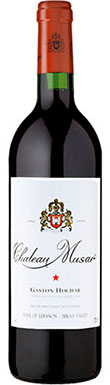
<p>This wine needs vigorous decanting otherwise it appears reduced. It shows evidence of French oak ageing: notes of vanilla with a cedar touch along with...
2013
Chateau Musar
Chateau Musar, Hochar Père et Fils, Bekaa Valley, Lebanon, 2017
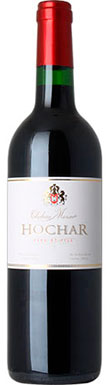
91
<p>This single-vineyard wine, from Aana, is made in a modern style: concentrated and slightly reductive. It shows notes of new oak barrels, lovely red berry fruit (reminiscent of Grenache) and garrigue aromas. So Mediterranean on the palate, with sweet tannins, spices and a meaty hint on the aftertaste. A very friendly, easy-to-drink and enjoyable wine. It becomes even better and more refined a day after the bottle is opened. I would recommend decanting it.</p>
2017
Chateau Musar
Chateau Musar, Levantine, Bekaa Valley, Lebanon, 2018
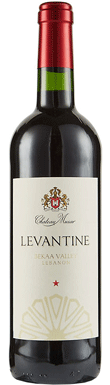
89
From low-yielding vines at 1,000m, Grenache shows its warm, high-toned herbal note here, alongside Cinsault's juicy berry fruit and sweet baking spices. It has good concentration, mouthcoating tannins and fresh acidity. One to enjoy in its youth with chargrilled meats and Mediterranean vegetables.
2018
Chateau Musar
