
Producer profile: Clos des Papes
Instrumental in the establishment of the Châteauneuf-du-Pape appellation, this venerable estate adheres steadfastly to its time-honoured values, seeking balance and finesse in its singular red and white cuvées. Matt Walls pays a visit


Like a dutiful son, I return to the ruins that sit at the top of the small town of Châteauneuf-du-Pape every year.
There’s not much left of the eponymous château these days, just two towering walls that lean against each other like exhausted old men. Dawn is the best time to visit; you can survey the blanket of vines stretching out below through the mist in the morning’s blue light to the distant clanking of bells and barking of dogs.
The cicadas don’t start screeching until later in the day. You forget how big they are until you find a desiccated carcass among the vines; those gnarled arthritic hands that reach towards the sun through bleached round stones.
Clos des Papes is a 10-minute walk away, through steep alleyways that run down from the ruins like sandstone trenches, passing vineyards punctuated with the occasional exclamatory cypress. Behind ornate metal gates lie the tall stone buildings that house the winery and offices. It feels cool inside. There is no slickly designed interior; it has the homely, practical feel and smell of a family winery.
Current owner and winemaker Vincent Avril is remarkably down to earth, considering he owns one of the greatest estates in Châteauneuf. He may be an oak of a man, but his wines are remarkably elegant for a region that certainly has its fair share of overblown, unbalanced bottles.
Clos des Papes at a glance
Location Southern Rhône, France
Winemaker Paul-Vincent Avril
Vineyard area 35ha
Number of plots 24
Average vine age 35 years old
Average yield 22hl/ha
Viticultural approach certified organic (Ecocert)
Red varieties 65% Grenache, 20% Mourvèdre, 10% Syrah, 5% other
Whites varieties Equal parts of Grenache Blanc, Roussanne, Clairette, Bourboulenc, Picpoul, Picardan
Average production Rouge 80,000-100,000 bottles Blanc 8,000-10,000; Le Petit Vin d’Avril Rouge 17,000 bottles Blanc 3,000
Turning point
The Avril family has been making wine in Châteauneuf since 1600, but 1873 was a pivotal year. Vincent’s great-grandfather, Paul-Eugène Avril, was born. And the entire Châteauneuf vineyard was wiped out by the phylloxera louse. It took five years for a treatment to be found. By the time Paul-Eugène was 17, the vineyards had largely been re-established, and when he was 23 he was among the first to sell wine in bottle, starting with the 1896 vintage.
Paul-Eugène was a pioneer in many ways, being among the first to export his wine in the early 1900s, and he registered the Clos des Papes brand in 1902. The psychedelically decorative, almost Pythonesque label design used today hasn’t changed in nearly 100 years. In 1911, He also chaired the first commission convened to look into the classification of the Châteauneuf-du-Pape vineyards – an initiative that led to the development of the French appellation d’origine laws that are replicated throughout Europe today.
The family line
Paul-Eugène’s son Régis Avril was born in 1901, and he helped steer the estate through two world wars. He worked on improving quality, eventually supplying the Palais de l’Elysée during the presidencies of General de Gaulle and Georges Pompidou. In 1954, he also bottled the first vintage of Clos des Papes Blanc, which now amounts to around 10% of overall production – a relatively high proportion. Régis’ son Paul Avril was born in 1937, and joined the estate in 1963. Paul’s son, the current custodian Paul-Vincent Avril, was born two years later.
Vincent and his father worked together at the estate from 1987 until Paul’s death in 2009. Vincent still misses him. ‘It’s impossible to have a better team than me and my father,’ he says. Paul made a number of improvements to the estate, notably in 1979 planting the Mourvèdre that is now so instrumental in the blend. But Paul was also responsible for establishing the defining qualities of Clos des Papes that often mark it out among its peers: elegance and finesse.
Paul studied in Burgundy, and even married a Burgundian. Vincent also has a great love of Burgundy, having studied in Beaune alongside his chef de culture Jean-Luc Lancelot. ‘We don’t want to make a Burgundy, but when people say we make the most Burgundian style of Châteauneuf, I’m happy with that,’ he says.
After his studies, Vincent travelled to different wine regions around the world to work, including Bordeaux (Château Mouton Rothschild, Château de Gaillat), Provence (Domaines Ott) and Australia’s Yarra Valley (Mount Mary). Other Châteauneuf producers praise his breadth of tasting experience, and the Clos des Papes cellars are also home to dozens of cases from other wineries around the world. It’s helped him develop an objective viewpoint. ‘The image of Châteauneuf-du-Pape is that of power. So what we try to do is bring balance.’ Key to this is blending.
Clos des Papes – a timeline
1873 Entire Châteauneuf vineyard destroyed by phylloxera; birth of Paul-Eugène Avril
1878 Re-establishment of the Châteauneuf vineyards begins
1890 600 hectares replanted
1896 First bottled vintage of Clos des Papes
1901 Paul-Eugène’s son, Régis Avril, is born
1902 Clos des Papes brand registered
1911 First commission for classifying the Châteauneuf-du-Pape vineyard held, chaired by Paul-Eugène Avril
1937 Paul Avril, Régis’ son, is born
1954 First vintage of Clos des Papes Blanc
1962 Death of Paul-Eugène Avril
1963 Paul Avril joins the estate
1965 Paul Avril’s son, Paul-Vincent Avril, is born
1987 Death of Régis Avril
1987 Paul-Vincent Avril joins the estate, his first vintage
1992 First release of Petit Vin d’Avril Rouge
1997 First release of Petit Vin d’Avril Blanc
2009 Death of Paul Avril
2011 Estate certified organic
Crafting a blend
The Clos des Papes wines don’t come from a single walled vineyard as the name suggests. The ‘Clos’ refers to one plot of old vines, the oldest part of the property, situated next to the ruins of the pope’s old château in the town. But there are a further 23 plots scattered across the appellation, which amount to a total area of 35ha (hectares) under vine. The estate’s range of Châteauneufs amounts to just two: a red and a white.
Châteauneuf is a big appellation: it spans a total of 3,200ha, or 32km². There is a distance of 10km between Vincent’s most northerly and southerly plots, and he can see a difference of 10 days in the ripening of grapes at either end. His vines are grown on all the different soils available, and they give different nuances to the finished wine; sand gives finesse, whereas clay produces wines with more power and structure.
Vincent’s reds are typically co-fermented blends of 65% Grenache, 20% Mourvèdre, 10% Syrah and 5% of co-planted Counoise, Vaccarèse, Muscardin, Terret Noir, Cinsault and Picpoul Noir; while his whites contain an equal percentage each of Grenache Blanc, Roussanne, Clairette, Bourboulenc, Picpoul and Picardan. ‘The complexity of Châteauneuf comes from blending varieties and terroirs,’ he believes. ‘Take that away and it’s no longer Châteauneuf-du-Pape.
The work done in the vineyard is the key to quality for Vincent. ‘I’ve never sold a single litre to a négociant,’ he states with pride. ‘All the work is done in the vineyard to make sure no tank is sub-standard.’ He works his vines organically, and since taking control of the estate he has stopped filtering the wine, introducing full destemming and reducing yields to an average of 22hl/ha – even as low as 13hl/ha in 2013. ‘It’s not an economic choice, it’s a quality choice,’ he admits.
He’s also introduced Le Petit Vin d’Avril, a red and a white Vin de France pair from small plots of vines just outside the Châteauneuf-du-Pape appellation boundaries. Each of these is produced with the same care as the grands vins, but the blends are different; the white is 90% Marsanne, 10% Chardonnay, while the red is made up of Grenache, Syrah, Mourvèdre, Cabernet Sauvignon, Merlot, Marselan and Caladoc. The white is unoaked, but one third of the red spends a year in oak foudres, which helps to season them ready to receive the red Clos des Papes for its maturation.
Beyond fashion
Grenache, though key to the Châteauneuf blend, does have its drawbacks. For Vincent, it can’t produce fully mature grapes at less than 14.5% alcohol. Another benefit of using other grape varieties is that they can help reduce the overall alcohol level. He aims for 14%–14.5% alcohol. ‘We make powerful wine, but not 17%.’
Use of oak has always been restrained at the estate. The red Châteauneuf is matured in large old oak barrels for 12-15 months, but only to soften the wine, not to add oak flavour. He doesn’t use any new oak ‘because you taste wood everywhere in the world and you get the same taste – that’s why I don’t use it’. The white Châteauneuf is fermented and matured only in stainless steel.
An emphasis on finesse and balance, restrained alcohol levels and reduced use of oak – these are current trends in wine regions around the world, but following fashion has never been the way at Clos des Papes. In the 1990s, when many Châteauneuf estates were producing ever more intense and concentrated special cuvées in the hunt for high ratings, Clos des Papes kept a respectful distance. ‘First of all, winemakers must make wines that they like to drink. Our wines are to go with food, and it’s for that reason we don’t make special cuvées. We never have and we never will.’
Price is often a fairly reliable guide to quality in wine, but this is not the case in Châteauneuf-du-Pape. The most expensive bottles are often over-extracted, overly alcoholic and heavy; they may show well in tastings and garner high points from some critics, but they lack drinkability and balance. Paradoxically, however, Clos des Papes can still be found for under £50 a bottle in the UK. It’s hard to think of many other ageworthy and collectable grands vins from top estates in classic regions, with a track record for quality, that can be bought for this price.
Vincent doesn’t currently have children, but his sister has six girls and his brother Claude, the mayor of Châteauneuf, has two boys. In the meantime, Vincent plans to continue ploughing the furrow that has served them well until now. Not that this means resting on his laurels: ‘You can always increase the quality,’ he says.
If you’re looking for a blockbuster Châteauneuf, Clos des Papes perhaps isn’t for you. But in terms of drinking pleasure and finesse, it’s a wine that could seduce even the most fervent Châteauneuf naysayer.
Top scoring Clos des Papes wines
Clos des Papes, Châteauneuf-du-Pape, Rhône, France, 2010
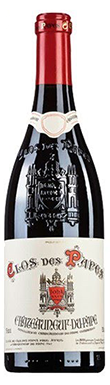

Undoubtedly one of the greatest Châteauneuf vintages of recent times, up there with the 1990 - and perhaps the 2016; time will tell. It's deeply...
2010
Clos des PapesChâteauneuf-du-Pape

Clos des Papes, Châteauneuf-du-Pape, Rhône, France, 1998
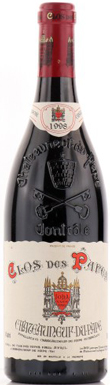
A hot vintage in the Rhone, good in the north but even better in the South, particularly in Châteauneuf. Very much plum in colour, this...
1998
Clos des PapesChâteauneuf-du-Pape
Clos des Papes, Châteauneuf-du-Pape, Châteauneuf-du-Pape, Rhône, France, 2016
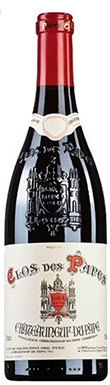
Yields are always low at Clos des Papes, but this was Vincent Avril's biggest harvest since 2007, with yields of 25hl/ha. A tasting of various...
2016
Clos des PapesChâteauneuf-du-Pape
Clos des Papes, Blanc, Châteauneuf-du-Pape, Rhône, France, 1998
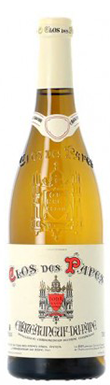
1998 is generally a better year for reds than whites, but this is something special. It has a really compelling nose of struck flint, cedar...
1998
Clos des PapesChâteauneuf-du-Pape
Clos des Papes, Châteauneuf-du-Pape, Rhône, France, 2005
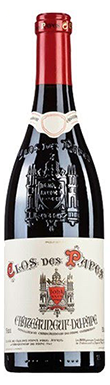
A beautiful vintage in the southern Rhône, hot and dry, which produced wines of power and finesse. After 12 years of age this still displays...
2005
Clos des PapesChâteauneuf-du-Pape
Clos des Papes, Châteauneuf-du-Pape, Châteauneuf-du-Pape, Rhône, France, 2016
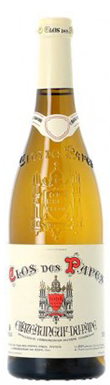
From various plots around the appellation, farmed organically. All six white varieties were co-fermented in equal percentages. There's a distinct quince, pear and aniseed character...
2016
Clos des PapesChâteauneuf-du-Pape
Clos des Papes, Châteauneuf-du-Pape, Rhône, France, 2000
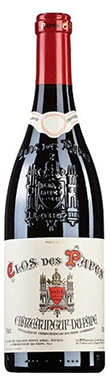
Fully mature at 17 years of age, this should remain on a plateau for the next seven or eight years. The palate is still generous...
2000
Clos des PapesChâteauneuf-du-Pape
Clos des Papes, Châteauneuf-du-Pape, Rhône, France, 2017
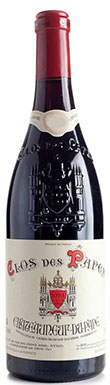
This has an expressive nose with notes of blackcurrant and spice (liquorice). The palate is ripe, supple and fragrant, again with blackcurrant notes on the...
2017
Clos des PapesChâteauneuf-du-Pape
Clos des Papes, Châteauneuf-du-Pape, Rhône, France, 2013
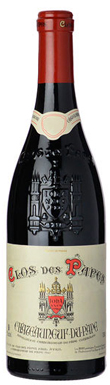
More Mourvèdre than usual this year, and tiny yields of just 13hl/ha. Pretty red fruits, damson, wild strawberry and raspberry on the nose. Violet top...
2013
Clos des PapesChâteauneuf-du-Pape
Clos des Papes, Blanc, Châteauneuf-du-Pape, Rhône, France, 2012
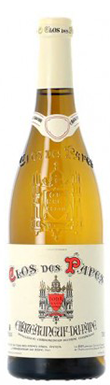
2012 was a lovely vintage of great freshness in the southern Rhône, despite some high alcohols, and at five years of age this is taking...
2012
Clos des PapesChâteauneuf-du-Pape
Clos des Papes, Châteauneuf-du-Pape, Rhône, France, 2016
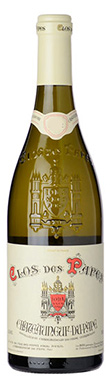
From various plots around the appellation, farmed organically. All six white varieties were co-fermented in equal percentages. There's a distinct quince, pear and aniseed character...
2016
Clos des PapesChâteauneuf-du-Pape
Clos des Papes, Châteauneuf-du-Pape, Rhône, France, 2009
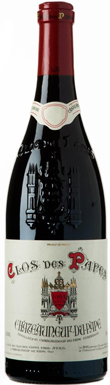
Vincent Avril at Clos des Papes owns around 32 hectares of vineyards across more than 20 plots, including one by the grounds of the famous...
2009
Clos des PapesChâteauneuf-du-Pape
