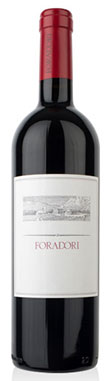
Christelle Guibert headed up into the Dolomites to visit Elisabetta Foradori, a key figure in Italian winemaking, who put Trentino and its native grapes on the map...
Now fifteen minutes late and my blood pressure rising, I’m driving up and down this steep, serpentine road sliced through the Dolomites mountain range, trying to find Elisabetta Foradori’s house. It was a chance encounter with her wines five years ago that first sparked my curiosity. Wines with such energy and purity, from unheard-of grape varieties; a visit was a must.
Meeting Foradori, one is immediately struck by her calm poise, her elegance, charm and intensity. She comes across as friendly with a bohemian chic look, oozing charisma as if straight out of a Jean-Luc Godard movie.
Today she is joined at the table by Emilio, her eldest son. While Foradori seems thoroughly Italian, Emilio’s Germanic accent betrays something of his origins, and the region of Trentino.
Neighbouring Alto-Adige is the historic land of South Tyrol, and an echo of the Austrian empire remains. Names of places are in both Italian and German, the Bayern Munich flag is flown, and spaezle (gnocchi-like dumplings) are regularly seen on menus.
Scroll down for Christelle’s top five wines from Foradori
Emilio is young but has been brought up thinking about wine. It was a different story for Elisabetta, thrown in at the deep end in sad circumstances. Aged 11 when her father passed away, she watched while her mother struggled on, in competition with the local cooperatives. ‘She wasn’t so connected to the vines, more to the bank account. A very pragmatic woman,’ Foradori recalls with an affectionate smile.Her grandfather, a lawyer also involved in local politics, had first bought the 15 hectare domaine in the 1920s and sold wine in bulk. Bottling the wine under the Foradori name would have to wait until 1960 when Elisabetta’s father Roberto learned oenology and injected more ambition into the winery.Throughout this time Trentino’s wines remained unknown to a wider public.‘I didn’t decide to make wine. I had to do what my father had done,’ she notes with a nonchalant shrug. She enrolled in the local oenology school aged 16 and before long was in charge. A passionate mountain climber, the greatest appeal of running a wine estate was to be working outdoors, and the space and freedom it allowed her.
‘I was alone, but I was completely free to do what I wanted, as my mother wasn’t involved,’ she says. ‘At 20 I had a lot of responsibility, but also a lot of space.’
Decanter newsletter
Get our daily fine wine reviews, latest wine ratings, news and travel guides delivered straight to your inbox.
Her passion for nature and the outdoors is clear. She looks wistful as she recalls hunting with her grandfather, and in the vineyard she skips around like a contented child, admiring her compost and pointing out with pride the quantity of worms with which it hums.
Average yields 45hl/ha on trellis, 65-70hl/ha on old pergolas, 35-40hl/ ha on old pergolas for Granato
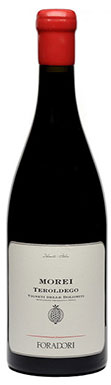
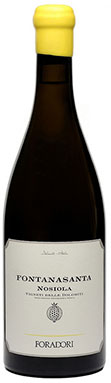
Average annual production 160,000 bottles, of which: 80,000 estate Teroldego; 20,000-25,000 Manzoni Bianco; 20,000 Granato; 10,000 Morei (from 2.5ha); 10,000 Sgarzon (from 2.4ha); 8,000 Nosiola; 8,000 Pinot Grigio
Soil Alluvial, limestone and sand
Vine density 6,000/ha
Love and innovation
The first major change, both in the vineyard and in her life, came with the arrival of Rainer Zierock, a biochemistry professor from Germany who was lecturing locally. As well as love, marriage and three children, he brought a boundless creativity which, if somewhat wayward, gave incentive to experimentation and ambition in the wines.
As she recalls: ‘The accepted wisdom at the time was that the local grape varieties weren’t capable of producing anything good. But Granato was born in 1986, thanks to Rainer.’ Made from old-vine Teroldego grown on traditional pergolas, Granato would go on to become Foradori’s flagship wine, helping to put the esate, the region and the grape variety firmly on the map.
Although they would ultimately divorce, and Zierock sadly pass away in 2009, his presence is still keenly felt. A quote of his continues to adorn the back label of the wines, his artwork is on the walls of the family house, and many innovations – such as massal selection and the focus on indigenous varieties – can be traced back to his time.
‘Emilio’s father was a crazy man but a special man, very clever and impulsive,’ recalls Foradori. ‘He was like an artist: very difficult on the one hand but with a lot of love on the other.’
(Image credit: Credit Unknown)
The 1990s was a period of mixed fortunes. The business was flourishing, and Granato was gaining increased recognition among connoisseurs. Privately though, as well as the difficulties of divorce in 1993, Foradori felt an increasing sense of disconnection.
‘By the end of the 1990s, I was done,’ she says. ‘The money was good and the winery was very successful, but I was missing the intuition, the connection with the land.’
This existential crisis was only averted with the help of Alsatian winemaker friend Marc Kreydenweiss. On his recommendation, Foradori adopted biodynamic practices in the vineyard.
This, a ‘life or death move’ by her own admission, allowed the reconnection with the soil she had been craving. She started with 2ha in 2000, and by 2002 the entire domaine was being run biodynamically, and was fully certified by Demeter in 2009.
The next important chapter for the estate began after an exchange with Giusto Occhipinti, winemaker at COS in Sicily. Impressed with the results in his own wines, Occhipinti urged the use of clay amphorae or tinajas.
Foradori bought one 400-litre tinaja in 2008 and started experimenting with skin contact on the white wines. The vessels are left open and the grapes and juice fermented for 20 days, with the skins submerged by hand, then the tinajas are closed for six to eight months.
The biggest danger is fermentation stopping, and because of this two or three tinajas-worth of wine will be lost each vintage. ‘I remember when I opened them for the first time I was so afraid everything would oxidise,’ she recalls.
But in fact the results were so positive that tinajas were soon used for the red wines as well, and the winery now boasts 158 amphorae. Foradori insists on only using one craftsman, from Villarrobledo in Spain, sceptical of the quality to be found in others.
As we leave the cellar, she pauses to scan the room and reflects: ‘With this [the tinajas], the last bit of technology in my head died!’
‘With this [the tinajas], the last bit of technology in my head died!’ Elisabetta Foradori
Foradori – a timeline
1920 Vittorio Foradori, a Trentino lawyer, buys the estate and sells wine in bulk
1960 His son Roberto takes over and starts bottling wine under the Foradori name
1986 First vintage of signature wine, Granato, released
1987 Elisabetta meets Professor Rainer Zierock, a big influence and the father of her three children
2002 First biodynamic preparations used on advice from winemaker friend Marc Kreydenweiss
2007 Lease of 8ha vineyard, Fontanasanta, near Trento
2008 First tinajas bought and experiments begin on skin-contact white wine
2009 Certified biodynamic by Demeter; first skin-contact wine, Nosiola, launched
2013 Emilio Zierock, Elisabetta’s son, starts at the winery after work experience abroad
2015 Emilio is now in charge of the winemaking. His brother Theo Zierock joins to handle public relations and sales management for Foradori
The next generation
Today the work in the cellar has been passed on to Emilio, though his mother very much remains an active participant. As he wryly observes: ‘Now it is a collaboration. If there are any doubts – but there are never any doubts – mum decides!’ Having studied philosophy before oenology, followed by work experience as diverse as Bordeaux’s Château Cheval Blanc and Bodega Chacra in Patagonia, Emilio expresses continuity from both parents.
The main change in the winery has been shorter macerations and gentler extractions, now with up to 30% whole bunches in their fermentations. As he explains: ‘I make cakes and hamburgers,’ inserting whole bunches between berries (hamburgers) or building up layer upon layer of whole bunches with berries (cakes).
Emilio is keen to stress this is far from the hippy image of hands-off, natural wine- making. ‘You have to be present, you have to observe, and if things are going in the wrong direction you have to act. This means a lot of looking down a microscope. You never know exactly what’s happening in the tanks, but you use your judgement and guide it a bit. And some wines need to be guided.’
The effect has been to retain the wines’ distinctive freshness and complexity, but also to emphasise their softer side. ‘My mum says the wines are more floral now; ironically the wines I make have become more feminine.’ Seeing the two of them together, there is a clear mutual respect, even if both admit mixing work and home life has its challenges.
In her poise, charisma and energy, Elisabetta Foradori brings to mind the late Anne-Claude Leflaive of Burgundy, another woman whose wines reach the heights of individuality, precision and excellence.
As the evening meal draws to a close, a thunderstorm descends on the Dolomite hillside. Foradori perches on the windowsill, rolls a cigarette and gazes out. Just a flicker of melancholy crosses her face, illuminated by the dramatic light show outside. For a woman who so clearly puts her heart and soul into everything she does, stepping back cannot be easy.
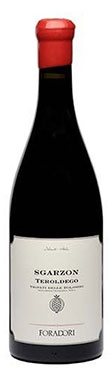
Teroldego sourced from the historic, cooler Sgarzon vineyard on sandy soil. Skin maceration in amphora gives a vibrant red cherry and floral nose of great...
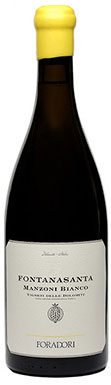
Foradori, Fontanasanta, Manzoni Bianco, Vigneti delle
My wines
Manzoni Bianco is a cross between Riesling and Pinot Blanc, and grapes are sourced from the Fontanasanta vineyards. This has delicate white flower and stone...
From young Teroldego vines sourced from 16 parcels. Fruit, 30% whole bunch, is fermented in concrete tanks then aged half in oak, half concrete. This...