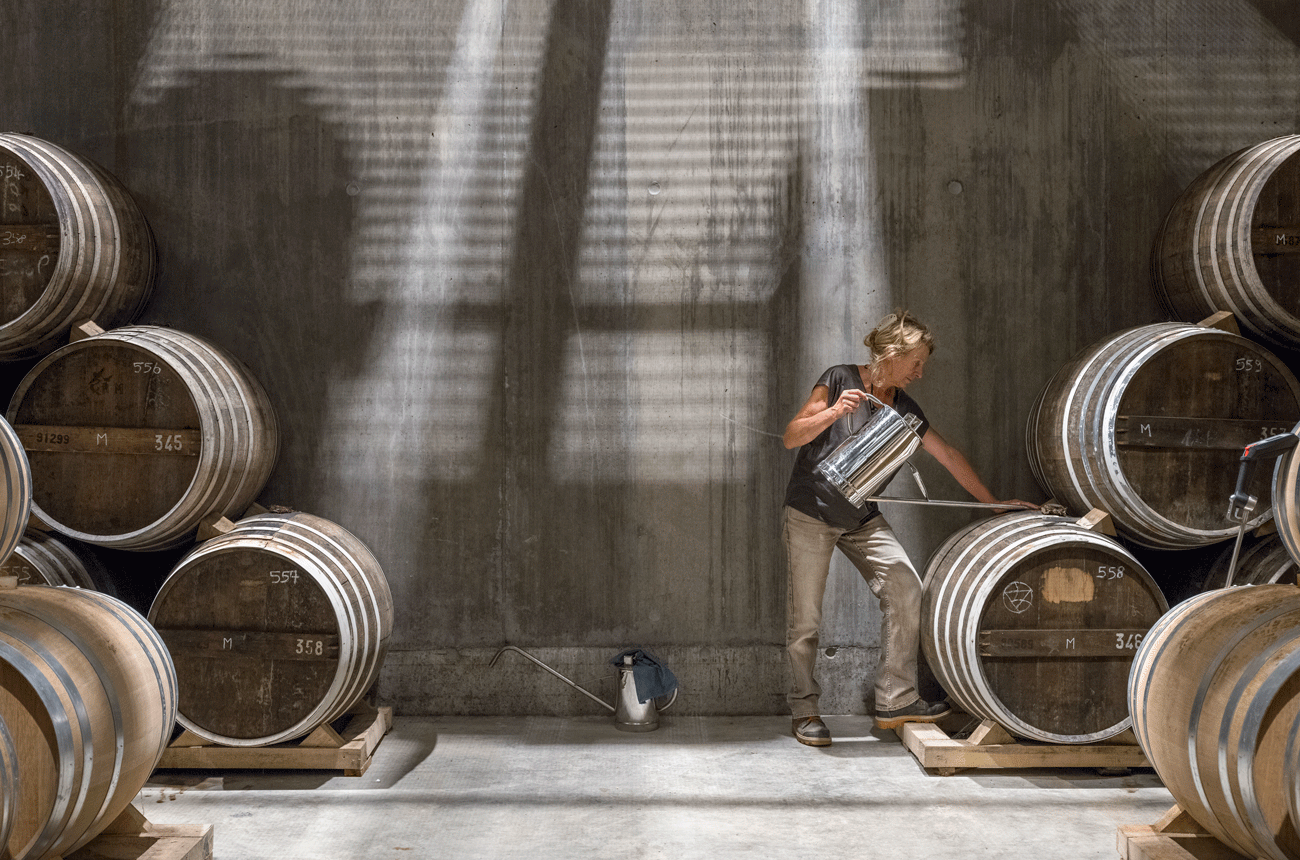
Discover Tasmanian whisky
Grabbing global attention since 2014, the single malts of Tasmania have a distinctive sense of place. Cassandra Charlick shares their history and recommends five great bottles to try.

What shall we do with the drunken sailor? In the early 1800s, the answer would have been to keep him sailing to whichever far-flung destination the British Empire was attempting to expand into. One such destination was Van Diemen’s Land – now Tasmania – where a penal colony was established in 1803, marking the beginning of the long history of the Tasmanian spirits industry.
In the early days, coins were scarce and booze plentiful, leading to spirits playing an essential role in trade and payment for goods and services. Distilling was legalised in Tasmania 1822, and Australia’s first legal distillery, Sorell Distillery, was established by Thomas Haigh Midwood in Hobart. In fact, Sorell Distillery produced Tasmanian whisky a full two years before Scotland's first legal distillery, Glenlivet.
Over a dozen distilleries followed suit, but not for long. Tasmania’s whisky industry was halted in 1839 with the introduction of the Distillation Prohibition Act, introduced by Governor John Franklin. His teetotaling wife famously declared: ‘I would prefer barley be fed to pigs than it be used to turn men into swine.’
A new era
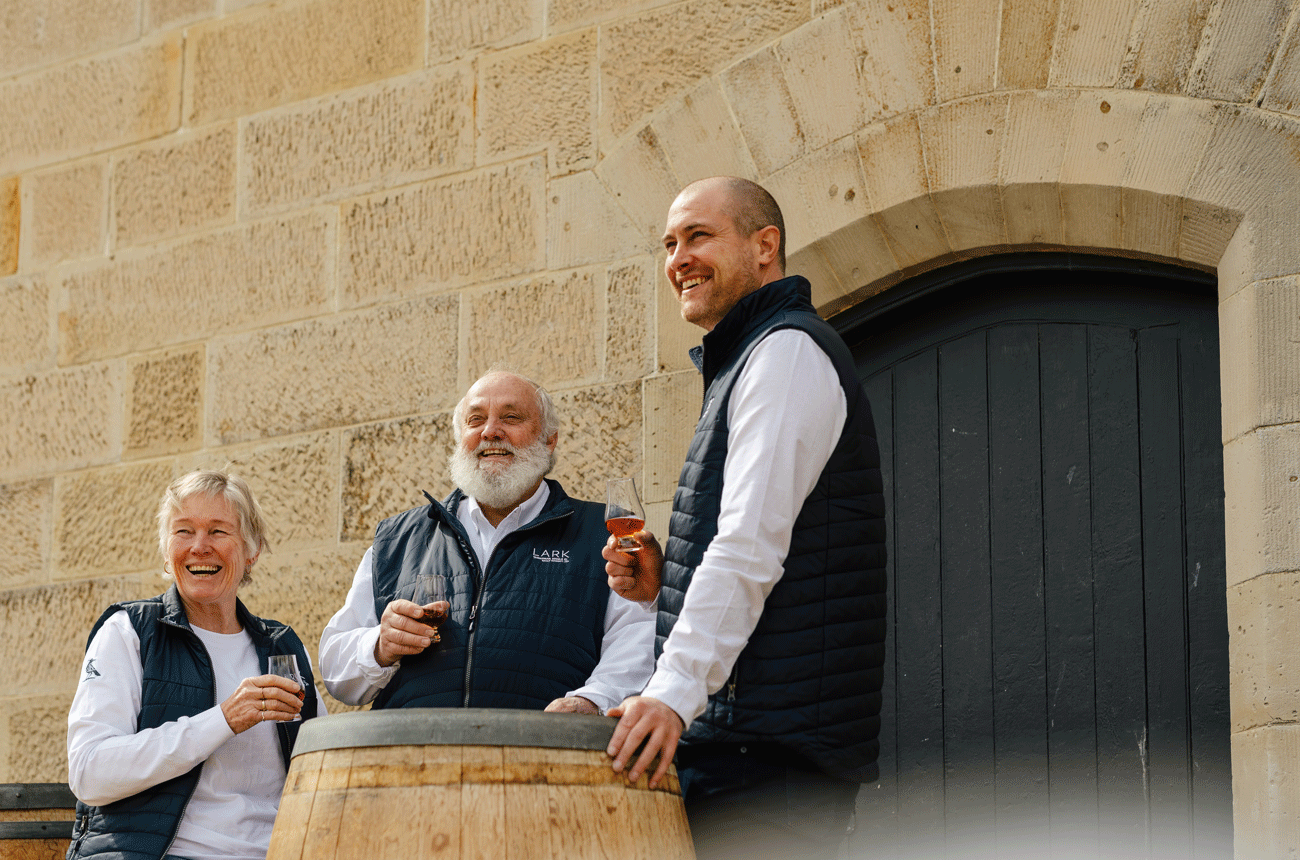
From left: Lyn and Bill Lark with Master Distiller Chris Thomson of Lark Distillery
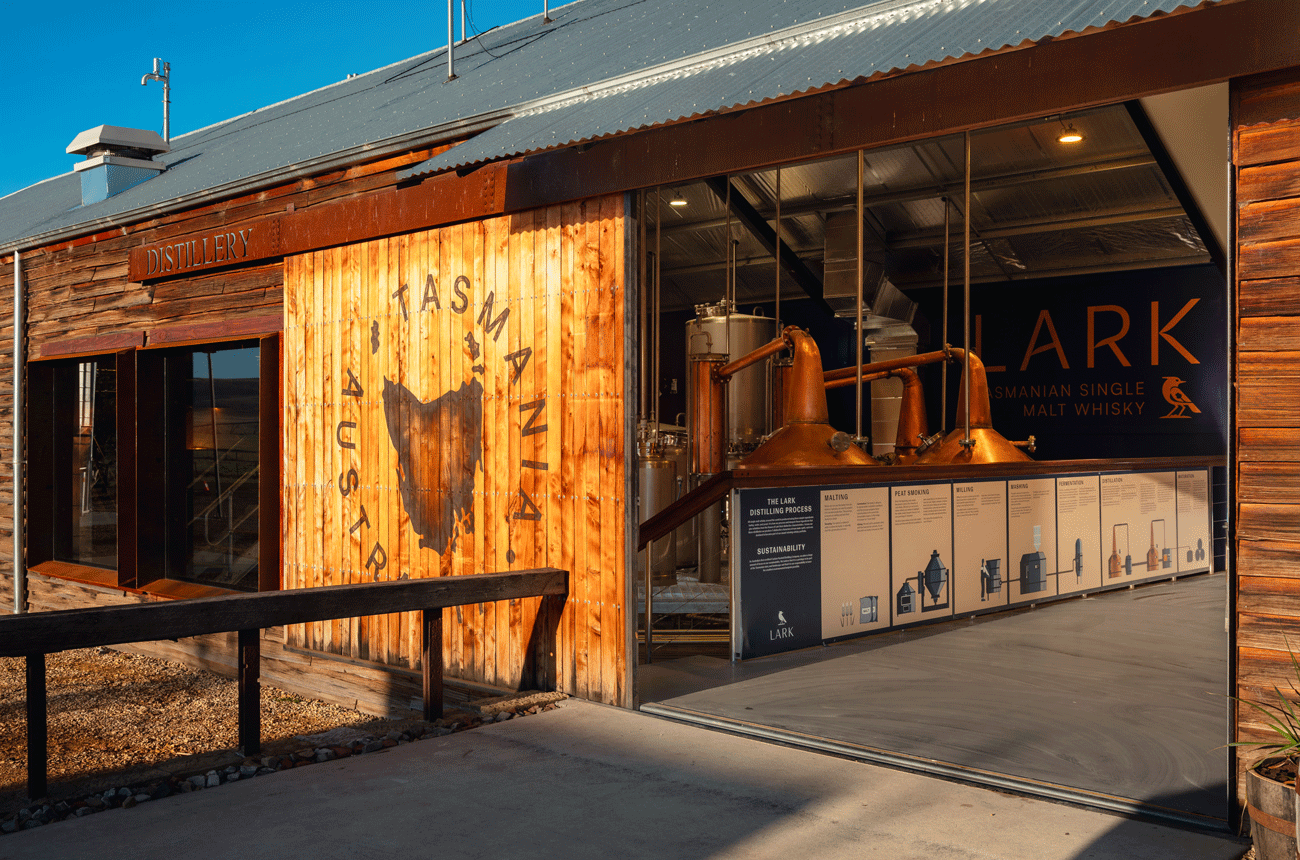
It would take another 154 years until the distilling industry was rebooted and there’s one name we have to thank for the modern Tasmanian whisky industry: Bill Lark. It was Lark’s lobbying (along with his wife, Lyn) that resulted in legislative change in 1990 to legalise small-scale craft distilling in Tasmania.
The pair launched Lark Distillery in 1992, distilling from the family home in the suburb of Kingston, just south of Hobart. ‘I grew up with the still outside my bedroom door,’ shares Kristy Lark-Booth, Jack and Lyn’s daughter, who is now owner and distiller of Killara Distillery, as well as president of the Tasmanian Whisky and Spirits Association. ‘That's where the name Killara comes from. It’s the name of the street where we lived.’
Shortly after Lark’s inception, in 1994, Tasmania Distillery was founded by Robert Hosken in Sullivans Cove, changing its name to the latter with new ownership in 1999. Patrick Maguire, a friend of Bill Lark, then purchased Sullivans Cove with several investors in 2004. It was under his management that the distillery transformed the trajectory of Tasmania’s whisky industry.
Making history
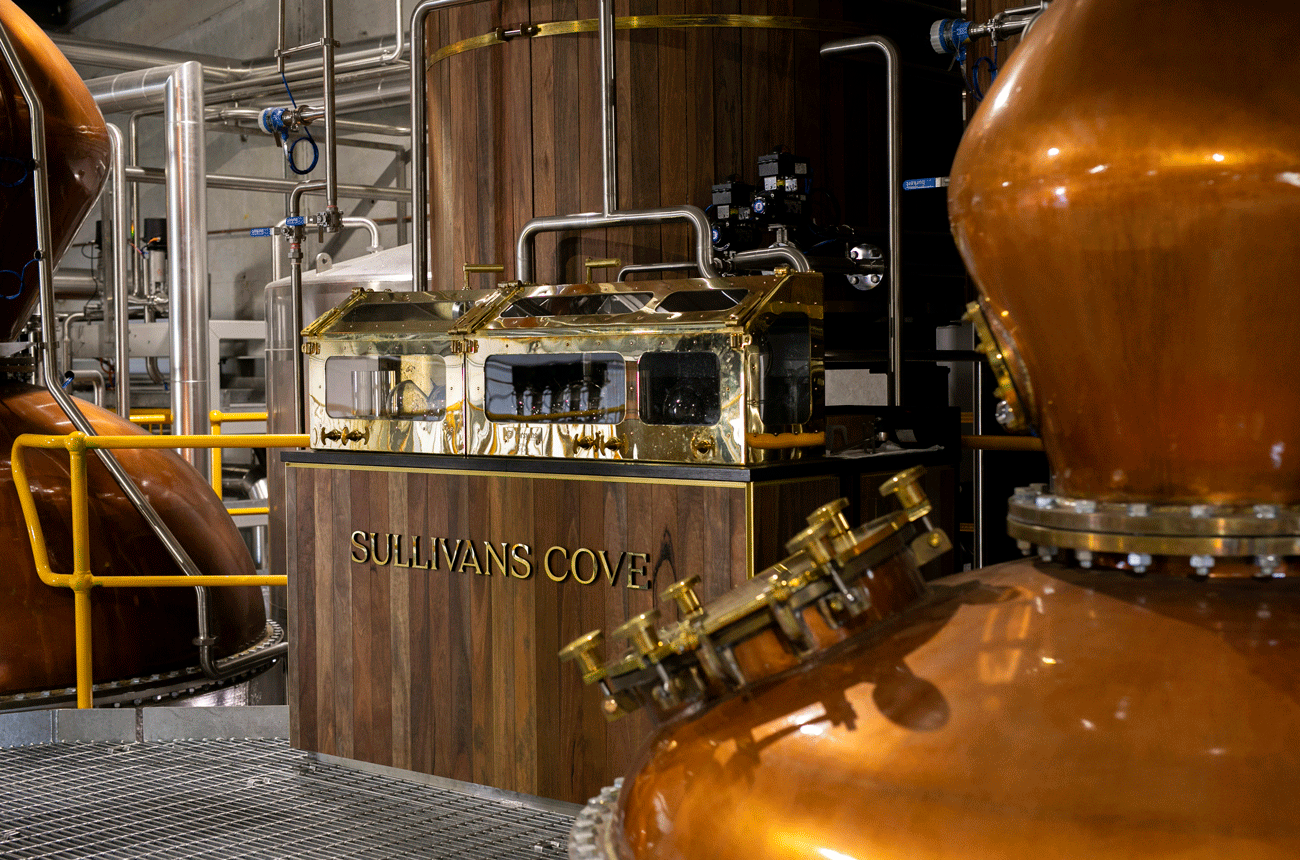
Sullivans Cove Distillery put Tasmanian whisky on the map
In 2014, the distillery was the first outside of Scotland and Japan to win the World’s Best Single Malt at the World Whiskies Awards with its French Oak Cask expression. The distillery has since gone on to take home the title of Best Single Cask Single Malt three times: in 2018, 2019 and 2026.
The 2014 accolade inspired a swath of new producers, and the figure has continued growing. ‘Killara was about the 16th licensed distillery in 2016. So it was roughly 25 years between the first distillery and the 16th,’ says Lark-Booth. ‘And now we’ve got about 80 or so distilleries in Tasmania.’
It’s difficult to establish the exact figure in terms of whisky producers, as distilling licences don’t differentiate the type of spirit distilled. However she estimates that around 60 distillers produce whisky throughout the island state.
A sense of place

Kristy Lark-Booth at Killara Distillery
Distilleries are dotted throughout the island, all benefiting from its diverse microclimates, fresh air, pure water, and high-quality barley. Tasmania sits between 40-44° latitude south; Scotland between 55–59° degrees north.
‘There’s not much between Antarctica and us,’ says Lark-Booth. ‘We get huge pressure systems from the south, creating a perfect environment: warm days, cool evenings, but not too hot or too cold. Whisky interacts with the cask through those pressure changes,’ she adds.
‘In Scotland's stone warehouses, the temperature is very even year-round, so maturation takes much longer, also because they use larger vessels than the ones most people here use,’ she adds. This, alongside the industry’s youth, is why age statements are not the norm for Tasmanian whisky.
Quicker maturation
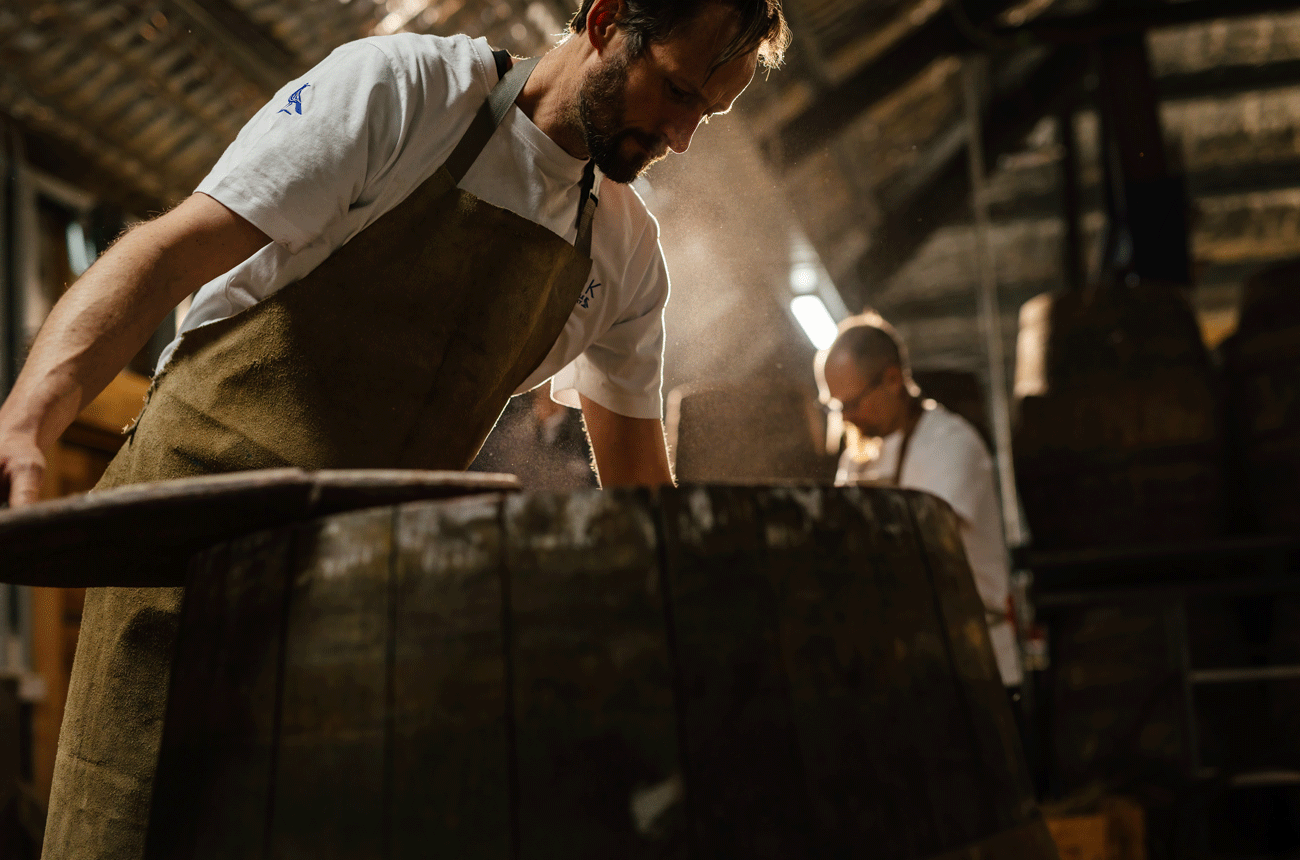
Lark Distillery uses barrels made by Tasmanian coopers
The Tasmanian climate and greater temperature fluctuation are responsible for another unique difference in the cask ageing process. At most Tasmanian distilleries, the angel’s share (the portion of whisky that naturally evaporates through the porous wood of the cask as the spirit ages) is at least double the amount in Scotch production, consisting of higher amounts of water evaporation versus alcohol evaporation.
‘In Scotland, casks are generally laid down at 63.5% and lose 1-2% volume annually to evaporation, primarily alcohol, as alcohol has a lower evaporation point than water. Colder, humid conditions mean whisky slowly drops in strength,’ Ashley Pryor of Sullivans Cove explains.
‘In Tasmania, warmer and drier conditions mean losses of 4-5% annually, but what evaporates is primarily water. Tasmanian whisky gets stronger in the cask, concentrating inside the barrel with the temperature fluctuating around 20 times a day, driving exacerbated interaction with the wood. In short, it matures at roughly double the pace of Scotch.’
A Tassie signature
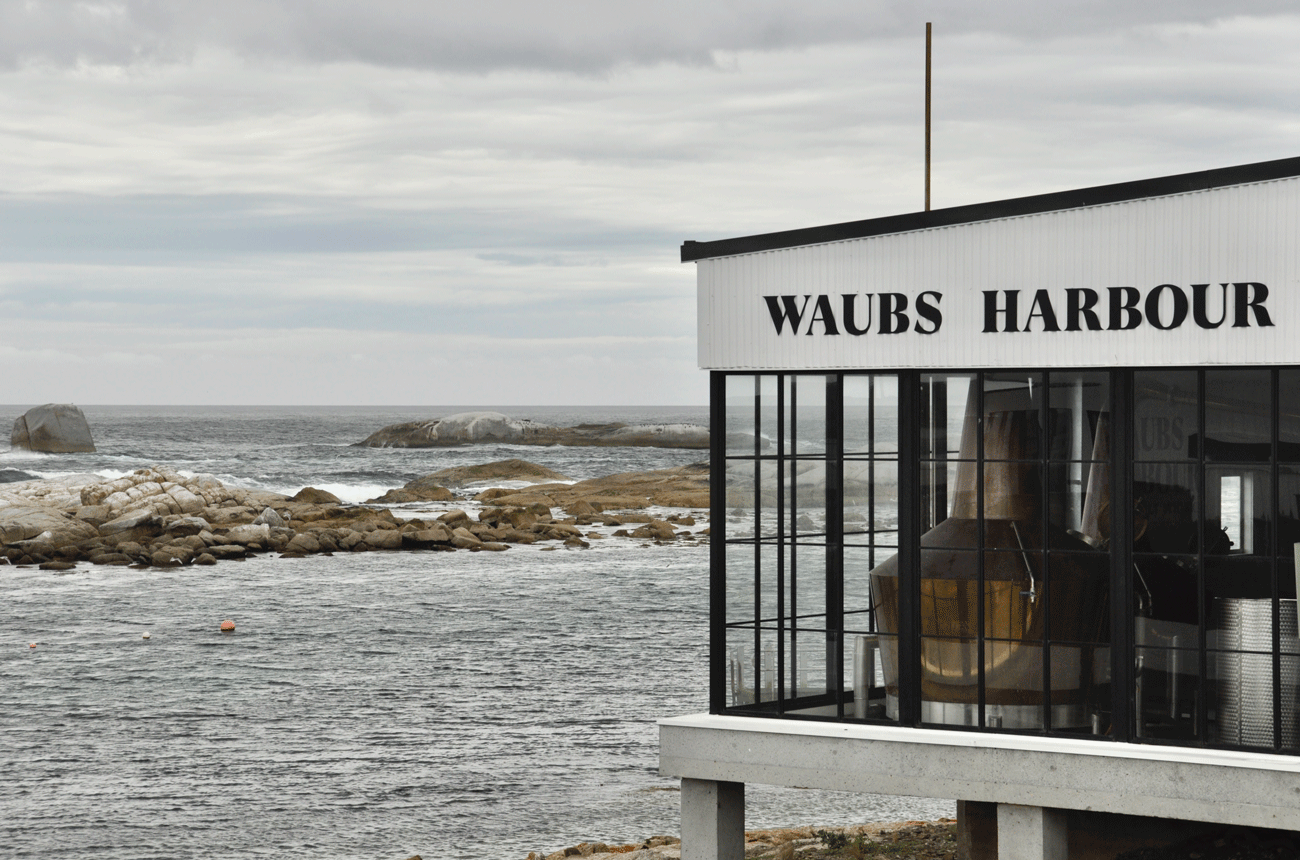
Waubs Harbour Distillery beside the ocean in Bicheno, Tasmania
Tasmanian whisky is spelled without an ‘e’, reflecting a style and production method closer to Scottish than American or Irish whiskey. But several hallmarks set it apart from Scotch and other global whiskies. Predominantly, you’ll find single malts, not blended expressions, and many distillers produce single cask releases.
Distillers take pride in local ingredients: locally grown and malted barley, Australian fortified casks, Tasmanian Pinot Noir casks, Tasmanian peat, and local coopers and still-makers. Tasmanian peat differs from UK peat, shaped by local botanicals such as gum trees, pepperberry and more, giving it a distinct character that carries through to the spirit.
‘The formula for Tasmanian whisky is making sure you care about each part of the process,’ shares Rob Polmear, co-founder and head distiller at Waubs Harbour. ‘Brew it yourself, using Tassie barley and water, things that make it provenance-based, but also because the barley here is great; it’s a brewer's barley meant for high flavour,’ he adds.
‘Then distilling involves using stills like Bill Lark chose in those early days. Pure copper, short-necked stills, which are hallmarks a lot of distilleries share, pushing for big, oily whiskeys,’ says Polmear. Finally there’s maturation. ‘A lot of Tasmanian whiskeys use tawny, and all three of our core lines have it. As you go up in price, you see more. That’s a hallmark of Tasmanian style.’
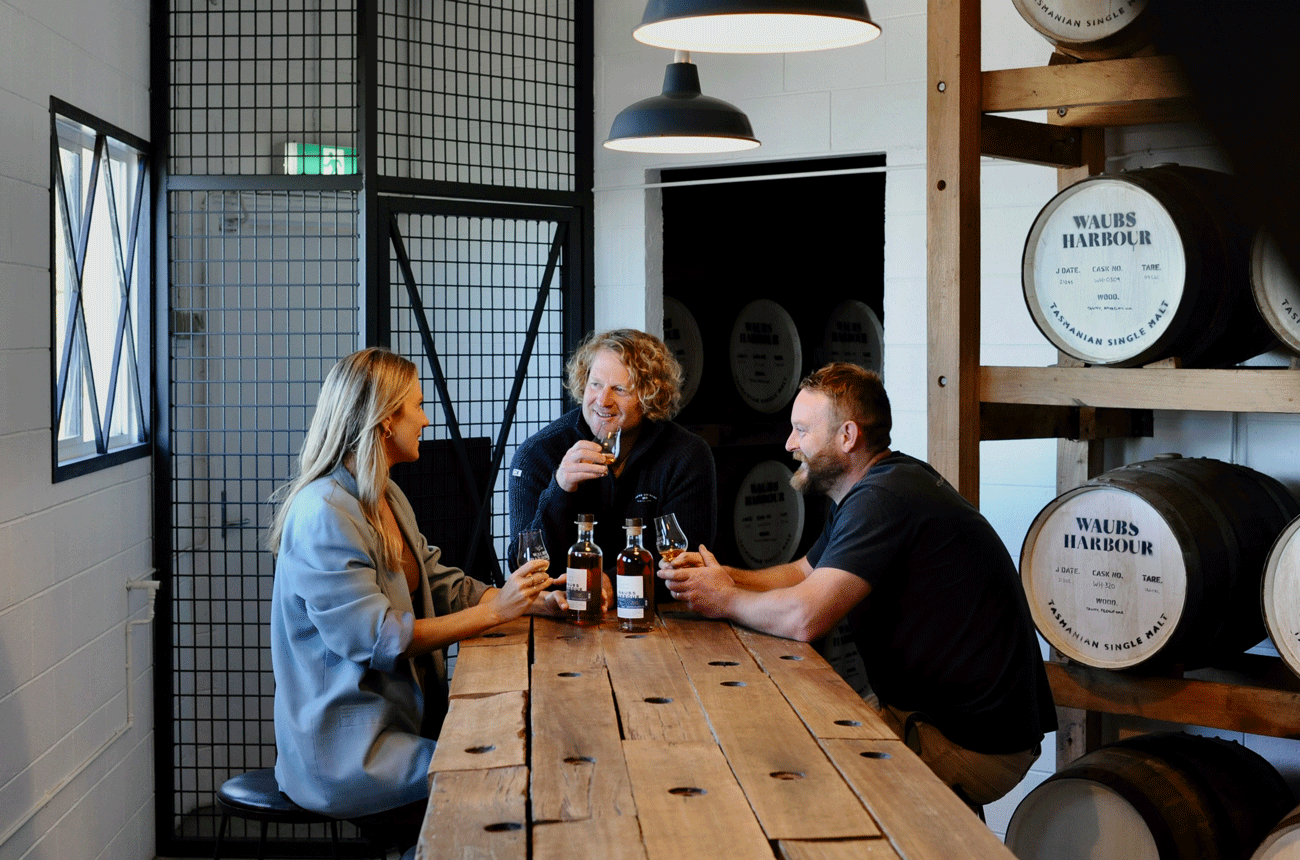
Bec Polmear, Tim Polmear and Rob Polmear, co-founders of Waubs Harbour
Tasmanian whisky: five to try
Killara KD91 ex Tawny Whisky Abbey 2025 Release – Bonnie ‘Breath of Fire’
A single cask, small-batch release, matured in a 100-litre tawny Port cask and offering up caramelised malt, Christmas cake, sea spray and salted caramel. Fruity and smooth on the palate with a creamy, spiced custard apple finish. Also available at cask strength. Alcohol 52%
Lark Fire Trail No 151
From Tasmania’s founding and largest distillery, which is now a publicly traded company. Single malt aged in Port and Sherry casks, then finished in ex-bourbon and American oak wine casks. Vanilla bean toast, orange blossom, creamed honey and subtle smokiness. A smooth, balanced, easy-drinking whisky with a generous finish. Alc 41.5%
Overeem Port Cask Matured Distiller Strength
From the fourth distillery in Tasmania, founded in 2005 by Casey Overeem and now run by his daughter Jane Overeem and her husband Mark Sawford. The Port Cask is their flagship, always a single-cask release, yet with a consistent house style. Mid-caramel toast, a lick of sea salt, white gum honey and creamed pear. Smooth and approachable. Alc 43%
Sullivans Cove TD0348 14 Year Old Single Cask American Oak Second-Fill
This single-cask, small-batch distillery placed Tasmanian whisky on the map with global accolades. The core range is centred on American oak, French oak and a double cask blend. An emerging Tassie category, second-fill casks allow the spirit to shine without the influence of a fortified predecessor. Bright citrus and orchard fruits, crème caramel, a dusting of dried sage and an impressive finish. Alc 48%
Waubs Harbour Founder’s Reserve Batch 11
A maritime distillery located in Waubs Harbour and founded in 2018 by head distiller Rob Polmear (ex-Lark and Overeem), and his brother and sister-in-law, Tim and Bec Polmer. Matured in older tawny Port casks and offering up layered spice, molasses, lamb fat umami and deep complexity. Rich and oily, a cask-strength cigar malt style. Alc 62%
Related articles