
Producer profile: Klein Constantia
Since new owners took over in 2011, sweeping changes at this historic Cape estate have transformed the wines, vineyards, cellar and 18th-century homestead. John Stimpfig pays a visit...


There was an almost audible intake of breath in January 2011 when the British financier Charles Harman and the Czech-American investor and entrepreneur Zdenek Bakala bought Klein Constantia. The concern in the Cape was understandable. Both tycoons lived overseas, were unknown quantities and neither had any experience of running a wine estate. In short, nobody quite knew what was going to happen next.
Scroll down to see John Stimpfig’s top six Klein Constantia wines to try
Of course, what really raised eyebrows was that the estate in question was Klein Constantia, one of the jewels in the Cape’s wine crown.
It was on these decomposed granite soils just 8km north of False Bay that Simon Van der Stel created the Constantia estate in 1685, which in turn gave birth to the unique and legendary sweet Vin de Constance. Over the next two centuries, it didn’t just become a favoured wine of kings and emperors, it was also celebrated and immortalised in literature by the likes of Austen, Dickens and Baudelaire.
However, periodically, Klein Constantia had also fallen on hard times. For a century, the property produced no wine following the devastating arrival of phylloxera. During the 1930s, its affluent, Gatsby-like American owners held plenty of glamorous parties. But still no wine was forthcoming.
The modern renaissance began in 1979 when Duggie Jooste bought the estate and set about making the iconic Vin de Constance again after a 100-year hiatus. He and his son Lowell also produced a range of dry and sparkling wines from the higher reaches of the estate. But it was a Herculean task, and by 2010 the family’s energy and resources had been all but spent.
When Harman discovered the estate was up for sale, he wasted no time in contacting his old friend Zdenek Bakala who needed little persuasion to make a joint offer to Lowell Jooste. According to Harman, ‘Jooste would only sell to buyers who would commit to realising his family’s vision by taking the property to the next level.’

Klein Constantia at a glance
Holdings: 56ha estate vineyards, 28ha purchased grapes
Varieties: Muscat de Frontignan, Sauvignon Blanc, Chardonnay, Riesling, Cabernet Sauvignon, Merlot, Syrah, Pinot Noir, Malbec, Petit Verdot
Annual production: 320,000 bottles of estate wine, 100,000 from bought grapes for the KC range
Exports: 65% of production Single-vineyard estate wines Vin de Constance and Metis, Perdeblokke, Block 381 and Block 382 Sauvignon Blanc;
Estate wines: Sauvignon Blanc, Chardonnay, Riesling, Vintage Brut Methode Cap Classique Sparkling and red blend
Fortunately, both men passed muster. ‘We got on with Lowell and convinced him this was a genuinely passionate investment on our part,’ says Harman. It helped that both were serious wine collectors who were also committed to South Africa. ‘I’d had a house in Cape Town for 25 years and several vintages of Vin de Constance in my cellar. The same went for Zdenek.’
What made them take the plunge? ‘The opportunity was too good to miss. It’s a combination of a unique wine in a beautiful, historic setting. We couldn’t turn it down.’ At the same time, Harman realised that people would question their intentions. ‘So we quickly made it clear we were there for the right reasons, to maintain and improve Klein Constantia for the long term.’
Ringing the changes
One of their first and smartest moves was to install Hans Astrom on the property as managing director. Astrom was poached from Hess Estates and immediately fell in love with the property and its undoubted potential. His mandate was to do whatever it took to revive and re-establish Klein Constantia’s glory days. Most importantly, the new owners have backed him and his team with the hard cash to make the necessary improvements in the vineyard and winery. ‘I have a long leash and a masterplan,’ he told me soon after his appointment.
However, it hasn’t been straightforward or easy. When the new owners took possession, the original 18th century homestead was a wreck, some of its vineyards were virused and Vin de Constance had been undersold and under-marketed. There was plenty to do.
Five years on, a not inexpensive, comprehensive and extremely sensitive transformation has taken place on this hallowed and historic terroir. Perhaps what embodies it more than anything has been the latest release of Vin de Constance, the first vintage created from start to finish by the new regime.
For 31-year-old Matt Day, the estate’s talented winemaker, ‘the 2012 vintage represents a new and exciting chapter in Klein Constantia’s history. ‘So yes, it’s a very big deal, because this is how we see the future of Vin de Constance.’

The 2012 comes after a very successful 2011 and a complete blank in 2010, when Day considered the vintage wasn’t sufficiently up to scratch to release. Even so, the 2012 is of a different order and magnitude to its recent predecessors.
Most obviously, there’s a greater freshness, balance, intensity and charge in the 2012 which has not happened by accident. ‘When I started here in 2007, we used to harvest bunches in just three passes,’ says Day. ‘But in 2012, we made 25 – picking berry by berry – to achieve the same levels of ripeness on that particular trie,’ he says. ‘The harvest began on 27 January and finished at the end of April.’
‘What we wanted were more blending options to give us greater complexity in terms of flavour, sugar, acid and alcohol,’ Day added, explaining that he insisted his team also harvested at 4am to ensure the grapes were at the coolest possible temperature to lock in and preserve their freshness.
The 2012 has also had the benefit of being vinified in Klein Constantia’s new custom-built cellar. In addition, Day has reduced the time spent in barrel to just three years. ‘The idea is to get more balance between youthful freshness and the traditional tertiary Vin de Constance flavour.’ He’s also changed the choice of oak. The barrels we use now are a mix of new and used French and Hungarian oak with some tight-grained acacia wood to reduce oxygenation during the wine’s ageing.

Klein Constantia – a timeline
1684 Simon Van der Stel (founder of Stellenbosch) starts his own wine farm, which occupied most of the valley. He called it Constantia.
1711 Van der Stel dies at Constantia and the property was divided into three estates
1822 Following the death of owner Hendrik Cloete, one portion of the original property is further divided into two estates which become known as Klein Constantia and Groot Constantia
1865 Phylloxera arrives in the Cape laying waste to its vineyards. Constantia winemaking comes to an end
1912 Klein Constantia is purchased by American heiress Clara Hussey
1979 Duggie Jooste buys Klein Constantia. He builds a new cellar in time for the 1986 vintage, which was released in 1989
2011 Zdenek Bakala and Charles Harman purchase Klein Constantia
2012 Klein Constantia merges with Anwilka Vineyards (also purchased from the Jooste family). Bordeaux’s Bruno Prats and Hubert de Boüard become shareholders
Back to the future
Day has yet more plans up his sleeve for Vin de Constance. For one thing, he has gone back to traditional bush-vine viticulture for the Muscat de Frontignan vines at the bottom of the property. ‘2011 was the first crop from the new bush-vine block,’ he says. ‘The idea was to return to the traditional trellising methods that were practised in the early 1700s. Already, it is yielding more exposed and better balanced grapes.’
His next ‘back to the future’ project is even more exciting. ‘Because we have the original Muscat de Frontignan clone which came to the Cape in the 17th century, we are working with Stellenbosch University to propagate our own massal selection. We’ve even isolated our own individual yeasts. The next phase will be to plant these vines at Klein Constantia.’
No wonder Day says that working on Vin de Constance ‘sends shivers down my spine – particularly when we go back to the methods which were first used here 300 years ago’. He adds: ‘What we don’t want to do is alter the original winemaking philosophy. So we are trying to tread a careful path between the past and the future by making small and incremental improvements where we can.’
Day is currently experimenting with some Petit Manseng, Chenin Blanc and Furmint, which may prove useful in low-acid years. ‘It’s a 10-year project – and remember we’re not looking for botrytis with Vin de Constance.’
Other significant changes have also been introduced. Klein Constantia’s estate-grown red portfolio has been whittled down to one wine, which is now made at Anwilka, its sister estate in the nearby and very prime Helderberg region of Stellenbosch. Anwilka was also purchased from the Jooste family in 2012 and Bakala and Harman brought on board the Bordelais duo of Bruno Prats, former owner of Cos d’Estournel, and Hubert de Boüard of Angélus. ‘Watching them blend is nothing less than a masterclass,’ says Day. ‘They are hugely supportive’.
However, the dry wine focus at Klein Constantia has unquestionably been on white, particularly Sauvignon Blanc. ‘We’ve placed a big bet on the variety at Klein Constantia,’ says Harman. I don’t think anyone else in the Cape is putting as much focus on it as we are.’
Importantly, it’s a distinctive and terroir-focused style. ‘We are looking to make serious and food-friendly Sauvignons, rather than an aperitif, New World style,’ explains Day.
The result is a diverse range of riper, savoury wines with more body and mid-palate power. ‘The aim is to go back to a more traditional, European approach. I’m looking for a more pared back, umami-like character that makes you want to reach for a second glass,’ he adds.
Focus on Sauvignon
Apart from the Estate Sauvignon Blanc, Day also produces four single-vineyard Sauvignons grown high up on the estate, each of which displays a distinctive saline, mineral edge which is clearly part of the Klein Constantia terroir. All the wines receive little intervention in the winery and will certainly benefit from a couple of years’ additional bottle age before you pull the cork.
Probably the most distinctive and unusual Sauvignon of all is the Metis, which provides another French connection – this time with the great Sancerre grower and winemaker Pascal Jolivet. Jolivet is a long-standing friend of Astrom, and was easily persuaded to do a small joint venture with Klein Constantia using three high-altitude blocks of Sauvignon. Jolivet visits the Cape several times a year, while Day also goes on field trips to Sancerre.
Metis is a curious, intriguing and delicious wine. According to Day, ‘It’s in the Jolivet style, but with our methods. Vinification is very hands off: wild fermentation, 12 months on lees and minimal sulphur. It’s high-risk stuff, and the grapes have to be in perfect health with low pH. But we do add sulphur because we’re not trying to make orange wine.’ Just 15,000 bottles are produced each vintage.
Mistakes have been made, and learned from. ‘We’d stopped making an estate Chardonnay, but our customers kept asking for it,’ says Astrom. ‘So we brought it back in 2012.’ The Cap Classique fizz was maintained. But production remains tiny: just 7,000 bottles.
Astrom’s management role has included a no-expense-spared renovation of the vineyards, winery and historic homestead. ‘The easy bit was replacing 15 hectares of virused vineyards, which was expensive but necessary. ‘The new clones and rootstocks will be much better,’ he asserts. Inside, the rebuilt winery is unrecognisable from its predecessor.
Much more complex was the renovation of the 18th-century homestead which was derelict and uninhabitable. The thatched roof had fallen in and there was no running water. That too was finally completed last year in time to host the prestigious 2016 Cape Wine Auction, which raised £657,000 for local charities.
One shudders to think what the whole thing has cost. But you can only applaud and admire the result. Presumably, Harman is happy with this latest acquisition and all that has transpired since 2011? ‘Without a scintilla of doubt,’ he says. ‘This was partly a passion project, which has given both Zdenek and I enormous pleasure because we come and stay several times a year. And while it wasn’t about making money per se, we knew it had to be economically viable to guarantee Klein Constantia’s long-term future. It was never a vanity project, because we need a return to justify and pay for what we’ve invested.
Moreover, he’s adamant that, ‘the biggest return for us has been the growing recognition of Vin de Constance as one of the great dessert wines of the world. It’s still a work in progress, but we feel we’re doing the right things in the right way.’
See John Stimpfig’s top six Klein Constantia wines to try
See also Klein Constantia wines tasted by Decanter experts here
You may also like
Expert’s Choice: Old Vine South Africa10 top South African wines worth seeking outCape Town: Top restaurants and wine barsGetting better with age: Old-vine Chenin Blanc in South Africa
Klein Constantia, MCC Brut, Constantia, Western Cape, South Africa, 2012
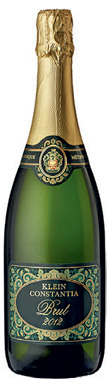

A bouquet of tropical, subtle fruit flavours. There is complexity through lees ageing with hints of brioche. The palate is fresh and lively with a...
2012
Klein ConstantiaConstantia

Klein Constantia, Metis Sauvignon Blanc, Constantia, Western Cape, South Africa, 2014
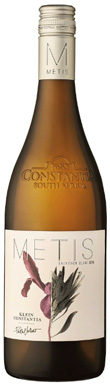
A typical mint, cassis and lemon zest nose. Bright and energetic in the mouth with sappy, apple and citrus fruit. Very supple chalky, flinty texture...
2014
Klein ConstantiaConstantia
Klein Constantia, Perdeblokke Sauvignon Blanc, Constantia, Western Cape, South Africa, 2014
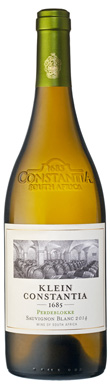
From an exceptional single vineyard at the top of the estate. A classical blackcurrant leaf nose, leads onto a spicy, tangy palate with oatmeal, gooseberries,...
2014
Klein ConstantiaConstantia
Klein Constantia, Estate Sauvignon Blanc, Constantia, Western Cape, South Africa, 2015
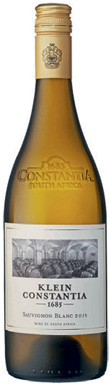
Savoury, zesty and fresh. Mineral, grassy notes combine with citrus, apricot and greengage fruit. Expressive and lean and balanced with good mouthfeel and ripe texture...
2015
Klein ConstantiaConstantia
Klein Constantia, Estate Red, Constantia, Western Cape, South Africa, 2014
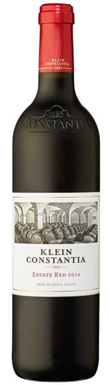
Gorgeous violet nose gives way to sweetly defined damson and cherry fruit on the palate. Bright, polished and poised with supple tannin structure, this blend...
2014
Klein ConstantiaConstantia
Klein Constantia, Vin de Constance, Constantia, Western Cape, South Africa, 2012
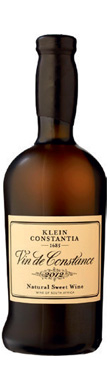
Stunningly intense aromatics of fresh stem ginger, tangerine and quince. Fabulously balanced sweetness and zingy natural acidity provide the perfect backdrop for an intense flavour...
2012
Klein ConstantiaConstantia
