
Producer profile: Stag’s Leap Wine Cellars
Last year, in the 50th anniversary of its founding, Matthew Luczy recounts how one of Napa Valley's brightest stars found early fame as one of California's great Cabernet Sauvignon producers. See a selection of Matthew's tasting notes as well as a new vertical of SLV Cabernet Sauvignon recently tasted and rated by Clare Tooley MW.


Stag’s Leap Wine Cellars went from not existing to taking top red wine honours at the 1976 Judgement of Paris in little more than five years. A few ‘perfect-storm’ factors helped, as well as more than a bit of luck, but it was a stunning achievement all the same.
As the winery celebrates its golden anniversary in 2020, it is impressive to realise that 47 of those 50 years have passed after they harvested the 1973 Cabernet Sauvignon – a wine that changed the game not only for Stag’s Leap Wine Cellars itself, but for winemaking in California as a whole and, to some degree, the entire wine world.
Scroll down to see a selection of Stag’s Leap tasting notes by Matthew Luczy as well as a those for a new vertical of SLV Cabernet Sauvignon spanning the years 2018, 2015, 2013, 2003, 1993 and 1987 by Claire Tooley MW
The winery was founded in 1970 by Warren Winiarski but the story starts with Nathan Fay. Fay moved from central California to Napa in 1951, and two years later purchased 81ha. Orchards of prune and cherry trees occupied the property at the time, and Fay was met with warnings by the University of California Davis in regards to planting Cabernet Sauvignon or other varieties best suited for ‘warmer climates’.
This tucked-away pocket off the Silverado Trail was thought to be too cool (relative to the warmer Oakville and Rutherford regions to the north) due to its proximity to the San Pablo Bay and its moderating effects on the vines. Regardless, in 1961 Fay forged ahead, and planted the first Cabernet Sauvignon in what is today known as the Stags Leap District AVA.
By 1969, Winiarski had already planted a small area of vines on Howell Mountain and was working as winemaker for Robert Mondavi at the time he first tasted Fay’s homemade wine. On tasting the nuance, elegance and lift of Fay’s 1968 Cabernet Sauvignon, Winiarski instantly realised the variety’s potential in Napa Valley. The following year, the land adjacent to Fay’s property became available and, figuring the soils and style of the resultant wine would be similar, Winiarski jumped at the chance.
It is this site, now referred to as SLV (Stag’s Leap Vineyard), that would produce the grapes for Stag’s Leap Wine Cellars’ acclaimed 1973 Cabernet Sauvignon.
Stag’s Leap Wine Cellars: the facts
Founded 1970, by Warren Winiarski
Location Stags Leap District, Napa Valley
Current owner Ste Michelle Wine Estates and Marchesi Antinori
Annual production 1.68m bottles
Vineyards 106ha of estate vineyards with an additional 283ha of purchased fruit
Wines Aveta Sauvignon Blanc, Karia Chardonnay, Artemis Cabernet Sauvignon, Fay Cabernet Sauvignon, SLV Cabernet Sauvignon, Cask 23 Cabernet Sauvignon
Timing is everything
Despite its reputation, influence and impact, the Judgement of Paris was actually organised more for education and fun rather than as a vehicle to alter the world’s perception of California wine.
It happened at a time in which the up-and- coming ‘kids from the sticks’, as Chateau Montelena’s Jim Barrett famously put it, were hungry to show their wares on the world stage. These pioneering California winemakers wanted to make a name for themselves, and what better place than up against the great, tried-and-true wines of France. Many of the producers featured in the competition didn’t even know of the tasting’s existence until they found out the results – they weren’t even aware that their wines had been entered.
The 1970s was a famously underwhelming time for French viticulture. As the Judgement of Paris organiser Steven Spurrier put it, France was ‘resting on its laurels’. In addition to a string of difficult vintages, this decade saw increased use of pesticides, herbicides and fertilisers, in part due to the hangover from prior attempts to chemically abolish phylloxera almost a century earlier.
An increasing number of growers in Burgundy navigated away from the négociant system and into the logistically challenging world of domaine bottling. This resulted in lacklustre wines early on, even from top domaines. On a global level, the 1973 oil crisis would rock worldwide economies for years to come, and compounded stagflation in the US.
During such volatile and uncertain times, guards often change and many torches are passed, intentionally or not. This in no way diminishes the achievement of the Californian producers who triumphed in 1976, but the context and timing serves as a reminder that comfort and confidence can easily lead to complacency.
The irony is that today, a region once deemed ‘too cool’ to ripen Cabernet Sauvignon is one of many trying to deal with the stylistic and existential challenges of overripeness in a world where both consumer tastes and the global climate are changing.

Vineyards and wines
In 1989, the Stags Leap District received AVA (American Viticultural Area) status, and was the first appellation in California to do so based upon its soils, which are mostly volcanic deposits shifted down from the Vaca range.
Fay’s 1968 Cabernet Sauvignon, the wine that inspired Winiarski to invest in this land, is actually fairly different to his own triumphant 1973 Cabernet. Wines from the Fay Vineyard (now capitalised to FAY), on eroded silty soil, are more perfumed and graceful, while the SLV Cabernet, from coarser, rockier soils, is the more robust and dense.
Stag’s Leap Wine Cellars’ now-famous Cask 23 has also changed identities over the years. From its inaugural 1974 vintage, it was the single best lot from the SLV vineyard, aged in an old puncheon: cask No23. With the winery’s long-awaited acquisition of the Fay vineyard in 1986, Cask 23 became a blend of the best lots of both Fay and SLV from 1990 onwards.
Although Stag’s Leap Wine Cellars has produced a Napa Valley Cabernet for decades, in 2001 it appended the name Artemis to it, to reduce consumer confusion between its own estate and that of Stags’ Leap Winery (apostrophes are very important around here).
It is sourced from a wide range of vineyards throughout the Napa Valley, with Atlas Peak and St Helena often providing its backbone. Small percentages of Merlot and Malbec are included in most vintages, as well as a portion of fruit from the Fay and SLV vineyards. With less time in new oak to maintain a greater level of freshness, it offers a supple gateway into Stag’s Leap Wine Cellars’ more structured and long-lived single-vineyard wines.
Stag’s Leap Wine Cellars: a timeline
1961 Nathan Fay plants the first Cabernet Sauvignon in what would become the Stags Leap District AVA
1969 Warren Winiarski tastes the 1968 vintage of Fay’s Cabernet Sauvignon
1970 Winiarksi purchases land next door to Fay, and founds Stag’s Leap Wine Cellars. The SLV vineyard is planted the same year
1973 Winiarski produces a Cabernet Sauvignon from his three-year-old vines
1976 Steven Spurrier organises the Judgement of Paris tasting at which Stag’s Leap Wine Cellars’ 1973 Cabernet Sauvignon wins the red wine category
1986 Fay retires and sells his pioneering vineyard to Stag’s Leap Wine Cellars. Winiarski replants it immediately
1990 Stag’s Leap Wine Cellars releases its first bottling from the Fay Vineyard
2007 A partnership between Ste Michelle Wine Estates and Piero Antinori buys Stag’s Leap Wine Cellars
2013 Marcus Notaro is hired as winemaker
2020 Stag’s Leap Wine Cellars celebrates its 50th anniversary
Latest releases
The 2017 vintage was a difficult one for Napa Valley. California as a whole was hit with Labor Day weekend (2-4 September) heatwaves, increasing sugars in the grapes as well as causing ‘the vines to fall asleep’, recalls Stag’s Leap Wine Cellars’ winemaker Marcus Notaro. ‘Then just when they started to recover, the October wildfires hit. The winery lost power and everyone was evacuated. We were mostly done with harvest but were well into fermentation.’
After some negotiating with local police (including helping them set up a roadblock), the winemaking team was able to retrieve generators and get everything up and running. ‘We were allowed to keep working, get pumpovers done and take care of the wines,’ says Notaro. ‘The wines do have a darker character to them, and that is definitely related to the heat. The tannins aren’t as plush, and that was one of the biggest challenges during fermentation: trying to get plushness, trying to find that balance.’ The 2017s are certainly textured, with sumptuous tannins, combined with a dense but rustic structure.
Nathan Fay’s trailblazing spirit, Warren Winiarski’s vision and the small matter of the Judgement of Paris happening at just the right time, have all combined to take Stag’s Leap Wine Cellars to heights no one could have predicted.
While there is no denying that the wine styles have become increasingly more forward and rich over the decades, the winemaking team has retained more evident terroir focus compared to many other producers.
In 2007, Winiarski sold Stag’s Leap Wine Cellars to a partnership of Washington State giant Ste Michelle Wine Estates and Tuscany’s Piero Antinori. The current management and winemaking team clearly understands the legacy they have acquired, and seem committed to upholding the winery as one of Napa Valley’s historical benchmarks.
This year, to mark the 45th anniversary of the Judgement of Paris, several events were held in the US, including the ‘Judgment of Napa’ which Clare Tooley MW attended and covered for Decanter. Her full report including her top-rated Chardonnay and Cabernet Sauvignon wines will go live on Decanter Premium on 9 December.
New releases & older gems: 14 wines rated
Wines are listed in colour and style order by vintage and include a new six-wine vertical of SLV Cabernet Sauvignon by Clare Tooley MW
Related content
Duckhorn Portfolio: the billion-dollar empireLuczy: a chat with Bill Harlan – and six wines back to 1992Napa Valley Cabernet: Best Stags Leap District 2018 wines
Stag's Leap Wine Cellars, Aveta Sauvignon Blanc, Napa Valley, California, USA, 2018
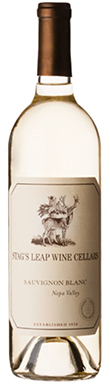

Sourced from sites in Oak Knoll, Calistoga and an area northeast of Napa itself called Wooden Valley. It’s a quintessential Napa Sauvignon Blanc, with grapefruit...
2018
Stag's Leap Wine CellarsNapa Valley

Stag's Leap Wine Cellars, Karia Chardonnay, Napa Valley, California, USA, 2018
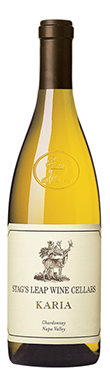
Ripe yellow fruits and toasty, nutty, oak-driven aromas from fermentation and eight months’ ageing mainly in 30% new barriques with a small portion in stainless...
2018
Stag's Leap Wine CellarsNapa Valley
Stag's Leap Wine Cellars, Cask 23 Cabernet Sauvignon, Napa Valley, Stags Leap District, California, USA, 2017
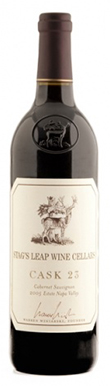
Prior to the 1990 vintage, Cask 23 was a selection of the finest blocks of the SLV Vineyard. Then, with the acquisition of the neighbouring...
2017
Stag's Leap Wine CellarsNapa Valley
Stag's Leap Wine Cellars, Cask 23 Cabernet Sauvignon, Napa Valley, Stags Leap District, California, USA, 2009

A great example of a modern Napa Cabernet coming into its own. After more than a decade of unfurling it reveals lovely, bramble, menthol and...
2009
Stag's Leap Wine CellarsNapa Valley
Stag's Leap Wine Cellars, Fay Cabernet Sauvignon, Napa Valley, Stags Leap District, California, USA, 2017
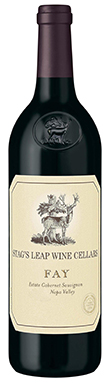
Nathan Fay’s 1968 Cabernet from this plot lit the fire for Warren Winiarski’s purchase of the adjoining land, which would go on to become Stag’s...
2017
Stag's Leap Wine CellarsNapa Valley
Stag's Leap Wine Cellars, Fay Cabernet Sauvignon, Napa Valley, Stags Leap District, California, USA, 1990
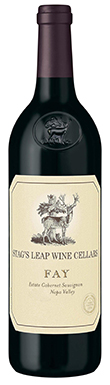
An all-time classic Napa Valley Cabernet, perfectly encapsulating both the elegance of the Stags Leap District AVA and this era of the Napa Valley, between...
1990
Stag's Leap Wine CellarsNapa Valley
Stag's Leap Wine Cellars, Artemis Cabernet Sauvignon, Napa Valley, California, USA, 2017
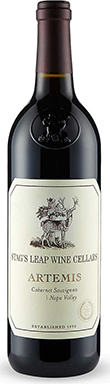
Artemis is a solid, respectable expression of modern Napa Valley Cabernet (with 4% Merlot and 1% Malbec), made using both estate and purchased fruit. Black...
2017
Stag's Leap Wine CellarsNapa Valley
Stag's Leap Wine Cellars, SLV Cabernet Sauvignon, Napa Valley, Stags Leap District, California, USA, 2018
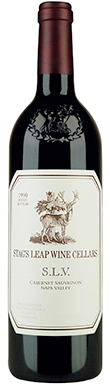
A ‘classic Napa Cabernet’, says winemaker Marcus Notaro, given the growing conditions that allowed for a long, slow ripening with cooler weather just when needed,...
2018
Stag's Leap Wine CellarsNapa Valley
Stag's Leap Wine Cellars, SLV Cabernet Sauvignon, Napa Valley, Stags Leap District, California, USA, 2017
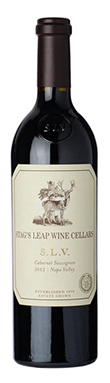
Warren Winiarski planted the SLV Vineyard in 1970 and just three years later produced the wine that would infamously go on to triumph over the...
2017
Stag's Leap Wine CellarsNapa Valley
Stag's Leap Wine Cellars, SLV Cabernet Sauvignon, Napa Valley, Stags Leap District, California, USA, 2015
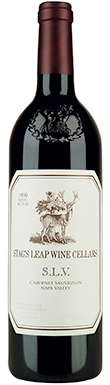
Celeriac and camphor, reminiscent of the 1987. There is a hint of mint on the nose too, a little like a chocolate after-dinner mint! A...
2015
Stag's Leap Wine CellarsNapa Valley
Stag's Leap Wine Cellars, SLV Cabernet Sauvignon, Napa Valley, Stags Leap District, California, USA, 2013
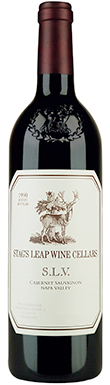
A ‘power year’ for Napa, says winemaker Marcus Notaro, this warm vintage with a dry start contributes to this wine’s powerful, hearty structure. All candied...
2013
Stag's Leap Wine CellarsNapa Valley
Stag's Leap Wine Cellars, SLV Cabernet Sauvignon, Napa Valley, Stags Leap District, California, USA, 2003
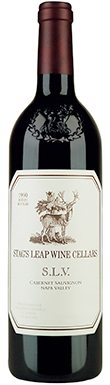
Dark ruby. Complex, living, breathing aromas of olive, fruit, game meat and mocha oak. A definite modern twist to this compared to older vintages: a...
2003
Stag's Leap Wine CellarsNapa Valley
Stag's Leap Wine Cellars, SLV Cabernet Sauvignon, Napa Valley, Stags Leap District, California, USA, 1993
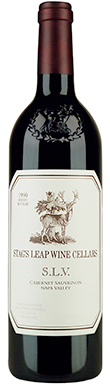
Deep ruby. Immediately engaging, with expressive aromas of blackcurrants and white spice. This is the perfect festive season wine! Despite the ripeness of the fruit...
1993
Stag's Leap Wine CellarsNapa Valley
Stag's Leap Wine Cellars, SLV Cabernet Sauvignon, Napa Valley, Stags Leap District, California, USA, 1990
The difference between the Fay and SLV sites only emerges fully with bottle age. Now three decades on, the sappy, dense, brooding character of SLV...
1990
Stag's Leap Wine CellarsNapa Valley
Stag's Leap Wine Cellars, SLV Cabernet Sauvignon, Napa Valley, Stags Leap District, California, USA, 1987
Amber rimmed. Headily perfumed: florals shot through with green leaf, like lilies, celeriac and camphor. Bordeaux-like. Persistent with fresh acidity still, despite the warmth of...
1987
Stag's Leap Wine CellarsNapa Valley
