
Regional profile: Rioja Oriental
More than just an administrational tweak, the changing of this sub-region’s name from Rioja Baja to Rioja Oriental holds far deeper significance for its native wine producers. As the region undergoes a winemaking transformation, Simon Field MW explains how a new generation is reclaiming the higher ground – in every sense of the phrase


Rioja Oriental used to be known as Rioja Baja. It used also to be known, anecdotally at least, as something of a poor relation; think of the comparison between the Aube and the Côtes des Blancs in Champagne, or between the Mâconnais and the Côte d’Or in Burgundy. This reputation, it transpires, was born as much as anything from ignorance, political expediency and a physical distance from the seat of power which, historically, has centred on the northwestern sector of the Rioja DOCa, closer to the early French influences and location of the largest and most powerful houses.
Things are changing, however, and now Rioja Oriental is being increasingly lauded for the very things which were once perceived as its drawbacks. History and geography will tease out the reasons why.Rioja is a long, cigar-shaped region, its three administrative hubs running in a south-southeast axis for more than 100km and covering nearly 64,000ha. One of these hubs, La Rioja, claims all the land south of the Ebro river and is therefore represented by both Rioja Alta and much of Rioja Oriental. North of the river we have the Basque province of Alava (Rioja Alavesa) and, further to the east, Navarra. Rioja Oriental straddles the river in the eastern sector, and therefore is divided across both autonomous districts of La Rioja and Navarra – in essence, all points east and southeast of the regional capital of Logroño, hence the name ‘Oriental’, which means ‘Eastern’ in Spanish.
Historically, focus has been on Logroño, for sure, but more specifically on the town of Haro deep into La Rioja Alta. The famous Marqueses of Riscal and Murrieta wanted to create conditions as close to France as possible; here the Atlantic influence was seen as the most benevolent, and here and only here could the Bordelais model be refashioned. Leave the rustic Garnacha to the small farmers out east… Oh, but make sure they sell us some of their grapes, preferably paying a less than generous price.
Thus was born a commercial hegemony and a business model which, more than anywhere else in Spain, has been built on branding and famous names. A generally successful model, it has to be said, but not one that really gives full voice to the rich diversity of this fascinating region. Even now, despite covering 38% of the land, Rioja Oriental is responsible for the actual production of only about 26% of the wine; grapes are still transported in bulk to the large bodegas upstream.
Rioja Oriental at a glance
Name Changed from Rioja Baja to Rioja Oriental in 2018
Vineyards 38% of Rioja total by area
Planted area 22,940ha red grapes; 2,034ha white grapes
Annual production 87m litres, 26% of the Rioja total in 2018 (336m litres)
Grapes Tempranillo 72%, Garnacha 13%, Graciano 4%, Mazuelo 3%, Viura 3%, Tempranillo Blanco 2%, Verdejo 1%, others 2%
What’s in a name?
Slowly but surely though, things are changing, and where better to start than the name? The term ‘Baja’ was perceived as problematic for two reasons: firstly because it means ‘lower’ and therefore held an association of inferiority; secondly because, topographically, the sub-region is not ‘lower’ at all. Indeed, a commonly overlooked fact is that Oriental is home to some of the highest vineyards in Rioja, most famously the Sierra de Yerga way out to the east.
The name change has divided opinions, of course. Rodolfo Bastida from Ramón Bilbao is positive and describes it as ‘an optimistic statement of a rebirth’. Meanwhile, garagiste winemaker Javier Arizcuren is more forthright: ‘A lot more work has to be done to defend and explain our rich heritage,’ he says, before ‘confusing the world at large’ with tweaks to nomenclature.
Raquel Pérez Cuevas from Bodegas Ontañón, is more philosophical. ‘Orient’ means birth in Latin, she notes, and this name change is all about rebirth; it also means east-facing, which makes it all the more suitable. ‘There is such a rich history in our region,’ she adds, recalling the Cistercian monks who cultivated vines in her village of Quel long before the adventures of Señors Riscal, Vargas et al. ‘They also built churches facing east!’ It seems that for the younger generation there’s an almost mystical appropriation to the new naming project.

Proud ambitions
Theirs is no easy endeavour, however. One statistic makes it clear how much the regional identity has been subsumed by wider projects of self-interest. In 1982, Garnacha covered 74% of the vineyards of what was then Rioja Baja; now the figure is closer to 13%. Arizcuren shows me aerial maps from the two eras and it also becomes clear that the hillside vineyards have largely been forsaken for Tempranillo plantings in the fertile alluvial soils which surround the Ebro, where it is certainly warmer, and the grapes are far more productive and amenable.
There is a division between this approach and that adopted by an increasingly vocal band of brothers who are seeking to restore what they perceive to be the rightful grape variety to its rightful homestead. One of their best-known ambassadors is Alvaro Palacios, who, on the back of similar restorative projects in Priorat and Bierzo, is now leading the charge to revitalise the wines from his family bodega, located in Alfaro.
The influential Bastida of Ramón Bilbao is entirely in agreement. ‘The temperature decreases by 0.3°C for every 100m of altitude,’ he says, explaining that the challenge is to ‘exploit the great potential for freshness, diurnal variation, and thus create an opportunity for Garnacha to express its full potential’. Far from the jammy, over-alcoholic styles of Rioja, some made by carbonic maceration, he is looking to recreate something approaching Châteauneuf-du-Pape, even citing an appropriate combination of sand and pebbles in his vineyards at Tudelilla. Châteauneuf with extra altitude thrown in for good measure!
Pérez Cuevas shares the excitement. Her minute plot, El Arca, situated at nearly 800m, is made up of pre-phylloxera Garnacha. When it is released in 2020, its Queirón-El Arca 2017 will be her first contribution to the new Viñedo Singular micro-categorisation. Nothing could be further away from the template of young Tempranillo grapes sold in bulk; though it would be naïve not to recognise that the bulk model is still the most prevalent here.
Looking ahead
Paul Shinnie, the influential Spanish wine buyer at UK importer Alliance Wine, is optimistic about the future for the region. He recalls how the market baulked at the introduction of Artadi’s single-vineyard El Pisón in the Alavesa, which now commands an extraordinary reputation and prices to match. He thinks that Rioja Oriental is a ripe candidate to pick up this baton. His view is shared, unsurprisingly, by a new and increasingly vocal generation of dynamic winemakers based in towns such as Alfaro, Tudelilla and Andosilla – areas that are now increasingly identified as centres of excellence, gateways to sites of uncompromising altitude and real potential.
Climate change will logically support farming at altitude, and the fact that this has significant historical precedent supports an already persuasive argument. Add to this the move within the Rioja DOCa to favour location in its methodology of classification, with vinos de zona and vinos de municipio assuming significance (possibly at the expense of age designations such as crianza and reserva), and one can easily and, quite literally, see the lie of the land.
Traditionally, crianza wines can be sourced from anywhere, which suits the large bodegas very well; the vinos de municipio and, even more so, viñedos singulares, are all about place, all about terroir. This is why there is so much excitement among the new generation of growers in the Rioja Oriental; they are determined to ensure that this misunderstood region is no longer seen as the poor relation. Quite the reverse in fact.
Rioja Oriental: 10 producers to watch
Bodegas D Mateos
Now in its seventh generation, the Mateos family is based close to the Ebro river at Aldeanueva, but has impressive holdings of mainly Tempranillo and Garnacha, the latter straying to the foothills of Mount Yerga. Their range of wines is stylistically broad and generally both versatile and successful.
Burgo Viejo
Six small bodegas located around Alfaro joined forces in 1987 and built a smart new winery, their 20ha of vineyards surrounding the town and climbing into the hills. The range runs the gamut from crianza to gran reserva; everything is fermented in stainless steel, then matured in barricas, the 80:20 ratio reflecting both the Tempranillo/Garnacha division and also the preference for American oak over French.
Isidro Milagro
One of Spain’s larger companies, producing several different labels around the country. It is perhaps all the more exciting, therefore, to discover such a jewel as its old-vine Graciano and to witness how the winemakers have coaxed all that is best from this fascinating variety.
Javier Arizcuren
The natural successor to Alvaro Palacios, Arizcuren is an articulate and gifted winemaker who has made it his life’s work to reverse the recent trend of grubbing up all of the old mountain Garnacha in favour of more fertile plots nearer to the Ebro. So far he has, somewhat against the commercial odds, succeeded magnificently.
Navarrsotillo
As its name suggests, Navarrsotillo is based in the administrational region of Navarra, its vines located on the most southerly edge of Rioja Oriental. Apparently uninspiring alluvial soils have been transformed by a strictly organic regime, with vineyards chosen carefully to suit their plantings of both Garnacha and Tempranillo.
Ontanon
Siblings Raquel, Rubén and María Pérez Cuevas make a terrific team: fifth generation in this case. Their plantings in Rioja Oriental span more than 250ha, a lot of it farmed organically, and their vines climb, at La Pasada, to an impressive 800m. Great ambassadors for a reawakening region!
Palacios Remondo
Having raised the profile of both Bierzo and Priorat, Alvaro Palacios, possibly Spain’s most charismatic winemaker, has reinvented his family bodega in Alfaro, chased away the low-hanging fruit and set out a fantastically seductive stall in the foothills of Mount Yerga. Sombrero, hombre!
Ramon Bilbao
Chief winemaker Rodolfo Bastida is a great fan of Rioja Oriental, so much so that he personally supervised the purchase of the company’s precipitous Garnacha vineyards in the region. In addition, the producer’s nearby Tudelilla vineyard, pebbly with a red-sand backdrop, provides the Garnacha component of its celebrated Viñedos de Altura, in combination with Tempranillo from Abalos in Rioja Alavesa.
Viña Herminia
The Viña Herminia brand was created by the Luis Caballero Group, owners of the superlative Lustau Sherry range, their intention to add expertise and a touch of glamour to the dusty landscape of what was then called Rioja Baja. They have achieved this goal with great aplomb and the whole region has benefitted accordingly.
Vinedos Real Rubio
By means of careful organic husbandry, dynamic producer Real Rubio has transformed the apparently mediocre potential of its location into something more special – sure proof that Ebro Tempranillo-dominated blends can indeed capture the essence of what will become a distinguished and ageworthy Rioja.
A mixed dozen of Rioja Oriental
Bodegas Ontañón, Vetiver Viura, Rioja, Northern Spain, Spain, 2017
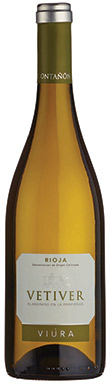

Viura can be a little anonymous, but not here. A combination of old-vine fruit and four months in American oak have coaxed out wonderfully complex...
2017
Bodegas OntañónRioja

Bodegas Ramón Bilbao, Lalomba Rosado, Rioja, Northern Spain, Spain, 2018
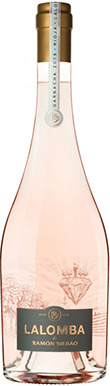
A pearlescent pink colour with attractive aromatics of freshly cut flowers, small red berries and even a hint of Seville orange. The palate is poised...
2018
Bodegas Ramón BilbaoRioja
Arizcuren, Solo Garnacha, Rioja, Northern Spain, Spain, 2015
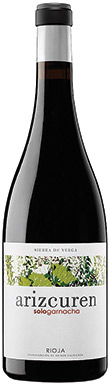
Javier Arizcuren’s homage to Garnacha has a purity born of old-vine fruit sourced high on the northern slopes of Monte Yera. The acidity of the...
2015
ArizcurenRioja
Arizcuren, Solo Mazuelo, Rioja, Northern Spain, Spain, 2015
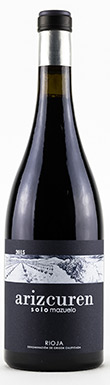
A rare gem, this Mazuelo (France’s Carignan) has been cultivated at 500m in the hills above the village of Quel and aged for four months...
2015
ArizcurenRioja
Burgo Viejo, Palacio del Burgo, Rioja, Northern Spain, Spain, 2014
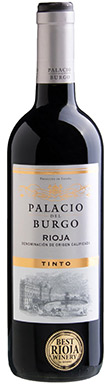
American and French oak, both old, have nurtured a richly seductive wine; cassis and compote, hints of vanilla, balsam and violets, then a warm, generous...
2014
Burgo ViejoRioja
Isidro Milagro, 5 Oros Vendimia Seleccionada Graciano, Rioja, Northern Spain, Spain, 2015
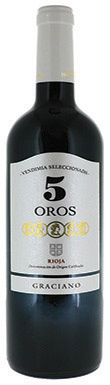
92
Another star performer in the Affordable Rioja panel tasting. Plush, herbal, and a little more textured and layered than other Gracianos. Tobacco, briary fruit and plum, with nice concentration and crisp acidity holding the palate together with great aplomb.
2015
Isidro MilagroRioja
Bodegas Palacios Remondo, La Montesa Crianza, Rioja, Northern Spain, Spain, 2016
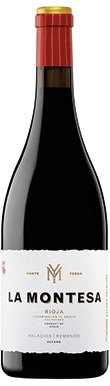
92
The homecoming of Alvaro Palacios was greeted with fanfare and a reappraisal of his family’s winemaking style. Now the grapes are sourced from higher in the hills, yields are lower and oaking is minimal. The result is fresh and pure, a symphony of red fruit with a backdrop of soft spice and silk.
2016
Bodegas Palacios RemondoRioja
Bodegas Ontañón, Crianza, Rioja, Northern Spain, Spain, 2015
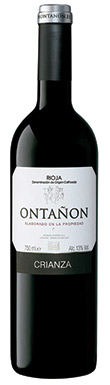
Aromas of bramble fruit with spice and lightly floral notes. On the palate, plum and blackberry flavours are given focus by lively acidity, courtesy of...
2015
Bodegas OntañónRioja
D Mateos, Colección de Familia La Mateo Cepas Viejas, Rioja, Northern Spain, Spain, 2015
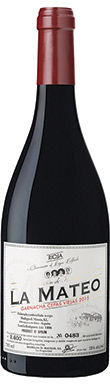
Garnacha can be quite alcoholic, so it’s worth considering this special bottling, aged for 18 months in French barrique and weighing in at an impressive...
2015
D MateosRioja
Viña Herminia, Reserva, Rioja, Northern Spain, Spain, 2012
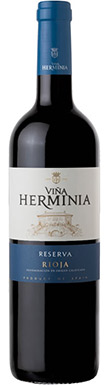
Aged for 18 months in a combination of French and American oak, its fruit sourced mainly from the slopes of Monte Argudo in the eastern...
2012
Viña HerminiaRioja
Navarrsotillo, Magister Bibendi Garnacha Crianza, Rioja, Northern Spain, Spain, 2016
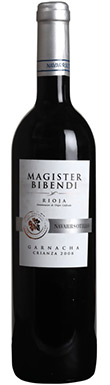
Organic to its roots and a beautiful expression of Garnacha’s red-fruit personality. Cherry and redcurrant to the fore, then cranberry and Alpine strawberries, and finally...
2016
NavarrsotilloRioja
Real Rubio, Crianza, Rioja, Northern Spain, Spain, 2015
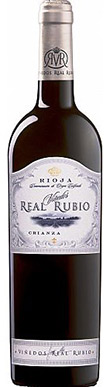
The Aldeanueva terroir is a mix of alluvial silt and clay. It favours youthful Tempranillo, yet here, with spicy, racy Graciano (20%) and the alchemy...
2015
Real RubioRioja
