
Rosa Kruger: Decanter Hall of Fame 2022
Our 2022 Decanter Hall of Fame recipient’s enthusiasm for South Africa’s old vines runs deep into the nation’s heritage, and her own. The devotion of this self-styled ‘farm manager’ to her cause has set an example to the whole of the wine world.
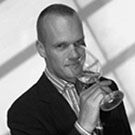

Growing up on a farm in the northern Transvaal, Rosa Kruger was surrounded by nature and the perilous immensity of the veldt. From the age of five, she’d regularly pack a bag with food and water and head off, shoeless, into the wilderness with one or more of her five brothers and sisters. ‘We’d come back at darkness to have a bath, get some sleep or receive a hiding,’ she says. ‘We were pretty wild.’
Scroll down to see Rosa Kruger’s five landmark wines & vineyards
It’s an instructive tale, illustrating several things about her. Kruger is strong, independent of spirit and likes to travel. In short, she was never destined for a desk job, despite working as a journalist and then a lawyer until she was in her mid-30s. Instead, she has gone on to become one of the leading viticulturists in the world, although she prefers the term farm manager.
Kruger has also been a key figure in the development of the post-apartheid South African wine scene, promoting good labour practices, assisting a local nursery to import new European grape varieties such as Assyrtiko and Garnacha Peluda, and helping young winemakers to find special vineyards. And then there is her work hunting down, preserving, nurturing and promoting the Cape’s precious old vines.
‘Why me? There are lots of people who deserve it more,’ was her modest response when she was told that she’d been chosen as the recipient of this year’s Decanter Hall of Fame Award. But the woman once described by local wine writer John Platter as ‘the warrior queen of South Africa’s modern wine makeover’ is a deserving choice. She is the first viticulturist (or farm manager) to be so honoured, as well as the first South African.

Rosa Kruger at a glance
Born 4 December 1960, Pretoria
Studied BA in Communications (University of Johannesburg); MA in Journalism (University of Johannesburg); LLB Law degree (Unisa)
Career Journalist at Die Beeld (1982-87); candidate lawyer (1990-96); farm manager (1996-2001); vineyard manager (2001-2011); 2012 to present, managing and developing new vineyard sites; 2016 Old Vine Project launched (see below)
Clients Boekenhoutskloof, Fairview, Gabriëlskloof, Reyneke, Rogge Cloof, Twee Jonge Gezellen
Awards International Wine Challenge Personality of the Year 2018; Institute of Cape Wine Masters Personality of the Year 2018; Decanter Hall of Fame 2022
Family One son
Other interests Hiking, music, reading
Pioneer spirit
The other significant thing about Kruger’s upbringing is her family’s name and history. She’s the great-great-granddaughter of Paul Kruger, the 19th-century President of the South African Republic, who survived the Great Trek from the Cape Colony in the south to the interior of the country as a child and fought against the British Empire in the two Boer Wars. Look at old pictures of Oom Paul, as he was known, and you can see the bloodline coursing to the present: something in the eyes perhaps or a sense of wilful self-confidence. ‘If you’re a Kruger,’ she says, ‘you must walk tall. We’re a family of farmers and fighters.’

The move into wine happened by accident. Kruger was running an apple orchard in Elgin when a neighbour suggested that the cool site would also be perfect for growing grapes. With no relevant qualifications but characteristic determination, she decided to give it a try, contacting Eben Archer, the viticulture professor at Stellenbosch University. Initially reluctant to help, the famous academic was won over by Kruger’s charm and chutzpah. Taking advantage of her training as a journalist, she taught herself by asking endless questions and visiting vineyards. As well as Archer, who died in 2019, she soaked up know-how from the soil scientist Dawid Saayman and Neil Rossouw, the viticulturist at Vergelegen.
Kruger is a fast learner. She left Elgin in 2001 to work for Uva Mira, then for Cape Point, then L’Ormarins in Franschhoek, where she was employed by the luxury goods billionaire Johann Rupert for seven years. Rupert valued her talents. ‘High maintenance, but worth the effort,’ was his verdict, according to someone who worked with the pair of them at the time.
Finding vines
It was on a trip to Europe in 2001 that Kruger first became interested in old vines. ‘I saw many historic parcels in France, Italy, Spain and Portugal and I was struck by the unique character of the wines they produced. So I asked myself a question: “Where are South Africa’s old vines?”.’
From 2004, working alongside Chris Loubser and Johan Nel of L’Ormarins and Johan Viljoen of industry body VinPro, Kruger actively started to track down forgotten vineyards in regions including Skurfberg, Piekenierskloof and the West Coast, driving thousands of kilometres on her quest. ‘Seeing how many vines were missing in those vineyards made me want to take care of them,’ she remembers.

Kruger began to compile a list of such vineyards, updating it regularly as she discovered new ones. ‘The vines just seem to find me,’ she laughs. Some parcels were used to make wines at L’Ormarins, but the number was growing exponentially. As the word spread, farmers began to get in touch, and so did young winemakers looking for special parcels. One such winemaker was Eben Sadie, who launched his Old Vine Series with six wines in 2009. Of the current line-up of eight bottlings, five – Kokerboom, Skurfberg, Skerpioen, Soldaat and ’T Voetpad – came via Kruger.
Over the years, she’s helped many of the best producers in the Cape to source fruit, from Donovan Rall to Duncan Savage, Chris and Andrea Mullineux to Adi Badenhorst, Chris Alheit to Jolandie Fouché. ‘I get phone calls every day of my life,’ she says. ‘I’m happy to put good people in touch with each other. You’re giving out gifts, but it helps people to make better wines. It’s wonderful to see these parcels find the right home.’
Committed to the cause
Her old boss Johann Rupert gave her seed capital to create the Old Vine Project in 2016, which has blossomed into one of the most dynamic associations in the wine world, tirelessly hymning the virtues of South African vineyards that are more than 35 years old with the help of its employees André Morgenthal and Nadia Hefer.

The OVP has grown to 130 members and 250 registered wine brands and is now almost self-funding, thanks to producer levies and the sale of winery plaques and Certified Heritage Vineyards seals that appear on bottles that qualify. It also hosts conferences and regular old-vine pruning schools. The OVP is helping to keep these vineyards in the ground. ‘They are no longer just a commodity, says Kruger. She points to the example of a grower in Piekenierskloof with a parcel of venerable Chenin Blanc and Palomino. ‘He called me and said, “I just made a profit from that vineyard for the first time ever”. You’ve got to give someone a reason to preserve these sites. It has to be about more than sentiment.’
The problem, as Kruger concedes, is that growers can make ten times the profit if they plant apples, pears, cherries or citrus, providing they have access to water. But many remain committed to their vineyards. ‘The pandemic showed us how short and fleeting life is. But if old vines can hang on, so can we. It’s that sense of longevity that people appreciate.’
Eye to the future
Why is Kruger so good at what she does? Focus is certainly part of it, what Eben Sadie calls her ‘unwavering adherence to a path’, but so is a kind of sixth sense. For all her years of experience, her reaction to a vineyard is emotional rather than scientific or data-dominated. ‘I just get this feeling when I see something special,’ she comments. Andrea Mullineux says: ‘Rosa knows how to rehabilitate an old parcel better than anyone. She has both the patience and the long-term vision to know how a vineyard will develop in the future.’

Kruger is freelance, but she works with other specialists, most notably Sheldon van Wyk, whose team plants, prunes and sometimes picks the vineyards she’s involved with, and Eddie Buxman, who advises her on farm development. ‘Sheldon has the most instinctive feel for viticulture that I’ve ever seen in another human being, and Eddie has an unbelievable sense of shape and form. Every site has a natural flow and you have to follow it.’
Planting new vineyards – as well as looking after old ones – is becoming an increasingly complicated business in the Cape, and isn’t going to get any easier. The reason is climate change. The Cape had five torrid heatwaves in February and March 2022, something that Kruger had never seen before. ‘People are in denial about what’s happening now and how much worse it’s going to get in the future’, she predicts. The worst-case scenario is that the southwestern corner of Africa could be 3°C hotter by 2050, which is ‘shit scary’.
There are ways of mitigating the effects of climate change, she says. These include planting south-facing slopes, capturing every drop of rain water, discovering new sites at altitude, building biodiversity and soil health, and using grape varieties that retain acidity and/or ripen before the later heatwaves. ‘Climate resistance is my main focus now,’ she concludes. ‘We have to work with nature as a partner, not use it as our slave. We can’t carry on like this.’
How much longer will Kruger herself carry on? She’s still very fit for a person in her early 60s, thanks to all that walking and fresh air, yet she insists that there’s no succession. ‘When I go, that’s it. I’ve worked with three assistants over the years, but they all left within three months. They didn’t enjoy the 10-hour days.’
Even if she does retire, Kruger could never leave the country of her birth for good. Oom Paul had no such luck. He went into enforced exile on 11 September 1900, weeping as his train crossed into Mozambique. ‘He was a farmer,’ says Rosa Kruger, ‘who loved the soils of South Africa.’
Paul Kruger died in Switzerland in July 1904. His final letter was addressed to the people of the Transvaal. In it, he expressed sentiments that could summarise the legacy of his great-great-granddaughter. ‘He who wishes to create a future must not lose track of the past.’ In the end, blood is thicker than water. Or wine.
Five to inspire: Rosa Kruger’s landmark wines & vineyards
South Africa
‘The Skurfberg 2009 was Eben Sadie’s first interpretation of a [Chenin Blanc] vineyard that I discovered in 2007. I think it’s an enormous challenge for a winemaker to stand back and let the vineyard speak for itself, but that’s what he does. Skurfberg reflects its landscape: a sandy, arid, windswept place with cold nights, surrounded by wild fynbos [native shrubland]. It’s a unique site interpreted by a genius.’
Loire
‘Didier Dagueneau’s 2003 Astéroïde [from a small plot of ungrafted vines] was made during the 2003 harvest in Pouilly-Fumé and was my introduction to extreme weather conditions in Europe [exceptionally hot in 2003]. We sat in the vineyard at sunrise and I was sure the heat would be devastating for the vines. But the wine turned out to be amazing when I tasted it the following year. I don’t know if it was the site or Didier’s talent as a winemaker.’
Southern France
‘Mas de Daumas Gassac in Languedoc was inspirational. I went to see [the late] Aimé Guibert in 2006 and he taught me several things about viticulture: think outside the box, follow the flow of the land and put your ear to the ground. When I got back from France, he wrote me the most beautiful handwritten letter thanking me for my visit. I still have it.’
Northwest Spain
‘The vineyards of Ribeira Sacra, Galicia. There’s no place like it. In 2005, I spent two weeks with Laura Lorenzo at Dominio do Bibei [Daterra Viticultores since 2014]. I loved those incredible steep [vineyard] parcels and the beauty of the rivers and mountains. I really appreciated the honesty, simplicity and freshness of the red and white wines, and I still do.’
Tuscany
‘Sassicaia is a remarkable place in a region that I love. Going there in 2012, I realised how vineyards can and should blend into their natural surroundings and the benefits of a biodiverse system. With that wine, you don’t taste the grape varieties, even the Cabernet Sauvignon, which has such a strong thumbprint; you taste the local landscape.’

Related articles
- Peter Gago: Decanter Hall of Fame 2021
- Semillon Gris: South Africa’s old-vine oddity
- Apostolos Thymiopoulos: Decanter Rising Star 2022
