
Ructions in Rioja


Allowing Riojas to be bottled under a new, vineyard-led classification seems an obvious step in defining quality. But, says Sarah Jane Evans MW, the Viñedos Singulares initiative has led to heated debate in the region.
‘It’s a disgrace – una vergüenza,’ exclaimed a Riojan winery owner a couple of months ago. He was expressing in the strongest terms his frustration with the new regulations recently introduced by Rioja’s governing body, the CRDOCa. Appellation rules are frequently unpopular, but rarely have I encountered such criticism, ranging from the extreme above, to a more generalised lack of enthusiasm.
Put simply, in June 2017, the CRDOCa proposed a new category, Viñedos Singulares, defining vineyards and permitting the mention of their names on labels. Soon after, in August, came an update on the regulations, for zone and village wines. This was a sudden step forward for a region which had hitherto only ranked wines in terms of their time in oak: crianza, reserva and gran reserva. (See box, right, for an explanation of the new rules.)
Regulatory bodies never move quickly, so this has been a strikingly speedy event. A range of factors drove this precipitate development. It may seem to be a straightforward matter of regulation and labelling. Yet Rioja produces wines that retail at £5 and at £100 or more, and there are conflicting interests. Growers, producers and cooperatives are in different camps, and have very different visions of quality wine. In the end, points out Agustín Santolaya, director general of Bodegas Roda, ‘it’s litres that speak in the regulatory bodies’ – the decisions are made by the big producers.
‘Simmering in the background is debate right across Spain about expressing terroir’
Regional voices
Simmering in the background is debate right across Spain about expressing terroir. In Jerez, Sherry was a wine that was all about blending, from the vineyard to the solera. Today a new generation of producers is focusing on single vineyards, recuperating the traditional names and their characteristics: Balbaina, Carrascal, Macharnudo, Miraflores, Pastrana… Their names never went away, but in the boom years of the 20th century only the brand name counted.
In the world of sparkling wines, Cava more recently faced the challenge of Italy’s Prosecco. Better late than never, it introduced a pinnacle of quality – Cava de Paraje Calificado – and approved the first 12 wines in 2017. The process covered definition of the vineyards and soils, lower yields, market recognition, and importantly a much more diverse tasting panel than the usual selection of local producers.Other regions are further advanced in their approach to quality classifications. In Priorat, the CRDOCa has a system of village wines and vineyard wines, in a structure closely identified with the guidance of local producer Alvaro Palacios. Priorat’s villages are distinctive in the landscape, and a village designation is easily understood by a visitor. But while the top villages of Burgundy should be recognisable to an expert blind taster, the general view is that perhaps only two Priorat villages could be identified in a blind tasting. Burgundy has had centuries; Priorat needs a little longer.
To the west, Palacios’ nephew Ricardo Pérez has revived exceptional single vineyards in Bierzo. It was no surprise that in July 2017 Bierzo announced a pyramidal model, very clearly Burgundian, showing a strong Pérez influence. At the base is regional wine, then village wine, paraje wine from a registered vineyard, classified vineyard wine (Vino de Viña Clasificada: 100% from the same parcel or parcels in a registered plot, minimum five years’ recognition, 30% lower than permitted yield), and at the top Gran Vino de Viña Clasificada – as before, but with 10 years’ recognition as Vino de Viña and with 35% lower yield. It’s clear that these proposals are more stringent than Rioja’s (outlined in the box).
Viñedos Singulares explained
Viñedo Singular wine
- Note the difference – not single vineyard, but singular vineyard
- Demonstrable boundaries and ownership for minimum 10 years
- Vineyard more than 35 years old
- Can be several plots or vineyards together if they are connected
- Yield at least 20% below the regional requirement
- Well-balanced vineyards with limited vigour
- Hand harvesting • Respect for the environment
- Traceability
- Quality assessment both initially and before sale
- ‘Excellent’ rating
Village wine
- The winery must be in the same village as the vineyard
- Producers may include up to 15% of non-village fruit from neighbouring vineyards outside the village boundary
- Name to appear on the front label at the same type size as ‘Rioja’
- Village wine will have a distinctive brand name
The future
Both of these categories have to go for state approval. Since the proposal on villages and zones is a development of what is pre-exisiting, the first village wines could appear in 2018. Viñedos Singulares is a new proposal, and it may be 2019 or 2020 before the first young or joven wines appear, and longer for reservas and gran reservas.
Sparkling wine
In the June 2017 regulation, traditional-method sparkling wine was added to the list of permitted categories of wines. This slipped in quietly behind the debate on Viñedos Singulares, but is an interesting step for producers such as Muga, which makes quality traditional-method sparkling but sells it under the Cava label.

Independent-minded
In Rioja, one factor driving change was undoubtedly political. Rioja has been conveniently separated into Rioja Alta, Rioja Alavesa and Rioja Baja (potentially soon to be changed to Rioja Oriental). The Alavesa producers have a strong identity, reinforced by the fact that they are administratively part of the Basque Country. The growing demands for regional independence across many parts of Europe has highlighted Alava’s wish for vinous self-determination. In 2016, 40 producers came together to propose the creation of Viñedos de Alava.
Prior to this, in November 2015 many of the leading producers in Spain had signed a statement, called the Matador Manifesto after the private club where it was held. Organised by leading Riojan producer Telmo Rodríguez, its goal was to recognise the heritage of Spanish wine, and its potential, and to defend the country’s exceptional vineyards. Added to this, at the end of 2015 Juan Carlos López de Lacalle of Artadi, a leading Riojan producer, withdrew from the Rioja CRDOCa because of his dissatisfaction with it.
A perfect storm was building and the CRDOCa could not afford to wait. It had to head off the Viñedos de Alava campaign, and it also had to take back leadership of the definition of villages. In that respect it was successful: the Alava producers have now backed down. Still, everyone has different views: my notebook is filled with diagrams of Burgundian-style pyramids (Bierzo proposals), interlocking circles (neighbouring village proposals) and criss-crossing rectangles (the CRDOCa vision).
Divided opinion
There are producers who are keen to sign up to register their viñedos singulares, to give their wines an additional point of difference. Who else? Easier to say who isn’t. Wellestablished single-vineyard wines have no need of authorisation: Finca Allende with its Mártires and Calvario; Telmo Rodríguez with Las Beatas; the Eguren family with its single vineyards. Palacios says firmly that his preferred term for his top wine is Gran Vino de Finca – if the CRDOCa had that as a category, then he’d consider using it.
Paul Shinnie, Spanish specialist buyer for the UK importer Alliance Wine, is as blunt as ever: ‘I cannot see how it will help the consumer,’ he says. ‘A shoddy single-vineyard wine will still be a shoddy wine, but it will now be backed by an official recognition as “something special”.’
The CRDOCa has started the wrong way round, says Victor Urrutia of CVNE: ‘It’s like fitting the gold taps before building the house’. At CVNE he could declare both Contino and Imperial as Viñedos Singulares. But why would he? If anything, he is more interested in village wines. Even here, though, he expresses the widely held criticism: why does a village wine have to be made in a winery in the same village. This prevents growers – particularly the new generation of young producers, who are working in small plots across Rioja – from making a library of village wines from different terroirs.
There is an interesting illustration of the potential power of the grower in northern California. There, Andy Beckstoffer owns and manages vineyards, many of which have become famous for the quality of their fruit – most notably, he owns part of To Kalon in Napa Valley. Famous name producers who buy from him acknowledge clearly the source of their fruit, a good example being Paul Hobbs’ Beckstoffer To Kalon Vineyard Cabernet Sauvignon from Oakville.
Back in Spain, the fundamental problem, as Pedro Ballesteros Torres MW, DWWA Regional co-Chair for Spain, puts it is: ‘Spain’s concept of terroir is inextricably tied to the wineries, not the land. This is so with Spain’s Vinos de Pago – self-created monopolies associated with a single owner rather than a single vineyard. In Rioja and Priorat, it is compulsory for a winery to own or control a vineyard in order for the vineyard to become known. De facto, it’s practically impossible for two or more wineries to produce wine from the same viñedo singular. (The exception is Bierzo.) This is what makes Spain completely different from Burgundy, no matter what the manifestos and statements proposing change say.’
Blending tradition
At Roda, Santolaya’s mission is to make the best wine from a blend of the best vineyards. ‘Don’t Burgundify Rioja,’ he pleads. Look back at the history: ‘Traditionally Rioja blended its wines from great vineyards; there were practically no single-vineyard wines made.’
Bodegas Frontonio winemaker Fernando Mora MW recently wrote his Master of Wine research paper on this very topic of classifying wines in Spain, surveying leading systems worldwide. His conclusion was that there’s no single right answer that fits all. He reminds us that ‘a wine that’s blended from two or more vineyards can be just as good as a singlevineyard wine’.
For CRDOCa Rioja it’s a work in progress, balancing the requirements of the big brands against the need to protect the prestige of its finest wines. Great Riojas are wines that run in parallel: exceptional single-vineyard wines and exceptional wines blended from exceptional single vineyards. Yours to choose.
Bodegas Palacios Remondo, Plácet Valtomelloso, Rioja, Baja, Northern Spain, Spain, 2014
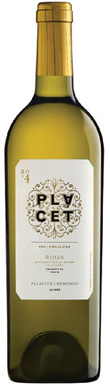

From a four hectare plot in the La Montesa vineyard. 100% Viura, a modern classic, aged in 2,000 litre foudres for 10 months. Perfectly balanced,...
2014
Bodegas Palacios RemondoRioja

Viñedos de Páganos, La Nieta, Rioja, Northern Spain, Spain, 2014
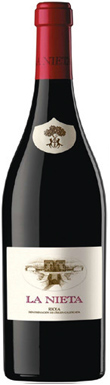
PBT: Blackberry fruit and dense oak make this an incredibly concentrated and ambitious wine. It is a true extract of old vine Tempranillo, superb in...
2014
Viñedos de PáganosRioja
Artuke, La Condenada, Rioja, Alavesa, Northern Spain, Spain, 2014
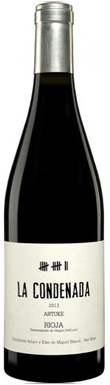
Only the second vintage. A blend of all the grapes from this old, formerly abandoned (condenada meaning ‘condemned’) site on sandy soil: 80% Tempranillo with...
2014
ArtukeRioja
Telmo Rodriguez, Tabuerniga, Rioja, Alavesa, Northern Spain, Spain, 2014
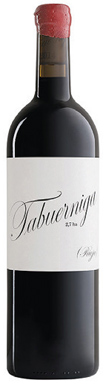
Having explored vineyards across Spain, Rodriguez is now fine-tuning the heritage of Rioja vineyards near his family home. With business partner Pablo Eguzkiza, he bought...
2014
Telmo RodriguezRioja
Finca Allende, Mingortiz, Rioja, Alta, Northern Spain, Spain, 2015
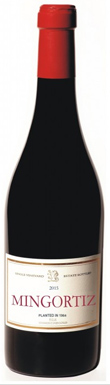
Miguel Angel de Gregorio is famed for the perfection of the single-vineyard Mártires, Calvario and Aurus. The newest arrival is Mingortiz, planted in 1964 on...
2015
Finca AllendeRioja
De Cuzcurrita, Cerrado del Castillo, Rioja, Alta, Northern Spain, Spain, 2011
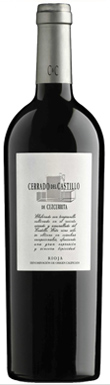
The very model of a single vineyard, made from vines within a walled enclosure – the cerrado or clos – of the medieval castle in...
2011
De CuzcurritaRioja
