
Sauternes second wines: Why they’re worth a look

Accessible and affordable, second wines offer the chance for a wider audience to experience the unique sweet character of Sauternes. James Lawther MW explores how these second wines are made and recommends bottles to try...
The first thing I was offered at La Chapelle, the recently opened restaurant at Château Guiraud in Sauternes, was a tasting glass of the estate’s second wine, Petit Guiraud. It arrived with a tiny, savoury amuse-bouche, a delicious concoction made with Bayonne ham.
Forget the age-old ‘pudding wine’ concept and think aperitif, appetiser, wine by the glass, wine bar, relaxed atmosphere and immediate gratification via the more accessible second labels.
Scroll down for Lawther’s pick of second labels from Sauternes
Sauternes has long been accused of being dusty and outmoded, but there’s a shake-up going on.
Wine tourism and gastronomy are being developed – the Guiraud brasserie and a Relais & Châteaux hotel with fine dining at fellow first growth Château Lafaurie- Peyraguey being two examples.
Down the line, second growth Château d’Arche is set to complement its hotel with a new spa.
Simultaneously, an increasing number of châteaux, including Yquem, are now open to the public by appointment. Further afield the problem is persuading consumers to take the plunge and experience the delights and complexity of this great wine – and that’s where the second labels play a part.
This is not to say the grand vin is being sidelined. All producers agree that their ultimate goal in any given vintage is to make as much of the top wine as possible.
And with the increasing sophistication of viticultural and winemaking practices (pruning methods, selective harvesting, control of sulphur dioxide, barrel fermentation, ageing), as well as the botrytised potential of recent years, this has become more and more feasible.
But these are great wines that need time to open and develop in bottle. They also have the potential to age for a considerable length of time. The product of a natural phenomenon, botrytis cinerea or noble rot, they require skill, patience and experience to produce, so naturally there is a price to pay. Enter the second wine.
New intentions
Until the new millennium most Sauternes classed-growth second wines were what Pierre Montégut, technical director at first growth Château Suduiraut, describes as ‘a typical Bordelaise second wine, made without a clear guideline to production and style, from young vines and batches that were unwanted in the grand vin’.
Most producers look to their second wines as a more open interpretation of their top wine, but these days extra thought goes into the shape and form and how it is achieved. The second wine, after all, serves as both an introduction to Sauternes and a stepping-stone to the top wine.

Château Suduiraut even has two second labels – Castelnau de Suduiraut and Lions de Suduiraut.
Montégut explains: ‘As the selection for Suduiraut became increasingly rigorous from 2001 onwards, our tastings began to identify batches of wine that expressed themselves earlier than those for Suduiraut.
‘Some were more classical in style so are now aimed at Castelnau, while others were fruitier and flattering which is the style of Lions. The batches were then traced to individual parcels, which enabled us to draw up a map identifying the plots for each of thethree wines. It doesn’t always work 100% this way, but gets us very close.’
Castelnau, which was originally created in 1992, evolved like this, with Lions taking on a separate identity from 2009. As Montégut points out, it’s not necessarily a question of young vines but terroir, as there is a parcel of 60-year-old vines on sandier soils which is usually destined for Lions.
Nor is it a question of residual sugar: the three cuvées from 2013 all hover around 143g/l to 150g/l of sugar. ‘You need a certain concentration to allow the botrytised aromatics of Semillon to develop,’ he argues. Length of barrel-ageing and the percentage of new oak do, however, vary for the three wines.
In a structured way Suduiraut has created three cuvées for three different profiles:
- Suduiraut for the connoisseur with deeper pockets who is willing to bide his or her time;
- Castelnau for the eager, classical palate;
- Lions for the freewheeling, debutant consumer.
The last two are half the price of the grand vin. In a certain way this democratises decent Sauternes, allowing the first-time buyer a taste of good botrytised wine.
Style choices
While Suduiraut and Château Rabaud-Promis, with its second wine Promesse, have opted for a more full-blown, richer style for their second wines, Château Guiraud has taken the opposite tack.
‘We wanted a wine that was more spontaneous in style, something sapid and aromatic, which gives instant pleasure and is limited in its concentration, the idea being that it would bring new consumers into the fold,’ explains Xavier Planty, manager of Guiraud for the past 32 years and co-owner since 2006.
Consequently, the previous second label, Le Dauphin, was abandoned and Petit Guiraud was introduced in 2011. The 2013 version, which is presently being poured from magnum at La Chapelle restaurant, weighs in at 76g/l residual sugar.
As at Suduiraut, certain parcels at Guiraud have been identified for making the second label. But two other factors are brought into play when it comes to the balance of the wine.
Guiraud has more Sauvignon Blanc planted than many estates and the blend of 65% Semillon and 35% Sauvignon Blanc in the 2013 reflects this feature.
The other characteristic is that the search for concentration is less extreme. ‘Whereas we will never harvest grapes for the grand vin under 20% or 21% potential alcohol, those for Petit Guiraud are picked at 17% or 18% when the botrytis offers aroma but less concentration,’ explains Planty.
There are, of course, other factors such as pH and acidity that have an influence when it comes to judging the balance and concentration of a Sauternes.
Vintage, too, plays a part, with years like 2013 and 2014 offering greater acidity and perceptive freshness than richer, ‘solar’ years like 2015 and 2016. That being said, the majority of second wines I tasted from a range of vintages had a residual sugar level of between 113g/l to 127g/l and came across as balanced, with just the right degree of sweetness.
‘Our style is one of lightness and finesse with less residual sugar and our second wine, Lieutenant, mirrors this character,’ says Laure de Lambert, owner of first growth Château Sigalas Rabaud.
Fresh approach
Another tip, if you are searching for a little more freshness, is to take a look at the second wines from Barsac, one of the five Sauternes communes.
Located on a lower-lying plateau, Barsac – which has the right to label its wines as Barsac or Sauternes – has a reputation for acidity and freshness, a feature provided by the red, clay-like sand and limestone soils found in this part of the appellation.
Château Climens is the leading estate here and its second wine, Cyprès, is as good as it gets. Calling it a second label is almost abusive.
Created in 1984, the name Cyprès (‘cypress’ in English) was inspired by the fact that way back in the Middle Ages a cypress branch was issued as a receipt to prove that the tax for shipping wine from Barsac to Bordeaux had been paid. These days cypress berries have a more practical use as they are included in a preparation used to spray for grapevine moth at the biodynamic-certified Climens.
The production of Cyprès is based uniquely on tasting, with both the grand vin and second wine receiving exactly the same treatment when it comes to vinification, maturation, percentage of new oak and time of bottling.
The quality of the harvest is the fundamental factor at the outset. ‘There are no flying winemakers in the cellars tweaking the wines, as it’s all down to nature,’ says technical director Frédéric Nivelle. Thereafter the various batches of wine (between 15 to 25 batches, which is the equivalent of 150 to 200 barrels depending on the year) are tasted on a regular basis and the blend for the two wines is made gradually during the period of maturation, dependent on how each batch evolves.
The eventual result gives an average in terms of volume of 60% grand vin, 40% second wine – and on the evidence of tasting the 2015s side by side, it produces a Cyprès that is open and expressive early on, compared to the more intense but reticent Climens.
Of course, there is no second label at the great Yquem, but in a way this is just as well, as it would probably be another vehicle for speculation.
Essentially, the second wines being produced by the classed growths today are for drinking, the objective being to encourage a new clientele.
And with a slight change in mindset and the comprehension of quality and value they could help win the day for Sauternes in its battle for viability and global appreciation.
Sauternes at a glance
Area under production: 1,978ha (2016)
Communes: Barsac, Bommes, Fargues, Preignac, Sauternes
Production: 43,178hl or 5.8 million bottles (2016)
Yield: 21.8hl/ha (2016)
Growers: 142
Classed growths of 1855: 26 (45% surface area, 40% volume)
Grape varieties: Semillon (80%), Sauvignon Blanc (17%), Muscadelle (3%)
Soils: Sand, gravel, clay, limestone
Vintages:
Lively, fresh with good acidity and citrus notes (still with botrytised concentration): 2014, 2013, 2011, 2007.
Richer, rounder with tropical fruit notes: 2016, 2015, 2010, 2009.
Lighter and more uneven: 2012 (sometimes no grand vin made), 2008
See Lawther’s pick of second labels from Sauternes
Read more Decanter magazine articles online here
Château Climens, Cyprès de Climens, Barsac, Bordeaux, France, 2013
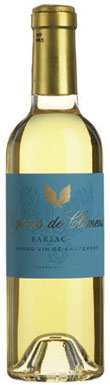

Burnished gold. Caramel aromatics with a marked note of crème brûlée. Complex and rich, with impressive length on the finish.
2013
Château ClimensBarsac

Château Doisy-Védrines, Château Petit Védrines, Sauternes, Bordeaux, France, 2013
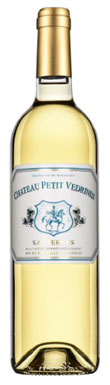
Pure, fresh and harmonious with caramel, spice, ginger and confit fruit notes. Round, full and supple palate with tangy freshness. Great value.
2013
Château Doisy-VédrinesSauternes
Château Suduiraut, Castelnau de Suduiraut, Sauternes, Bordeaux, France, 2013
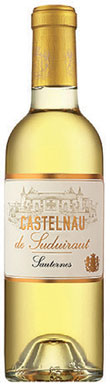
The complete package. Rich and substantial palate with a lovely depth of fruit. Citrus, tropical and vanilla notes. Persistent flavour with a long, fresh, balanced...
2013
Château SuduirautSauternes
Château Rieussec, Carmes de Rieussec, Sauternes, Bordeaux, France, 2013
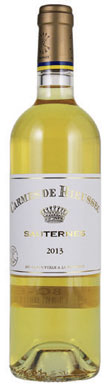
Golden hue. Subtle confit fruit and roasted aromas. The palate is full, round and generous with botrytised, bitter notes on the finish adding freshness.
2013
Château RieussecSauternes
Château de Malle, Les Fleurs de Malle, Sauternes, Bordeaux, France, 2016
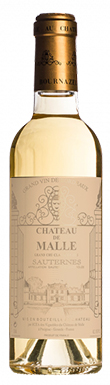
Youthful and pure but already expressive. Pineapple, citrus and honeyed notes. Sweetness on the attack but with balancing acidity. Upfront and appetising; a real gourmandise...
2016
Château de MalleSauternes
Château Lafaurie-Peyraguey, La Chapelle de Lafaurie-Peyraguey, Sauternes, Bordeaux, France, 2015
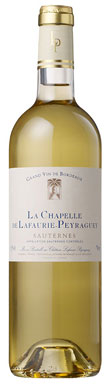
Lively and fresh with mandarin and citrus notes. Even a hint of ginger and spice. Round, supple and fruit-driven on the palate. Some bitter, botyrtised...
2015
Château Lafaurie-PeyragueySauternes
Château Coutet, La Chartreuse de Coutet, Sauternes, Bordeaux, France, 2014
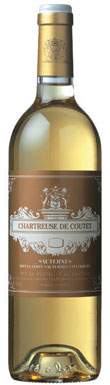
Eminently accessible, the fruit highlighted on the nose and palate. Fresh peach and apricot notes. Juicy and round with adequate intensity. The refreshing finish denotes...
2014
Château CoutetSauternes
Château La Tour Blanche, Les Charmilles de la Tour Blanche, Sauternes, Bordeaux, France, 2015
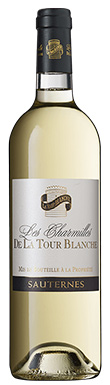
The nose is reticent at first then opens to marmalade, pineapple and spice notes. There’s lovely purity of fruit here. Round and caressing texture on...
2015
Château La Tour BlancheSauternes
Château Rabaud-Promis, Promesse de Rabaud-Promis, Sauternes, Bordeaux, France, 2015
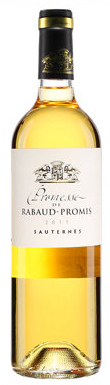
Burnished gold. Richer weight and style. Apricot and candied fruit notes. Full and round on the palate with a barley sugar nuance. Definitely sweeter but...
2015
Château Rabaud-PromisSauternes
Château Sigalas Rabaud, Lieutenant de Sigalas, Sauternes, Bordeaux, France, 2015
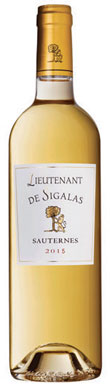
Bright and breezy in style with peach, citrus and vanilla notes. Plenty of freshness and zing, the fruit is forward and juicy, the palate light...
2015
Château Sigalas RabaudSauternes
