
Ten Sicilian wineries at the top of their game


Well loved as a holiday destination, this volcanic Mediterranean island is also home to a thriving wine industry that ticks all the authenticity boxes. Stephen Brook selects 10 estates at the top of their game...
Sicily may be an island, but it often feels like a country of its own. Waves of invasion have left their mark: Phoenicians, Greeks, Romans, Arabs and Normans have all swooped in. Even the British made their mark, by inventing the fortified wine of Marsala.
Sicilian wines enjoyed no great renown until recently, other than specialised styles such as Marsala and the Muscats of Pantelleria and other islands. Diego Planeta was not the first producer to work with international varieties – that honour goes to Tasca d’Almerita – but he was the first to market them around the world. Although he knew Sicily had fine indigenous varieties, they often didn’t age and had no reputation. Only wines such as Chardonnay could put Sicily on the map. Planeta was right, but the company soon added local varieties and styles to its portfolio.
At the same time, adventurous investors were discovering the amazing potential of the volcanic soils of Etna. A few local producers had long made fine wines, white and red, from Etna,but it took an infusion of enthusiasts from Tuscany, the US and Denmark to exploit these remarkable, often ancient, vineyards.
Today, Sicily rejoices in its diversity, with an invigorating mix of large and small enterprises. The larger companies have maintained standards, and have been joined by other excellent producers such as Cottanera, Firriato, Spadafora and the biodynamic COS.
Meanwhile Etna, with its rich micro-terroirs, is booming and continues to deliver beguiling wines.
My selection of estates that follows aims to reflect the range of styles, from traditional to modern, that prevails in Sicily today.
Tasca d’Almerita
This noble property, spread over five hills in the centre of the island, is not so much a wine estate as an eco-system, farming so comprehensively that when dining here, it’s usual to be informed that every item on the menu is produced on the spot.
Although best known for large-volume wines such as Regaleali Rosso and Bianco, named after the family’s main estate, founder Conte Giuseppe had a more international vision and was probably the first grower in Sicily to plant varieties such as Chardonnay, from 1988, and Cabernet Sauvignon.
Today Tasca releases a bewildering range of wines, including bottles from the island of Salina, and Grillo from the island of Mozia near Marsala. The family has also retreated from its focus on international varieties, although those wines are still produced.
Its top white, created to celebrate Conte Giuseppe’s golden wedding, is Nozze d’Oro, a blend of Inzolia and Sauvignon Blanc. But the estate’s pride and joy is Rosso del Conte, first made in 1970, and mainly a blend of old-vine Nero d’Avola and Perricone.
Perhaps Tasca releases too many wines, and not all of them are memorable, but at the top level they are consistent and long-lived. And there is little doubt that without the family’s pioneering approach, other far-sighted producers such as Planeta and Firriato might have been less swift to follow its lead.

Planeta
For many years Diego Planeta ran the vast Settesoli cooperative founded by his father, best known for its Mandrarossa brand. At the same time he was developing his own family vineyards to create his eponymous brand – it couldn’t hurt that its name suggested a global vision – and today the family owns about 400ha in six locations. Winemaker Alessio Planeta says: ‘In the 1980s we were planting on hunches. But today we have a much clearer idea of what works where.’
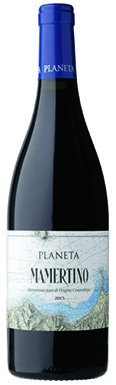
In the beginning Planeta focused on French varieties because, according to Diego Planeta, that was the only way to gain attention on international markets. ‘It was also the case,’ he adds, ‘that Sicilian varieties didn’t age well – or not at that time.’ Although Planeta still releases full-bodied Chardonnay, Cabernet Sauvignon, and Syrah, it has not been slow to expand into other areas such as Vittoria, where Frappato is produced, as well as Etna, Noto for Moscato, and Capo Milazzo in northeast Sicily where it grows the obscure variety called Nocera to revive a once-famous wine called Mamertino.
Like Tasca, Planeta would rather hang its hat on indigenous varieties than international ones: as it expanded, it did so by planting its own vineyards from scratch in order to have maximum control. Also like Tasca, it produces a high-volume brand, the unoaked La Segreta range, but it’s the varietal wines, beautifully packaged, that still set a high standard for others to follow. Planeta remains a family-run business confident of its future.
Feudo Montoni
Not far from Regaleali in Cammarata, and thus deep in the inland hills, lies Feudo Montoni, an organic estate run with passion and commitment by Fabio Sireci.
It’s an ancient property, first praised in papal archives from 1595. Sireci produces excellent wines from varieties like Catarratto and Perricone, but the reputation of Montoni is rooted in its outstanding Nero d’Avola, especially the wine known as Vrucara. The celebrated Italian oenologist Giacomo Tachis tasted the wine and was struck by its difference from the jammier styles of Nero that dominated the market in the early 2000s. He surmised that Vrucara had to be an ancient biotype preserved by the isolation of the vineyard.
The elegance of Vrucara is also a consequence of the estate’s elevation, as its 25ha of vines lie at 500m-750m. There’s a good deal of clay as well as sand in the soil, so the vines rarely suffer drought stress; moreover cool nights preserve freshness and acidity.
Vrucara is made from bush vines with an average age of 75 years, and takes its name from a wild plant that has eucalyptus aromas. Until 2017 the wine was aged in tonneaux, but Sireci has designed his own concrete tanks that encourage an exchange of oxygen without imparting oak flavours. ‘Nero d’Avola has mislaid its history,’ says Sireci, ‘and has lost its identity and typicity. I’m proud that I can help to rediscover it.’
Donnafugata
The dashing Rallo family – José Rallo is an alluring chanteuse – owns this sophisticated winery in Marsala. They founded the estate in 1851, initially producing fortified wines, but Gabriella Rallo oversaw the introduction of table wines of fine quality, and was one of the first to equip a winery with temperature control. Today Donnafugata owns more than 300ha and, like Tasca, produces an immense range of wines, including many dry white wines of freshness and elegance.
It gained an international reputation for Ben Ryé, a passito Muscat from Pantelleria, where it controls 68ha. Most of its other vineyards are in the obscure Contessa Entellina DOC east of Marsala. This is the source of its finest red wine, Mille e Una Notte, a blend of Nero d’Avola, Petit Verdot and Syrah, which is aged in mostly new barriques. Less iconic and costly is the barrique-aged Tancredi, which is based on Nero d’Avola, plus Cabernet Sauvignon, Syrah and a dash of Tannat.
Given that Donnafugata now produces close to 3 million bottles, quality is very high across the range, and even its simplest wines are enjoyable and balanced. Moreover, they are well packaged with stylish labels that radiate Mediterranean joie de vivre.
Cusumano
Like Planeta and Donnafugata, this large firm, with an annual production of about 2.5m bottles, has vineyards in various parts of the island. Of its more than 500ha, 190ha (mostly of white varieties) lie in the province of Palermo, with 140ha (mainly Nero d’Avola) in Butera, and 70ha more near Trapani. The first releases were in 2001, and Cusumano remains very much a family company, with brothers Alberto and Diego at the helm. A major development occurred in 2013 when it bought 15ha from Benanti on Etna, after searching for years for a suitable property there, and named the estate Alta Mora. Today there are 28ha under vine.
The brothers’ best-selling wine is the mostly unoaked Benuara, made from two-thirds Nero d’Avola and the remainder Syrah. Its top Nero is called Sàgana, cropped at low yields and aged in large casks. Moscato dello Zucco is a Moscato Bianco, the grapes dried for three months and the wine aged in small barrels – one of Sicily’s finest Moscatos.
The initial releases of Ata Mora wines from Etna, especially two single-vineyard reds, show great promise. But even at more basic levels, the Cusumano wines are well crafted, consistent, balanced and sensibly priced.
De Bartoli
Near Marsala are the cellars of De Bartoli. As a fortified wine, Marsala was invented by the British in the mid-19th century. Once spoken of in the same breath as Port or Madeira, its reputation suffered a sharp decline once it became customary to add flavourings and concentrated must, use high-yielding grape varieties, and reduce ageing times. Quality plummeted and so did production.
The late Marco de Bartoli was well aware that authentic Marsala was essentially an oxidised wine from the Grillo grape given extended ageing in wooden casks. The minimum alcohol level for Marsala was 18%, the consequence of enthusiastic additions of brandy, but De Bartoli’s wines were unfortified and thus below that legal requirement. His refusal to follow the rules led to his winery being shut down from 1995 to 2000.
Marco died in 2011 but his son Renato follows loyally in his footsteps. Today a range of fine and authentic Marsala is still being produced, as well as a superb dry Grillo and remarkable wines from Pantelleria. The flagship wine has always been Vecchio Samperi, even though it cannot be labelled as Marsala. It’s made in a solera system, with 6,000 bottles a year drawn off the barrels.

Benanti
Dr Giuseppe Benanti, a pharmaceuticals entrepreneur, was one of the first to realise the potential of Etna’s vineyards, which in the 1980s were producing mostly mediocre wines. His first vintage from the family’s revitalised plots was 1991 and his ambition to set a higher standard was soon realised.
Today the property is run by his twin sons Antonio and Salvino. Most Etna estates are based in just one part of the region, but Benanti is unusual in having vineyards both on the cooler north side of the volcano (Rovittello) and on the southern side (Serra della Contessa). Both produce excellent but different Etna Rosso wines, with Rovittello being more structured and dense. The red wines used to be aged in barriques, but the estate is now reverting to large casks.
Benanti also revealed the potential of the Carricante variety, and the thrillingly saline white Pietra Marina is produced from 80-year-old vines grown at 920m. Many would argue that this is Sicily’s finest expression of Etna Bianco. Newer producers may have grabbed more limelight over the past decade or so, but Benanti remains a name to be conjured with, and there is no better introduction to the Etna styles than the family’s single-vineyard wines, both red and white.
Passopisciaro
Andrea Franchetti, blessed with boundless confidence and considerable resources, founded the Trinoro estate in southern Tuscany, where he makes powerful wines from Merlot, Cabernet Franc and other varieties.
By 2000 he was searching for cooler sites that would generate wines in contrast to hot Tuscany, and when he visited the Etna slopes he realised this was just what he was looking for. He bought an abandoned winery outside the town of Passopisciaro as well as a vineyard at 1,000m, and gradually acquired 26ha, both purchased and leased, planted with old bush vines of up to 120 years old. From these he makes a range of single-vineyard wines as well as a generic blend called Passopisciaro, and an atypical Chardonnay.
Franchetti likes to pick late, so in some vintages the wines can be too high in alcohol. In cooler years such as 2015, however, he produces finely balanced wines with great intensity of fruit. They are aged for 20 months either in cement tanks or large casks, and bottled without filtration.
Tasting the single-vineyard wines side by side, it’s clear there are differences between them – of personality rather than quality. Quantities are limited and prices high, but these are structured wines that repay cellaring, although the generic Passopisciaro, which should not be underestimated, is more accessible on release.
Palari
Whenever I drink this wine, it makes me sigh with pleasure. It’s certainly among my favourite three red wines of Sicily. It comes from 7ha in the obscure Faro DOC, which owner Salvatore Geraci helped put on the map.
It’s a cousin of Etna Rosso, in that Nerello Mascalese forms a large part of the blend, but in other respects it has little in common with Etna. The steep, stony vineyards are tucked along the Straits of Messina in the island’s northeastern corner, looking across the water to the mainland city of Reggio Calabria. The climate here is more Mediterranean than volcanic, elevation is around 400m, and the vines are up to 80 years old. The main components of the blend are Nerello Mascalese, Nerello Cappuccio and Nocera. Palari is fermented in wooden vats and aged for 20 months in one-third new barriques.
Any lots that Geraci is not entirely satisfied with go into his second-label wine, Rosso del Soprano, which spends less time in wood yet often comes very close in quality to Palari.
A recent vertical tasting of 13 vintages back to 1998 persuaded me of Palari’s ageability, though after about 12 years’ ageing, secondary characters begin to overshadow the wine’s beguiling fruit, elegance and seductiveness.

Murana
Almost every region in Italy has its tradition of passito wines – that is, drying bunches of grapes for weeks or months in order to increase their sugar content before pressing and vinification.
In areas such as Soave and Valpolicella this is done by laying bunches on racks in an attic; in more southerly regions, bunches are spread outdoors under direct sunlight. On the island of Pantelleria this became a cottage industry with some two dozen producers, including Donnafugata and De Bartoli. The grape used is Zibbibo, an Arabic term for Muscat.
The most doggedly traditional producer is Salvatore Murana, a former fireman. He claims to have been producing wine since he was four years old. ‘When I was in kindergarten I’d run off to help my grandfather!’ Today he controls 15ha of Zibbibo and makes a range of wines of varying intensity. Some can be extreme: the wine he calls Creato was vinified in 1976 and aged in barrels until it was bottled in 2005. Tasted in 2014, Creato resembled an old Rutherglen Muscat from Australia in its viscosity and figginess. His best wines are Khamma and Martingana, from single vineyards planted in 1932, but Mueggen is more affordable and classic in style.
Brooks’s top 10 Sicily wines:
Tasca d'Almerita, Rosso del Conte, Contea di Sclafani, Sicilia, Sicily, Italy, 2013
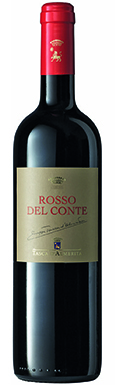

54% Nero d’Avola and 26% Perricone blended with other red varieties from the estate. The nose is sumptuous, with ripe, oaky, cherry and blueberry aromas....
2013
Tasca d'AlmeritaSicilia

Planeta, Capo Milazzo, Mamertino, Sicily, Italy, 2015
91
Planeta has helped return the Nocera variety to its rightful place among Sicilian wines. Discreetly red-fruited on the nose, with refined cherry aromas and a light, meaty tone. It is medium-bodied, but its fine acidity gives intensity. This Mamertino is linear and poised, with elegance rather than flesh,but its drive gives a long, concentrated finish. Perfect with a veal chop.
2015
PlanetaMamertino
Feudo Montoni, Vrucara Nero d'Avola, Sicilia, Sicily, Italy, 2012
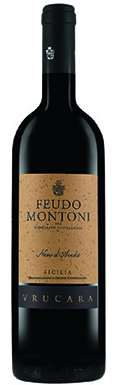
This is Nero d'Avola at its best, with no trace of jamminess. The nose is resplendent with dark cherry fruit and a light smokiness. It's...
2012
Feudo MontoniSicilia
Donnafugata, Tancredi, Terre Siciliane, Sicily, Italy, 2012
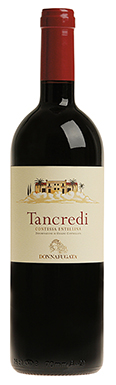
This Nero d’Avola-based blend can be austere when young, but the 2012 vintage is more open. The nose is lush and oaky, with brooding black...
2012
DonnafugataTerre Siciliane
Cusumano, Sàgana Nero d'Avola, Sicilia, Sicily, Italy, 2013
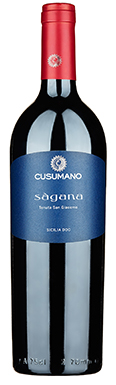
A more opulent expression of Nero d'Avola, this has complex and vibrant aromas of black cherries, damsons, tobacco and cloves. Rich, tannic and concentrated, it...
2013
CusumanoSicilia
Benanti, Rovittello, Etna, Sicily, Italy, 2013
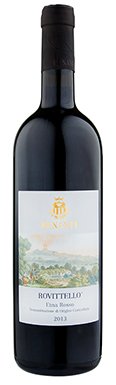
There are fragrant red fruits on the nose, which is still reserved. The attack is intense and sleek, with lifted red fruits and tannins that...
2013
BenantiEtna
Passopisciaro, Etna, Sicily, Italy, 2014
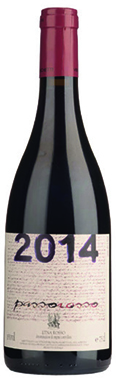
Explosive on the nose, showing power and forthright cherry and red-fruit aromas. Broad and fleshy for Etna, this is concentrated and tannic, chewy and forceful...
2014
PassopisciaroEtna
Palari, Faro, Faro, Sicily, Italy, 2010
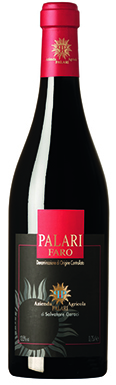
The nose is lean and intense, with aromas of sour cherries and a hint of coffee. Although very concentrated, it's silky, fresh and lively, with...
2010
PalariFaro
Murana, Mueggen Passito di Pantelleria, Passito di Pantelleria, Sicily, Italy, 2009
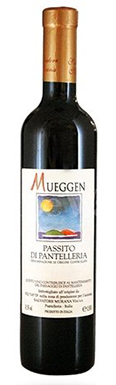
Less figgy and burnished than his single-vineyard passito wines, Mueggen is still astonishing. Yellow-gold colour and a nose of honey and apricots. Mandarins and quince...
2009
MuranaPassito di Pantelleria
