
Sonoma County’s best kept secret: Moon Mountain District
Established 11 years ago, Moon Mountain District is one of the newer AVAs in Sonoma County. Yet, with over 130 years of continuous viticulture, its history along with its geological and climatic profile make for a long-standing, quality winemaking region.


The Sonoma American Viticultural Area (AVA) known as the Moon Mountain District presents a paradox. It is both a rough-and-tumble locale with rogue characters who flout convention, and a land of pristine beauty that produces some of the finest wines in Sonoma County.
Nestled within the larger Sonoma Valley AVA, Moon Mountain District was granted AVA status in 2013. It spans just 800 hectares (of Sonoma’s 7,000ha) at elevations between 120 and 716 metres, all within a 15 kilometre stretch.
The region’s hallmarks, that helped it gain its AVA status, are its hill and mountainside vineyards and red volcanic soils. These include some of the oldest vineyards in California too, including Hanzell’s 1953 Ambassador vineyard and the storied Monte Rosso.
Scroll down to see notes and scores for selected wines from producers on Moon Mountain

Kamen Vineyard in the Moon Mountain District. Credit: Kamen Estate Wines
Mountain geology
Both tectonic plate shifts and volcanic eruptions formed the Mayacamas Mountain range, where the Moon Mountain AVA sits. The Mayacamas divide the Napa and Sonoma valleys, and Moon Mountain lies on the west-facing flank, with one of Napa’s high-elevation AVAs, Mount Veeder, on the opposite side.
The millennia-long geological and volcanic activity also contributed to the dominant soil type in the region, which is rocky and iron-rich, ideally suited to Cabernet Sauvignon, a staple variety in Moon Mountain.
This soil is one of the distinguishing factors that helped to delineate the Moon Mountain AVA. And although volcanic soils are not unique in themselves, when coupled with the high elevations at which the vineyards are planted, they produce something very special indeed.
Because of these attributes, many highly regarded vineyard sites reside in the appellation, including the the Hamel Family’s Nun’s Canyon vineyard. Most famous of all, however, is the aforementioned Monte Rosso, named after that very same iron-rich, red soil.
The origins of the region
Viticulture in this part of California dates back to the 1800s. In the 1850s, Agoston Haraszthy, a Hungarian pioneer of the California grape industry, saw the potential of Sonoma and bought a 226ha (5,000 acre) swath of land there, bringing in Charles Krug as his winemaker.
What is now the Monte Rosso vineyard was founded not much later, the first vines planted by Emmanuel Goldstein in the 1880s. Because of the vineyard’s unique soil, the grapes grown there became known for their high quality and flavour. Some of those original vines planted in the 1880s still produce fruit today.
In the 1930s, vintner Louis Martini purchased the site, and renamed it ‘Monte Rosso’. Over the subsequent years, the winery and its vines have become a venerable and historic California landmark.

Climatic character
As this area of Sonoma lies 100% within the Sonoma Valley AVA, the climate profile is Mediterranean, so the even, warm growing season is tempered by abundant rainfall during the winter months. However, due to the significant range of elevations, a myriad of microclimates exist within the confines of Moon Mountain.
Long sunshine-filled California days help the vines achieve optimum ripeness. At the same time, the westward-facing aspect of most vineyards means that they are cooled by the ocean breezes that roll in off the San Pablo Bay and the Pacific Ocean.
Altitude and the nearby ocean also means that wind plays a vital role in Moon Mountain’s character. It prevents morning fogs from lingering, dries out canopies saturated with moisture to fend off disease pressure, but also increases the transpiration rate of the vines, keeping them in that state of just-enough-stress necessary for the production of great wine.
Mountain pioneer
For years, Moon Mountain was a relatively unknown territory. That was until pioneering viticulturist Phil Coturri put the AVA on the map. Growing up in the area, Coturri was well-acquainted with it – and with its wine through family connections.
In the 1970s and 1980s the dangers of herbicides and pesticides were becoming apparent and there was a wave of renewed interest in organics and push back against the conventional approach to farming.
Coturri began his career in earnest during this time. He knew the dangers of chemicals all too well. Once, when working in a vineyard he had been accidentally dosed with the herbicide Paraquat which made him very ill.
This, coupled with his hippie roots, compelled him to be a proper steward of the land, among those extolling the virtues of organic farming well before it became a mainstream approach.
An early client was Hollywood screenwriter Robert Kamen. At that point (1981) just the future writer of the ‘The Karate Kid’ franchise (among others), Kamen had used the proceeds from selling one of his first scripts to buy 113ha in Sonoma. He turned 16ha into a vineyard and asked Coturri to help plant it.
Coturri had no hesitation about planting Cabernet Sauvignon there. And then, when it was badly damaged in a fire, replanting it again and adding more Bordeaux varieties for good measure.
Coturri went on to advise and manage many of the region’s vineyards and was a pivotal figure in the creation of the Moon Mountain AVA itself. To this day, he manages a sizeable proportion of the AVA as well as running his own winery, and an olive grove for olive oil – the latter a further pioneering project he undertook with his wife, Arden Kremer, in the early 1990s.
Four Moon Mountain producers:

Kamen Estate Wines
Kamen was one of the early growers on Moon Mountain. He owns 121ha, of which 20ha are planted in an amphitheatre-style vineyard. It is the oldest site Coturri has planted and Kamen calls it ‘Phil’s laboratory.’ It was also Coturri’s first organic-certified vineyard in California.
The vineyard has a variety of grapes, including Grenache and Viognier plantings, because Kamen and Coturri procured cuttings from Côte Rôtie. However, the vineyard is centred on Cabernet Sauvignon. Kamen and Coturri believe that the elevation, aspect and exposure to light in the vineyard are perfect for the king of Bordeaux varieties.
‘We knew this was Cabernet country, and we have our own Kamen Heritage Clone,’ says Kamen, which is thought to be a Martini clone originally grown on Monte Rosso vineyard.
Mark Herold, the Kamen Estates winemaker, says that they use: ‘around eight different clones to make the Kamen wines. These are the paints of my palette, where clones offer diversity, which translates to wine complexity and layering. The Kamen Heritage clone is the backbone or “foundational colour,” if you will, of these Moon Mountain District wines.’
Korbin Kameron Wines
Korbin Kameron Wine’s proprietor is Korbin Ming, whose parents bought the 8ha property in 1999. At 716m in elevation – the highest vineyard on Moon Mountain – Korbin Kameron Wines sits about 243m above the fog line with unobstructed 360-degree views. On a clear day, one can even see the Pacific Ocean.
When his parents decided to buy property and plant vines in Sonoma, they conducted a soil analysis that confirmed that Bordeaux varieties were the best suited to their property.
With the aid of Phil Coturri all five red Bordeaux varieties, as well as Semillon and Sauvignon Blanc, were planted and are managed with both organic and holistic farming practices.
Robert Pepi was Korbin Kameron’s original winemaker, but now Ming, with consulting winemaker Timothy Milos, leads the winemaking with a site-first approach. Ming is a big fan of harnessing the high elevation and cooler climate to craft the wines he wants to drink.
Together they ensure that all of the wines are the purest expressions of the vineyard, making most of the range as single-variety wines.
‘If everything is done well in the vineyard, I can be very hands-off in the cellar,’ says Ming. ‘Relying more on farming gives the purest expression of place, in my opinion.’

Hanzell Vineyards
For more than 70 years, Hanzell Vineyards has been a revered Pinot Noir and Chardonnay house. It was founded in 1953 by James Zellerbach, a philanthropist and former ambassador to Italy.
Zellerbach’s travels eventually led him to Burgundy, where he felt inspired by the connection to the land the winemakers there had – and the wines that commitment produced.
Of the 80ha estate, 18ha are planted with vines. According to Jason Jardine, current Hanzell president and director of winemaking, the vineyards are planted organically in a way that ‘mimics nature’ and can ‘sustain fertility’.
Jardine believes that farming holistically – within an ecosystem that includes animals, plants, and even food grown on-site for the staff – is the only way the world can continue to exist. No chemicals are used on the vines and there is a no-till policy to help preserve soil health.

Moon Hollow Ranch
Entrepreneurs, Michael and Xochi Birch, the owners of San Francisco’s hottest private members club, The Battery, have built one of the most intriguing wine estates in all of Sonoma County – Moon Hollow Ranch.
Their 325ha, secluded slice of heaven atop Moon Mountain is home to all manner of livestock, including pigs, sheep, goats, ducks, geese and chickens. The vineyards are comprised of an equally diverse mix of Syrah, Grenache, Viognier, Cabernet Sauvignon, Cabernet Franc, Mourvedre and Sauvignon Blanc.
The vines and animals live symbiotically, producing an entirely sustainable ecosystem. Animals are so important to Moon Hollow Ranch that they’re featured on the labels.
The livestock manager uses ‘regenerative grazing for carbon sequestration’ and other methods to preserve and enhance habitats. Phil Coturri, along with winemaker Mark Herold and Christophe Tassan, sommelier, host, former The Battery wine director, and Meilleur Ouvrier de France (MOF) brand ambassador, are all important pieces of the viti-vini pie.
‘Wine is a postcard of taste,” says Tassan. ‘It’s a picture of a place.’ And with every wine that Herold makes for the Birch’s label, he believes a story about the land is told.
Wines from four featured Moon Mountain producers
Related articles
- Sonoma travel guide: The perfect three-day itinerary
- Sonoma County AVAs: Overview and 10 wines to try
- Exploring Sonoma County’s coolest vineyards plus top wines from each
Korbin Kameron, Sauvignon Blanc, Sonoma County, Moon Mountain District, California, USA, 2021
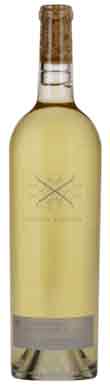

With a blend of Sauvignon Blanc and Sémillon, the nearly three-dimensional, bright fruit is a textbook explanation of what high-elevation winemaking is like. Abundant sunshine...
2021
Korbin KameronSonoma County

Hanzell Vineyards, Hanzell Farm Chardonnay, The Zellerbach Selection, Sonoma County, Moon Mountain District, California, USA, 2022
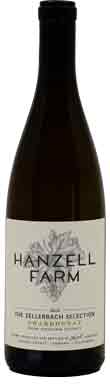
It's surprising that this stainless steel-fermented Chardonnay didn't undergo malolactic fermentation as there is a creaminess and fullness to the texture of the wine that...
2022
Hanzell VineyardsSonoma County
Korbin Kameron, Merlot, Sonoma County, Moon Mountain District, California, USA, 2019
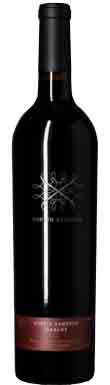
The flagship wine of the range, this Merlot showcases what elevation can do to a wine. With an acid-first profile, unlike most Merlots, this one's...
2019
Korbin KameronSonoma County
Kamen Estate Wines, Cabernet Sauvignon, Sonoma County, Moon Mountain District, California, USA, 2019
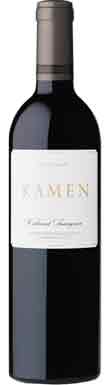
Deeply pigmented with opulent black and blue fruits, this Cabernet feels both sophisticated, as it has five years on it, and youthful, with a vivacity...
2019
Kamen Estate WinesSonoma County
Kamen Estate Wines, Lava Block Cabernet Sauvignon, Sonoma County, Moon Mountain District, California, USA, 2019
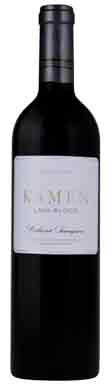
From Lava Block, which is a 5-hectare micro-climate within Kamen Estate, planted in 2008, it is the rockiest slope in the vineyard. Blackberry and blueberry...
2019
Kamen Estate WinesSonoma County
Korbin Kameron, Cabernet Sauvignon, Sonoma County, Moon Mountain District, California, USA, 2019
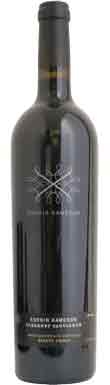
A familiar whiff of the three-dimensional stewed blue, red, and black fruit often characteristic of mountainside viticulture, the Korbin Kameron Cabernet also has a tactility...
2019
Korbin KameronSonoma County
Moon Hollow, Grenache, Sonoma County, Moon Mountain District, California, USA, 2021
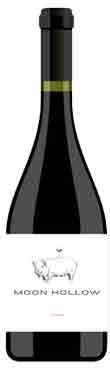
From the estate vineyard, a high elevation, organic (CCOF-certified) site with undeniable coastal influence. Lush, blue and red fruit with a modicum of spiciness that...
2021
Moon HollowSonoma County
Hanzell Vineyards, Ambassador's 1953 Vineyard Pinot Noir, Sonoma County, Moon Mountain District, California, USA, 2021
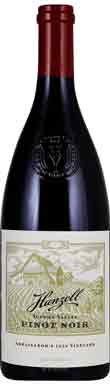
The wine gets its name from the original, a small vineyard of the same name, planted in 1953. Ambassador Vineyard is 71 years old and...
2021
Hanzell VineyardsSonoma County
Moon Hollow, Syrah, Sonoma County, Moon Mountain District, California, USA, 2021
The high-elevation Moon Hollow Ranch vineyard is an organic (CCOF-certified) vineyard; the terroir takes on specific coastal influence and that from the nearby vegetation. A...
2021
Moon HollowSonoma County
Hanzell Vineyards, Cabernet Sauvignon, Sonoma County, Moon Mountain District, California, USA, 2020
The blend is 86% Cabernet Sauvignon, 6% Cabernet Franc, 6% Malbec and 2% Petit Verdot. Though it's a blend of thick-skinned, heavier varieties here, the...
2020
Hanzell VineyardsSonoma County
