Sonoma AVAs – The most exciting
Larger and more diverse than its California neighbour Napa, Sonoma contains 18 different AVAs. From sprawling Sonoma Valley to small Fort Ross-Seaview and hidden gems such as Rockpile, Elin McCoy highlights the most exciting winemaking regions here and flags up the producer names you need to know…


More rural and less glitzy than Napa, Sonoma is also bigger and more diverse, and its 18 American Viticultural Areas (AVAs) more confusing. They overlap and some encompass several smaller ones, but all have at least a few top-quality wines and young winemakers exploring new grapes and winemaking ideas.
Wines from some newer Sonoma AVAs such as Fountaingrove District are hard to come by, which is why my picks below focus on those whose wines are available in the UK.
Scroll down for Elin McCoy’s top 18 wines from Sonoma‘s most exciting AVAs
Petaluma Gap
Wind is the force behind Sonoma’s most recent AVA, approved in 2017. Much of this pastoral valley in southern Sonoma County lies inside the huge Sonoma Coast AVA, but vintners insist the sub-zone deserves its own appellation because of the ways that the wind makes the wines unique. The boundaries are contoured by where wind maintains a speed of at least 13km an hour.
The Gap refers to a 24km opening in the coastal hills that acts as a wind tunnel through which cool breezes and chilly fog rush in from the Pacific and south to the town of Petaluma and San Pablo Bay. In summer, fog hangs about until the morning sun blows it off; then later, mid-afternoon wind and nightly fog bring daily temperature swings of up to 10°C. The result is slower ripening and a long growing season, even into November.

The wind helps to reduce yields and creates smaller berries with thicker skins, so wines have both acidity and structure, with intense aromas and flavours yet lower alcohol levels. About 75 % of the grapes planted here are cool-climate-loving Pinot Noir; the rest are split between Chardonnay and Syrah and a tiny smattering of other varieties.
The region has a 150-year tradition of grape-growing and remains a region of growers. There are 80 vineyards and 1,620ha planted, but only nine wineries. Most vineyards are small, though Jackson Family Wines has moved in. A handful have been made famous by the 50 or so wineries outside the AVA that buy Petaluma Gap grapes; trendsetter Arnot-Roberts has made the best vineyards, Gap’s Crown and Griffin’s Lair, famous.
Names to know: Adobe Road, Cline Cellars, Keller Estate, Sangiocomo
Russian River Valley
Bob Cabral, the former winemaker at Williams Selyem, once told me that when God invented Pinot Noir, he put his thumb on the Russian River Valley. This AVA, established in 1983, is ground zero for the rise of California Pinot Noir to cult status. Most of its 94 wineries make at least one bottling, and many make half a dozen or more, labelled with vineyard names. But the region is also known for its lush, creamy-textured, lemony Chardonnays.

Low-lying and forested, its roads lined with redwoods and nearly 5,700ha of mostly Chardonnay and Pinot Noir, Russian River remains one of the most important AVAs in Sonoma. Its boundaries have been disputed and expanded, a reflection of the price premium conferred by its name on the label. The river of the same name snakes through the region and pulls in dense fog that keeps temperatures cool and therefore acidity in the grapes, although it’s not as cool as the coast. The river’s fog line largely defined the AVA’s original boundaries, and it is one key to the character of the wines, along with a wide swing in daily temperatures, plus the Goldridge soil, a sandy loam.
But Russian River has more diverse micro-climates and soils than people realise. There are, for example, a number of old Zinfandel vineyards and the AVA recently launched a ‘neighbourhoods’ initiative to highlight the differences in its five sub-zones. The coldest, foggiest one, Green Valley, has its own AVA producing superb sparkling wines with edgy acidity.
A handful of adventurous 1970s pioneers, such as Joseph Swan and Joe Rochioli, showed that Russian River could make great Pinots, and their success attracted a second wave, such as Merry Edwards (whose winery was recently purchased by Roederer), in the 1990s.
Generally the Pinots are darker in style, with plump, ripe plum fruit, a trademark cola element, and a voluptuous rather than silky texture. Chardonnays, except those from Green Valley, are lush and velvety. But times are changing, and more Russian River Valley winemakers are aiming to be on trend with lighter, more food-friendly styles.
Names to know: Carlisle, Croix Estate, DuMol, Dutton-Goldfield, Ramey Cellars, Ryme, Williams Selyem
Moon Mountain District
When screenwriter Robert Kamen showed me around his biodynamic Kamen Estate vineyard on Moon Mountain on a quad bike, he wore flipflops. Given the rough terrain of broken volcanic rocks, I was happy to be in hiking shoes. The spectacular views were to die for.

This 7,150ha AVA, with about 610ha of planted vines, was established in 2013. It’s on the eastern side of Sonoma Valley, on the slopes of the southern Mayacamas Mountains, whose ridgeline divides Sonoma and Napa.
The AVA is composed of rugged hillside vineyards, some incredibly steep and remote, at elevations from 120m to 670m. They face southwest, soaking up warm, intense afternoon sun and wind from the Pacific, and many are farmed organically with the help of revolutionary viticulturalist Phil Coturri.
Thin soils and altitude define the wines, producing smaller, thick-skinned grapes that make old-school age-worthy reds with powerful, intense flavours. The soil is volcanic basalt and ash, sometimes with deposits of clay. The grapes are mostly red Bordeaux varieties and Zinfandel. Cabernet Sauvignon produces big, rich, complex wines reminiscent of Napa mountain Cabs from Mount Veeder. Some of the AVA’s most unique wines come from Monte Rosso, one of California’s iconic old vineyards with red, iron-rich volcanic soils that was originally planted in the 1880s.
But tucked away on the cooler lower hillsides, you’ll find stellar Chardonnay and Pinot Noir, originally planted in the 1950s by Ambassador James Zellerbach when he founded Hanzell Vineyards.
Names to know: Amapola Creek, Hanna, Hanzell, Kamen Estate, Sixteen600
Dry Creek Valley

While this narrow, rural valley (26km long, 3km wide) is one of the best terroirs in California for world-class Zinfandel and Petite Sirah, some 30 varieties are grown here. One of Sonoma’s smallest AVAs, Dry Creek Valley retains a rustic, laid-back feel and a legacy of old vines and multi-generational winemaking families. You still feel the influence of early pioneers, many of them Italian, who arrived after the 1849 Gold Rush. Many who planted grapes over 100 years ago, such as Mauritson, are still making wines from them, which adds to the region’s strong sense of identity.
That rich heritage and one of the world’s densest concentrations of old-vine Zinfandel set it apart even in 1983, when it became an official AVA. Now it boasts 150 growers and 60 wineries. It’s a great place to tour as most wineries are still open without appointment. The conditions – a valley floor, benchland and hillside vineyards, long, warm days yet evenings can be cool – are ideal not just for Zinfandel, but also fine Sauvignon Blanc, as championed by modern pioneer David Stare, who founded Dry Creek Vineyards in 1972.
Much excitement here now is in leaner, claret-style Zinfandels and experiments with Italian and Rhône varieties. Unti Vineyards, for example, has Roussanne, Mourvedre, Fiano, Cinsault, Vermentino, Grenache and more. Another development is a hidden gem that overlaps Dry Creek Valley’s northern border: Rockpile AVA. Its rugged landscape of steep hillsides, big winds and wild boars has only 65ha of vines and its intense wines are hard to find, but you’ll hear more about it in the future.
Names to know: Amphora Wines, Dry Creek Vineyards, Lambert Bridge, Nalle, Ridge Lytton Springs, Talty, Unti
Sonoma Valley
An AVA since 1981, this sprawling region in the southeastern corner of the county was known historically as The Valley of the Moon. This was the birthplace of California’s commercial wine industry in the 19th century, thanks to a legendary self-proclaimed ‘Count’, Agoston Haraszthy, who founded the first winery, Buena Vista, in 1857. Today, it has 114 wineries, 5,260ha of vineyards, and some of Sonoma’s hippest tasting rooms. The new Abbot’s Passage winery, for example, offers not just a collection of small-lot field blends but also adventure gear and apparel.
Bordered by two mountain ranges, it encompasses the charming town of Sonoma as well as several smaller more cohesive AVAs: Bennett Valley, Los Carneros, Sonoma Mountain and Moon Mountain. But understanding the bigger AVA is a way to gain deeper insight into Sonoma’s long wine history, which is now being rediscovered by a younger generation looking for authenticity.
With dramatic terroir contrasts between the valley floor and mountain slopes, Sonoma Valley grows a wide range of grapes and boasts 15 different soil series. The most fascinating sub-zone now is the Moon Mountain District.
Though the most planted grape is, surprisingly, Chardonnay, what’s most exciting are the young winemakers producing field blends and Zinfandel from old 19th- and early 20th-century vineyards. One of them is Morgan Twain-Peterson MW, whose Bedrock Vineyard in the heart of Sonoma Valley boasts 120-year-old vines.

Names to know: Bedrock, Bucklin, Donum Estate (Carneros), Scribe
West Sonoma Coast
Although not yet an official AVA, the narrow slice of breathtaking coastline referred to as the West Sonoma Coast gained preliminary approval in July 2018 and final approval is expected soon. It’s the place for Sonoma’s most exciting Pinots, Chardonnays and Syrahs made by small family wineries, many of whom farm organically. This is where San Francisco hippies settled when they went back to the land in the 1960s.
You could say the pending AVA is push back against the vast 195,000ha Sonoma Coast AVA, created in 1987, whose name on a label is meaningless as a guide to the character of the wine inside the bottle. Much of its land is far from the coast, with zero influence from the Pacific Ocean.
So wineries and vineyards (there are now 47) within a few kilometres of the coast pushed for a new AVA to highlight how very different their wines are because of the direct Pacific influence and cold maritime climate with more abundant rainfall than inland. Day and night temperatures are cool and also more uniform. That’s why harvest is several weeks later than in the Russian River Valley, yields are lower and the wines more expensive.
Wines from all varieties tend towards lower alcohol and higher acidity, with layers of savoury complexity and pure, restrained fruit flavours – very much in tune with the wine zeitgeist. Another contributing factor to their style (and higher prices) is the terrain on which vines are planted: steep ridges at high elevations where clashing tectonic plates formed the San Andreas Fault and created a jumble of complex soils.
Still, nothing is simple. The central part of the West Sonoma Coast, with the oldest vineyards, won its own AVA status as Fort Ross-Seaview in 2012.
Names to know: Failla, Flowers, Hirsch, Littorai, Martinelli, Peay, Red Car

Fort Ross-Seaview
Fort Ross-Seaview is a small AVA with 225ha of vineyards in the centre of the pending West Sonoma Coast appellation, though some vintners thought it was too soon to subdivide the area into top spots. But trying to gain AVA status for the three distinct sub-zones in the coastline area before trying to get one for the overall West Sonoma Coast was an earlier strategy. Infighting over the Fort Ross-Seaview name and boundaries ate up years before it was finally approved in 2012.

What makes the area unique is that vineyards must be higher than 300m elevation – above the fog line – where intense sunlight plus cool coastal air allow flavours to develop more fully. The first vineyard in this isolated spot was planted in 1972, and a handful of pioneers such as David Hirsch arrived during the next decade. Despite the fact that it’s not easy to make wine on these high ridges where wild boar gobble the grapes, the region’s potential for Pinot Noir drew winemakers such as Napa’s Jayson Pahlmeyer, who planted 12ha in 2002. One very recent addition to the mix is Raen, a partnership of Carlo and Dante Mondavi, sons of Tim Mondavi, owner of Napa Cabernet powerhouse Continuum. Most winemakers also craft elegant, creamy-textured Chardonnays.
In fact, Lester and Linda Schwartz, who own Fort Ross Vineyard & Winery, tested 16 grape varieties, but say they found only the Pinot Noir and Chardonnay were any good. But being South Africans, they planted Pinotage anyway.
The common stylistic thread linking the AVA’s Pinots is savoury, wild red fruit, a mineral-and-earth character, serious tannic structure and striking vibrancy. Initially few vintners put Fort Ross-Seaview on the label, but now it’s a badge of honour.
Names to know: Failla, Hirsch, Martinelli, Raen, Red Car, Wayfarer
Knights Valley
Even though this is one of Sonoma’s original five AVAS, established in 1983, it still feels very remote, mysterious, off the beaten path. Maybe that’s because it’s the easternmost region in the county, and it’s often mistakenly thought to be in Napa Valley. While the area has some 40 growers, there are few wineries, no tasting rooms, just a single twisty road for access and no restaurants or hotels. It’s one of the most pristine wine regions in California.
It’s also the warmest AVA in Sonoma, with high levels of sunshine that are ideal for superb Cabernet Sauvignon and other Bordeaux varieties, which are the main claim to fame. The style marries Napa Valley’s full-bodied structure and ripe chocolatey flavours with Sonoma County’s elegant acidity and signature cocoa-powder finish.

The mountain landscape is dominated by defunct volcano Mt St Helena and the volcanic soils are mineral-rich. There are about 1,000ha planted, many owned by Jackson Family Wines for its single-vineyard Anakota label and Beringer for its Knights Valley Cabernet. The top name is Peter Michael Winery, founded in the 1980s by a wine-loving Englishman of the same name who’d been inspired by the 1976 Paris Tasting. He also planted Chardonnay and Sauvignon Blanc along with Bordeaux red varieties. But the sleepy area has recently attracted new names, such as Knights Bridge, and Donelan is busy replanting its great Syrah vineyard, which was destroyed by wildfires.
Names to know: Anakota, Beringer, Donelan, Knights Bridge, Peter Michael
See Elin McCoy’s top 18 wines from Sonoma ‘s most exciting AVAs
You may also like
Californian Cabernet Sauvignon 2010 panel tasting resultsTop Sonoma red wines for the cellarGreat wine route: California’s Central CoastPremium Californian Chardonnay: Panel tasting results
Arnot-Roberts, Clary Ranch Syrah, Sonoma County, Sonoma Coast, California, USA, 2016
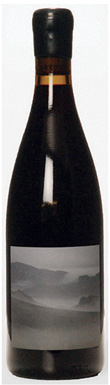

The coolest Syrah vineyard in California, Clary Ranch is in the heart of the Petaluma Gap, planted on a hillside near Tomales Bay. This 2016 vintage is restrained but powerful, showing bright floral and fresh herb aromas along with dark-toned fruit.
2016
Arnot-RobertsSonoma County

Wind Gap, Gap’s Crown Pinot Noir, Sonoma County, Sonoma Coast, California, USA, 2014
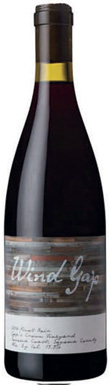
A delicate, lushly aromatic Pinot from one of the top vineyards in the Petaluma Gap, made with 100% whole clusters. It’s bright and lifted, with spicy cranberry flavours, and lightly oaked. The winery has recently been sold, so grab this vintage while you can.
2014
Wind GapSonoma County
Joseph Swan, Cuvee de Trois Pinot Noir, Sonoma County, Russian River Valley, California, USA, 2014
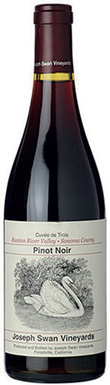
Pure and spicy, with a silky texture, fine-grained tannins from 10 months in oak and a lush core of cherry fruit. This blend of several vineyards shows the Burgundian side of RRV Pinots.
2014
Joseph SwanSonoma County
Williams Selyem, Pinot Noir, Sonoma County, Russian River Valley, California, USA, 2015
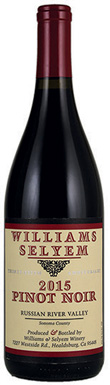
This is a textbook example of Russian River Valley Pinot. The blend, which spends 11 months in oak, sings with cherryish fruit and spice notes. It has density and power, but there’s also a juicy elegance to the palate.
2015
Williams SelyemSonoma County
DuMOL, Montecillo Vineyards Cabernet Sauvignon, Sonoma County, Moon Mountain District, California, USA, 2014
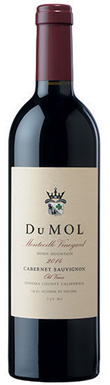
Although DuMol is located in the Russian River Valley and better known for Pinot Noir, the winery buys grapes from this dry-farmed vineyard planted in the late 1960s. This is a big, deep and mineral inflected 100% Cabernet Sauvignon with overtones of cherries and liquorice, plus chewy tannins from 20 months in oak.
2014
DuMOLSonoma County
Louis M Martini, Monte Rosso Vineyard, Sonoma County, Moon Mountain District, California, USA, 2013
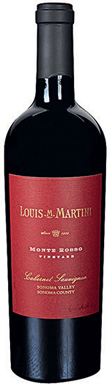
Monte Rosso, a historic vineyard made famous by Louis M Martini, is now owned by E&J Gallo. This bold, almost over-the top 100% Cabernet Sauvignon has huge intensity and blackberry richness with hints of smoke and liquorice from the 27 months it spent in oak.
2013
Louis M MartiniSonoma County
Bedrock Wine Co, The Bedrock Heritage, Sonoma County, Sonoma Valley, California, USA, 2016
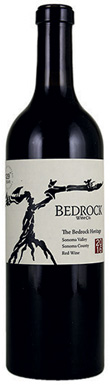
Sourced from estate vineyard and others in Sonoma Valley, this delicious traditional red with deep, dark berry fruit will change your mind about what Zinfandel (with 12% other red grapes) can be.
2016
Bedrock Wine CoSonoma County
Gallica, Rossi Ranch Grenache, Sonoma County, Sonoma Valley, California, USA, 2017
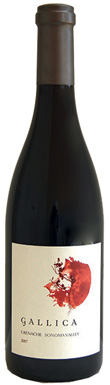
This Napa Grenache packs a punch. From the first whiff to its long, pomegranate and raspberry finish there’s a peppery edge that grips the attention. A slight green herby note adds to the appeal and compounds the clay-like tannins. A deliciously aromatic wine that punches with a silk-gloved hand.
2017
GallicaSonoma County
Ridge Vineyards, Lytton Springs, Sonoma County, Dry Creek Valley, California, USA, 2016
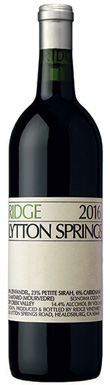
This Zinfandel blend (with 23% Petite Sirah and 6% Carignan) has an intense purple juiciness, plenty of tannins from 14 months in oak, plus a slightly burly, rustic character.
2016
Ridge VineyardsSonoma County
Jolie-Laide, Provisor Vineyard Grenache, Sonoma County, Dry Creek Valley, California, USA, 2016
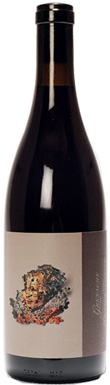
This bright, strawberry-scented wine is made from 100% Grenache. With its soft texture, it’s an example of the exciting direction being taken by young winemakers. The grapes were crushed by foot and fermented with whole clusters, with 10 months of ageing in oak.
2016
Jolie-LaideSonoma County
Littorai, BA Thieriot Chardonnay, Sonoma County, Sonoma Coast, California, USA, 2016
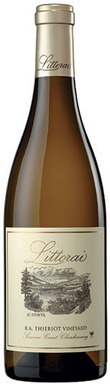
From the Freestone/ Occidental area, often my favourite of Ted Lemon’s Chardonnays. It’s all about bright citrus, fresh herbs, with minerals and crushed rocks.
2016
LittoraiSonoma County
Peay Vineyards, Pinot Noir, Sonoma County, Sonoma Coast, California, USA, 2016
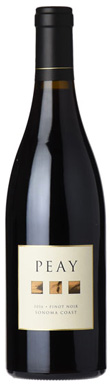
In the northernmost part of the West Sonoma Coast, only about 6km from the Pacific Ocean. This blend from blocks in the estate vineyard is always a bargain. Bright, fresh, more savoury than fruity, with a gentle 10 months’ oaking.
2016
Peay VineyardsSonoma County
Wayfarer, Wayfarer Vineyard Chardonnay, Sonoma County, Fort Ross-Seaview, California, USA, 2015
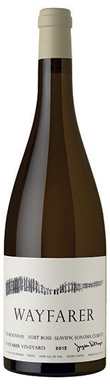
Jayson Pahlmeyer planted 12ha, mostly Pinot Noir, high above the Pacific here, but this rich, textured and powerful white, with aromas of white flowers, shows how brilliantly Chardonnay does there.
2015
WayfarerSonoma County
RAEN Winery, Home Field Vineyard Pinot Noir, Sonoma County, Fort Ross-Seaview, California, USA, 2015
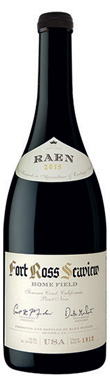
Tim Mondavi’s sons Carlo and Dante founded this winery in 2013, with the aim of making several bright, cool climate Pinot Noirs with energy and tension. This one, which spends 10 months in oak, has a palate filled with alluring red cherry and pomegranate fruit.
2015
RAEN WinerySonoma County
Peter Michael, Les Pavots, Sonoma County, Knights Valley, California, USA, 2013
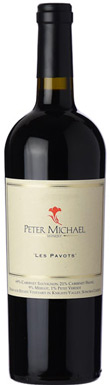
A great vintage for this estate’s grand, full-bodied flagship red (69% Cabernet Sauvignon, 21% Cabernet Franc, 10% Merlot). Powerful, opulent and complex, it’s deep and fruity, with smoky, tobacco undertones from its 18 months in oak.
2013
Peter MichaelSonoma County
Knights Bridge, Estate Cabernet Sauvignon, Sonoma County, Knights Valley, California, USA, 2015
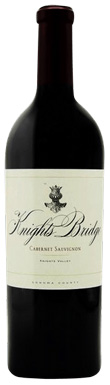
This flagship 100% Cabernet Sauvignon red is the first vintage from the winery’s replanted estate vineyard. It’s a rich and savoury wine, showing chocolatey overtones and plenty of spice and earth flavours, as well as the structure and concentration from 20 months in oak. A wine that will repay ageing.
2015
Knights BridgeSonoma County
