
South African Sauvignon Blanc: 10 top producers to know
Sit up and take notice: South Africa is blazing a trail in the New World, making site-expressive Sauvignon Blanc. The local winemakers’ respect for their terroir has seen a growing number turning out Sauvignons that speak confidently of their origins. Here are 10 names to watch.
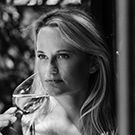

Malu Lambert meets the South African producers bringing loacl personality to this fruity favourite.
Scroll down to see tasting notes and scores for 10 site-expressive Sauvignon Blancs from these top South African producers
Tinashe Nyamudoka – Kumusha Wines

‘Kumusha comes from my native language, Shona, and it means your roots, your home, or your origin,’ says Tinashe Nyamudoka, proprietor of the own-label brand. There are eight wines in the range, which includes wines from the Swartland, Slanghoek, Sondagskloof and the Western Cape at large. Nyamudoka started Kumusha Wines in 2017 with the assistance of winemaker friend Attie Louw of Opstal.
Born and raised in Zimbabwe, Nyamudoka moved to South Africa in 2008. He got his first break polishing cutlery at The Roundhouse restaurant outside Cape Town. Soon he was promoted to waiter and the love affair with wine began. Following a few stints at other restaurants he was appointed as head sommelier at Africa’s most famous restaurant, The Test Kitchen (which closed in late 2021). He juggled his responsibilities there with judging on both local and international competitions. In 2020, he left in order to focus on Kumusha and other projects.
Notably, Nyamudoka is a member of Team ZIM with three other Zimbabwean sommeliers, and Jancis Robinson MW assisted them with crowdfunding to get them to the 2017 and 2018 World Blind Wine Tasting Championships. In 2018, they finished in 14th place, beating both Team USA and Team UK. The documentary Blind Ambition (Third Man Films, 2021) follows their journey. ‘I’m in a constant pursuit of wines that honour their origins,’ Nyamudoka says. ‘We use minimal intervention winemaking to let the wine be free to do the talking.
John Bouwer – Gedeelte Wines
Located in a remote pocket of the West Coast in St Helena Bay you’ll find family-owned Gedeelte Wines in its own tiny appellation. Just 4km from the ocean, the soils are flattened sea sand with a limestone component. The farm was bought in the early 2000s by owner Wimpie Bouwer who planted 6ha of Sauvignon Blanc, adding to the old-vine Barbarossa and Palomino that was already there. Taking over winemaking duties from his father, self-taught John Bouwer says he was already intrigued by Sauvignon when he was aged just 13. ‘I started experimenting with the grapes in small containers, my mother’s stolen four-litre sugar pots…’ A school outing to Stellenbosch stalwart Neethlingshof further inspired him and he’s been ‘hooked ever since’.
The farm’s cellar was built in 1948 after the end of World War II; the wines made here are all matured under a naturally occurring veil of flor. After pressing the Sauvignon Blanc, the juice goes to stainless steel tanks for fermentation. This is when the veil grows thinly over the wine. After a couple of months, the wine is drawn off the flor and is matured in French oak.
‘I believe winemaking is a feeling, an emotional act,’ says Bouwer. ‘We make wine by little interference without conventional cooling – we bargain completely on the veil to protect the wine.’
Matthew Day – Klein Constania
‘Any producer can create a fruit-bomb Sauvignon Blanc that is super-aromatic and pungent,’ says Matthew Day, winemaker at Klein Constantia. ‘The problem with this is that you run the risk of all Sauvignons tasting the same.’
His eyes were opened during a trip to Pascal Jolivet in Sancerre. Jean-Luc Soty, winemaker at the time, showed him six different vineyards that corresponded with six different wines. ‘Our job is that of caretaker,’ says Day. ‘Don’t overcomplicate things and, more importantly, don’t mess it up.’
Day grew up in Johannesburg on a small farm, the pull of the vine drawing him to the Cape after leaving school. He graduated from Stellenbosch University with a BSc in Viticulture & Oenology and from there he worked at various local estates as well as abroad in St-Emilion, Barossa and Napa Valley. It was in 2008 that he landed at Klein Constantia under the guidance of Adam Mason, taking the reins as winemaker in 2012; a high note was being named Tim Atkin MW’s Young Winemaker of the Year for 2016.
Home to renowned sweet wine Vin de Constance, the majority of the production at Klein Constantia is actually Sauvignon Blanc (approximately 50% currently, with more blocks coming into production soon). Among seven iterations of the grape is a collaboration with Pascal Jolivet, called Metis. The estate Sauvignon Blanc 2021 was made from 42 different vineyard parcels, each fermented separately before blending. This was achieved through a custom built tank farm. Day says they ‘have gone completely back to the basics’ with winemaking by working hyper-oxidatively with juice at crush, and 100% wild fermentation.
Carmen Stevens

From a young age Carmen Stevens dreamed of becoming a winemaker, an almost impossible wish in a country that was still in the stranglehold of apartheid. Through sheer grit she was finally accepted to Elsenburg Agricultural Training Institute. She graduated in 1995 as the first person of colour to qualify as a winemaker in South Africa, then becoming the assistant winemaker at Distell as well as winemaker for Tukulu Wines. After this, she spent some time at Welmoed Wines, before clinching the title of head winemaker of Amani Vineyards.
In 2011, Naked Wines, a UK online wine retailer and community of member ‘Angels’ who pay to support independent winemakers, launched a campaign to help Stevens kickstart a solo career. It was a startling success, with £120,000- worth of her wine being pre-ordered. In 2014, she launched her eponymous brand, and in 2019 she registered her winery as the first 100% black-owned winery facility in the country.
From her Stellenbosch cellar she produces a number of wines, among them a perennial favourite, the Carmen Stevens Sauvignon Blanc. Since she started her label she has been sourcing fruit for it from the same vineyard, 22-year-old vines grown in the maritime climate of Durbanville on weathered shale. For the 2019 vintage she blended in a wooded portion ‘to take the edge off the acidity’ and won the award for Best Wooded Sauvignon Blanc by local wine authority Winemag.co.za.
‘I love the challenge of working with South African Sauvignon Blanc,’ Stevens says. ‘It’s like a child that demands all the attention. So every morning during fermentation I go and greet the Sauvignon ferments first!’
Elunda Basson – Steenberg
After completing her studies at Stellenbosch University, Elunda Basson worked harvests in both California and Champagne. Upon returning home it was to Franschhoek winery Rickety Bridge for two vintages before embarking on 19 years at the country’s leading alcoholic beverage group Distell. During this tenure Basson worked with Nederburg, The House of JC Le Roux and Pongrácz, before joining Steenberg as cellarmaster in 2019.
‘I approach winemaking by sticking to the basics while still being authentic to the wine’s sense of place,’ says Basson.
And what a place. Located in the foothills of Table Mountain, the Constantia Wine Valley (the oldest wine-producing area in South Africa) has its own particular microclimate. The region receives about 1,000mm of rain per year (more than Sancerre, which averages some 850mm according to climate-data.org), making irrigation unnecessary. The average temperature in Constantia at the height of harvest is about 20°C, and of the 421ha under vine in the region (see constantiawineroute.com), almost half is Sauvignon Blanc. At Steenberg they make the most of this Sauvignon bounty.
‘We pride ourselves on producing several different styles from the same terroir,’ says Basson. To this end she produces four Sauvignons: a sparkling, an estate blend, a wooded version, and The Black Swan, a vineyard selection produced with extended lees contact in tank. There is also the super-premium Magna Carta, which blends Sauvignon and Semillon.
‘We try and vinify each of our blocks separately to allow us the opportunity to select only the very best to go into The Black Swan,’ Basson says. ‘We believe this wine to be the most naked expression of Sauvignon from our farm.’
Rudger Van Wyk – Stark-Condé
‘Wines should always bring you back to the glass. Balance and drinkability are key,’ says winemaker Rudger Van Wyk of Stark-Condé, located in the alpine-like valley of Jonkershoek in Stellenbosch. In a very short time, Van Wyk’s wines have garnered high praise from top critics. He was also awarded the Diners Club Young Winemaker of the Year 2018. He grew up in a small town on the Western Cape’s Garden Route – and from there the iconic vines of Stellenbosch beckoned.
He achieved a degree in Viticulture & Oenology from the University of Stellenbosch, and in his fourth year was approached to take part in the Cape Winemakers Guild Protégé Programme – an internship programme. Van Wyk landed a prized position at Kanonkop with Abrie Beeslaar. ‘He drove home the mantra of excellence in winemaking,’ says Van Wyk.
Van Wyk also spent some time at Nitida Wine Estate in Durbanville honing his white winemaking skills with a focus on Sauvignon Blanc. In his second year of internship he hopped on a plane to do a harvest in Burgundy, after which he got the job at Stark-Condé.
Stark-Condé is a medium-sized, organic enterprise with vineyard elevations ranging from 150m-600m above sea level. The more premium wines come from lofty sites on the slopes, such as the Round Mountain Sauvignon Blanc: a single vineyard on decomposed granitic soils with an elevation of 400m. He says: ‘At just under 30, the block is almost the same age as myself, so there’s a lot of personality and character flowing through those vines!’
Riandri Visser – Cape Point Vineyards

So obsessed is she with Sauvignon Blanc that Riandri Visser’s dog is called Sauvignon, while her two cats are named Sancerre and Loire. She is the winemaker at Cape Point Vineyards. Set against the slopes of the Chapman’s Peak mountain range, the estate’s granitic soils are planted to Sauvignon Blanc, Semillon and Sauvignon Gris, the wide blue band of the Atlantic ocean beyond, less than 2km away. Visser says she can smell the ocean in her cellar.
The fascination with Sauvignon kicked off for her when visiting Sancerre after completing her degree. Back on home soil, her first winemaking job was at Tierhoek in the Piekenierskloof, ‘on a small farm in the middle of nowhere’. This was followed by a stint at Tokara in Stellenbosch. ‘After the 2014 harvest, I received a call from Duncan Savage, who was then the winemaker at Cape Point Vineyards, asking if I could come in for an interview,’ she says. The rest is history; she quickly climbed the ropes from assistant winemaker to officially being appointed as winemaker in 2016.
‘When you respect, understand and stay true to terroir, cultivar and vintage, you can capture the wine’s soul,’ says Visser when asked to describe her approach. Going full circle, she now splits her time between South Africa and Pascal Jolivet in Sancerre, where they are working on a project together to showcase Sauvignon Blanc from Coteaux du Giennois as well as a Pouilly-Fumé; both will launch in 2022.
Thys Louw – Diemersdal
Something of a savant with Sauvignon, for more than 25 years now this Durbanville winemaker has been devoted to all possible expressions of the grape. Thys Louw grew up on his family estate, where he says the Louw family has been making wine since 1885. Before settling into his role there, he was mentored at Buitenverwachting in Constantia by great white winemaker Hermann Kirschbaum. As a sixth-generation wine-farmer, Louw says wine has always been a part of his life.
‘I came to work on the farm in 2005 and immediately wanted to make Sauvignon. My father said, “not so fast, you’ve got to show me what you can do”. He gave me eight rows to harvest. Fortunately, I got it right – this is still our Diemersdal Eight Rows and that wine opened the way for me to begin specialising with the grape.’
Diemersdal is a big operation, harvesting close on 3,000 tonnes of grapes with a substantial range of white and red wines, and eight different Sauvignon Blanc offerings, including a Noble Late Harvest sweet wine. ‘Having volumes to work with, I can push boundaries,’ says Louw. Along with the commercial lines, the portfolio also includes idiosyncratic expressions: the Winter Ferment, made in July from Sauvignon Blanc juice frozen at harvest in February, as well as the skin-contact, spontaneous-ferment Wild Horseshoe. Augmenting this is the Diemersdal Marlborough Sauvignon Blanc, wine produced near Nelson on New Zealand’s South Island but bottled under the South African brand; and the kingpin, The Journal, an oaked Sauvignon.
John Seccombe – Thorne & Daughters

‘When crushing Sauvignon Blanc during my first harvest, I knew I was exactly where I wanted to be,’ says John Seccombe of Thorne & Daughters, an own-label project he runs with his wife Tasha. This was in 2002 at Newton Johnson Family Vineyards. Since then, he’s worked harvests in England, Languedoc, the Barossa and California. When falling pregnant with their first daughter, the couple headed home to the Cape to raise her. Seccombe took on various gigs at local wineries before starting Thorne & Daughters in 2012 in a corner of Chris Alheit’s cellar near Hermanus.
The wines are now made at Gabriëlskloof, Bot River. For their range of nine wines they source grapes from 15 different growers. The Snakes and Ladders Skurfberg vineyard Sauvignon first made an appearance in 2019. They use archetypes of childhood to name all of their wines. ‘The board game is a good representation of the highs and lows of such an extreme site,’ Seccombe says. ‘It’s at the edge of viability for vineyards and the rainfall is extremely low.
He adds that he never expected to be working with Sauvignon Blanc again, ‘but when I saw the vineyards, I was hooked’, referring to the 27-yearold bush vines located high up in the Citrusdal mountains. So isolated is the vineyard that at harvest time Seccombe and his team pitch tents alongside it to get some sleep in-between picking and transporting. When it comes to winemaking, Seccombe uses his baseline approach of no additives, oxidative juice handling, native yeast, old barrels and full malolactic.
RJ Botha – Kleine Zalze

After graduating from Stellenbosch University, RJ Botha, cellarmaster at Kleine Zalze, had an internship at Château Angélus in Bordeaux. On his return home he took up the post of winemaker at Nitida Wine Farm in 2007, where he truly cut his teeth with Sauvignon Blanc.
In 2010, he was named Diners Club Young Winemaker of the Year. Botha has been with Kleine Zalze since 2012, putting in a decade of hard work that saw it named Winery of the Year in the 2021 Platter’s Wine Guide. This was followed by a gold medal at the Concours Mondial du Sauvignon 2021. ‘We’re never going to be New Zealand: South Africa’s strength is the diversity of styles we can achieve with Sauvignon Blanc,’ Botha says.
A huge advocate for the variety, Botha is also the chairman of Sauvignon Blanc SA, the association charged with promoting the category and hosting the annual Sauvignon Blanc Top 10 as well as numerous other events, including the aim of bringing Concours Mondial du Sauvignon to South Africa.
‘Winemaking plays a big role with Sauvignon – it’s not only the vineyard doing the talking,’ emphasises Botha. He employs the most meticulous protective methods to retain the aromas and flavours, with the use of dry ice [to prevent oxidation and preserve freshness] already beginning in the vineyard.
In an ongoing quest for quality, enter Project Z – a set of experimental wines intended to improve the estate’s Vineyard Selection and Family Reserve ranges through the findings. The wines proved too good to blend away into others. New to the Z range is the Sauvignon Blanc 2020, from a shale-rich corner of a vineyard on the estate’s Faure farm.
Site-expressive Sauvignon Blancs from 10 top South African producers
Related content
Expert’s choice: South African old vine Chenin Blanc
South African Pinotage: panel tasting results
Cape Point Vineyards, Reserve Sauvignon Blanc, Cape Town, South Africa, 2020
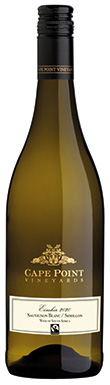

Ocean-side Sauvignon Blanc was whole bunch pressed, barrel fermented, and then spent 15 months on the fine lees. It’s an elegant rendition; leafy and cool...
2020
Cape Point Vineyards

Diemersdal, The Journal, Durbanville, Cape Town, South Africa, 2020
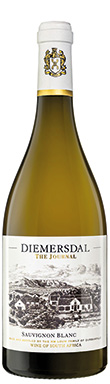
From 30-year-old vines, the wine was barrel fermented then matured in French oak, 50% new 600L for 11 months. It was bottled unfiltered. Inviting aromas...
2020
DiemersdalDurbanville
Thorne & Daughters, Snakes and Ladders, Citrusdal Mountain, South Africa, 2020
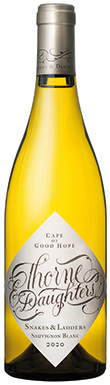
The nose is subtly aromatic with pressed flowers, grapefruit skin and lemongrass with a hint of fragrant smoke from maturation in old oak. This wine...
2020
Thorne & Daughters
Klein Constantia, Estate Sauvignon Blanc, Constantia, South Africa, 2021
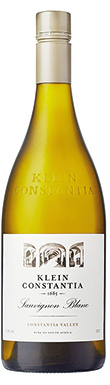
Ethereal at first, white blossom, flint, oyster shell, then the earthiness of cool white clay and peppery fynbos. The structure is long and defined on...
2021
Klein Constantia
Stark-Conde, Round Mountain Sauvignon Blanc, Jonkershoek Valley, Stellenbosch, South Africa, 2021
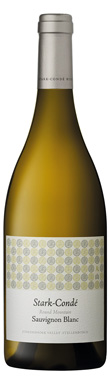
A complex nose of sun-warmed hay, cantaloupe, white tea, Cape gooseberry and lime cordial. These flavours evolve on the palate with an undercurrent of salty...
2021
Stark-CondeJonkershoek Valley
Kleine Zalze, Project Z Sauvignon Blanc, Stellenbosch, South Africa, 2020
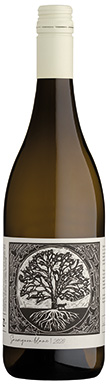
Chiselled. The grapes were whole bunch pressed and then transferred to just one amphora for fermentation. It was left on the lees for six months...
2020
Kleine Zalze
Steenberg Vineyards, The Black Swan Sauvignon Blanc, Constantia, South Africa, 2020
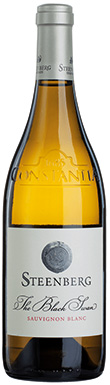
Layered aromatics of blackcurrant, green fig and flint are punchy and inviting. There’s a real tension and focus to the palate, a tightrope along which...
2020
Steenberg Vineyards
Carmen Stevens Wines, Sauvignon Blanc, Durbanville, Cape Town, South Africa, 2020
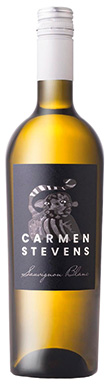
Citrus zest, just-ripe tropical fruit and hint of honeyed peach on this lightly oaked Sauvignon (a 2% component was fermented in 100% new oak). The...
2020
Carmen Stevens WinesDurbanville
Gedeelte Wines, Sauvignon Blanc, Western Cape, South Africa, 2021
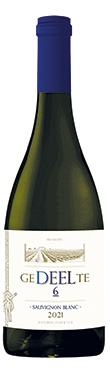
Spicy white flowers, pistachio and green apple freshness open this entrancing wine, constantly evolving in the glass it’s a wine to pair with the bounty...
2021
Gedeelte Wines
Kumusha Wines, Sauvignon Blanc, Overberg, South Africa, 2020
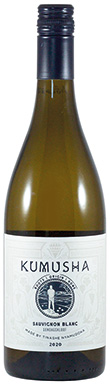
Hailing from cool ward Sondagskloof, which forms part of the Cape South Coast delineation. Here temperatures rarely exceed 20°C, though the sunlight hours are long...
2020
Kumusha Wines
