
South American Syrah: Panel tastings results
With wines from Chile, Argentina and Brazil earning top scores, there is quality and consistency in South American Syrah – though still potential for the category to grow, too.


Alistair Cooper MW, Dirceu Vianna Junior MW and Peter Richards MW tasted 79 wines with four outstanding and 15 highly recommended.
Entry criteria: Producers and UK agents were invited to submit their latest-release, single-varietal (85% minimum) Syrahs from any South American region.
The verdict
Chile dominated this South American tasting, accounting for 70% of the wines tasted. While Argentina has the most Syrah vines planted, there were only 18 Argentinian wines submitted. Nonetheless, the results showed the potential of Syrah across the continent, with Outstanding wines from Argentina, Brazil and Chile.
Alistair Cooper MW noted: ‘When South American Syrah is good, it’s certainly as good as Australia and New Zealand.’ Dirceu Vianna Junior MW agreed. ‘A few wines right at the top could rival any wine from anywhere. But in the middle there were also a lot which were exuberant, rewarding, easy to drink – and very consistent.’
‘These were intriguing wines, which engendered discussion – and that’s what Syrah should do,’ mused Peter Richards MW, adding: ‘There were corresponding lows to some of the highs, but it’s a grape which clearly has a lot of diversity in style, and quality. South America is a big place and it’s great to see it fulfilling that diversity.’
So is it safe to assume that Syrah belongs in South America? ‘Yes – but it needs specific sites, it needs the right winemaker and it needs the right climate,’ said Richards. ‘There are probably quite a few places where it is that it shouldn’t be, but when it is in the right place, it’s so exciting.’
‘We saw that the right place is certainly coastal Chile. Leyda looked pretty smart and Paredones was really impressive,’ added Cooper. ‘On both sides of the Andes the effect of altitude on Syrah is important: cooler sites really do favour quality Syrah production.’ Vianna Junior agreed: ‘In Altamira in Brazil, for example, where people are planting Cabernet Franc; maybe they should be looking at Syrah.’
Chile in charge
Chile is certainly leading the way for Syrah in South America – our tasting demonstrated this, with a spread of wines from different regions including Colchagua (11), Casablanca (8), Maipo (8), Leyda (7), Limarí (6) and Cachapoal (4), alongside Aconcagua Costa, Elqui, Rapel and San Antonio.
This diversity pinpointed the regions that Syrah fans should look for on wine labels. ‘We have the Elqui styles emerging and the more coastal Casablanca, San Antonio, Aconcagua Costa,’ noted Richards. ‘These are quite distinctive styles; more Rhône-y. Obviously they’ve got higher alcohol and sweeter fruit, [but] it’s a relatively distinctive style on the global stage.’
Chile is also a winning quality choice for shoppers, here producing nine Highly Recommended wines and 40 Recommended. ‘You’re safe to reach for a bottle of Chilean Syrah,’ concluded Vianna Junior.
While progress has clearly been made, the tasters were keen to put this into perspective. Cooper noted that significant plantings of Syrah in South America only began in 1996. ‘In its current guise, it’s less than 25 years old, so it’s impressive, actually, how far they’ve come,’ he said.
The winemaking journey is only just beginning, however. ‘Today we saw a move towards a lighter touch, to people reining in the extraction and not thinking that Syrah has to be a powerful beast,’ said Richards. ‘It can be food-friendly, or it can be an unassuming wine. I’d love to see South America do more of that, because that’s an area where it can make properly distinctive styles.’
Vianna Junior was keen to see more experimentation: ‘I don’t think Syrah production has evolved as much as it should in the last 10 years. They’re not taking risks. I don’t see, for example, use of stalks, which they are doing in Australia and New Zealand. Maybe they’re too shy,’ he added.
‘We need more passionate Syrah lovers in South America taking this on,’ agreed Richards. ‘In the same way there are Pinot obsessives, we need Syrah obsessives to really grab this and go for it. We found a lot to love in these wines and would urge producers to keep going, because South America is already making some world-beating Syrah!’
Discussion copy by Julie Sheppard.
See all wines from the panel tasting here
The scores
79 wines tasted; Chile 56, Argentina 18, Uruguay 3, Brazil 2
Exceptional 0
Outstanding 4; 2 Chile, 1 Argentina, 1 Brazil
Highly Recommended 15; 9 Chile, 5 Argentina, 1 Brazil
Recommended 53; 40 Chile, 11 Argentina, 2 Uruguay
Commended 3; 2 Chile, 1 Uruguay
Fair 2; Chile
Poor 0
Faulty 2; 1 Chile, 1 Argentina
About South American Syrah
Not traditionally the first port of call for this well-loved spicy red grape, but producers across the whole continent are growing in confidence to find their own styles, as Peter Richards MW explains.
Syrah: the Cinderella of South America? It’s frequently overlooked in favour of more glamorous rivals – Cabernet, Carmenère or Pinot in Chile, Malbec or Cabernet Franc in Argentina, Tannat or Albariño in Uruguay. It certainly makes an appearance at the grand ball of South American wine, even taking an occasional (if brief) starring role. Yet the threat of reversion to the mundane norm as midnight looms seems ever present.
It’s a shame, because Syrah has huge potential in South America. It is more forgiving in the vineyard than Pinot, yet capable of similarly winning elegance and perfume. It ducks and dives into more sprightly, provocative, intriguing territory than the sturdier styles of Malbec, Cabernet or Tannat. It thrives in the breathless altitudes of Argentina’s uplands, just as it excels in Chile’s degraded granite coastal slopes. The sheer diversity of styles that Syrah can produce is exemplary, and growing more nuanced as winemakers treat it with due sensitivity.
Untapped potential
Take Brazil. Vineyard data is hard to come by, but there is little Syrah planted here beyond a few producers in the south and some in Vale do São Francisco. And yet there are already one or two outstanding Syrahs being made in the country, some from vines that are harvested two or even three times a year – suggesting real potential for a grape that has very little track record. More work is surely advisable.
Uruguay has little in the way of Syrah, nor does it seem a particular focus given the clear hegemony of Tannat (27% of the national vineyard). Beyond this, other reds such as Cabernets Sauvignon and Franc, Merlot, Pinot Noir – even Marselan and Arinarnoa – seem to enjoy precedence. Some successful wines are blends.

Argentina has significantly more Syrah planted than Chile, yet the wines seem curiously hard to find among the oceans of Malbec. Seriously ambitious Syrah from Argentina is a rare beast and it struggles to match the excitement of the country’s top Malbecs. Mendoza accounts for 70% of the country’s Syrah and the higher reaches of the Uco Valley produce some of the country’s finest examples. Yet there is potential all along the Andean west, from Salta down to Patagonia (San Juan and La Rioja also have significant plantings).
South American Syrah: Know your vintages
(based on Chile as the main region)
2019: Heatwaves and water shortages meant lower yields and an earlier harvest than in 2018. Powerful and concentrated wines. Coastal areas seem to have fared best. (Argentina’s third good, warm vintage in a row.)
2018: A potentially outstanding vintage and a welcome boost after two difficult years. A cooler, later year after 2017 with a generous yield and excellent potential for elegant, expressive wines. (Argentina: warm days and cool nights gave bright, exuberant wines.)
2017: Torrid heat and forest fires beset one of the earliest, lowest-yielding vintages of modern times. Beware smoke taint. (Argentina: warm year, expressive styles.)
2016: Torrential autumn rain hit a slow-maturing vintage, yet those few who harvested early and focused on elegance escaped the worst. (Argentina: cool and rainy year, lighter styles.)
2015: Warm weather gave generous wines, often very good; all but the best are to drink up now.
2014: Spring frosts hit cooler areas but the season ended well. Wines well defined, expressive, the best capable of long ageing.
Syrah plantings in South America
Argentina: 12,246ha (6% of national vineyard total, 4th most planted variety)
Chile: 7,738ha (6% of total, 7th most planted variety)
Uruguay: 55ha (1% of total, 13th most planted variety)
Brazil: No statistics available
Chile is the South American nation where Syrah has shone most brightly to date. It’s quite startling to note that Syrah only arrived in Chile in the mid-1990s. In little over two decades, Syrah has undoubtedly proven its huge potential for diversity and quality, from the peppery, sprightly style of Elqui to the beautiful scents and beguiling textures of coastal realms, via more opulent expressions from the likes of Apalta or Limarí. Syrah’s vineyard growth – once exponential – has fallen back of late, though.
The potential is all there. For now, despite some notable successes to date, Syrah remains in need of fairy godmothers or handsome princes, in the form of Syrah obsessives to champion the variety and give it a chance of happy-ever-after.
Top scoring South American Syrah wines
See all wines tasted here
The judges
Alistair Cooper MW
Having lived and worked in Chile and Argentina for various wineries, Cooper has been based in the UK since 2006. He writes for Jancis Robinson and Decanter as well as other publications. Currently president of Chile’s Catad’Or Wine Awards, he judges globally and is the global consultant buyer for United Cellars in Sydney.
Dirceu Vianna Junior MW
Originally from Brazil, Vianna studied forest engineering and law, before moving to London, where he began to work in the wine trade in 1990. In 2008, he became the first South American male to obtain the title of Master of Wine. He now works as a wine writer, educator, technical consultant and competition judge.
Peter Richards MW
The Decanter World Wine Awards Regional Chair for Chile, Richards is an award-winning broadcaster and writer as well as a leading global authority on Chilean wine. Together with his wife Susie Barrie MW, he co-hosts the Wine Blast podcast as well as the acclaimed Wine Festival Winchester.
Casa Marín, Miramar, San Antonio, Chile, 2012
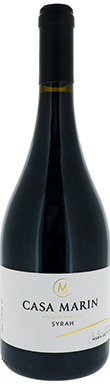

Founder of Casa Marín, María Luz Marín is the first female winemaker and winery owner in Chile. In 2000, she ignored advice from colleagues and...
2012
Casa Marín

Emiliana, Salvaje, Casablanca Valley, Chile, 2018
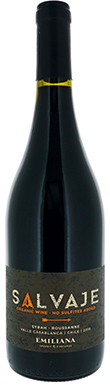
Voted by Wines of Chile as 'Winery of the Year 2016', Emiliana is a pioneering winery producing wines from organically and biodynamically farmed grapes with...
2018
Emiliana
Finca Las Glicinas, Terciopelo, Uco Valley, Altamira, Mendoza, Argentina, 2018
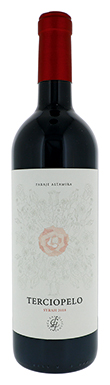
The grapes for the Terciopelo Syrah are grown in the deep rocky soils of the 15-year-old Paraje Altamira vineyard which is located in the foothills...
2018
Finca Las GlicinasUco Valley
Guaspari, Vista da Serra, Brazil, 2017
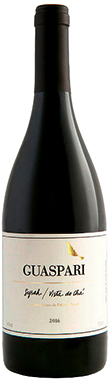
In 2001, the Guaspari family began to plant vineyards in the Espírito Santo do Pinhal Highlands, an area 200 kilometres from São Paulo which was...
2017
Guaspari
San Pedro, 1865 Desert Valley, Elqui Valley, Chile, 2018
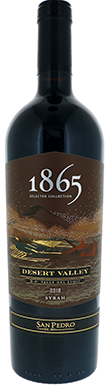
Superb savoury spice, voluptuous dark fruit and a vibrant peppery snap with a lovely frame of oak. Beaming with energy.
2018
San Pedro
Altos de Tintogasta, Seismiles, Calchaquí Valley, Salta, Argentina, 2019
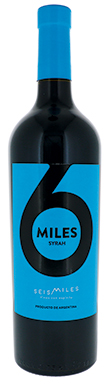
A moreish style with lipsmacking black olive and brooding dark fruit flavours, velvety tannins and a long savoury finish.
2019
Altos de TintogastaCalchaquí Valley
Casa Silva, Cool Coast, Paredones, Colchagua Valley, Chile, 2018
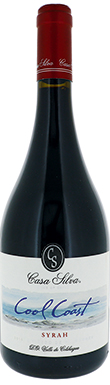
Plush and plummy with an emergence of black pepper; very fresh and fine with an excellent concentration and cooling finish.
2018
Casa SilvaParedones
Catena, Animal Orgánico, Uco Valley, Vista Flores, Mendoza, Argentina, 2018
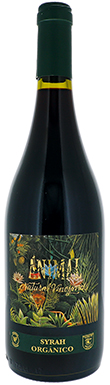
Jam-packed with youthful dark fruit, pepper and chocolate with a grippy structure, precise tannins and a ripe fruit finish.
2018
CatenaUco Valley
Leyda, Lot 8, Leyda Valley, San Antonio, Chile, 2018
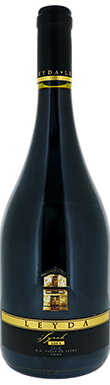
Brimming with ripe berry fruit and black pepper spice, with finely grained tannins and a cool, blue-fruit laced finish.
2018
LeydaLeyda Valley
Tapiz, Syrah, Mendoza, Argentina, 2018
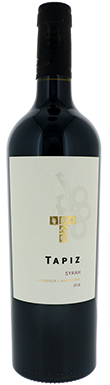
Serious, grown-up Syrah with peppery, floral aromatics underpinned by an unctuous dark fruit core and a bittersweet finish.
2018
Tapiz
Echeverria, Gran Reserva, Coquimbo, Chile, 2015
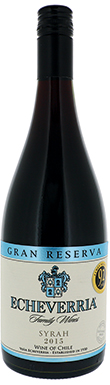
Decadent black olive savouries with ripe dark fruit, sweet spice and chocolate bursting through; layered and textured with a salty finish.
2015
Echeverria
William Cole, Reserve, Casablanca Valley, Chile, 2018
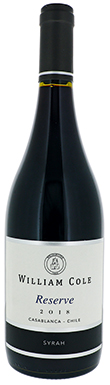
A really zippy style encompassing dark forest fruit and floral aromas; focussed, fresh with a lean savoury elegance.
2018
William Cole
Errazuriz, Aconcagua Costa, Costa, Aconcagua Valley, Chile, 2017
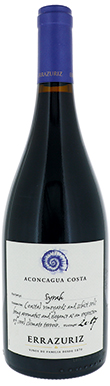
Dense layers of molasses, dark fruit and pepper with a streak of bright acidity and a caress of fine tannins.
2017
ErrazurizCosta
Guaspari, Vista do Chá, Brazil, 2016
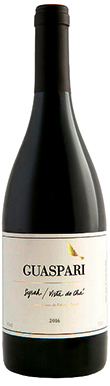
An ethereal, mysterious composition of dark berry, lush violet and seductive sandalwood and a lovely cooling note to finish.
2016
Guaspari
Diamandes, Diamandes de Uco, Uco Valley, Mendoza, Argentina, 2017
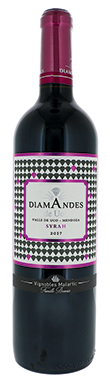
Oozing blue fruit and cinnamon with woodsmoke and coffee undertones, with a lift of pepper on the long finish.
2017
DiamandesUco Valley
Emiliana, Signos de Origen, Casablanca Valley, Chile, 2016
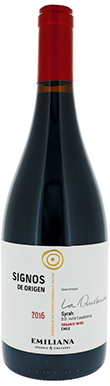
Subtle smoky dark fruit, chocolate and spice aromas with a rustic, savoury palate; quietly impressive and one to linger over.
2016
Emiliana
Errazuriz, Max Reserva, Aconcagua Valley, Chile, 2016
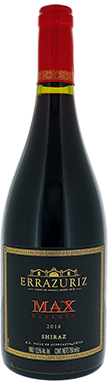
An exuberance of dark fruit combined with cocoa and gentle spice with sleek tannins and a persistent savoury sign off.
2016
Errazuriz
Amayna, Leyda Valley, San Antonio, Chile, 2017
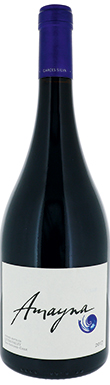
Buckets of lively berry and cherry fruit with lovely sweet violet florals; crunchy, juicy and full of energy.
2017
AmaynaLeyda Valley
La Puerta, Clasico, La Rioja, Argentina, 2019
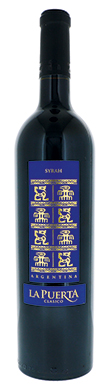
A bright, vibrant attack of fresh berries and floral aromas with a pure crunch of juicy fruit on the palate.
2019
La Puerta
