
South American trendsetters: five names to know
Winemakers across South America are pushing boundaries, questioning styles, challenging stereotypes and finding ways to cope with climate change. Patricio Tapia profiles five mavericks shaking things up in their respective countries.
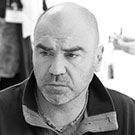

See profiles on five top South American trendsetters:
- Matías Riccitelli – Argentina
- Roberto Henríquez – Chile
- Alejandro Vigil – Argentina
- Francisco Baettig – Chile
- Santiago Deicas – Uruguay
Scroll down to see tasting notes and scores for a wine from each of the five South American trendsetters
Matías Riccitelli – Argentina
With a portfolio of 35 wines and a production of more than 400,000 bottles a year, this restless Mendoza winemaker has taken the Argentinian wine scene by storm.
Matías Riccitelli’s abundant energy takes him from the vineyard of deep Patagonia to the impossible heights of La Carrera in the Uco Valley. An eye for diversity has seen him work with grape varieties considered eccentric for Argentina, such as Trousseau, alongside far more traditional reds like Malbec from the classic Vistalba area. The result is an explosive mix.
Matías is the son of Jorge Riccitelli, one of the most important winemakers of the modern era in Argentina, so it’s not surprising that Matías has been in contact with vines, vats and barrels since he was a child.
His first official winery job was in 2000, as part of the oenological team at the Fabre Montmayou winery in Mendoza. He became chief winemaker and remained there until 2012, when he decided to fly solo and launched Matías Riccitelli Wines.
First it was just one wine, Riccitelli Malbec from old Vistalba vines. But things really took off with his Hey Malbec!, a thirst-quenching blend from vineyards across Mendoza that became a great success at a time when the local market was still occupied by ripe, oaky reds. The commercial success of Hey Malbec! gave Matías peace of mind, allowing him to experiment and take risks.
Today, it is risk that defines his portfolio, with wines that show the diversity of Argentina. These range from pét-nats and orange wines to high-altitude whites and traditional reds from classic areas. ‘I define myself as a guy who believes in wines with a sense of place but, above all, believes in the diversity of wine,’ he says.
Roberto Henríquez – Chile
‘País is a machine, a plant that can live for 200 years and continue to bear fruit,’ says Roberto Henríquez. He has become a reference in South America when it comes to wines made from this ancestral grape variety – the first red that the Spanish brought to the New World. Henríquez produces País in southern Chile, on the banks of the Bío Bío river.
He studied oenology after school, following a childhood dream. ‘I don’t know why, but I always wanted to make wine,’ Henríquez says. He also wanted to be independent: to manage his own vineyards and have control of production. After working in several Chilean wineries and taking multiple trips around the world, he finally started his own venture in 2015.
With just five harvests under his belt, Henríquez’s work has focused on rescuing old vineyards lost in the foothills of the Cordillera de Nahuelbuta, an area with a prosperous past in vines, but which has been gradually devastated by logging companies and their extensive pine plantations. In the winery, Henríquez intervenes as little as possible, respecting the oenological traditions of the area to obtain elegant, fresh wines that are faithful expressions of these cold foothills rising up from the mighty Bío Bío.
Henríquez’s eponymous project is based on 12ha, seven of which are his own. He produces 15 different labels that add up to 55,000 bottles a year. While his speciality is delicate and fragrant País, wine lovers should also pay attention to his whites made from Sémillon, Corinto and Moscatel, this time from the Itata Valley. It’s another forgotten Chilean region that today, thanks to Henríquez and others, has been given a new lease of life.
Alejandro Vigil – Argentina
Winemaker Alejandro Vigil has the word ‘Malbec’ tattooed on his arm – a small sign of the love he feels for Argentina’s flagship grape. However, based on his wine career, maybe the tattoo should read ‘Adrianna Vineyard’.
This mountainous site, located above 1,400m in the foothills of the Andes in Gualtallary, has been of fundamental importance in Vigil’s professional career – right from the first time he visited it in the mid-1990s, while working for the soil department of INTA, the National Institute of Agricultural Technology.
‘It was just planted, and I could not believe that someone had dared to plant there, on those stony soils, at that height,’ remembers Vigil.
Years later, when he started working for Catena Zapata, the winery that owns that vineyard, he would have the opportunity to see the potential of those high-altitude grapes. In 2004, he produced Adrianna Vineyard Malbec, a landmark red in Argentina’s modern-day wine history. Many more followed, including three single-parcel Malbecs that make up an in-depth study of the diversity of soils in that vineyard.
‘We decided to bottle them separately. This was to show the richness of Adrianna’s soils, but also because we feel that although the blend might be able to hide the not-so-good, it can also hide what is excellent,’ he explains.
Today, Adrianna has grown to 110ha and also offers Vigil – now technical director at Catena Zapata – the fruit for his extraordinary White Bones and White Stones, two of South America’s best white wines.
It is also the source of the Malbec and Cabernet Franc grapes used to produce Gran Enemigo, the top line of Bodega Aleanna, where Vigil is also winemaker and partner. With these and other wines, Vigil has managed to extract, from a privileged vineyard, one of the most solid collections of wines in Argentina.
Francisco Baettig – Chile
In the dynamic Chilean wine scene, it is common for winemakers to constantly seek new horizons, new jobs. But that’s not the case with Francisco Baettig who, since 2003, has been in charge of the wines at Viña Errázuriz, one of the leading lights of Chile’s wine industry.
But staying in one place is not synonymous with stagnation for Baettig; he has played a central role in the renewal of Chilean wine.
This began with the vision of Errázuriz owner Eduardo Chadwick, who, at the turn of the millennium, devised plans for vineyard expansion towards the coast of the Aconcagua Valley. Today, the Chardonnay and Pinot Noir that Errázuriz produces from these coastal hills are among South America’s best.
At Viñedo Chadwick, another of the Viña Errázuriz wineries, Baettig has shown that a signature red – this time Cabernet Sauvignon from the Maipo Alto region – can be delicate and fresh, not just a mass of concentration.
Both the Cabernet and the Aconcagua wines have had a profound influence on the recent development of the Chilean wine style. ‘This has been an evolution for Chile’s winemakers,’ explains Baettig. ‘When they took over wineries in the early 1990s, at the beginning of the Chilean wine boom, they didn’t have the experience to set their own terms. Now they do have it and I think that today – especially in Chile’s high-end wines – you can taste more honesty, more sense of place, more freshness and less reverence for the market.’
Baettig has also just launched his own project, Vinos Baettig, in southern Chile’s Malleco Valley. A rainy and cool place, it delivers exactly that: wines with freshness, honesty and a sense of place.
Santiago Deicas – Uruguay
The wine scene in Uruguay is experiencing a revolution, defined by the discovery of new areas and also by new styles of its star red grape variety, Tannat. And Familia Deicas is at the forefront of this change. The winery has been operating since 2000, but over the past 10 years, when Santiago Deicas began working on its wines, it has changed tack to follow a new and vibrant path.
‘For many years we focused on macho wines – reds with great colour, tannins and concentration. Since we drank them with lamb, everything was fine,’ says Deicas, a dynamic, open-minded young man who has steered the winery’s new course. These were austere, monumental, macho Tannats, but Deicas believed there was more to the grape.
‘What I didn’t find in those wines was the influence of the Atlantic; that freshness of the sea. And it didn’t seem right to me that there was only one interpretation of the variety,’ he explains.
To achieve a different expression of Tannat in particular – but also Uruguayan reds in general – Deicas and his team have focused on two things. First, earlier harvests and less-extractive macerations to obtain lower-octane reds and, second, working with vines in different areas. These include Sierra de Mahoma, Progreso and, notably, Garzón, near the Bay of Maldonado, where the Atlantic influence can be strongly felt.
The results of this work can be seen in the single-vineyard line, home to Uruguay’s freshest and crunchiest Tannats and other reds. His work and this revolution are a real breath of fresh air to the increasingly exciting Uruguayan wine scene.
Wines from Patricio Tapia’s five South American trendsetters
Related content
Patagonia: The pioneers
Best South American wines: Great value picks for summer
Riccitelli, Hey Malbec!, Luján de Cuyo, Mendoza, Argentina, 2019
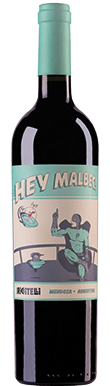

An excellent example of how juicy and fresh Malbec can be, this red is unoaked with 20% whole bunch fermentation. It has a delicious fruity...
2019
RiccitelliLuján de Cuyo

Roberto Henríquez, Santa Cruz de Coya, Bío Bío Valley, Chile, 2019
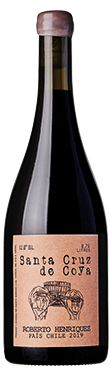
This is a selection of four tiny vineyards on the south bank of the Bío Bío River in southern Chile. Aged in steel vats and...
2019
Roberto Henríquez
Catena Zapata, Adrianna Vineyard Mundus Bacillus Terrae, Uco Valley, Gualtallary, Mendoza, Argentina, 2016
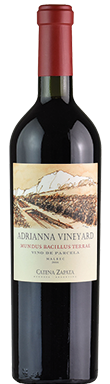
In one of the coldest vintages of the last 30 years in Mendoza, the Adrianna Vineyard plot (just 1.4 hectares) produced crisp, red fruit in...
2016
Catena ZapataUco Valley
Errazuriz, Las Pizarras, Costa, Aconcagua Valley, Chile, 2018
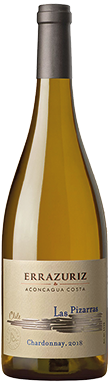
From vineyards planted on the coastal slopes of the Aconcagua Valley, about 11km from the sea, on white slate soils. This Chardonnay has just over...
2018
ErrazurizCosta
Familia Deicas, Extreme Vineyards Cerro del Guazuvirá, Lavalleja, Maldonado, Uruguay, 2015
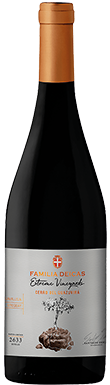
The Guazuvirá vineyard was planted by the Deicas family in 2013, directly on bedrock. Located about 17km from the sea, the influence of the Atlantic...
2015
Familia DeicasLavalleja
