
The Canary and Balearic islands; Spain’s exciting island wines
Look past the Spanish mainland to the Canaries and Balearics to discover diverse wine styles and fascinating local grape varieties. David Williams introduces the names to know and recommends top bottles to try from Tenerife, Lanzarote, La Palma, Mallorca and more


Surreal is a word you sometimes see used to describe the vineyards of the Canary Islands. And it’s true there’s something uncanny, almost nightmarish about, say, a vineyard trained with the traditional cordon trenzado method in El Valle de la Orotava on the archipelago’s largest island of Tenerife.
Arranged horizontally just inches above the ground, the gnarled, plaited vines, many of them well over a century old, some as much as 200 years old, seem to slither around the vineyards like entwined wooden snakes, stretching as far as 15m from the mother trunk – a sight made all the more eerie when shrouded in the mist that is such a frequent feature of this sub-tropical climate.
No less peculiar, surprising and dreamlike are the vineyards of Lanzarote, which call to mind some imagined post-apocalyptic experiment to make wine on the moon. Here the vines are dug into the thick layer of pícon volcanic ash that covers the island, each bush vine protected from the winds that blow in off the Atlantic by being planted in pits (hoyos) surrounded by low semi-circular stone walls (abrigos or overcoats).
So yes, surreal, but very far from irrational. The vineyards look like they do because they’ve been adapted to the very specific challenges of their surroundings by generations of ingenious wine growers. That their radical difference comes as a shock to those of us weaned on the conventions of modern mainland European viticulture is largely due to the fact that the Canary Islands have been away from the vinous mainstream for so long.
That’s not surprising. Strictly – geographically – speaking, the seven islands that collectively form Europe’s most southerly wine region are part of Africa: clustered, at 28° latitude, on the southern border of the Northern Hemisphere’s traditional band of winemaking possibility, with the southwestern Moroccan Atlantic coast just 96km from the southeastern coast of Fuerteventura. Culturally and politically, however, this is Spain of course, and has been since the islands were colonised and settled in the late 15th century.
Canaries and Balearics Literary past
With the Spaniards and Portuguese (who gave up their claim on the Canaries in exchange for the Spanish leaving Madeira, the Azores and Cape Verde to them) came the vine, and the islands’ first brush with vinous fame. Canary Island wines, thanks in no small part to the islands’ ideal position on transatlantic trade routes, were much coveted in Elizabethan England. References to ‘canary sack’ abound in Shakespeare plays – from ‘a cup of canary’ in Twelfth Night to the ‘marvelous searching wine’ that ‘perfumes the blood’ in Henry IV Part II. Later, Thomas Jefferson is said to have asked for a Canary Island wine to toast the signing of the Declaration of Independence in 1776.
By the 20th century, however, Canary Island wines had dwindled into a largely parochial concern. It’s striking that, in the most recent edition of The Oxford Companion to Wine, the brief entry on the Canary Islands (written by respected Spanish wine expert Victor de la Serna) describes how ‘mediocre wines for the tourist trade are being replaced by much more interesting products’.
Holidaymakers aside, for most wine drinkers outside the islands, even those ‘mediocre’ wines were a mystery. It’s really only in the past decade that the Canary Islands have begun to make any sort of mark on the modern international wine scene. But it’s the islands’ very isolation that has made that renaissance possible – and so exciting.
It was the archipelago’s remote geographical position, after all, that meant the Canaries avoided the phylloxera plague that swept through Europe in the late 19th and early 20th century. That in turn meant there was no need to apply the cure: rather than replacing vineyards ravaged by the louse with plants grafted on to American rootstocks, Canary Islanders have been able to keep vines on their own rootstocks (pie franco).
The absence of phylloxera also accounts for the remarkable age of many Canary Island vines, and for the islands’ defiantly eccentric portfolio of grape varieties.
Local variety
On the white side, Malvasia was historically considered the most important, the ingredient of the sweet sack that made the archipelago’s name (although recent evidence suggests the wines may well have been blends). It is still widely planted, notably on both La Palma and Lanzarote, producing both dry wines in an array of styles and quality, and sweet wines that reference the old days (and occasionally hit a tangy-lusicious sweet spot). Malvasia is joined by Listán Blanco (the local name for sherry country’s Palomino Fino), and Vijariego Blanco (once common in Andalucia, now confined to the Canaries, and to Tenerife and El Hierro in particular); as well as Marmajuelo and Gual (the local name for Madeira’s Bual) among others.
For reds, another Madeiran favourite, Tinta Negra Mole (known in the Canaries as Negramoll), the Portuguese variety Alfrocheiro and Jura’s Trousseau (going by the local synonyms Baboso Negro and Tintilla, respectively) are joined by Vijariego Negro (Catalonia’s Sumoll) and the solo star or main player in many of the Canaries’ most critically acclaimed reds: Listán Negro.
With Canary Island wines it’s not so much the grape varieties themselves as the way they interact with the archipelago’s unique conditions that, literally, gets the mouth watering. Broadly speaking, the climate is sub-tropical, with the fierce heat of Saharan Africa moderated by the cooling effects of Atlantic trade winds, leading to warm summers and mild winters.
However, there are many different microclimates on each island. On the largest island of Tenerife alone you can find enormous variations defined by the varying altitudes and expositions on the slopes of El Teide, an active volcano that, at 3,718m above sea level, is Spain’s highest peak. These differences are reflected in Tenerife’s five DOs (from the dry, southern Abona, with plantings touching 1,500m above sea level, the highest in Europe, to the more humid Ycoden-Daute-Isora, on the island’s northwest side).
There is corresponding variety in the wine style, too, although at this stage in the Canary Islands’ evolution it isn’t always easy to say how much is down to terroir and how much to individual winemaking philosophies. In general, however, Canary Island wines are categorised by a wildness of flavour that shouldn’t be confused with rusticity: a mix of electric acidity and saltiness, and a lightness of alcohol that makes them very refreshing, and very of the moment.
While they’re entirely their own thing, as a frame of reference, the reds often have something of Etna’s Nerello Mascalese about them: a kind of Pinot Noir-like grace and red-fruited suppleness charged with peppery spice, earth and iron-like minerals. Meanwhile in their mix of intensity, tang and zip, the white wines are how I imagine unfortified Madeira would taste. Not everything – not nearly enough, in fact – reaches the UK. But these deliciously idiosyncratic wines are worth getting to know when you find them.
Balearic beat
If the Canary Islands’ modern-traditional wines are a true expression of volcanic, Atlantic terroir, then Spain’s other great renaissance island wines, from the Balearics, are all about the flavours and charms of the Mediterranean.
When we say Balearics – and certainly when we’re talking about wines available in the UK and US – we really mean one island. Although there is a small but growing and increasingly interesting scene on Menorca, and a sprinkling of ventures on Ibiza and Formentera, the heart of the action in the archipelago that begins 96km east of Spain, is in Mallorca. With around 2,500ha of vineyards it is home to the Balearic Islands’ two officially recognised DOs, Binissalem and Pla i Llevant, as well as two regional wine designations and some 70 producers.
Wine arrived in Mallorca with the Romans, but like the Canary Islands, it was as a producer of Malvasia sack in the 16th century that it first came to fame. Unlike the Canaries, however, the vineyards of Mallorca fell victim to phylloxera, which came to the Balearics in 1891, and which, by the time it finished its work, had destroyed the local wine industry.
The recovery was slow to come. Farmers quit the wine business in favour of other forms of agriculture (almond trees being a particularly popular choice), and where vines were replanted, often with a co-planted, intermingling mix of varieties both red and white, it was strictly for local consumption. By the 1980s, however, a handful of growers had started taking production more seriously, sprucing up cellars with modern equipment and planting vines. And by 1990, Binissalem, in the centre of the island, had become Spain’s first island wine DO. Now interest in Mallorcan wine became more than a mere tourist-inspired curiosity.
As with so many other (re-)developing Spanish – and, indeed, southern European – wine regions, international grape varieties played a major role in the late 20th-century expansion of the Mallorcan vineyard. Cabernet Sauvignon, Syrah, Merlot, Pinot Noir and Chardonnay are all found in varying quantities around the island, as well as Tempranillo, known by its Catalan synonym (islanders speak a dialect of Catalan) Ull de Llebre, Monastrell (aka Mourvèdre) and the Cava grapes Macabeu and Parellada. But it is the local grape varieties – vinified separately or as part of a blend – that produce the most distinctive wines.
For reds, there are three that stand out: Manto Negro, which on its own produces a light, juicy, succulent style for relatively early drinking; Fogoneu, with its distinctive freshness and low pH; and Callet, a dark-skinned grape with an intriguing spiciness. For whites, the dominant – most widely planted – local is Moll, or Prensal Blanc, which on its own produces Verdicchio-esque wines of crisp briskness with an almondy twist, and which has the natural acidity to serve as a base for some of the island’s Cava-like sparkling wines.
Most wineries are still using those native grapes in blends that include both local and international varieties. But, as with the wines of the Canaries, it’s the island climate rather than the varieties per se that makes Mallorcan wines such an engaging proposition. The influence of the sea, with a consistent sea breeze that reaches far inland, has a distinctly moderating, cooling effect. The wines are consequently much lighter than their mainland Mediterranean peers – the Bordeaux varieties do very well here, with little in the way of excess jamminess – with a distinctive twist of salt-edged freshness that gives life and drinkability from everything to fish-partnering blanc de noir whites to the meatiest of red blends.
The Canaries and Balearics Wines
Viñatigo, Vijariego Blanco, The Islands, Spain, 2017
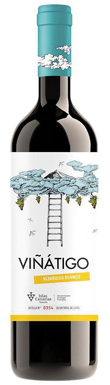

One of the Canary Islands’ great advocates of native varieties, Viñatigo here shows off the joys of white variety Vijariego. Fermented in French oak, it...
2017
Viñatigo

El Grifo, Colección Malvasía Seco, The Islands, Spain, 2017
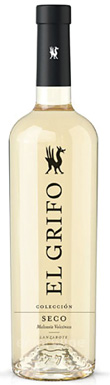
Malvasia was the original source of Canary Island wine fame; today on Lanzarote it makes for an utterly distinctive dry white that combines floral and...
2017
El Grifo
Mesquida Mora, Sincronia Blanc, Plà i Llevant, The Islands, Spain, 2018
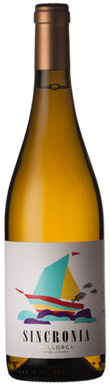
From a small family-run, biodynamic bodega, this blend of local favourites Moll and Giró with Parellada and Chardonnay is beguilingly fresh and breezy, with gentle...
2018
Mesquida Mora
Susana Sempre, Blanco, The Islands, Spain, 2017
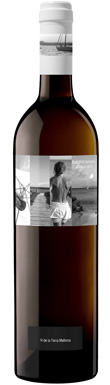
The light and crisp local Moll (Prensal Blanc) is blended with rounded Chardonnay for another charmingly evocative white, where stone fruit fleshiness meets a fish-and-seafood-friendly...
2017
Susana Sempre
Envínate, Taganan Tinto, Tenerife, Spain, 2017
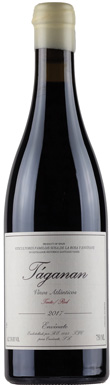
A light, filigree but explosively expressive red from one of Spain’s most exciting and adventurous producers (who also has vines in Ribeira Sacra).This Listán Negro-Listán...
2017
Envínate
Anima Negra, AN, The Islands, Spain, 2016
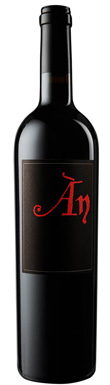
92
A boutique producer that has done much to revive interest in Mallorcan wines in general and the local Callet variety (95% of the blend here, with equal parts Manto Negro and Fogoneu) in particular. This red is deep, intense, thyme-scented and balanced with mineral freshness.
2016
Anima Negra
Suertes del Marques, 7 Fuentes, Valle de la Orotava, Tenerife, Spain, 2016
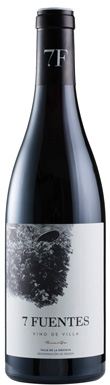
A superb introduction to the wild joys of Tenerife reds, this Listán Negro-Tintilla blend is as light, feathery and red-fruited as Pinot Noir, with herbs,...
2016
Suertes del Marques
4 Kilos Vinicola, 12 Volts, The Islands, Spain, 2017
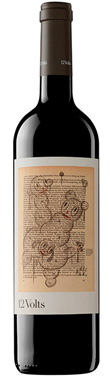
Ex-Anima Negra winemaker Francesc Grimalt and musician Sergio Caballero’s exciting project always hits the spot with this blend of local and international varieties (Callet, Fogoneu...
2017
4 Kilos Vinicola
Tajinaste, Tradición Listán Negro, Valle de la Orotava, Tenerife, Spain, 2016
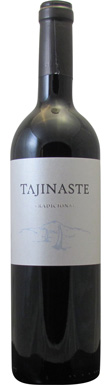
Another beautiful expression of Valle de la Otorava Listán Negro, this is vividly coloured and flavoured with a succulent orange-and-cranberry juiciness that's framed with smoke,...
2016
Tajinaste
Macià Batle, Tinto Añada, The Islands, Spain, 2018
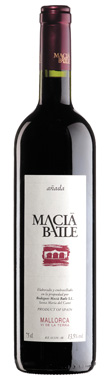
From Mallorca’s second-largest producer, this is a good-value introduction to Balearic style. The local Manto Negro is blended with Merlot, Cabernet and Shiraz for a...
2018
Macià Batle
