Well known for its award-winning sparkling wines, Tasmania is growing in stature as a producer of top-quality still whites and Pinot Noirs. Sarah Ahmed follows the latest developments on this ‘cool’ island state
Cast adrift 240km south of mainland Australia, across Bass Strait, Tasmania was quickly spotted by colonial explorers as a natural fit for Europe’s cool-climate-loving crops.
In 1788, the first of them, Lieutenant William (Mutiny on the Bounty) Bligh, recorded planting three apple trees and nine vines ‘to do good the most in our power to the Natives or those who may come after us’.
Scroll down to see Sarah’s tasting notes
Tasmania, the Apple Isle, went on to become Australia’s most productive apple-growing state. Today, it’s the apple of the wine industry’s eye – a zero-surplus zone, whose grapes are conservatively estimated to be worth almost six times the national average and whose entire production (about 0.5% of Australia’s total) retails at above $15/£9.18 a bottle.
Nailing its colours so firmly to the super-premium mast is not this enviable wine state’s sole point of difference. Tasmania is also charting fresh territory as Australia’s coolest wine region. With a climate not dissimilar to that of Champagne (but, crucially for still wines, significantly drier), it is Australia’s undisputed capital of traditional method sparkling wine.
Made from Pinot Noir, Chardonnay and sometimes Pinot Meunier, this style of fizz accounts for about 35% of the island’s production. With ‘a suppleness of structure’, which Ed Carr, Accolade’s sparkling winemaker, identifies as Tasmania’s signature note, demand is seemingly insatiable.
When I visited last year, traditional method specialist Fran Austin of Delamere Estate told me: ‘Sparkling has gone berserk… we can’t keep up.’ Oddbins head buyer Ana Sapungiu MW echoes her comments, reporting of Jansz Rosé: ‘Customers can’t get enough of it.’
Decanter newsletter
Get our daily fine wine reviews, latest wine ratings, news and travel guides delivered straight to your inbox.
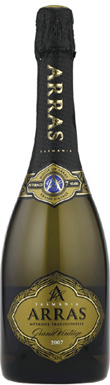
My top-scoring fizz from House of Arras is imported to the UK by Liberty Wines; its managing director David Gleave MW observes sanguinely that demand will naturally exceed supply ‘if, like Arras, the wines taste better than Champagne at the same price’.
Carr, Australia’s most awarded sparkling winemaker and Arras craftsman, is renowned for his commitment to lengthy ageing of wines on their yeasts in bottle; the Grand Vintage 2007 was disgorged after several years to build complexity, while his flagship cuvée, EJ Carr, spends a decade on its lees.
Beyond Sparkling
If fizz is firing on all cylinders, what about the other two-thirds of Tasmanian wine production – the still wines? Mainland producer Hardys (owned by Accolade), then Penfolds were quick to siphon off top-notch Chardonnay for respective multi-regional blends Eileen Hardy and Yattarna, even if, joked Hardys’ Tom Newton, he initially ‘picked up the crumbs’ from Carr’s sparklings.
Although both wines now include a hefty percentage of Tasmanian Chardonnay, competition for fruit is hotting up, especially now freshness (which Tasmania so reliably delivers) is prized over sheer power.
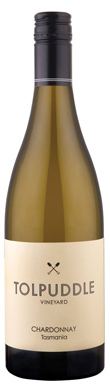
Take Tolpuddle Vineyard, historically a key source for Eileen Hardy and Arras. It was acquired in 2011 by Martin Shaw and Michael Hill Smith MW (owners of Shaw & Smith in the Adelaide Hills) and the pair now make a stunning single-vineyard Chardonnay and Pinot Noir from this mature Coal River Valley site.
Although Coal River Valley is in Tasmania’s warmer, drier south, its distinctive raciness is, for Hill Smith, a product of the fact that, while ‘the Adelaide Hills are cool, southern Tasmania is cold’, plus his belief that Tolpuddle Vineyard is ‘one of the great single vineyards of Australia’.
With unusual limestone sub-soil, southern Tasmania’s Derwent Estate in the Derwent Valley is another. In 2013, this long-term supplier to Penfolds’ Yattarna Chardonnay partnered up with winemaker John Schuts, building a winery to increase the quantity and quality of wines Schuts previously made for Derwent Estate at Winemaking Tasmania, a leading contract winemaker.
Derwent’s new flagship Chardonnay and Pinot Noir label Calcaire highlights the more exacting terroir-focused approach, especially for Pinot Noir. It is now harvested by block or clone over two to three weeks in 20 picks.
Such developments are a win-win for Tasmania. Gleave praises ‘a new breed of small independent wineries aiming for the very top of the tree’, whom it is exciting to see refocusing pedigree sites on ambitious 100% Tasmanian wines.
Meanwhile, the big players push to find the great sites of the future, such as the Central Highlands’ only vineyard (Tasmania’s highest at 250m) which, says Penfolds’ Kym Schroeter, ‘walked into Yattarna’ in the 2014 blend: a shoo-in.
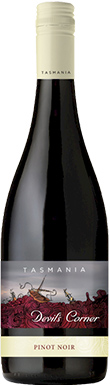
As for Tasmania’s biggest vineyard, the 175ha Hazards on the East Coast’s Freycinet Peninsula (known for its fruit density), it was bought by Victoria-based Brown Brothers in 2010. Approving of Ross Brown’s pledge to create a category he said did not yet exist, a generous and flavoursome Pinot Noir with mass appeal, The Wine Society’s Sarah Knowles MW says: ‘It really is fantastic to see Devil’s Corner open up such a great potential market given its price point, style and appeal.’
Because so much of the island’s typically small-scale production has either gone to contract winemakers or been blended on the mainland, I can understand why rising star Domaine Simha’s Nav Singh (who honed his skills at Burgundy’s Domaine de l’Arlot and Bordeaux’s Château Le Pin) describes Tasmania as ‘embryonic… the last frontier of premium winemaking in Australia’ when it comes to showcasing the island’s individuality.
However, since my 2012 visit, I have noticed a growth spurt (in both number and maturity) of small independent wineries and winemaker-led labels, which, by cultivating a closer relationship with the land, are building on the work of boutique pioneers such as Domaine A, Freycinet Vineyards, Josef Chromy and Stefano Lubiana.
Tasmania is ‘embryonic – the last frontier of premium winemaking in Australia’ – Nav Singh, Domaine Simha
Diversity of style
Tasmania wine is fast growing up in terms of sub-regional and terroir expression, stylistic diversity and innovation, as well as quality. Drawing on five years’ chairing the Hobart Wine Show plus overseeing production of Yalumba’s mushrooming Tasmanian portfolio (Jansz, Dalrymple, Parish Vineyard), winemaker Louisa Rose confirms: ‘The general quality is lifting so much; we are starting to see great sites emerge, and understand the differences between them, especially for Pinot Noir.’
Huon Valley, for example, has been catapulted into the limelight after Home Hill’s Kelly’s Reserve Pinot Noir 2014 won Australia’s prestigious Jimmy Watson Trophy in 2015. Stefano Lubiana has now bought a vineyard in this atypically humid (for the south) region once regarded as fit only for sparkling, as has Mount Pleasant’s chief winemaker Jim Chatto and Home Hill’s winemakers Paul and Gilli Lipscombe of Sailor Seeks Horse.
In Tamar Valley, Stoney Rise’s Joe Holyman, formerly a wicketkeeper in Tasmanian cricket, is fine-tuning his Pinot Noirs – and pushing stylistic boundaries with an unsulphured example and the textural skin-contact Brian range, made with fellow winemaker Peter Dredge and wine writer Mike Bennie.
Earlier-picked and less extracted, the wines have become brighter, crunchier and more precise – a better reflection of northern Tasmania’s cloudier, wetter climate. Even Project X, a 100% whole-bunch Pinot, which he initially trod daily for a fortnight, but now hand-plunges. ‘It dawned on me,’ says Holyman, ‘that Dujac [the influential Burgundy producer] plunged because they didn’t want the whole-bunch [style] to show.’
In the small amphitheatre of vineyards surrounding their home, Sinapius’ Vaughn Dell and Linda Morice are making sublime, slow-burn, mineral Pinot Noirs and Chardonnays amid the cluster of Pipers River sparkling producers. It is the most humid of Tasmania’s principal regions.
Meticulous viticulture (doubling, even tripling planting density for super-low yields) and sensitive winemaking (differentiating parcels) have enabled Dell to achieve his goal of ‘making wines that taste like they are grown here’. New wine Clem Blanc (a field blend of Grüner Veltliner, Gewürztraminer, Pinot Gris, Pinot Blanc and Riesling) has the texture and spice of a sophisticated Alsace Edelzwicker.
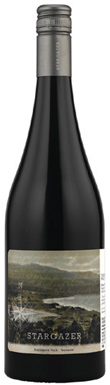
Samantha Connew made her name at Wirra Wirra in South Australia’s McLaren Vale, and is burnishing her credentials in Tasmania with Stargazer, which she founded in 2013. Since acquiring a Coal River Valley (CRV) vineyard last year, she has switched her Pinot Noir source from Huon Valley. Though she describes CRV Pinot as ‘traditionally more robust and tannic than Huon Pinot’, Connew uses whole-bunch fruit for aromatics and is ‘pretty gentle with extraction’; it accounts for the uncommon levity of her pale CRV Pinot.
Also part-sourcing from CRV, Nick Glaetzer (Glaetzer-Dixon) favours a traditional style, describing his ageworthy Pinots as ‘having a Pommard character; that leathery savouriness’. They starkly contrast with Sixteen Nouveau, his new ‘Beaujolais rip-off’ made from Pinot Noir.
CRV and the Meadowbank Vineyard in the Upper Derwent Valley were the source of Barossa-born Glaetzer’s controversial 2011 Jimmy Watson Trophy-winning Mon Père Shiraz 2010. This savoury, fresh, Rhône-ish wine prompted a disgruntled, anonymous caller to phone Meadowbank’s Gerald Ellis, demanding to know how a Tasmanian Shiraz could win Australia’s top wine award.
Meadowbank has been a magnet for both established (Arras) and new-wave producers, including former Accolade winemakers Peter Dawson and Tim James (now of Dawson James) and Peter Dredge (both for his funky Dr Edge label and Meadowbank’s recently revived label).
It is also where Singh and wife Louise Radman mainly source and craft perfumed, delicate yet textured Riesling, Chardonnay, Gamay and Pinot Noir. With early picking and skilful use of skin contact, 600-litre barrels and amphorae, Domaine Simha’s light touch has won listings at The Fat Duck in Melbourne.
Like most Tasmanian wines, quantities are tiny. Just 5% of Tasmanian wine is exported and, even then, Knowles says: ‘The limiting factor is often The Wine Society’s “allocation” rather than our members’ appetite.’
Offbeat appeal
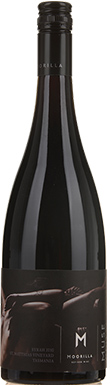
To appreciate the uniqueness of Tasmania and its wines, my best advice is to visit this beautiful island, which has experienced the fastest growth of international tourists in the nation as a whole, largely due to Hobart’s acclaimed Museum of Old and New Art adjacent to the Moorilla Estate winery at Berriedale, where resident winemaker Conor van der Reest is taking things in exciting new directions while painstakingly conserving its heritage 1970s vines.
As Sapungiu points out, this island has a special allure for wine lovers: ‘It is the region that is the point of difference… Tasmania is cool in every sense; a bit unusual.’
Tolpuddle Vineyard, Chardonnay, Coal River Valley, Tasmania, Australia 2015
My wines
The first vintage vinified at Shaw + Smith’s Adelaide Hills winery shows the presence of an oak frame and more pronounced lees manipulation, giving pleasing...
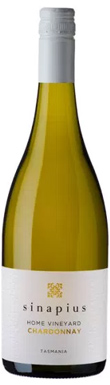
Sinapius, Home Vineyard Chardonnay, Pipers River, 2015
My wines
A beautifully textured, slow-burn, nuanced Chardonnay with white blossom and incipient honey. Chablis-like chalky lees, oyster shell and lemony fruit gently flesh out a firm...
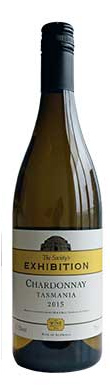
The Wine Society, The Society's Exhibition Chardonnay, 2015
My wines
91
A typically concentrated, well-focused East Coast Chardonnay. Cashew nuances, ripe, zesty lemon, lime and rock melon with praline and cream complexity and a subtle smokiness to the finish.
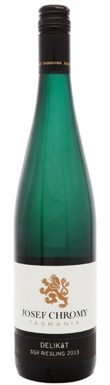
Josef Chromy, SGR Delikãt Riesling, Tasmania, 2016
My wines
90
From beside a small rocky creek, both SGR (Sixty Grams Residual) Delik-at – a Kabinett style – and its dry stable-mate Zdar have slate-like minerality. This has sorbet-pure lime with pretty elderflower.
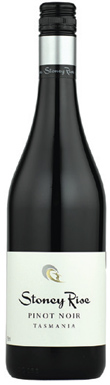
Stoney Rise, Holyman Pinot Noir, Tamar Valley, 2015
My wines
95
A 0.6ha block planted in 1986 produces a spicy fretwork of tannin (55% whole-bunch), with sappy pomegranate, redcurrant and berry fruit. Taut, mineral acidity reinforces its precise architecture.
Harvested on a biodynamic calendar flower day, skilfully fermented in amphora with 100% whole-bunch for three months then aged in tank. Dried sweet spice, peony and mineral-inflected sappy red cherry, with the slinkiest tannins.
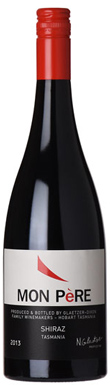
Glaetzer-Dixon, Mon Père Shiraz, Derwent Valley, 2015
My wines
Climate and partial whole-bunch ferment produce a medium-bodied, Rhône-like wine with light peppery grip and lift to its sweet but fresh strawberry, red cherry, plum...
Moorilla Estate, Muse Series, St Matthias Vineyard Cabernet
My wines
A finely etched, perfumed blend, well supported by filigree tannins and scintillating acidity – a spear to its jewel-bright blackcurrant and red cherry fruit, with...
Stargazer, Pinot Noir, Coal River, Tasmania, Australia, 2016
My wines
Pale, willowy and fragrant, with mesmerising waves of fresh, creamy red berry, currant and cherry fruit, laced with peony, violets, bitters and chamois tannins. Beguiling.
Made by Tasmanian producer Tamar Ridge, this elegant Pinot has a fragrant cranberry nose with a touch of dried herb, which leads into light and crunchy strawberry and raspberry fruit. There is a lovely fresh acidity in the background.
Decanter Magazine, Portugal Expert & DWWA Regional Chair for Portugal
Sarah Ahmed, aka ,, is an independent, London-based wine writer, educator and judge. She was awarded the Vintners Cup in 2003, the Wine of Portugal Personality of the Year (Europe) 2019 and Honorary Australian Woman of Wine Award 2017.