
Tasting Château Figeac: 17 vintages from 1947 to 2019
Château Figeac's winemaking team has been doing remarkable work, says Yohan Castaing, who charts the St-Emilion estate's history and tastes all vintages from 2005 to 2019 – plus 1964 and 1947.


‘Few estates have given so much thought and attention to details to achieve the most precise viticulture possible.’
The upcoming official revision of the St-Emilion Classification – scheduled to be announced in September 2022 – just might be the occasion for Château Figeac to at long last achieve the highest ranking of ‘premier grand cru classé A’.
Scroll down to see tasting notes and scores for 17 vintages of Château Figeac wines
A brief history of Château Figeac
Figeac has long been a major estate of Bordeaux, one whose origins go back to the Gallo-Romain epoch of the second century as a vast domain known by the name of Figeacus.
Over the centuries, the estate experienced a good measure of vicissitudes, but because of its large surface area on a scale that had more in common with that of Left Bank estates, Château Figeac was one of the pioneers for the emergence of great wines on the Right Bank.
This is made clear in the authoritative book on the subject, Les Grands Vins, St-Émilion, Pomerol, Fronsac by the late Henri Enjalbert (1910-1983), professor of geography at the University of Bordeaux, who dedicated this major tome to Thierry Manoncourt, owner of Château Figeac.
‘Surrounded by the small and midsize properties of St-Emilion and Pomerol lies the Figeac estate on a gravelly soil with undeniable viticultural aptitudes, a domain that has been perpetuated from Antiquity and the Middle Ages right up to modern times,’ he wrote.
Indeed, Château Figeac stretched over some 200 hectares (ha) during the 18th century, as shown on the famous 1785 map known as the ‘carte de Belleyme’, named after the geographer Pierre de Belleyme (1747-1819) – who produced it for King Louis XV.
After several successive owners, the Carle family, who pursued activities in banking and trade, acquired the estate after the marriage in 1654 of François de Carle with Marie de Caze, whose family had owned it for some 200 years.
Château Figeac became their flagship enterprise and its reputation for fine wine production grew.
Unfortunately, the turmoil of the French Revolution followed by the speculative frenzy of the early 19th century put André de Carle-Trapet, the last heir of this family, in a delicate financial position. In 1832, a few years after his death in 1825, his widow, Félicité de Géres, faced ruin and began to break up the property in several stages.
A notable one was the sale to Jean-Jacques Ducasse, president of the Commercial Court of Libourne, 7.6ha of vines on an exceptional gravelly terroir in the area known as ‘Barrail des Cailloux’ near the road from St-Emilion to Pomerol.
A second lot of 8.58ha was also sold, including the ‘Au Cheval-Blanc’ tenant farm belonging to Château Figeac.
Ducasse had the ambitious project of forming his own wine estate from these acquisitions, which resulted in what we know today as Château Cheval Blanc. However, he wished to take advantage of Figeac’s strong reputation and for a while – even up to 1841 according to Enjalbert – sold his wine as ‘vin de Figeac’.
Despite the welcome income from this sale, Félicité de Géres remained overwhelmed by her debts and sold Château Figeac in 1838 to Louis-Urbain Lebel, a Parisian businessman.
Mr. Lebel did not take much care of it, nor did subsequent owners until 1892, when Henri de Chevremont acquired the property. It then passed into the hands of André Villepigue (1851-1926), general secretary of the Préfecture of the Seine, after marrying the new owner’s daughter. Happily, the estate regained a certain ambition, but especially after Villepique’s grandson, Thierry Manoncourt, took over the running of the property in 1947.
Thierry’s mother had acquired in 1942 Château Millery, located in the commune of St-Christophe-des-Bardes within the St-Emilion Grand Cru appellation area. But it was at Château Figeac that this agricultural engineer wanted to settle down full-time to develop his idea of great wines.
Thierry Manoncourt passed away in 2010, but throughout his life he never stopped trying to burnish the reputation of his estate by producing some of the finest wines of St-Emilion.
To achieve his purpose, he was remarkably innovative in his approach to winemaking but also grape-growing. Manoncourt completely renovated the wine-making facilities, inspired by the actions of Théopile Skawinski, estate manager and co-owner of Léoville Las Cases but also designer of a revolutionary vat-house at both Pontet-Canet and Lynch-Bages.
But Manoncourt also conducted a soil analysis of the whole property to get a better understanding of its terroir. From that ensued the major change that really put its stamp on Figeac.
This was his audacious decision to cultivate a considerable portion – as much as 35% – of Cabernet Sauvignon, a grape rarely planted in St-Emilion, but which he believed could shine here thanks to the property’s pockets of alluvial gravel soils, especially on the remarkable ridges or croupes, and particularly the one bearing a name with hellish resonance, the Graves de l’Enfer. All of them benefit from a marvellous morphology that offers multiple expositions.
Manoncourt’s choice of a nonconformist trio of grape varieties, completed by Cabernet Franc and Merlot, was a stroke of agronomic genius that made him one of the leading wine growers of his time, and it also became the marker of Figeac’s singular style.
Château Figeac today
Thierry’s widow, Marie-France Manoncourt, and her children still own Château Figeac.
To move forward while also striving to preserve the uniqueness of Figeac’s strong identity, they undertook the construction of new winemaking facilities that would be extremely pragmatic but architecturally bold – and yet blend perfectly into the surrounding area.
General manager Frédéric Faye, who rose through the ranks after being recruited by Thierry Manoncourt, was able to inaugurate this new, well-thought-out chai for the 2021 vintage.
The result provides a striking setting befitting the St-Emilion jewel that Figeac is. It also constitutes a worthy tribute to Thierry Manoncourt while incarnating the estate’s ambitions to achieve the highest rank in the appellation hierarchy in the impending revision of the St-Emilion Classification.
Should that play out as wished by the family, the irony of history is that Figeac will not at long last stand at the summit alongside its historically linked neighbour; Château Cheval Blanc has chosen to withdraw from the classification process and therefore from the classification itself.
If Figeac does attain the ultimate rank of premier grand cru classé A, this promotion will be amply deserved – as this vertical tasting proved.
After a period when the wines were of impeccable quality but at times a little too dense and tannic, Château Figeac is now focused on fine-tuning its terroir expression in a way that brings forth more clearly the elegance and finesse that can come from the parcels of gravelly soil.
It is doing so while also highlighting the graphite and smoky aromas more specific to Merlot on gravelly soil, as well as displaying the characteristic tension provided by Cabernet Sauvignon, which gives Figeac its unique character.
The work of Frédéric Faye and his team in recent years has been remarkable. Few estates, be it in Bordeaux or around the world, have given so much thought and attention to details to achieve the most precise viticulture possible.
Without altering the innate style of Château Figeac, since 2015 the team has succeeded in producing wines of brighter aromatic intensity and expressivity allied with greater textural precision on the palate, which Faye believes owes a great deal to the fact that sulphur in longer used during vinification.
Tasting 17 vintages of Château Figeac from 1947 to 2019
Related content
St-Emilion council defends classification after Angélus withdrawal
Bordeaux 2016: 30 top-scoring and best-value wines
Château Figeac, St-Émilion, 1er Grand Cru Classé B, Bordeaux, France, 2019
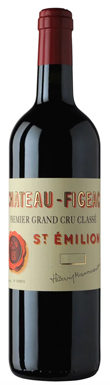

A remarkable Figeac which, with a yield of just 34hl/ha and using 100% new oak, remains elegant and refined, with none of the alcoholic excess...
2019
Château FigeacSt-Émilion

Château Figeac, St-Émilion, 1er Grand Cru Classé B, Bordeaux, France, 2018
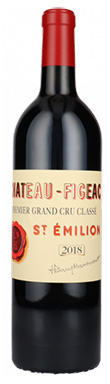
This still exudes the freshness and exuberance that the wine had during the primeur stage with its scents of blackcurrant, raspberry, and crushed strawberry along...
2018
Château FigeacSt-Émilion
Château Figeac, St-Émilion, 1er Grand Cru Classé B, Bordeaux, France, 2017
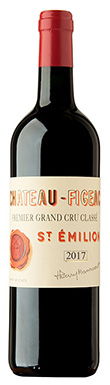
The 2017 possesses a more earthy character than 2018 and 2019, but it is also endowed with finely focused aromas of black fruit, spice, and...
2017
Château FigeacSt-Émilion
Château Figeac, St-Émilion, 1er Grand Cru Classé B, Bordeaux, France, 2016
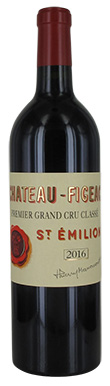
Refined and classy, like a Hermes suit all in place, balancing ripe black and cool blue fruit aromas with cedar, echoed on the palate, which...
2016
Château FigeacSt-Émilion
Château Figeac, St-Émilion, 1er Grand Cru Classé B, Bordeaux, France, 2015
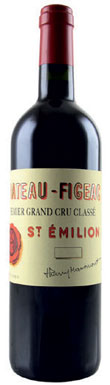
This Figeac expresses the solar character of the vintage while retaining enticing freshness. The bouquet is dense and complex with spicy, woody and graphite-like notes...
2015
Château FigeacSt-Émilion
Château Figeac, St-Émilion, 1er Grand Cru Classé B, Bordeaux, France, 2014
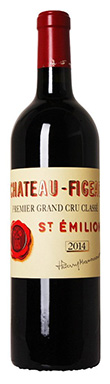
Here is a 2014 that entices with its aromatic subtlety for a core of spicy black fruit. The attack is lively and although the palate...
2014
Château FigeacSt-Émilion
Château Figeac, St-Émilion, 1er Grand Cru Classé B, Bordeaux, France, 2013
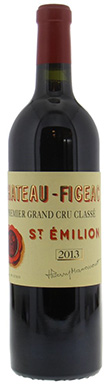
From the very first whiff, surprisingly compelling scents of black fruit but also cherry pits complicated by notes of truffles and spices reveal a lovely...
2013
Château FigeacSt-Émilion
Château Figeac, St-Émilion, 1er Grand Cru Classé B, Bordeaux, France, 2012
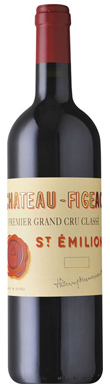
As ever with Figeac, this will benefit from longer ageing than most because of the proportion of Cabernet Sauvignon and Cabernet Franc in the blend....
2012
Château FigeacSt-Émilion
Château Figeac, St-Émilion, 1er Grand Cru Classé, Bordeaux, France, 2011
The pronounced notes of truffles, graphite and spices suggest a wine that has attained its apogee. After aeration, black fruit including ripe plum comes to...
2011
Château FigeacSt-Émilion
Château Figeac, St-Émilion, 1er Grand Cru Classé, Bordeaux, France, 2010
Many 2010 St-Emilion are over the top, with high alcohols, but not Figeac. The nose is starting to evolve, with lush blackcurrant and mint aromas,...
2010
Château FigeacSt-Émilion
Château Figeac, St-Émilion, 1er Grand Cru Classé, Bordeaux, France, 2009
The colour remains deep and shows no sign of evolution. The nose, too, remains youthful, but it's broad and fleshy, with generous blackberry fruit. Plump...
2009
Château FigeacSt-Émilion
Château Figeac, St-Émilion, 1er Grand Cru Classé, Bordeaux, France, 2008
The nose of the 2008 remains a bit closed at this stage, but coaxing reveals a rather complex aromatic profile composed of black fruits, spices,...
2008
Château FigeacSt-Émilion
Château Figeac, St-Émilion, 1er Grand Cru Classé, Bordeaux, France, 2007
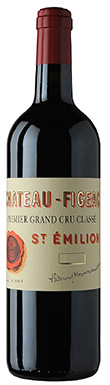
A remarkable nose expressing sweet scents of fresh fruit, cherries, raspberries, blackcurrants along with a floral touch. There is a hint of animal character after...
2007
Château FigeacSt-Émilion
Château Figeac, St-Émilion, 1er Grand Cru Classé, Bordeaux, France, 2006
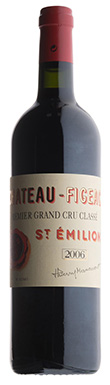
The bouquet of the Figeac 2006 offers an array of fresh fruit, cherry, plum and raspberry complicated by spices and mint. It has a juicy...
2006
Château FigeacSt-Émilion
Château Figeac, St-Émilion, 1er Grand Cru Classé, Bordeaux, France, 2005
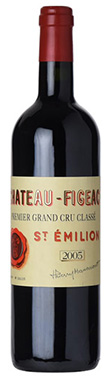
This is a Figeac of rather brooding, earthy character that opens up with aeration to reveal its notes of cherry, tobacco, leather and then graphite...
2005
Château FigeacSt-Émilion
Château Figeac, St-Émilion, 1er Grand Cru Classé, Bordeaux, France, 1964
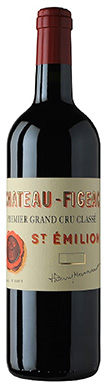
Superb nose mingling leather, ripe fruit, herbs, spices, menthol, and a hint of graphite and flowers. The velvety yet sharply defined mouthfeel is juicy and...
1964
Château FigeacSt-Émilion
Château Figeac, St-Émilion, 1er Grand Cru Classé, Bordeaux, France, 1947
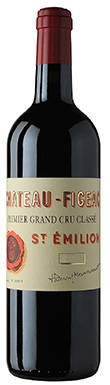
A still sumptuous wine of special significance as it was with this vintage that the future Madame Manoncourt fell under the spell of both the...
1947
Château FigeacSt-Émilion
