
Ten next-generation Spanish winemakers to know


Pedro Ballesteros Torres MW highlights 10 trail-blazing winemakers who are changing the face of Spanish wine. See below for the names to know and the wines to seek out.
Scroll down to see the wine ratings and tasting notes.
- This article is currently only available online for Premium members
Alejandro López Bodegas Bilbaínas – Rioja

Among the world’s oldest wine brands (there are references to winemaking since 1551), Codorníu is ideally positioned to take a long-term view in its business development In the 1990s the group bought Bodegas Bilbaínas, a classic Rioja producer that was going through difficult times. It set to work reviving its most prestigious brand, Viña Pomal. Codorníu followed a young-gun strategy, first by hiring Diego Pinilla, now the group’s technical director, who trained and was replaced by Alejandro López.
López is a man of his land, educated in Rioja and Navarra, but has a global vision, acquired during time in Chile, Italy and the US. His present scope of work at Bilbaínas is a winemaker’s dream. He follows three principles: first, to introduce gradual improvements while keeping the character of the top brands Viña Pomal and La Vicalanda; to develop a number of single-vineyard and single-varietal wines; and to experiment with new wines, new cultivation methods and whatever else makes sense to try.
López has free rein. He has made lovely sulphur-free Garnachas and an amazing orange wine – something quite surprising for a large concern such as Bilbaínas (which produces 5 million bottles a year). López’s example is being closely followed by other producers, large and small. His capacity to influence the whole Rioja market, and his openness to innovation, are key assets for the present and the future.
Almudena Alberca Viña Mayor – Ribera del Duero, Rueda

Almudena Alberca started her career producing boutique wines, such as Viñas del Cénit in Zamora. Then she added Dominio de Atauta to her portfolio – an amazing winery in Ribera del Duero with pre-phylloxera Tempranillo vineyards, planted in sandy soils interspersed in a wild forest. Alberca’s hand in Atauta resulted in remarkable leaps in quality. Her wines won top marks from American wine critics and sold very easily.
Then, instead of remaining in her comfort zone, Alberca moved to brand new turf, accepting the job of technical director at one of Spain’s big-volume players, Viña Mayor. Each year, Viña Mayor releases 4 million bottles of red wine from Ribera del Duero and white wines from Rueda, sold at affordable prices through major retail chains such as Tesco in the UK.When Alberca accepted the job, her objective was to move the entire production up the quality ladder, while keeping the wines’ market appeal. A difficult task, considering that grapes are supplied by a very high number of vine-growers. But Alberca got things moving: she launched a new premium Viña Mayor brand, El Secreto – a selection of the best grapes. The name is to show growers and consumers that this premium path is the secret to Viña Mayor’s contined success.Alberca’s efforts may not seem as glossy as those of the other nine winemakers on these pages, but will likely be much more relevant to Spain’s wine industry, because she is changing what mainstream consumers drink.
Jorge Monzón & Isabel Rodero Dominio del Aguila – Ribera del Duero
Spain is a country of great winemakers and unknown vine-growers. Jorge Monzón is an exception to this rule. His customers – Pingus, Berrouet, Vega Sicilia and the García family of Aalto – produce with his grapes some of the most distinguished wines in Ribera del Duero. He is proud of his job as grape producer, which he undertakes jointly with his father.
Monzón was trained in Bordeaux and Burgundy, including a stage at Domaine de la Romanée-Conti. No wonder that he has a particular skill in spotting the best old-vine vineyards, grown organically.
He started making wine only in 2010, when he and his wife Isabel (the architect behind the winery) launched Dominio del Aguila. His success was almost immediate: international critics quickly recognised the amazing finesse of his wines, which are field blends from very old vines, vinified in ancient lagares, with no destemming, no filtration and long ageing. By these methods, the wines express their Ribera del Duero terroir with a purity unheard of until Dominio del Aguila was released.
Each of its wines has a distinctive personality, from the lovely Picaro del Aguila Claret (a wine between rosé and red) to its regular reserve or top cuvées. Monzón and Rodero have shifted the perception of the region’s wines from concentration and power to finesse, balance and complexity. Others now try to emulate them. Thanks to this couple and the precedent they have set, wine lovers will be able to reap the rewards.
Diego Magaña Bierzo, Navarra, Rioja

One of the most challenging times for a family winery can be the point of transition from one generation to the next – a moment when the younger family member looks at things afresh. New generations need to have different opinions to their forebears, otherwise they would feel useless. But innovations last only one generation.
Diego Magaña is the son of Juan Magaña, a selfmade man who, 40 years ago, was a true revolutionary in Navarra, importing French grape varieties when this was forbidden by Spanish law, introducing modern winemaking techniques and stamping an indelible influence on the whole region. His Merlots are among the best in Spain, and many others win high accolades. The winery now owns more than 100ha and exports to many countries.
His son is another revolutionary, of a different type. He seeks the purest expression of terroir through an intimate understanding of the vineyard, and minimises interventions in the winery. While the father shocked with his innovative brio, the son is admirable in his deep conviction. Juan learned from the Bordeaux extroverted school, where wines impress with their power and depth; Diego’s maestro, by contrast, is Raúl Pérez, that bearded genius who conveys pure delicacy in his wines.
Diego Magaña went to Bierzo, far from Navarra, to learn how to achieve his aims and fine-tune his methods. He has produced wines that are an expression of his own personality as much as of their terroir. Now he has moved to Rioja Alta, and it’s certain that some time in the future his father’s magnificently modern and complex wines will be complemented in Navarra by his own.
Paola Medina Williams & Humbert – Jerez

Paola Medina symbolises the so-called ‘Sherry revolution’, pooling energetic youthfulness, deep respect for Sherry heritage and amazing know-how and creativity.
She is aware of the needs for the region – ‘to focus on premium quality wines, keep volumes down, and to integrate Sherry with the finest gastronomy’ – and is well positioned to see the way ahead.
Williams & Humbert is 130 years old, but 40 years ago fell victim to fraudulent practices by its then owners. It was expropriated by the Spanish Government in 1983, which sold it on to a Dutch supermarket chain, before it was bought in 2005 by the Medina family. Its mission has been to steer Williams & Humbert back to its former glories.
Medina believes those objectives can be achieved only with the finest – and newest – Sherries, and she has explored many avenues to create these wines of the future. For instance, non-fortified Sherry, made with overripe or sun-dried grapes from carefully cultivated vineyards. Or oloroso made from the finest musts. Or the recovery of Pedro Ximénez and other native varieties.
But Medina’s most amazing innovation so far is her idea of vintage fino Sherry: to replace the traditional solera system (in which newer vintages are blended into mature wines to keep a consistent expression over time) with a single-vintage system. The wines are bottled when the flor (a layer of yeast floating over the wine that protects it against oxidation and changeS the wine’s character) is close to exhaustion.
The flor is as much a terroir as the vineyard, being an eco-system in itself, that sometimes results in excellence. Follow Medina closely to enjoy Sherry as you never imagined.
Fernando Mora MW Campo de Borja, Valdejalón

Mora likes living fast. He is only 35 years old but is already succeeding in his second professional life. Mora started as an industrial engineer, specialising in renewable energy sources, but moved out of his comfort zone when his wife introduced him to the world of wine. He says it was a life-changing moment, and that he had no hesitation in dedicating himself to this new passion of vine-growing and winemaking.
He started at home as an amateur, while getting a fast-track education. Then he joined efforts with Paco Latasa and Mario López to create Frontonio, a winery from an improbable origin for quality wine – Valdejalón in Aragón. With lots of hard work and very little money, the trio succeeded in putting this IGP on the map with their vibrant, fruity Garnachas.
There was no stopping the intensely focused Mora. He completed Wine & Spirit Education Trust courses until he got the Diploma then, with no break in between, embarked upon the gruelling Master of Wine programme, which he completed in 2017 after just three years, winning an award for his research paper on a proposed approach to categorising vineyards in Aragón’s more well-known DOC of Campo de Borja.
In 2015, in the middle of his studies, Mora launched an ambitious project in that region, Cuevas de Arom. And today, making his thesis a reality, he is differentiating its vineyards, improving wines in the DOC even further.
In just a short time, Mora has become one of the leading players in the renaissance of Aragón Garnacha as a global fine wine grape. But you can be sure it won’t stop there. Keep an eye on his progress – if you can keep up!
Maite Sánchez Bodegas Arrayán – Méntrida

Sánchez is the daughter of one of Spain’s greatest wine journalists, Bartolomé Sánchez. She shares her father’s passion, but came to wine by a different route.
Instead of tasting and writing, she first learned the scientific principles of oenology and then how to make wine. After training in major classic regions around the world – Rioja, Ribera del Duero, Priorat, Marlborough, Casablanca and Burgundy – she got a job at Bodegas Arrayán, originally a candidate for becoming a Vino de Pago in Castilla-La Mancha, and which has a top-notch vineyard planted with international varieties.
Sánchez did well there, making some very balanced and enjoyable wines that carved out a niche in competitive markets. But her rise to fame came when she convinced the owner to produce Garnacha from very old bush vines in the neighbouring Gredos area. With this move she took a leap into the wild side. Previously her wines had been politically correct, with well-defined fruit, good concentration and textbook balance. But Sánchez’s Grenaches are an inspiration, showing untamed fruit, passion from the soil and velvety rusticity.
Now Arrayán is bursting with innovations. Part of its vineyard is being regrafted to create individual wine styles. Its classic, international wines are set to be progressively replaced by challenging but terroir-driven wines from native varieties. Garnacha will feature more prominently, but also Bruñal, Graciano, Mizancho, Rufete and Albillo – a white grape that was on the verge of extinction only five years ago. Something new is afoot in central Spain, and Sánchez is part of it.
Borja Pérez Ignios Orígenes – Ycoden-Daute-Isora, Tenerife
Pérez prefers to introduce himself as a fourth-generation vine-grower rather than winemaker. Indeed, he started operations in his winery only in 2011.
Right from the very beginning his ideology was clear: to support sustainable development in his region, Ycoden-Daute-Isora on Tenerife’s northwestern coast, through grape growing.
To achieve that, he farms only indigenous Canary Islands grape varieties – a pleasure for any wine lover’s vocabulary: Baboso, Listán Blanco, Listán Negro, Marmajuelo, Tintilla and Vijariego. Then, in this region characterised by steep slopes and a variety of aspects, the grapes from each plot of land, whatever the size, are fermented separately.
The final step is to observe rather than intervene; to learn from those native vines and those volcanic soils, and to produce unique wines that convey their landscape’s message. From early on, his Ignios Orígenes wines (now three reds, two whites and a sweet) were internationally acclaimed. They are difficult to find even in Tenerife, as practically all his production is sold in mainland Spain and the US. He modestly confesses: ‘I never dreamed I’d achieve this kind of success.’
Pérez considers his global profile as just one step in a broader aim to support local grape production. His Artífice project, a line of wines made with fruit bought from local growers of native old vines, shares the philosophy – and success – of Ignios Orígenes.
At 32, Pérez is a leading figure in Tenerife’s wine industry, showcasing new and worthy examples of Canary Islands wine to a wider community, while developing his own.
Elías López Montero Bodegas Verum, La Mancha

Castilla-La Mancha is the largest vineyard region in the world: 400,000ha of vines are planted here, much of it producing an ocean of mediocre wine for distillation, bases for sparklings and vermouth, and lots of other cheap wines.
However, there are areas within the region with real potential – if the right varieties are planted and the right viticultural practices applied. One needs courage in abundance to launch a quest for quality and originality in La Mancha.
The prejudices among fine-wine consumers and critics about the region make it extremely difficult to achieve recognition, no matter how valiant the efforts put in. Elías López Montero’s father was already a pioneer in the region, being the first to plant Cabernet Sauvignon together with the local Cencibel (Tempranillo) and Airén, and then continuing with other international varieties. The results were good, but not good enough for his son.
Montero first improved quality by selecting the best plots of grapes and vinifying them separately. He made a varietal Airén (a usually bland white, and the main variety in La Mancha) from ungrafted vines, which was remarkable for its freshness, along with some of the best varietal Tempranillos in the region.
Next he embarked upon an ambitious quest to rescue old native varieties, such as Tinto Velasco, and to introduce other Spanish varieties into the region, including Graciano and Malvasía, which offered the potential to retain acidity and good aromatics in the harsh La Mancha climate.
The results are impressive: a range of wines with distinctive character and lots of appeal, that are bound to change the perception of La Mancha in the minds of both mainstream consumers and wine aficionados.
Roberto Santana Envínate Group – Tenerife, Almansa, Manchuela, Ribeira Sacra, Extremadura, Montilla
Roberto Santana is a perfect archetype for how winemakers can reinvigorate and innovate the world of fine wine. He holds a deep and well-informed understanding of the complexities of producing high-quality wine, and a conviction that teams work better than individuals.
His endeavour is inextricably linked to three colleagues – he met Laura Ramos, Alfonso Torrente and José Angel Marchante when studying oenology at Alicante University. In 2007, they created Envínate, with the aim of creating wines that speak of their origins in diverse areas of Spain, by focusing on careful work in the vineyards and the delicate handling of grapes and must. They started in Ribeira Sacra then expanded into Tenerife, Almansa, Manchuela, Extremadura and, most recently, Montilla in the south.
Highly acclaimed by international critics, their wines are not easy to find as they are all sold on allocation, but are well worth seeking out. They come from remote locations such as Taganana in Tenerife, unknown varieties such as Moravia from Manchuela, extremely old vines or impossible sites such as Camiño Novo at Ribeira Sacra. Despite their different birthplaces, the wines all share an utter originality, individual sense of place and shared characteristics of delicacy and elegance.
Envínate will never produce millions of bottles, but several dozen young talents are already looking at Santana and his peers as examples of how a new generation of authentic, diverse, exciting wines, in Spain and abroad, can be produced.
See the tasting notes and ratings
Pedro Ballesteros Torres MW is the DWWA Refional co-Chair for Spain and on the governing board of the Spanish Tasters’ Union.
Bodegas Bilbaínas, Viña Pomal Alto de la Caseta, Rioja, Alta, Northern Spain, Spain, 2015
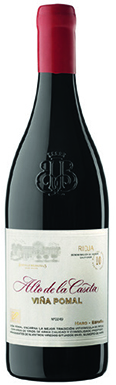

Refined, very classic Rioja Alta expression, showing lots of fruit and an impressive concentration, which results in a soft but firm touch on the palate....
2015
Bodegas BilbaínasRioja

Bodegas Viña Mayor, El Secreto Reserva, Ribera del Duero, Castilla y Léon, Spain, 2015
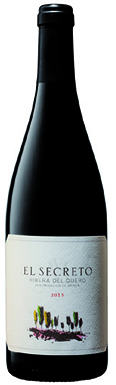
Well-structured and balanced, elegant yet serious and long, while retaining its freshness. A Ribera del Duero benchmark for blind tasting lovers.
2015
Bodegas Viña MayorRibera del Duero
Dominio del Aguila, Peñas Aladas Gran Reserva, Ribera del Duero, Castilla y Léon, Spain, 2012
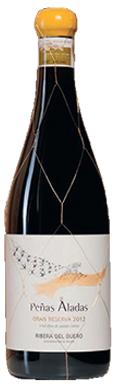
97
Restrained nose that is distinguished by delicate ripe fruit, giving way to a balanced, dense but fresh palate with fine-grained tannins, and a slow finish of great elegance.
2012
Dominio del AguilaRibera del Duero
Dominio de Anza, Finca El Rapolao Mencía, Bierzo, Bierzo, Spain, 2015
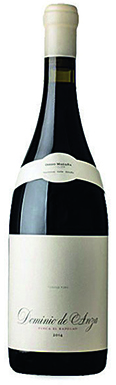
Well-defined and complex aromas of myrtle, liquorice, violet and sweet baking spices. Silky and juicy black fruits on the palate, then becoming much more powerful...
2015
Dominio de AnzaBierzo
Williams & Humbert, Williams Colección Añadas Tiento Fino, Fino, Jerez, Spain, 2007
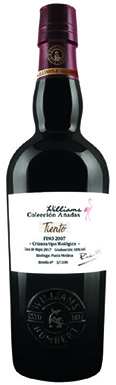
A wine full of glorious aromas, with one of the most impressive and complex expressions of the Sherry flor. Creamy, suave, deep, charming and eternal....
2007
Williams & HumbertFino
Arrayán, Garnacha de Arrayán, Méntrida, Spain, 2014
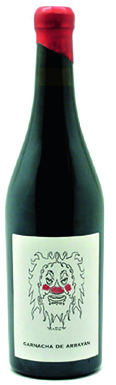
A delicate, high-altitude Garnacha that is very pure and intense in red cherry characters. Fresh, fruity and textured on the palale, with a long finish...
2014
Arrayán
Cuevas de Arom, Os Cantals, Aragón, Spain, 2015
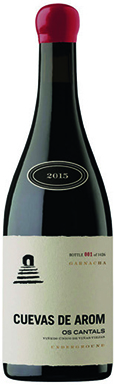
An amazingly complex and concentrated Garnacha – a precious jewel to be enjoyed in small sips. This is the true essence of Aragón.
2015
Cuevas de Arom
Ignios Orígenes, Marmajuelo, Tenerife, Spain, 2015
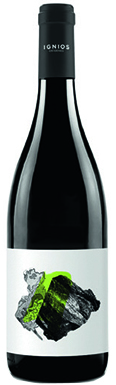
A barrel-aged white that smells alluringly of lava and dried herbs. It is round and individual, revealing lovely texture on the palate, finishing with notes...
2015
Ignios Orígenes
Bodegas Verum, Malvasía, Castilla-La Mancha, Spain, 2016
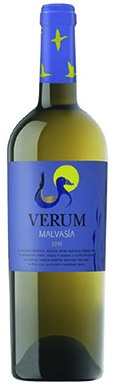
Aromatic and original with a lovely lightness of touch for this region. Floral and fresh on the palate too, brightened by vibrant acidity. All this...
2016
Bodegas Verum
Envínate, Lousas Parcela Camiño Novo, Ribeira Sacra, Galicia, Spain, 2015
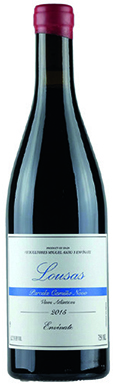
A wild wine that is intense, particular and utterly exhilarating. The vibrant, honest red berry fruit is deliciously concentrated, becoming more velvety on the finish.
2015
EnvínateRibeira Sacra
Bodegas Bilbaínas, Viña Pomal Alto de la Caseta, Rioja, Alta, Northern Spain, Spain, 2015
Refined, very classic Rioja Alta expression, showing lots of fruit and an impressive concentration, which results in a soft but firm touch on the palate....
2015
Bodegas BilbaínasRioja
Bodegas Viña Mayor, El Secreto Reserva, Ribera del Duero, Castilla y Léon, Spain, 2015
Well-structured and balanced, elegant yet serious and long, while retaining its freshness. A Ribera del Duero benchmark for blind tasting lovers.
2015
Bodegas Viña MayorRibera del Duero
Dominio del Aguila, Peñas Aladas Gran Reserva, Ribera del Duero, Castilla y Léon, Spain, 2012
97
Restrained nose that is distinguished by delicate ripe fruit, giving way to a balanced, dense but fresh palate with fine-grained tannins, and a slow finish of great elegance.
2012
Dominio del AguilaRibera del Duero
Dominio de Anza, Finca El Rapolao Mencía, Bierzo, Bierzo, Spain, 2015
Well-defined and complex aromas of myrtle, liquorice, violet and sweet baking spices. Silky and juicy black fruits on the palate, then becoming much more powerful...
2015
Dominio de AnzaBierzo
Williams & Humbert, Williams Colección Añadas Tiento Fino, Fino, Jerez, Spain, 2007
A wine full of glorious aromas, with one of the most impressive and complex expressions of the Sherry flor. Creamy, suave, deep, charming and eternal....
2007
Williams & HumbertFino
Arrayán, Garnacha de Arrayán, Méntrida, Spain, 2014
A delicate, high-altitude Garnacha that is very pure and intense in red cherry characters. Fresh, fruity and textured on the palale, with a long finish...
2014
Arrayán
Cuevas de Arom, Os Cantals, Aragón, Spain, 2015
An amazingly complex and concentrated Garnacha – a precious jewel to be enjoyed in small sips. This is the true essence of Aragón.
2015
Cuevas de Arom
Ignios Orígenes, Marmajuelo, Tenerife, Spain, 2015
A barrel-aged white that smells alluringly of lava and dried herbs. It is round and individual, revealing lovely texture on the palate, finishing with notes...
2015
Ignios Orígenes
Bodegas Verum, Malvasía, Castilla-La Mancha, Spain, 2016
Aromatic and original with a lovely lightness of touch for this region. Floral and fresh on the palate too, brightened by vibrant acidity. All this...
2016
Bodegas Verum
Envínate, Lousas Parcela Camiño Novo, Ribeira Sacra, Galicia, Spain, 2015
A wild wine that is intense, particular and utterly exhilarating. The vibrant, honest red berry fruit is deliciously concentrated, becoming more velvety on the finish.
2015
EnvínateRibeira Sacra
