
Tenuta Regaleali’s Rosso del Conte: five decades on
Aldo Fiordelli visits central Sicily for a tasting of five decades of this estate's flagship red wine.


I met eighth-generation CEO Alberto Tasca, an elegant Sicilian noble dressed in a pullover to shield him from the cool evening breezes, in the courtyard of the family’s historical Tenuta Regaleali in Sclafani Bagni.
Situated within the Contea di Sclafani DOC, which comprises just four producers, the altitude here is one of the main differences between Regaleali and so many other wineries in Sicily, providing remarkable diurnal temperature differences that are key to retaining freshness in the wines.
Scroll down to see tasting notes and scores for five decades of Rosso del Conte
This freshness is vital when the daytime temperatures can exceed 40°C, as in the summer of 2021, when Sicily achieved an extreme temperature record for Europe, reaching 48.9°C.
At Tenuta Regaleali the mercury reached 47°C. ‘We had 115 days without rain, followed by just 40mm on 4 September,’ said estate manager Corrado Maurigi. ‘Regaleali’s five lakes were diminished: one was drained and cleaned during the winter.; two others were used to extinguish two major fires; the last three remained half-full.’
Sicily is an extremely complex region, often referred to as a continent in its own right.
Harvest lasts at least 90 days, typically starting in the southeast and ending in the northwest, so it is essential to understand where an estate is located.
Located in the centre of the island, Regaleali’s vineyards start at 400 metres above sea level and reach up to 900m. Here, among the estate’s 538 hectares – 380ha of which are planted to 55 different indigenous grape varieties – the growing season is noticeably longer than on the coast, where white wines are picked at the beginning of August.
To take a closer look at the effect of altitude at Regaleali, one can consider the various expressions of Nero d’Avola at the estate. This indigenous red grape variety, super-trendy in the 2000s, has a chameleon-like character.
Forget the bold, warm if not burning, overripe or cooked wines often tasted from the coast – ‘For us,’ explained Alberto Tasca as he introduced a vertical tasting of Rosso del Conte, ‘this grape is responsible for the freshness within the blend.’ Regaleali’s Nero d’Avola is harvested between the end of September and the beginning of October.
San Lucio vineyard
Rosso del Conte, the flagship red wine of the estate, is based on Nero d’Avola and Perricone. The blend, however, is not enough to explain the quality of this historic Sicilian red.
The outstanding balance often expressed, the elegance of the tannins and the surprising ability to age all contribute to its potential.
But most of all, its unique character comes from the concentration derived from the old bush vines of the San Lucio vineyard, a steep hill that rises from a path dominated by eucalyptus trees.

Giuseppe Tasca – Alberto’s grandfather – planted the 5.5ha San Lucio vineyard in 1956 (today covering 7ha) with Nero d’Avola and Perricone. The wine it produced, beginning with the 1970 vintage, was known as Riserva del Conte – a Perricone-dominated blend and Sicily’s first single-vineyard wine.
After several years it disappeared, to be replaced by Rosso del Conte, although the Riserva del Conte was revived in 2010 to mark its 40th anniversary, now produced in tandem with Rosso del Conte in select years.
The first vintage of Rosso del Conte debuted in 1979. A reverse blend led by Nero d’Avola rather than Perricone, it was initially aged for 12 months in chestnut until 1992, when chestnut was replaced with large Slavonian oak casks and French oak barrels.
By the mid-90s, the wine was aged solely in French oak. Between 2004 and 2014, Rosso del Conte was produced as a selection of the best grapes of the estate and in 2006 the blend was enriched with Syrah. From 2015 it returned to the historical blend from the San Lucio vineyard.
Alberto and his father, Lucio Tasca have both relied on the best winemakers, first employing Giacomo Tachis and then Carlo Ferrini. Today, Corrado Maurigi manages the estate with talented passion, walking through the vineyards as if he were speaking to them, even tasting the vine’s sap.
Tasting back to 1979
We tasted a range of vintages dating back to 1979. Dark fruited, rich and spicy with refined tannins and good balance for ageing, the Rosso del Conte blend is often distinguished by notes of dried eucalyptus leaf, a reflection of the eucalyptus trees which surround the estate.
The 2001 is astonishingly youthful and outstanding; the 1992 was slightly oxidised; all the others were enticing and soulful.
The 1979 was not only well conserved, demonstrating its longevity and ability to age, but was also fascinating to drink, while the younger vintages show more concentration, preserving the layered and complex style dreamed up by the old Count Tasca d’Almerita 70 years ago.
Tasting five decades of Rosso del Conte
Related content
Tasting IDDA wines from Angelo Gaja and Alberto Graci’s Etna projectSicily’s wine evolution plus 10 top wines worth seeking outSicily’s wine evolution plus 10 top wines worth seeking out
Tasca d'Almerita, Tenuta Regaleali Rosso del Conte, Sicily, Italy, 1979
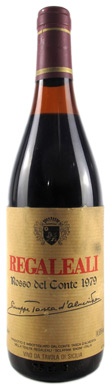

The 1979 is a wine to demonstrate the ageing ability of Rosso del Conte, and is drinking very well now. A year with, on average,...
1979
Tasca d'Almerita

Tasca d'Almerita, Tenuta Regaleali Rosso del Conte, Sicily, Italy, 1983
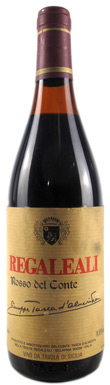
A cold, rainy winter and a mild spring led to a hot and fairly dry summer, offset by water reserves did not causes excessive stress...
1983
Tasca d'Almerita
Tasca d'Almerita, Tenuta Regaleali Rosso del Conte, Sicily, Italy, 1992
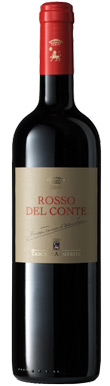
The 1992 vintage was harvested relatively late, on 8 October and it should be considered a cool vintage. The blend is mostly Nero d'Avola with...
1992
Tasca d'Almerita
Tasca d'Almerita, Tenuta Regaleali Rosso del Conte, Sicily, Italy, 1998
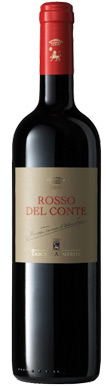
According to the estate, this was a vintage where the vines developed well during the growing season despite high (600mm) rainfall. The average age of...
1998
Tasca d'Almerita
Tasca d'Almerita, Tenuta Regaleali Rosso del Conte, Sicily, Italy, 2001
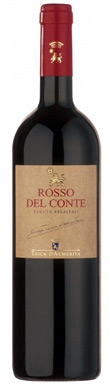
Mostly based on Nero d'Avola, 'with a few vines of Perricone,' the 2001 is quite a classic vintage with good precipitation (500mm) during the winter,...
2001
Tasca d'Almerita
Tasca d'Almerita, Tenuta Regaleali Rosso del Conte, Sicily, Italy, 2006
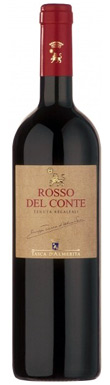
For the 2006 Rosso del Conte, Nero d'Avola (85%) and Perricone are joined by Syrah. It was a very controversial vintage with a short summer...
2006
Tasca d'Almerita
Tasca d'Almerita, Tenuta Regaleali Riserva del Conte, Contea di Sclafani, Sicily, Italy, 2010
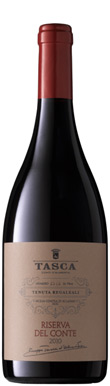
Revived for the 40th anniversary of its inaugural vintage, the 2010 Riserva del Conte is a powerful yet graceful wine, the result of a rather...
2010
Tasca d'AlmeritaContea di Sclafani
Tasca d'Almerita, Tenuta Regaleali Riserva del Conte, Contea di Sclafani, Sicily, Italy, 2016
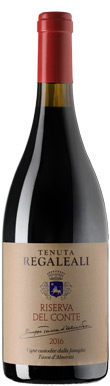
The 2016 vintage was characterised by a mild and dry winter, a cool spring and a summer with well-distributed rainfall. Summer temperatures were not very...
2016
Tasca d'AlmeritaContea di Sclafani
