
Adam Lee: California’s Pinot Noir whisperer and 10 top wines
US West Coast Pinot Noir legend Adam Lee, creator of the popular Siduri brand, chats to Sara Schneider about his new project on California's Central Coast.


The winemaker who became a West Coast Pinot Noir legend, crafting the variety up and down the coast for his Siduri brand, has launched a new chapter.
And it is California’s Central Coast – specifically, Monterey’s Santa Lucia Highlands – that gives him the character he covets for his Clarice Wine Company.
Scroll down to see tasting notes and scores for 10 Adam Lee California Pinot Noirs
There was no wine on the table in Adam Lee’s childhood home in Austin, Texas. (No good Southern Baptist family would have countenanced it.) But wine would indeed catch him in the end – in the form of one particular variety – and for almost 30 years.
Lee has earned a reputation for coaxing Pinot Noir from a range of growing regions. His wines from the Santa Rita Hills and Santa Lucia Highlands on California’s Central Coast up through the Russian River Valley, West Sonoma, and Anderson Valley farther north, to Oregon’s Willamette Valley – made into the best versions of themselves.
He has inspired and mentored many Pinot makers and created Pinot Noir lovers worldwide. In 2015 Lee sold Siduri, the brand he built into the West Coast’s Pinot powerhouse, to Jackson Family Wines.
He decided to focus his new Clarice Wine Company entirely in Monterey’s Santa Lucia Highlands. The tale of his adventure involves a girlfriend, a particular Russian River Pinot Noir, and an accidental tourist-style beginning.

At Trinity College in Austin, Lee studied French history, specialising in the comparative history of the French and American prison systems. ‘Somehow, that didn’t lead to a job after college,’ he deadpans. But a more personal experience did. During his junior year, Lee was dating a senior whose first job out of college happened to be in Northern California.
Lee admits to spending most of the summer between his junior and senior years visiting her. ‘We would go wine tasting,’ he adds, ‘mainly looking for sweeter wines.’
Along the way, though, it was a red wine that would steal his heart. ‘The first red wine I fell in love with was a 1984 Rochioli Pinot Noir. You might say the relationship with the girl didn’t last, but the relationship with Pinot Noir did.’
Back in Texas, a ‘temporary’ assistant manager job at a wine store, Austin Wine & Spirits, piled on serendipitous immersion into wine.
‘We had an amazing selection,’ he says, ‘including the imports of Bobby Kacher, Terry Theise, and Marco de Grazia. The 1985 and 1986 Bordeaux were coming out, 1984 to 1987 California Cabernets, an amazing time for a young man like me to get into wine.’ Eventually, he became the company’s president and wine buyer for the Neiman Marcus Department Stores in Dallas.
But California called.
The pull of Pinot Noir
At this point, these stories typically involve intern work in enviable cellars, stints in vineyards and production houses down under or in Burgundy, and a first job back home as assistant winemaker to a legend. All of that is missing on Adam Lee’s resumé.
He had decided he wanted to be a wine writer (possibly as practical as his degree in French history).
Lee thought he should probably make a little wine first. Siduri was the project, and region by region – almost accidentally – Lee grew its portfolio into arguably the most broad-based Pinot house in the world.
‘I’d love to say that I had a plan to work with such a large selection of regions,’ he says. ‘But quite frankly, we took fruit where we could get it. In 1994 we started in Anderson Valley, added Sonoma Coast and the Willamette Valley in 1995, and the Santa Lucia Highlands in 1997. It wasn’t until 2000 that we consciously considered where to source fruit.’
At that point, Russian River Valley came knocking and, finally, the Santa Rita Hills – specifically Clos Pepe Vineyard. ‘We really gave some thought to that one,’ Lee says of the last, ‘as it meant a couple more hours in the car each way. But we tasted the wines from that part of the state and knew it was worth it.’

Those were the early days for Pinot Noir on the West Coast. In many cases, the vines and the winemakers were new at it. ‘Don’t forget that California Pinot Noir is a relatively new adventure, and many of the wines I made during my early days at Siduri came from brand new vines,’ Lee says.
‘I was the first person in Garys’ Vineyard, Rosella’s Vineyard, Sierra Mar, Soberanes Vineyard – and Clos Pepe.’ His winemaking career grew simultaneously alongside some of the region’s most important vineyards. Both of them evolved towards balance and a more focused character.
Lee has seen it all on that last front. For perspective, he rolls out the infinitely cited yet relevant movie Sideways (2004).
‘I think a large number of Pinot Noir lovers were introduced to the grape because of the movie,’ he says. ‘And the timing corresponded with the two warmest vintages I have ever experienced (2003 and 2004). The wines were bigger and riper and higher in alcohol than normal. People started expecting that style, even in far cooler vintages like 2005.’
In his view, that led to vintners making wines that were too big for their growing seasons for a few years. But no longer. He believes ‘the public is happy to have Pinot Noir flavourful but lighter in body than your average Syrah.’
And he’s high on that audience. ‘Pinot Noir lovers have always been detail-oriented in a way I don’t see with other grapes. They want to know clones, yields, row direction and any other geeky thing you can think of. I love that!’

A new chapter
With Clarice Wine Company, Lee had the chance to make wines that had fully caught up with his evolution.
‘As I aged, I found myself wanting to make wines that reflected both me and the vines,’ he explains. ‘I wanted wines that weren’t all about the fruit, that had the complexity that only comes from older vines. And I wanted to make them with more intent. I wanted wines that will age as well as the vines have – hence a bit lower alcohol and more structure from stems.’
In Lee’s view, Monterey’s Santa Lucia Highlands offers the perfect canvas for his new wines, the soils, weather patterns, and even farming practices.
‘I believe the quality of farming there is unmatched,’ he claims, adding a nod to his particular partners: ‘The Franscioni and Pisoni families do a remarkable job. They are not only exceptional farmers, but they are also some of my very best friends.’
Specific to Santa Lucia Highlands narrow swath of benchlands, stretching some 18 miles south from a point close by Monterey Bay itself, are Chualar, loam soils that tend to limit vine growth.
And then there’s the wind. As the Central Valley warms up, the stiff ocean breezes are sucked into the Salinas Valley across the Santa Lucia Highlands every afternoon like clockwork – often hitting 25 miles per hour or more.
‘This cools down the area and leads to an exceptionally long hang time, and that allows for fantastic flavour development while retaining acids and leading to complexity, great stem ripening, and more lively wines,’ says Lee.

The long ripening window inspired him to play with picking a little bit. In both Garys’ and Rosella’s vineyards, he gets fruit from two separate blocks. There is elevation and rootstock variation in Garys’. In Rosella’s, different clones lead to a 10-day range in ripening. Ultimately, he opts to pick the two blocks together in both vineyards.
‘That means some fruit is slightly overripe, and some are slightly underripe. But the whole is ripe,’ he asserts. ‘I believe this leads to added complexity in the wine.’
The idea was his grandmother’s. Clarice. ‘She told me that when you cook in a large pot if you put the meat, the carrot and potatoes, the broth, and the spices in together early, they all meld together. If you put any of them in later, they stand out. The same is true with any winemaking additions.’
A prized partnership
Along the way, Lee took a detour – a sentimental journey, if you will, with his longtime friend, the late Philippe Cambie of Châteauneuf-du-Pape, a legend in his own right with Grenache.
Cambie had earned some 15 perfect 100-point scores for his Southern Rhône wines, but he had never made a Pinot Noir.
Considering that Grenache has been dubbed the ‘Pinot Noir’ of the region, Cambie aspired to apply his considerable skills to Pinot stateside. And who better a partner than Adam Lee, with ready fruit sources and decades of deft Pinot making on his resume?
As it turned out, though, there was great Old World-New World irony in the matchup. As Lee describes it, Cambie tasted through his Clarice wines and reported that he thought he made the wines beautifully. ‘But,’ he declared, ‘I don’t like them.’
Cambie wanted riper fruit, richer mouthfeel, and more upfront deliciousness. The style of rich, more powerful Pinots was out of Lee’s comfort zone, but ‘looking at Pinot Noir through Philippe’s eyes,’ he says, ‘allowed me to view the grape differently… look at things anew again.’

Lee will not continue with the Beau Marchais brand, which was the partnership with Cambie, as his dear friend’s vision very much drove it.
He has a new project in the works, launching from the Central Coast. Working with John Wagner at Peake Ranch in the Santa Rita Hills he’s introducing Babs and Busy Signal wines.
The latter is a Pinot Noir at $35. This wine, he hopes, will attract younger people, wine lovers without collector budgets, with true-to-variety appeal and a fair bit of immediate gratification.
Indeed, the 2021 Busy Signal Pinot offers mouthfilling brambly berry, cherry, plum, and spice – good Pinot Noir character. Adam Lee’s next chapter looks to inspire a larger circle of wine lovers with quality Pinot Noir they can afford.
Adam Lee wines: 10 top wines tasted and rated
Related content
Napa Cabernet 2019: full vintage report and top-scoring wines
Napa and Sonoma wineries to visit: 15 of the best
California sustainability: latest developments and innovations
Beau Marchais, Rosé of Pinot Noir, California, USA, 2021
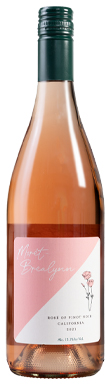

This first vintage of a rosé under the Morét-Brealynn label (with Adam Lee consulting) is a blend of fruit from Russian River Valley and the...
2021
Beau Marchais

Beau Marchais, Clos Pepe Vineyard Est Pinot Noir, Santa Barbara County, Sta Rita Hills, California, USA, 2020
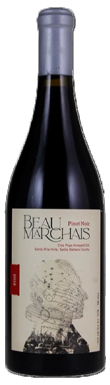
The 2020 Clos Pepe Est leans a little more savoury than its Ouest counterpart, with beautiful balance between super-fine tannins and just-ripe fruit. A swirl...
2020
Beau MarchaisSanta Barbara County
Clarice Wine Co., Rosella's Vineyard Pinot Noir, Monterey County, Santa Lucia Highlands, California, USA, 2019
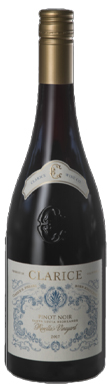
For his 2019 Rosella's Vineyard Pinot, Adam Lee pulled back to about 67% stem inclusion, for gorgeously balanced results. A nose heady with anise spice,...
2019
Clarice Wine Co.Monterey County
Beau Marchais, Clos Pepe Vineyard Ouest Pinot Noir, Santa Barbara County, Sta Rita Hills, California, USA, 2020
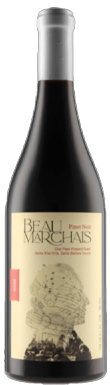
Mint, fresh herbs and crushed rock open on the nose, lending a savoury character to rip blackberry, vanilla, floral, and exotic spice aromas. On the...
2020
Beau MarchaisSanta Barbara County
Clarice Wine Co., Garys' Vineyard Pinot Noir, Monterey County, Santa Lucia Highlands, California, USA, 2019
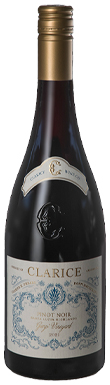
A full 77% whole-cluster inclusion adds structure to this focused yet complexand young—Pinot Noir. Beautiful high-toned floral aromas float over darkly seasoned fruit and underlying...
2019
Clarice Wine Co.Monterey County
Clarice Wine Co., Pinot Noir, Monterey County, Santa Lucia Highlands, California, USA, 2018
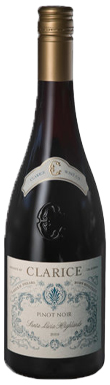
From a slightly cooler vintage, this 2018 Pinot leans a little darker, more savoury. Complex aromas evolve in the glass, from rose petals, dark cherries,...
2018
Clarice Wine Co.Monterey County
Beau Marchais, Soberanes Vineyard PInot Noir, Monterey County, Santa Lucia Highlands, California, USA, 2019
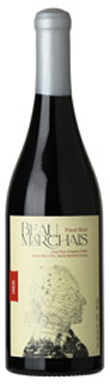
Deep, ripe fruit aromas, signaling voluptiousness, are layered with scents of violets, vanilla, and loamy forest floor. For all of its ripeness and power, this...
2019
Beau MarchaisMonterey County
Clarice Wine Co., Pinot Noir, Monterey County, Santa Lucia Highlands, California, USA, 2017
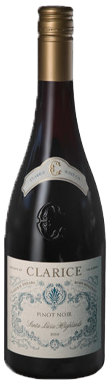
This appellation-wide Pinot Noir from Adam Lee takes no back seat to his single-vineyard wines. An aromatic nose opens with florals and spices unfolding to...
2017
Clarice Wine Co.Monterey County
Clarice Wine Co., Pinot Noir, Monterey County, Santa Lucia Highlands, California, USA, 2019
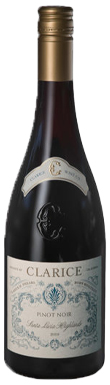
Beautifully balanced and complex, the 2019 Santa Lucia Highlands Pinot is robust in its youth. Spice, forest floor and florals swirl around brambly berry aromas....
2019
Clarice Wine Co.Monterey County
Beau Marchais, Stray Dogs Pinot Noir, Central Coast, California, USA, 2021
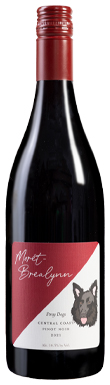
Adam Lee consults for Morét-Brealynn Wines, named for winemaker-owner Morét Brealynn, and for this Stray Dogs Pinot (inspired by her dog, Stout) Brealynn and Lee...
2021
Beau MarchaisCentral Coast
