
The making of Montalcino


Should Brunello be made more like a Burgundy or a Bordeaux? Producers have tried both approaches over the years, says Monty Waldin, but have now acquired the knowledge and confidence to plough their own furrow...
When I first visited Montalcino more than a decade ago, I felt Italy’s flagship region was trying to imitate two of my old stamping grounds: California and Bordeaux.
Plucking leaves from around ripening Sangiovese bunches to create Brunellos with exotic, California-style ripeness was in vogue. But it left the vines looking like they’d had an extreme bikini-line wax. And exposing Sangiovese’s sensitive skins to the full glare of the Mediterranean sun risked vaporising its savoury sour cherry flavours into baked jam.
Scroll down for Monty’s top 12 Brunellos
Another noticeable trend was ageing these overripe Brunellos in new oak barriques, each holding enough wine for just 300 bottles. This aped Bordeaux’s attempt to convert reds with edgy, long-haul tannins into vanilla-infused, short-haul fruit-bombs.
Traditionalists say Montalcino’s large wooden vats, botti, which hold several thousand bottles’ worth, help Brunello age for longer overall, even if the wines may appear angular early on. Abandoning these for barriques allowed Brunellos newly released on to the market, four years after harvest, to taste more agreeably plump in the race for high scores from the critics.
The risk was that ‘Italy’s most ageworthy’ red would lose its ageworthiness – too few 1997s and 2004s (both five-star vintages) have stood the test of time, for example.
Allegations that, despite having to be a 100% Sangiovese wine, some Brunellos had been blended with French grapes to give the wines darker, lusher fruit robust enough to cope with barrel ageing, gave rise to the so-called ‘Brunellopoli’ scandal in March 2008.

‘Ink made by the carpenter,’ is how Giuseppe Sesti describes the wines from this period. Sesti, a Venetian intellectual, historian and astronomer, founded the Castello di Argiano winery in the 1970s. Another new arrival then was the Schwarz family of La Màgia.
‘Only 20 or so Montalcino wineries bottled their own wines then,’ says Fabian Schwarz, who represents the second generation. ‘Gradually, Montalcino’s [then] 150 or so grape-growers started bottling their own wines too. It made financial sense. But with no winemaking experience, they relied on consultants, leading to a degree of standardisation. Now, as their successors are less risk-averse, there are bigger stylistic differences from winery to winery.’
Schwarz’s Brunellos are ethereal but intensely flavoured, in part because he lets his hand-picked grapes infuse in their own cool juice for a few days before fermentation starts, a common practice in Burgundy.
He also cites the increasing prevalence – again as in Burgundy – of organics in Montalcino. ‘Pinot Noir and Sangiovese are both fragile grape varieties, but well-executed organic practices, such as replacing soluble mineral fertilisers with natural grassing, produce smaller berries, with thicker, more-disease-resistant skins. You get deeper but not heavier wines.’
Organics and oak
One-fifth of Brunello wineries are now organic, including three of Montalcino’s five biggest estates – Lamberto Frescobaldi’s Castelgiocondo, the Ghezzi family’s Camigliano and Francesco Marone Cinzano’s Col d’Orcia, which dates back to 1890.
Schwarz sees organics as ‘a prevent rather than cure philosophy in the vines. Being more interventionist in the vineyard allows potentially less intervention in the winery. With organics, both grape flavours and grape sugars [potential alcohol] ripen in sync. This allows more creative winemaking and less need of winemaking technology for technology’s sake’.
One Burgundy technique unsuited here is fermenting Sangiovese as whole bunches. ‘Leaving Sangiovese’s stems in during fermentation risks very green-tasting Brunellos,’ says consultant Mauro Monicchi. ‘Whole berries, yes [as in Schwarz’s case, above]; whole bunches, no.’
Monicchi studied in Bordeaux when it too was aping California’s overripe style, but chose another path. ‘There is a short window, just a few hours, between when a grape is underripe, perfectly ripe, and overripe,’ he says. ‘Picking perfectly ripe (grapes) allows winemakers the most freedom of all. There is less need to force colour and tannin out of the grapes and into the wine. And it allows more flexibility with the size and kind of oak you can then age the wine in.’
Flexibility regarding oak is built into Brunello di Montalcino’s rules. Producers can choose the size and origin of oak they use, so long as the wine spends 24 months maturing in the wood before bottling (36 months for Brunello riserva).
Monicchi’s clients have included both larger Montalcino estates such as the renascent Tenute Silvio Nardi (a 2016 DWWA Gold medal winner for its Brunello 2011), and smaller, under-the-radar ones like Caprili, Siro Pacenti and Villa i Cipressi.
Oak regimes across these estates vary, from 225-litre barriques to 6,000-litre wooden vats or botti grandi. ‘Sangiovese picked at perfect ripeness digests its oak, without the need to over- extract tannin, colour or flavour during winemaking,’ says Monicchi.
As another Monicchi client, Giancarlo Pacenti of the highly regarded Siro Pacenti notes: ‘In our case, ageing Brunello in barriques is not done to mimic Bordeaux or Burgundy – even though Burgundy is where the wood for our barrels comes from. We select it, and we age it for 20 years before turning it into barriques. We are not looking for oaky notes, but oak that lets our Brunello breathe while it’s ageing. This gives us smoother tannins, and purer fruit and terroir expression. Consumers get a longer, more flexible window of drinkability too. That’s really important for a wine like Brunello.’
Down to earth
But because Montalcino’s terroir is so varied – Schwarz calls it ‘a four-sided pyramid with a cooler north side, a warmer south side, and an especially Mediterranean-influenced southwestern side’ – what works for one winery may not work for another. Hence Francesco Leanza of Podere Salicutti, Stella di Campalto of San Giuseppe and Jan Erbach of Pian dell’Orino collaborated on a soil mapping project, the first (and so far only one) of its type in Montalcino.
Erbach describes Sangiovese as: ‘A very Burgundian grape in the sense that, like Pinot Noir, it really transmits the subtle nuances of soil and site. Burgundy’s grand and premier cru vineyards often follow distinct soil types mapped by monks 1,000 years ago. We [three] mapped our soils, to see what possibilities existed to make wines from single soil types.’
Erbach’s Cancello Rosso (‘Red Gate’) vineyard, for example, is no bigger than a soccer field, but has two distinct soils, one 30 million years older than the other. Grapes from each are farmed and fermented differently.

This soil-mapping initiative has so far been largely shunned by Montalcino’s power brokers. Dividing Montalcino into Burgundy-style ‘climats’ or sub-zones – Argiano, Canalicchio, Montosoli, Santa Restituta and Sesta would be prime candidates – is unlikely to happen.
Every square metre, even the tarmac in Montalcino’s supermarket car park, would have to be classed as grand cru quality to keep everyone happy, it seems.
Despite this, ‘Brunellopoli has had both positive and negative consequences’, says Francesca Padovani, who planted the organic- from-scratch Campi di Fonterenza vineyard from 2000 with her twin sister Margherita. ‘There is pressure to please the market. Brunello is Italy’s most expensive, best-known wine. In the 1990s people were looking towards Bordeaux in style. Ultimately you have to focus on what Sangiovese gives here, and try to express that.’

Maurizio Castelli, a consultant who sees organic growing as the way to give winemakers more winemaking freedom in the long term, agrees. ‘The influence that journalists and critics have on Brunello’s styling has diminished. The current generation of Montalcino producers has more experience, and a deeper knowledge of their terroir.
They now have the self-confidence to express what to them Brunello should be, from whatever soil, terroir or situation they happen to have. It was much easier to generalise about Brunello a decade or so ago. It’s more difficult to do that now.’
Monty’s top Brunellos:
Monty Waldin is a widely published wine writer, author and DWWA Regional Chair for Tuscany
Related content:
Brunello 2013 vintage: A sneak preview
Salicutti Brunello vertical: The past, present and future
Anson: A new Super Tuscan counter culture
Montalcino wine tour: Wineries, restaurants and hotels
Salicutti, Piaggione SV, Brunello di Montalcino, Tuscany, Italy, 2011
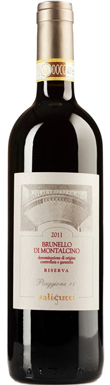

Salicutti's Riserva is a true single vineyard bottling of Piaggione with the initials SV distinguishing it from the regular Brunello. Like the latter, the Riserva...
2011
SalicuttiBrunello di Montalcino

Pian dell'Orino, Brunello di Montalcino, Tuscany, Italy, 2009
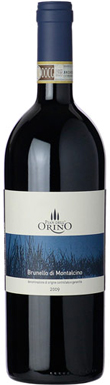
A really hot year, but no sense of baked, jammy fruit here. Smooth and intense; you really get a sense of the underlying power of...
2009
Pian dell'OrinoBrunello di Montalcino
Podere San Giuseppe, Stella di Campalto, Brunello di Montalcino, Tuscany, Italy, 2010
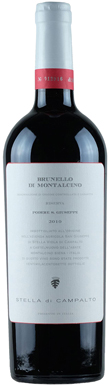
A sun-trap Sangiovese from the wilder, warmer, south side of town. Lightly coloured, powerfully perfumed and intensely, agreeably textured. Lovely – but the longer you...
2010
Podere San GiuseppeBrunello di Montalcino
San Polino, Brunello di Montalcino, Tuscany, Italy, 2010
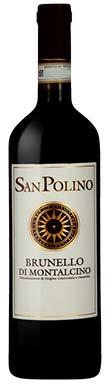
San Polino’s Brunellos are marked by generous layers of fruit, tannins that are equally deep, and a welcome, smooth savouriness which effortlessly draws you in....
2010
San PolinoBrunello di Montalcino
Siro Pacenti, Vecchie Vigne, Brunello di Montalcino, Tuscany, Italy, 2012
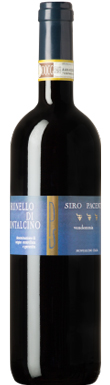
Giancarlo Pacenti’s selection of old vines uses age and experience to add a velvety wrap around firm, crunchy, beautifully focussed tannins. This is a crowd-pleaser...
2012
Siro PacentiBrunello di Montalcino
Il Marroneto, Madonna delle Grazie, Brunello di Montalcino, Tuscany, Italy, 2011
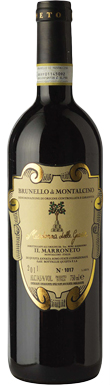
Just as in 2012, the hot 2011 vintage was a year where the cooler north fared better, avoiding the worst of an August heat spike....
2011
Il MarronetoBrunello di Montalcino
Campi di Fonterenza, Brunello di Montalcino, Tuscany, Italy, 2011
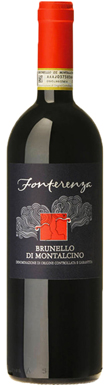
A remarkably unforced style of Brunello whose lip-smackingly wild streak of firm hawthorn, rosehip and other hedgerow fruits is unique in Montalcino.
2011
Campi di FonterenzaBrunello di Montalcino
La Magia, Brunello di Montalcino, Tuscany, Italy, 2011
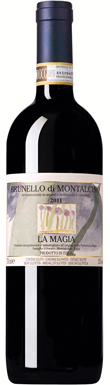
This spent 36 months in 500 litre tonneaux, 33% new, though you'd never guess. The fruit’s wild strength, ripeness and delicacy shine through, a testament...
2011
La MagiaBrunello di Montalcino
Le Macioche, Riserva, Brunello di Montalcino, Tuscany, Italy, 2006
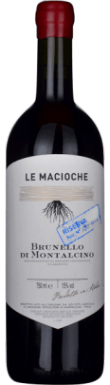
The mid-2000s was an uneasy, uneven period for Brunello, but this small estate in Montalcino’s warm southeast has been consistent, making Brunello with classic Sangiovese...
2006
Le MaciocheBrunello di Montalcino
Le Ragnaie, Brunello di Montalcino, Tuscany, Italy, 2012
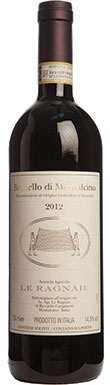
Riccardo Campinoti vinifies his far-flung vine plots apart, and all slightly differently. This blend has Sangiovese's signature bright red cherry fruit with rippling, savoury tannins....
2012
Le RagnaieBrunello di Montalcino
Tenute Silvio Nardi, Brunello di Montalcino, Tuscany, Italy, 2011
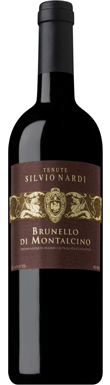
Of Montalcino’s bigger estates, this is the most improved over recent years. It has really got on top of its very varied terroirs to be...
2011
Tenute Silvio NardiBrunello di Montalcino
Salicutti, Piaggione, Brunello di Montalcino, Tuscany, Italy, 2012
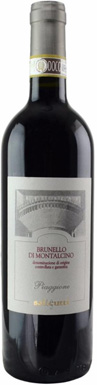
This wine seems to be in an awkward phase, which isn't surprising given its youth. However, the vintage could also be at play. The nose...
2012
SalicuttiBrunello di Montalcino
