
The new Carmenère plus 12 of the best worth trying
Armed with a better understanding of how to get the best out of the variety, Chilean winemakers have created a fresher, fruitier style of Carmenère, says Patricio Tapia


Even oenology professors didn’t know what it was. In November 1994, a group of Chilean scientists accompanied French ampelographer (vine expert) Jean Michel Boursiquot through the vineyards of Carmen winery in Maipo Valley. When they stopped to inspect a plot of Merlot, Boursiquot uttered something no one was expecting: ‘This isn’t Merlot, it’s Carmenère.’ The Chileans looked at each other. ‘Carme what?’
At the time, it wasn’t as simple as picking up a smartphone and Googling the word. So after the vineyard inspection Philippo Pszczólkowski, an oenology professor at the Pontifical Catholic University of Chile, returned to the faculty to look through his books. And there it was, in an old encyclopedia of wine grapes – the obscure variety of Carmenère.
Consider the context. In 1994, Chilean wine was beginning to make an impact in foreign markets thanks to its very attractive price-quality ratio. The Sideways effect was still to come, and Merlot was one of the star grapes. Following this discovery by Boursiquot, further investigation proved that what was believed to be a Merlot mutation – a kind of ‘Chilean Merlot’ – was in fact a much more obscure red grape that was common in Bordeaux until it practically disappeared after phylloxera. Chile was suddenly left without one of its best commercial weapons, so naturally the first reaction was one of alarm.
See Tapia’s picks: top 12 Chilean Carmenères
Luckily many saw the silver lining: that this was a good opportunity for Chile to showcase something of its own, a variety scarcely found in other parts of the world. ‘What we saw then was great enthusiasm,’ recalls Aurelio Montes, founder of Montes Wines and today president of Wines of Chile, the office that promotes Chilean wine to the world. ‘Many hectares of Carmenère were planted and other vineyards were purified, with the idea that this was our emblematic grape. But the truth is that there was more enthusiasm than knowledge. It was planted in some unsuitable sites and the results were not very well received.’
Specific conditions
One of the first lessons learned with Carmenère is that the grape requires very specific conditions. It needs enough water, so soils that retain water well are best. It also ripens very late (two to three weeks after Merlot) so it needs a lot of light and enough heat to mature, otherwise vegetal aromas tend to dominate, with the wine tasting more of salad than wine.
In the first decade after the discovery of Carmenère in Chile, dealing with this vegetal side was a major challenge. And the twin solutions to which winemakers resorted were the obvious ones: to use new wood, in any format; and over-ripening the grapes until all traces of ‘salad’ disappeared. The result was that Chilean Carmenère became rather sweet, with almost no freshness to it.
‘I like to taste the crisp fruit of grapes harvested early. If there is something vegetal, it doesn’t bother me, so long as the fruit flavours prevail’ Sebastián Labbé
Happily, Carmenère has been given serious attention in recent years, both in the vineyard and in the winery. Today a new generation of Chilean Carmenère flourishes – fruitier, fresher and, above all, with a clearer identity.
Clos de Luz sources fruit for its Massal 1945, a Carmenère full of freshness and energy, from vines planted in 1945. The soil here in Almahue, in the Cachapoal Valley, is colluvial – of loose sand and stones – and doesn’t retain much water, but that’s not a problem says winemaker Felipe Uribe: ‘The vines are so old they regulate themselves.’
Since the first harvest in 2012, Uribe has been cutting the Carmenère bunches earlier. ‘We picked three to four weeks before our neighbours. Everyone thought we were crazy. But the earlier harvest caused us no problems. The site is warm, and ripeness is achieved very quickly. The mixture of old vines and earlier harvests give us a lot of fruit,’ Uribe says, adding that he has no problems with Carmenère’s vegetal side. ‘Actually, I like it, although I don’t want it to be the only aroma.’
To ensure the vegetal aspect doesn’t dominate, Uribe controls irrigation but waters the vines almost until harvest. He believes the more stressed the vine, the less photosynthesis it generates, so it fails to mature.
Starting early
Sebastián Labbé, head oenologist at Santa Rita, has a different theory. For his Floresta Carmenère he looked to another old vineyard, this time dating back 70 years, planted on a granite slope in Apalta – an area of Colchagua Valley that also enjoys a warm climate, with many hours of sun. ‘In the lower parts of the vineyard the water layer is closer to the roots and that’s why the plant never stops growing. On this hill, the water level drops early in the season, so the vine concentrates on ripening its fruit and the production of vegetal aromas stops,’ explains Labbé, as we walk among the old and thick trunks of Carmenère vines.
With his mind set on freshness, Labbé likes to start early. In a warm year like 2017, he cut the bunches in mid-February, while in colder years, such as 2018, the harvest was towards the end of that month. Both dates are completely unusual for Carmenère which, until perhaps only five years ago, was typically picked towards the end of April. ‘I like to taste the crisp fruit of grapes harvested early. If there is something vegetal, it doesn’t bother me, so long as the fruit flavours prevail.’ Labbe doesn’t age his wines in Bordeaux barrels (as was the norm in the past) but in larger foudres, which help preserve the purity of flavours obtained in the vineyard. Avoiding new oak and moving to larger ageing vessels are the new rules when it comes to ensuring that vibrant Chilean Carmenère fruit.
‘Harvesting earlier gives us very good acidity in a variety that is not supposed to have much’ Rodrigo Zamorano
A new viewpoint
Rodrigo Zamorano, winemaker at Caliterra, shares the new way of looking at the variety: that some vegetal characters are nothing to be afraid of in the quest for freshness. ‘There is no reason to hide Carmenère’s vegetal side; it’s part of its identity,’ Zamorano asserts, as we climb to the highest part of the Caliterra vineyard in Colchagua. Here, on this steep granite hillside planted with Carmenère in 2004, we are surrounded by thorns – typical vegetation in a place where it rains very little. From this spot, Zamorano sources fruit for Pétreo, Caliterra’s top red (100% Carmenère).
These grapes haven’t always been destined for the most ambitious wine of the estate. The previous wisdom was that the high (400m) altitude and cold climate of this site called for a later harvest date, to ensure full ripeness. Yet the resulting wine wasn’t hitting the quality levels Zamorano was looking for, so the fruit was typically used in other wines. ‘But in March 2016 we went through the vineyard earlier and tasted the grapes. To our surprise, we realised there were almost no vegetal tones. We decided to harvest immediately,’ recalls Zamorano.
The influence of soil in these Colchagua vineyards seems to be the key. While granite dominates higher up, in the lower areas soils are rich in clay, retaining water and, according to Zamorano, influencing the vegetal aromas. ‘When we are ready to harvest Pétreo at this higher altitude, it’s pure fruit. Grapes in the lower vineyards still taste very green.’
But more fruit purity does not mean a lack of greenness. Zamorano explains that when they harvest the grapes for Pétreo there is a mixture of pyrazines and fruit flavours. ‘If you are obsessed with vegetal aromas you might think that everything has been ruined. In our experience those vegetal aromas remain, but they integrate in the middle of the fruit flavours. The best thing about harvesting earlier is that gives us very good acidity in a variety that is not supposed to have much.’
Radical departure
The result of all this work is a wine that will seem a radical departure for many wine drinkers who are familiar with the Chilean Carmenère of recent years. The palate, with its earthy, herbal and fruity tones, feels vibrant and tense. It’s a new take on the variety – one that harkens to the past, when winemakers weren’t afraid of Carmenère’s green side.
‘What we do now is more or less the same as we did when we first started, especially in the vineyard and with the harvest date,’ says Marcelo Retamal, winemaker at De Martino, during our discussion about the alcohol level of his Alto de Piedras 2015. Older vintages of this 100% Carmenère contained 12.5%abv, while this vintage sits at 13%.
De Martino was a Carmenère pioneer: the first producer in Chile to label a red wine with the name of the grape, but also among those who most enthusiastically embraced the trend of hyper-ripeness and abundant new wood. However, as of 2011, Retamal and his team decided to change the house style to favour more refreshing and fruity wines, harvesting earlier and using large foudres instead of new barrels. ‘Carmenère must have a herbal side because it is in its DNA. But when you plant it in places that are not suitable, the greenness can be too much,’ eplains Retamal.
The refreshing and charmingly fruity Alto de Piedras 2015 comes from a vineyard of about 30 years old, planted on mainly alluvial soils. However, there’s also some clay, which Retamal says helps the vines retain the right amount of water. The result is a wine that is not only refreshing, but also seductively delicate – something not often found in this variety.
So, with this new style of Carmenère firmly established, can it become the emblem for Chilean wine? ‘Yes, I believe that Carmenère is having its moment,’ says Aurelio Montes. ‘There are very good examples being made now and we have learned a lot about how to get the best from the variety. However, I think the dominance of Chilean Cabernet Sauvignon is very difficult to overcome.’ That’s probably true; the presence of Cabernet is monumental in Chile. But this trend towards fresher, fruiter Carmenère is likely to attract the attention of wine lovers once again – no longer an obscure, unloved French grape but but now truly a characterful Chilean native.
Patricio Tapia is a regular Decanter contributor and the author of the annual Descorchados guide to the wines of South America
See Tapia’s picks: top 12 Chilean Carmenères
You may also like
Chilean Carmenère: Panel tasting resultsChilean Pinot Noir: Panel tasting results30 best affordable Chilean wines to tryChile vintage 2019: Promising vintage but yield drops across Chile
Santa Rita, Floresta Carmenère, Apalta, Colchagua Valley, Chile, 2018
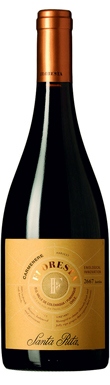

From vines more than 100 years old, this is the most outstanding member of a new generation of fresh and fruity Carmenères. There are herbal...
2018
Santa RitaApalta

Caliterra, Pétreo Carmenère, Colchagua Valley, Chile, 2016
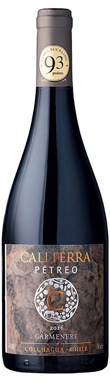
From granite soils, this defies the classic Carmenère character with its earthy aromas, fruit strength and body that’s both supple yet tense, like a marathon...
2016
Caliterra
Clos de Luz, Massal 1945 Carmenère, Almahue, Cachapoal Valley, Chile, 2017
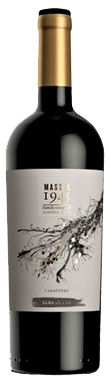
2017 was warm in the Central Valley, and to counteract it, the grapes for this were harvested earlier to obtain its delicate, fresh and vibrant...
2017
Clos de LuzAlmahue
Concha y Toro, Terrunyo Carmenère, Peumo, Cachapoal Valley, Chile, 2017
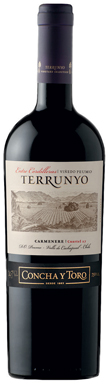
The clay soils of the warm Peumo area usually give some of the best Carmenères in Chile, such as this Concha y Toro classic. In...
2017
Concha y ToroPeumo
De Martino, Alto de Piedras Carmenère, Maipo Valley, Chile, 2015
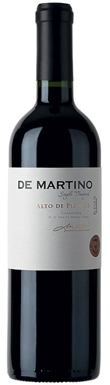
From alluvial soils on the banks of the Maipo river, this is a fresh, delicate style of Carmenère, revealing subtle tones of herbs and red...
2015
De Martino
Lapostolle, Collection Carmenère, Apalta, Colchagua Valley, Chile, 2016
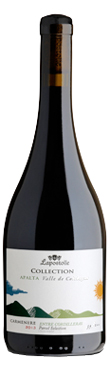
A pure expression of ripe red fruits seasoned with spices and earthy tones in a Carmenère sourced from vines planted at the start of the...
2016
LapostolleApalta
Errazuriz, Aconcagua Alto Carmenère, Aconcagua Valley, Chile, 2017
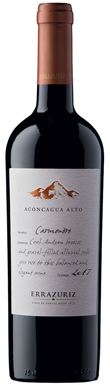
Panquehue is home to Errazuriz’s 100- year-old winery and some of its best vineyards. This is a deliciously fresh and fruity Carmenère, firm in acidity...
2017
Errazuriz
Terranoble, CA2 Costa Carmenère, Lolol, Colchagua Valley, Chile, 2016
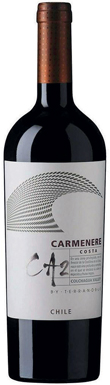
CA is Terranoble’s project that seeks to reveal the way in which Carmenère shows its origin. Here that area is Lolol, on the Colchagua coast....
2016
TerranobleLolol
Emiliana, Signos de Origen Los Robles Carmenère, Colchagua Valley, Chile, 2016
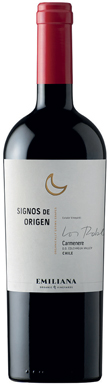
From the organic vineyards of the Los Robles farm, this shows Carmenère’s herbal side without any kind of shame. But it’s not just herbs –...
2016
Emiliana
J Bouchon, Block Series Carmenère, Maule Valley, Chile, 2016
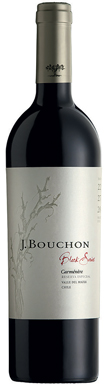
From the granite soils of the coastal hills of Maule, this faithfully represents the new face of the grape: herbal notes in the foreground, but...
2016
J Bouchon
Odfjell, Orzada Carmenère, Cauquenes, Maule Valley, Chile, 2017
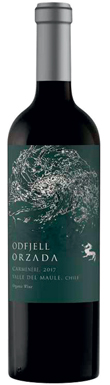
To capture all the purity of Carmenère, Odfjell has opted here not to use wood. The result is an example of the variety that shows...
2017
OdfjellCauquenes
Undurraga, TH Carmenère, Peumo, Colchagua Valley, Chile, 2016
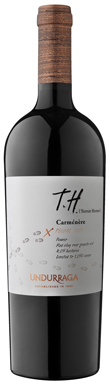
Peumo is one of the main sources of Carmenère in Chile. From its vineyards planted under the intense sun of the area, this TH (Terroir...
2016
UndurragaPeumo
