
The promise of Pignoletto
It is fast emerging as a fizz vying for a slice of Prosecco’s success, Pignoletto is a variety that deserves recognition in its own right. The grape is producing individual styles, both still and sparkling, that reflect the region’s varied rural landscape, as Carla Capalbo reports


One of the excitements of being a fan of Italian viticulture is exploring its seemingly endless array of native grapes. Italy is said have close to 2,000, of which about 400 are currently being used for winemaking. Some, like Grillo, Nerello Mascalese and Ribolla, were little known outside their specific cultivation areas until quite recently, yet have become favourites of wine lovers internationally. Others are still emerging from obscurity.
Carlo Petrini, founder of the Slow Food movement, sees in the rediscovery and expansion of these grapes and their terroirs a cause for optimism for the country’s future. ‘Thanks to this patrimony of biodiversity, these lesser-known varieties can offer us exciting new tastes and enable us to move beyond the classic areas for great wines, such as Chianti and the Langhe, to other parts of our landscape.’
About 10 years ago, as I was researching an article on Emilia Romagna’s food for Decanter, I tasted a white wine made from an Emilian grape variety known locally as Pignoletto – its official name is Grechetto Gentile. I hadn’t heard of it before. Made by Maurizio Vallona, a producer on the slopes not far from Bologna, Ammestesso was a deliciously flavoursome, balanced still white wine with distinctive notes of wild mountain herbs and a citrussy register. It had been successfully aged for several years, and that too surprised me, as it showed the grape’s potential for making complex, aged wines with personality.
Pignoletto – Breaking through
I’ve been a fan of this grape ever since. As I was to discover, Vallona’s approach is atypical: the overwhelming majority of Pignoletto is produced as a sparkling wine, in both frizzante and spumante versions. As such, it’s been positioned in the market by some producers as an alternative to Prosecco.
Indeed, there’s recently been massive investment in this grape by the large wine cooperatives that dominate production in the region’s lowlands; it’s Italy’s fastest-growing viticultural expansion. Out of the 2,500ha currently planted to Grechetto Gentile for making Pignoletto, 1,000ha have been planted in the last six years. And while the 14 million bottles that are currently being produced may seem like a lot, they’re only a drop compared to Prosecco’s ocean of more than 400 million.
Like Prosecco, most Pignoletto is made in frizzante versions (lightly sparkling), though a lot of spumante is also made of each. Most frizzante is made using the Charmat- Martinotti method, in which the secondary fermentation takes place in steel tanks rather than in the bottle. Spumante tends to be made using what the Italians call ‘metodo classico’, in which the secondary fermentation takes place in the bottle.
David Kermode, a London-based wine critic, is a Pignoletto enthusiast too. ‘Despite the rapidly expanding production of Pignoletto, it remains like David to Prosecco’s Goliath,’ he says. ‘But Grechetto Gentile is a more interesting and versatile variety than Glera, Prosecco’s grape, and I definitely prefer it. For a start, it has a different feel – almost 80% of Pignoletto is frizzante, rather than spumante, resulting in softer, rounder, frothier bubbles. On the nose, it’s similar – gently perfumed, with jasmine blossom and delicate peach aromas. In the mouth, it’s a little drier than Prosecco, with relatively simple citrus and green-apple flavours and a slightly longer finish.’
The large cooperatives have successfully broken into the UK market, with their sparkling Pignolettos available in the large chains including Sainsbury’s, Tesco and Waitrose.
Pignoletto is now one of the most popular white wines of Bologna, a city that itself is rising on the wish lists of international travellers. It goes well with the rich, iconic foods of the region, including prosciutto, lasagne and tagliatelle, and offers an alternative to its local reds, Lambrusco, Barbera and Sangiovese di Romagna.
Rooted in tradition
Grechetto Gentile is an adaptable, easy-to-grow variety capable of generous yields. From a viticultural perspective, it has been found to be identical both to Umbria’s Grechetto di Todi and Campania’s Pallagrello di Caserta, in a version that also risked extinction until 20 years ago. Its popular name refers to the compact way the bunches grow, in a shape similar to a pine cone (pigna). It’s been around, under an assortment of local names, for a long time, but in the flatlands of Emilia it played a specific role, as Giorgio Melandri, one of the region’s top wine experts, explains.
‘In the bassa, or lowlands, that border the rivers here between Ferrara, Bologna and Modena, Pignoletto was planted in the areas in which hemp, or canapa, was cultivated. In earlier times, hemp’s fibres had many uses, from fabrics to ropes, and fared best in well- drained soils. It grew tall and was easily blown over, so between the fields the farmers left a strip of land bordered by drainage ditches. On that strip they planted ash, field maple and elm, and trained Grechetto Gentile vines into them to complete the windbreak. The peasants were doubly happy: this vine is so leafy it made a thick wall, and at the end of the season they could also harvest its abundant grapes.’ Hemp was banned as a crop in the early 1960s, but Pignoletto remained popular.
Traditionally, Melandri continues, the preferred white of the Colli Bolognesi was Albana. ‘But after Albana was “claimed” by the Romagnans in 1967 for their own DOC, growers in the Colli Bolognesi lost interest in Albana and switched their attention to this other attractive local white.
‘Few other whites have Grechetto Gentile’s ability to summon up aromas of wild herbs – sage, oregano, pimpinella and wild rocket – that aren’t too balsamic. It also has a green aspect that keeps it refreshing, with balance and an acidity that’s never extreme.’
Open to interpretation
Within Emilia Romagna, Pignoletto was established as a DOC in 1978 in three sub-zones: Colli d’Imola, Modena and Reno. Unusually, it does as well in the rich soils of the valleys as in the poorer terrains of the hills. In the gently rising pre-Apennine hillsides south of Bologna, where fields, woods and vineyards are interspersed with dramatic limestone outcrops, Colli Bolognesi Pignoletto was granted DOCG status in 2010 in recognition of its potential to produce more territorial wines in this area, then the boundaries extended in 2014.
Today, about 1.5 million bottles are produced within the DOCG. In ancient times, these were lands used by the Etruscans. It is in the DOCG areas and in the Colli d’Imola within the DOC zone that Grechetto Gentile’s potential for ageing and complexity – even in the sparkling versions – has been revealed.
Giacomo Savorini runs the Consorzio Colli Bolognesi, one of two consortia that deal with Pignoletto. ‘This patchwork of varied and unusual geological configurations offers our producers – many of whom run small, artisanal wineries – the chance to interpret Grechetto Gentile in personal ways, giving it a range of character that you don’t find in the plain.’
Maurizio Vallona, the aforementioned producer, is one of these. So is Federico Orsi, whose farm in the Colli Bolognesi includes animals, crops and vines and is being cultivated using biodynamic methods. His vision for his Pignoletto wine is unique.
‘What I love about Grechetto Gentile is what I call its rusticity,’ he says, as we skirt the pig field to reach his vineyards. ‘This grape has thick skins, is high in polyphenols and is extremely versatile, and it has adapted well to the type of agriculture we practise. In addition to still, frizzante and spumante versions, it can make passito and late-harvest wines too.’
Orsi prefers to macerate the grapes for his Pignoletto and is making a pét-nat-style wine that ferments using spontaneous yeasts and is unfiltered, with practically no added sulphites. ‘Grechetto affords us this possibility and, despite not having high acidity, the wines always remain structured but fluid and saline. As we’ve seen, it also has the potential to age well and increase in complexity in good years, and this too makes it very unusual.’ Orsi has become a beacon for the grape and is a popular figure on the natural wine circuit.
For now, Grechetto Gentile is a grape in progress. It is being successfully produced on a large scale in sparkling versions – much of which is consumed within the region of Emilia Romagna – and has shown that, in the hands of producers with vision, it can lift itself into individuality. I look forward to seeing what else it’s capable of.
Pick of the Pignolettos
Wines tasted by Carla Capalbo and Sally Easton MW
Orsi Vigneto San Vito, Sui Lieviti Pignoletto Frizzante Brut, Emilia Romagna, Italy, 2014
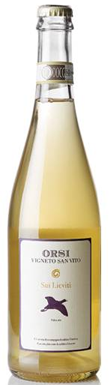

Reverting to the rifermentato technique used by his grandfather, Federico Orsi produces this wine with a second fermentation in bottle. Without disgorgement, the indigenous-yeast lees...
2014
Orsi Vigneto San Vito

Vallona, Ammestesso Pignoletto, Emilia Romagna, Italy, 2014
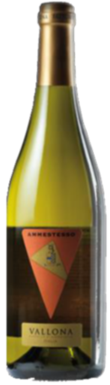
Grechetto Gentile grown at about 300m, matured in cement tanks for three years on lees with stirring. A complex wine that shows aromas of honey,...
2014
Vallona
Tenuta Santacroce, Metodo Famigliare Sur Lie Pignoletto Frizzante Brut, Emilia Romagna, Italy
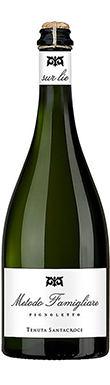
This is an estate owned by the Chiarli family and it has 30ha of vines, about half of which are Grechetto Gentile. Made with a...
Tenuta Santacroce
Cevico, Romandiola Pignoletto Frizzante Brut, Emilia Romagna, Italy, 2018
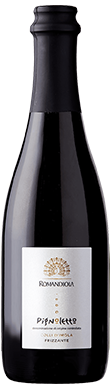
Romandiola is the ancient name for Romagna. From Terre Cevico, a large, well-established cooperative, the grapes are grown on the hillsides above Imola and picked...
2018
Cevico
Gaggioli, Pignoletto, Emilia Romagna, Italy, 2018
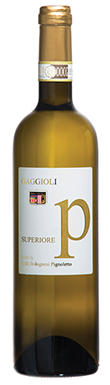
Grechetto Gentile is hand-harvested then fermented in stainless steel to preserve the grape’s natural aromatics. Shows white-floral aromas, fresh quince and apple, along with more...
2018
Gaggioli
Balli Vini, L’Ancestrale Pignoletto Spumante Brut Nature, Emilia Romagna, Italy, 2017
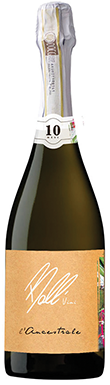
This 10-month lees-aged cuvée from Alessio Balestri shows appealing yeastiness and development. A steely-savoury nose with complex hints of nuttiness leads to a rich palate...
2017
Balli Vini
Castelvetro, Pignoletto Extra Dry, Emilia Romagna, Italy
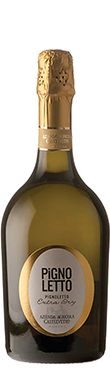
The vineyards for this extra-dry wine have long been owned by the Chiarli family. They are located in the hills near the village of Castelvetro...
Castelvetro
Il Monticino, Frizzante del Monticino Pignoletto Brut, Emilia Romagna, Italy
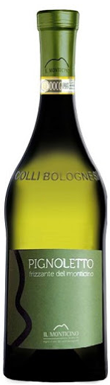
Morandi family vineyard at 200m-250m in the hills close to Bologna. Made in the Charmat-Martinotti method, with about 40 days on lees. The nose has...
Il Monticino
Aldrovandi, Alto Vanto Bianco, Emilia Romagna, Italy, 2017
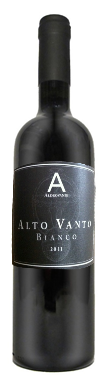
Some of the fruit for this wine comes from Pignoletto vines dating back to 1938, on sommelier Federico Aldrovandi’s single hectare in Monteveglio. Fermented in...
2017
Aldrovandi
Villa Cialdini, Pignoletto Millesimato Brut, Emilia Romagna, Italy, 2018
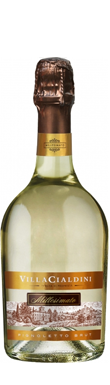
Another from Chiarli vineyards, made by Franco De Biasio. Lively apple and citrus aromas are followed by a full palate with light almondy notes, then...
2018
Villa Cialdini
Riunite, Tesco Finest Pignoletto Spumante Brut, Emilia Romagna, Italy, 2018
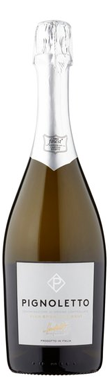
Made in partnership with one of Emilia Romagna’s largest cooperatives, which boasts 1,700 growers and specialises in both red and white sparkling wines. It has...
2018
Riunite
Sainsbury's, Taste the Difference Pignoletto Spumante Brut, Emilia Romagna, Italy
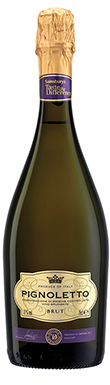
Grapes undergo cold maceration for 10 hours, then soft pressing. The must ferments at low temperatures and the Charmat-Martinotti method is used, with about 30...
Sainsbury's
