
The transformation of Bordeaux’s crus bourgeois
In the vast wine landscape of Bordeaux, it's very easy to fixate on the very topmost estates. But a small step down the pyramid sit the ever-improving châteaux of the Crus Bourgeois. Andy Howard MW picks out 10 estates offering a modern and affordable take on Bordeaux.


The scale of the Bordeaux wine industry dwarfs that of most other regions and, in some cases, countries.
Although hard to be precise, recent statistics show a vineyard area exceeding 110,000 hectares, with over 6,000 individual producers.
Ten crus bourgeois recommendations listed below
Classification tiers
The revered Bordeaux Grands Crus Classés classification of 1855 tops the pyramid, with many areas having their own systems, e.g. St-Émilion and the Graves.
Nestling under the Grands Crus Classés is the significant Cru Bourgeois classification, comprising three ascending quality tiers – Cru Bourgeois, Cru Bourgeois Supérieur and Cru Bourgeois Exceptionnel.
Every 10 years the crus bourgeois are re-evaluated. The most recent review in 2020 identified a total of 249 Crus Bourgeois du Médoc, with 179 designated Cru Bourgeois, 56 Supérieur and 14 Exceptionnel.
The 249 producers accounted for 31% of the Médoc’s production, 28% of the area under production, and an annual total of 28 million bottles.
Geographically, cru bourgeois is dominated by producers from the Médoc and Haut-Médoc, with a smaller number from St-Estèphe, Margaux and Listrac & Moulis, and just one in Pauillac.
Making changes
The Bordeaux wine industry has undergone dramatic changes in the past two decades. For many years, the region has had a reputation for the highest quality top-tier wines, with remarkable longevity but with price levels to match.
But the cheaper Bordeaux wines did not always have the best reputation, with many producers focusing more on yields rather than ripeness.
As newer, high-performing areas developed around the world, changes were necessary.
Today, the situation has progressed further. As the climate has changed, so have the pressures on producers, ranging from excessive rainfall and disease pressure, to drought.
Consumer demand has altered, with a new wave of drinkers looking for wines which are approachable when young, more fruit driven, and many are keen to taste wines crafted in a more forward-thinking, less interventionist, way.
Into the limelight
Cru bourgeois wines have neatly stepped into the limelight as they offer virtually the same quality as the Grands Crus Classés but at much more affordable price-points.
They also embrace environmental initiatives and have adopted many of the latest winemaking techniques – reduced use of (new) oak, greater emphasis on terroir character and increased use of alternative maturation vessels such as concrete eggs and amphora.
These are wines which offer high-quality, the ability to drink while young yet also age for a decade or more, whilst delivering great value for money. So, who are the producers to look out for?
Ten cru bourgeois to know
Château Arnauld, Haut-Médoc, Cru Bourgeois Exceptionnel
Statistics: 18 hectares, average vine age 40 years, 60,000 bottles
Blend: Cabernet Sauvignon 52%, Merlot 43%, Petit Verdot 5%
Founded at the end of the 17th century, Arnauld lies in the village of Arcins. Now part of the Vignobles de Larose group, significant investments have been made since 2014 including a new vat room and barrel hall.
Michel Rolland acts as a consultant here. The current focus for Arnauld is on greater finesse through changes in extraction and maturation.
Pre-fermentation maceration for eight days at 5°C, pigeage and delestage (rack & return) for extraction, together with lower fermentation temperatures, are supported by increasing maturation in vats to promote fruit and freshness.
The winemaking team now only use Burgundian barrels, believing these are better suited to their style.
In future, expect to see Merlot and Cabernet Franc matured in amphora and 400/600l casks. Arnauld is a dynamic producer which lives up to its ‘Exceptionnel’ status.
Château Larose-Trintaudon, Haut-Médoc, Cru Bourgeois Supérieur

Statistics: 197 hectares, average vine age 28 years, 750,000 bottles
Blend: Merlot 47%, Cabernet Sauvignon 44%, Petit Verdot 9%
With a history dating back to 1719, the highly distinctive château at Larose-Trintaudon dominates the vineyard.
After years of decline, in 1963 the estate was purchased by the Forner family (owners of Marquès de Caceres) with large-scale vineyard replanting under the guidance of Emile Peynaud.
The large vineyard is remarkably homogenous with 70% stony and sandy gravel, and 30% limestone-clay.
In 1986, the château became part of the Allianz group. There is a strong focus on environmental impact – the estate is a member of Vignoble Responsable and is certified by the Terra Vitis association.
Frank Bijon (President of the Alliance of Crus Bourgeois and Chief Winemaker and General Manager) says, ‘we think that a sustainable vision across all aspects of the wine business (production and sales) is the best strategy.
‘Taking care of the environment using only organic and bio-control products to protect the vineyard, and taking care of the people and our territory.’
Château Mongravey, Margaux, Cru Bourgeois Supérieur
Statistics: 14 hectares, average vine age 30 years, 90,000 bottles
Blend: Cabernet Sauvignon 61%, Merlot 35%, Cabernet Franc 4%
A family-owned operation, Mongravey was established in 1981, becoming Cru Bourgeois Exceptionnel in 2018.
Today Régis, Jérôme and Karin Bernaleau create some fine Margaux wines from this small vineyard with several plots and nine distinct parcels.
Karin explains that: ‘We are adapting to the younger consumers looking for less oaky wines while keeping our Margaux typicity.’
She expands on changes in the winemaking process: ‘We have stopped pumping over for extraction and now use the R-Pulse system which allows for a softer extraction and silky tannins.’
Mongravey is also experimenting with clay amphorae to finesse tannins and fresh fruit aromas, together with a focus on High Environmental Value certification, CSR, hedge planting and reducing water/electricity consumption.
Frequently a high-scoring wine, Mongravey offers great value and is well-worth seeking out.
Château Le Crock, St-Estèphe, Cru Bourgeois Exceptionnel

Statistics: 32 hectares, average vine age 41 years, 100,000 bottles
Blend: Cabernet Sauvignon 57%, Merlot 33%, Petit Verdot 5%, Cabernet Franc 5%
Le Crock is both a top-performing St-Estèphe and Cru Bourgeois Exceptionnel, and has been owned by the Cuvelier family (owners of Château Léoville-Poyferré) since 1903.
Sara Lecompte Cuvelier is Managing Director, Yoann Lavigne (Cellar Master) and Isabelle Davin (Winemaker at Le Crock/Léoville-Poyferré) in charge.
The 32ha comprises three distinct areas with gravel/sand on the surface over clay sub-soil.
The estate anticipates organic certification in 2025, with the latest focus on bio-diversification in the vineyard as well as modifications fermentation/maturation with the use of 550l ‘double’ barrels and 750l amphora.
Cuvelier notes that the, ‘crus classés carry with them a lot of prestige, yet the cru bourgeois brings a more familial style among the team and owners.’
Extreme weather conditions are seen as the main threat with extended periods of hail a particular risk, countered by the estate employing a balloon protection system.
Château Laffitte-Carcasset, St-Estèphe, Cru Bourgeois Supérieur
Statistics: 35 hectares, average vine age 30 years, 110,000 bottles
Blend: Cabernet Sauvignon 60%, Merlot 35%, Cabernet Franc 5%
Originally created in 1759, current owner, Pierre Rousseau, acquired the estate in 2016 and between 2019-2022 invested heavily in the estate, including building a new winery.
Laffitte-Carcasset now employs conical tanks crafted out of steel or concrete, individually thermo-regulated and adapted to specific grape varieties and plots.
The winemaking team believe that some primary fermentation in new barrels is beneficial in improving the integration of the wood, while amphorae are used selectively for Merlot to enhance fruit and aromatics.
The estate renewed 50% of the vineyard in 2019 following a detailed analysis of soils, enabling a precise match of grape varieties to individual plots.
Laffitte-Carcasset is a powerful, sturdy and characterful wine which emphasises the rugged style often seen on the St-Estèphe plateau.
A weighty, deeply coloured cru bourgeois with plenty of ageing potential.
Château d’Arsac, Margaux, Cru Bourgeois Exceptionnel

Statistics: 53 hectares, average vine age 27 years, 200,000 bottles
Blend: Cabernet Sauvignon 70%, Merlot 30%
The history of the estate goes back almost 1,000 years to the Lords of Arsac. In 1986 it was acquired by Philippe Raoux, with the château in ruins and the vineyard area having reduced to just 3ha.
The ‘diagonale‘ slash on the label indicates the merging of tradition with the new. There are now 53ha planted out of the 103ha on the estate.
Fermentation is in stainless-steel cuves prior to ageing in 50% oak (half-new, half one-year-old) and 50% tank.
The estate was promoted to Cru Bourgeois Exceptionnel in 2020, and features as one of the Bordeaux Tourist Offices ‘Art & Wine’ trail sites.
As with many of the leading cru bourgeois, sustainability and the environment are a key focus, with the château obtaining the HVE level 3 – the top level.
Château Paveil de Luze, Margaux, Cru Bourgeois Exceptionnel

Statistics: 32 hectares, average vine age 35 years, 200,000 bottles
Blend: Cabernet Sauvignon 70%, Merlot 30%
Dating back to 1862, Paveil de Luze is a seventh-generation family domaine. It was previously run by the energetic Frédéric de Luze, who did much to promote the revitalised Crus Bourgeois du Médoc association before his untimely death in 2016.
The estate continues in family hands, run by his sisters Marguerite and Catherine.
There is a strong environmental drive here, with HVE 3 certification achieved, and a bio-diversity approach utilised for the whole vineyard under the guidance of the Derenoncourt consultants.
Marguerite de Luze identifies the estates current key challenges as ‘adapting to climate change while maintaining our identify and not losing the style of Margaux.’
She also notes the impact of climate change on grape ripeness, observing ‘the excellent ripeness of Cabernet Sauvignon in recent years has led us to increase the proportion in the final blend (90% in 2023).’
With recent vintages, the property has produced wines with plenty of ripe, forward fruit, yet balanced by a refreshing mineral character.
Château Patache d’Aux, Médoc, Cru Bourgeois
Statistics: 58 hectares, average vine age 40 years, 250,000 bottles
Blend: Cabernet Sauvignon 50%, Merlot 44%, Cabernet Franc 4%, Petit Verdot 2%
This substantial 58ha property was owned by the Knights of Aux from 1632 to the French Revolution, after which the château became a coaching inn.
Antoine Moueix is now the proprietor. Despite the long history, many changes are underway. Clément Holtz (Assistant General Manager) notes ‘consistency is the most important issue’ and that ‘the weather changes more frequently than we can adapt, so we must be flexible and keep on innovating’.
The new cellar features small tanks from 75 to 175hl to allow plot-specific fermentation. The winemaking team also utilises lighter extraction, together with some whole-bunch vinification to ‘bring fresh and floral aromas’.
There is also a focus on clonal selection – in 2021 an experimental block was planted with 26 clones of the main Bordeaux varieties on 11 different rootstocks, and in 2022 a separate clonal selection project using the château’s 90 year-old Cabernet Sauvignon commenced.
Château Moulin Rouge, Haut-Médoc, Cru Bourgeois Supérieur

Statistics: 27 hectares, average vine age 45 years, 100,000 bottles
Blend: Merlot 50%, Cabernet Sauvignon 40%, Cabernet Franc 10%
Château Moulin Rouge is a family-owned estate dating back 13 generations, located in the commune of Cussac-Fort-Médoc, between Margaux and St-Julien.
The vineyard lies on many gravel mounds. Owner (Geoffrey Ribeiro) stresses the importance of sustainable methods, and that the estate has obtained HVE 3 certification.
Ribeiro highlights changes made at the estate to meet challenging demands from both consumers and the climate, saying that, ‘we try to extract softer tannins than a decade ago, with shorter pumping overs’.
He adds: ‘We have purchased 500l barrels for several years – the objective is to get a good balance between freshness, fruit flavour and oak.’
Moulin Rouge remains a more classically styled Haut-Médoc wine, with concentration and structure for longer ageing. This is an estate to follow for those seeking less exuberant fruit.
Château Poitevin, Médoc, Cru Bourgeois
Statistics: 25 hectares, average vine age 26 years, 160,000 bottles
Blend: Merlot 55%, Cabernet Sauvignon 35%, Petit Verdot 10%
The family estate of Château Poitevin is situated in the northern Médoc, very close to the Gironde estuary.
With a vineyard composed of limestone and gravel lying over clay subsoils, the estate primarily focuses on red wines but also makes a high-scoring white wine from Sauvignon Blanc and Sémillon.
Originally, the Poitevin family were bakers in the village of Jau-Dignac-Louriac, before their love of the vine took them in a new direction.
From 1991, Guillaume Poitevin followed in the footsteps of his father and grandfather, expanding the vineyard area and building a new winery.
The property became a Cru Bourgeois in 2003 and Supérieur in 2018, with the estate working towards organic certification from the 2023 vintage.
With Merlot taking the lead at Poitevin, the wine achieves an excellent balance between ripeness and drinkability, together with the concentration and structure for ageing.
All delivered at a very fair price.
Ten Crus Bourgeois to try
Related articles
- The renaissance of St-Émilion’s Château Laroque
- Bordeaux 2014 revisited 10 years on
- Left and Right Bank Bordeaux: What is the difference?
Château Le Crock, St-Estèphe, Cru Bourgeois Exceptionnel, Bordeaux, France, 2019
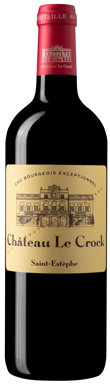

A complex, vibrant Saint-Estèphe with pure fruit-characters on the nose and an intriguing note of crushed rock. Sweet and ripe on the palate, red-fruits to...
2019
Château Le CrockSt-Estèphe

Château Mongravey, Margaux, Cru Bourgeois Supérieur, Bordeaux, France, 2019
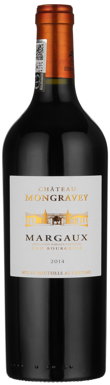
A fine example of Margaux with complexity on the the nose, beautifully restrained and elegant notes of violets, and rose. A wine which needs a...
2019
Château MongraveyMargaux
Château Laffitte Carcasset, St-Estèphe, Cru Bourgeois Supérieur, Bordeaux, France, 2019
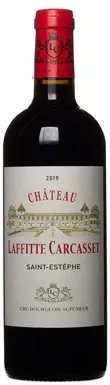
Very deep, vibrant purple in the glass. Fine combination of black cherry and raspberry on the nose. Firm tannins but these will soften with another...
2019
Château Laffitte CarcassetSt-Estèphe
Château d’Arsac, Margaux, Cru Bourgeois Exceptionnel, Bordeaux, France, 2019
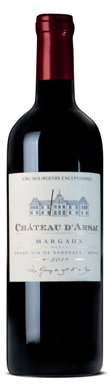
A Cru Bourgeois possessing many of the expressive qualities as expected from its Margaux location. A deep, understated and intellectual wine, with more of a...
2019
Château d’ArsacMargaux
Château Arnauld, Haut-Médoc, Cru Bourgeois Exceptionnel, Bordeaux, France, 2019

Lying outside the village of Arcins, Château Arnauld counts Chasse-Spleen and Poujeaux as its neighbours. The 18ha property's 40 year-old vines are planted on deep...
2019
Château ArnauldHaut-Médoc
Château Paveil de Luze, Margaux, Cru Bourgeois Exceptionnel, Bordeaux, France, 2020
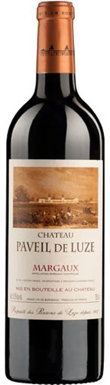
The fruit character is riper with more of a conserve style, yet balanced with plenty of acidity. Fleshy and generous on the palate with subtle,...
2020
Château Paveil de LuzeMargaux
Château Poitevin, Médoc, Cru Bourgeois, Bordeaux, France, 2019
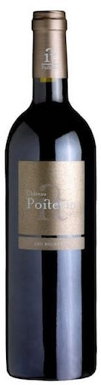
From a family run property. Merlot dominates the blend (55%) adding plush characters, with Cabernet Sauvignon (40%) and Petit Verdot (5%) adding freshness and spice....
2019
Château PoitevinMédoc
Château Larose-Trintaudon, Haut-Médoc, Cru Bourgeois Supérieur, Bordeaux, France, 2019
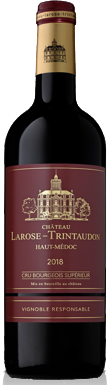
A subtle, intriguing and approachable Cru Bourgeois, starting to show some development on the nose with briary, sous-bois characters emerging. Less black fruit in style,...
2019
Château Larose-TrintaudonHaut-Médoc
Château du Moulin Rouge, Haut-Médoc, Cru Bourgeois Supérieur, Bordeaux, France, 2019
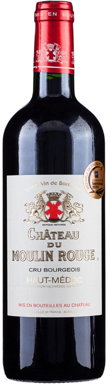
A fine, classically styled wine which is structured and shows more of a traditional, meaty, earthy character than some of the more exuberantly fruited Cru...
2019
Château du Moulin RougeHaut-Médoc
Château Patache d'Aux, Médoc, Cru Bourgeois, Bordeaux, France, 2019
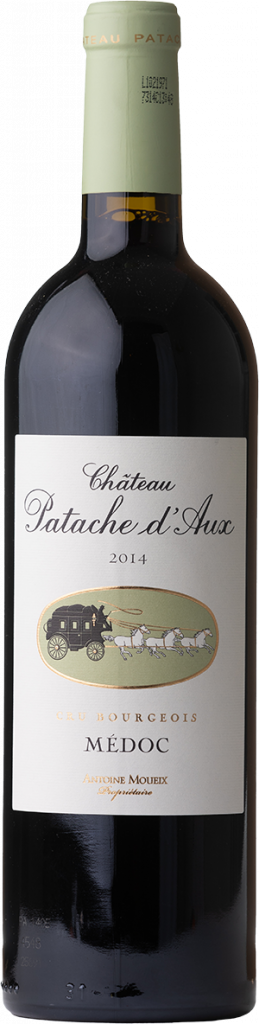
Red and plum fruit on the nose, with an intriguing floral and violet lift. Sweet, juicy palate with plenty of ripeness, balanced with peppery notes...
2019
Château Patache d'AuxMédoc
