
Cinsault: It’s not just a backing singer


Regarded for decades as simply a useful blending grape, is hardy Cinsault finding favour again? Alistair Cooper MW feels its wines are deserving of a reappraisal…
It is often said that wine trends are cyclical, mirroring the fickle beast that is the fashion industry. Wine styles and grapes come and go, just as flares and beards just keep on coming back.
And if ever there were a grape that has experienced a wild swing in its fortunes over the past century, it’s Cinsault. Once widely planted, then much maligned and brutally grubbed up, this inherently hardy and tenacious grape has experienced a welcome mini-renaissance in recent years.
Scroll down for Alistair Cooper MW’s pick of the best Cinsault buys
This article appears in the September 2018 issue of Decanter magazine, on general sale from 1 August, but is available online exclusively to Premium members.
Historically Cinsault has played a pivotal, yet often understated role in the development of several leading wine industries. These include France, South Africa, Lebanon and, to a slightly lesser degree, Chile.
Intrinsically Cinsault is a drought-resistant grape, capable of tolerating extreme temperatures. Coupled with this it is a robust variety, largely disease resistant in warmer climates.
When you add to the mix its extraordinary ability to yield copiously, its attraction to wine-growers becomes clear – particularly given the time period in which its popularity peaked.
The French annexation of Algeria and Morocco in the 19th century saw Cinsault thrive in the blistering north African heat.Algerian wine flooded phylloxera-ravaged France to slake the Gallic thirst. In an era where quantity trumped quality, Cinsault also became a favourite in South Africa – where it was known as Hermitage, then as Cinsaut.By the 1970s, Cinsault was the most widely planted grape in South Africa – both as a workhorse grape and for distilling into brandy. Indirectly Cinsault also left a deep impression on the South African landscape in the form of Pinotage.A cross of Cinsault and Pinot Noir developed in 1925 by Professor Abraham Perold, its success as a variety is questionable, yet Cinsault’s DNA remains firmly ensconced in the Cape winelands.It’s fair to say that Cinsault’s role has largely been behind the scenes. It fulfils a vital yet unheralded part in the rosés of Provence and Tavel, and is even a permitted grape in Châteauneuf-du-Pape.
Thus far, it may sound as if Cinsault is a solid yet uninspiring variety with little chance of landing a starring role as a red monovarietal showstopper.
Yet there is a growing band of winemakers who are banging the Cinsault drum, and unequivocally believe in its potential. Mark Savage MW recalls maverick winemaker Daniel Domergue (of Clos Centeilles in the Minervois) quipping more than 20 years ago: ‘Making rosé wine with your Cinsault is like taking the goats to market in your Jaguar!’
All in the soil
The Itata region of central Chile is home to 650ha of Cinsault. Introduced officially in 1940 to bolster the colour of País and add to the yield, it has garnered considerable interest over recent years. ‘Cinsault is incredibly terroir-oriented,’ explains globally respected terroir guru Pedro Parra. ‘In a bad site, the wine is bad – much like Grenache and Carignan. But in Itata, the decomposed granite and quartz offer ideal conditions for Cinsault.’ Discussing Cinsault’s flavour profile in Itata, Parra states: ‘It tastes like a brother of Pinot Noir, delicate with beautiful, complex perfumed aromas, great minerality and also freshness. Somewhere between Pinot Noir, Gamay and Mencía.’
On the topic of site expression and terroir in Itata, Derek Mossman Knapp of Garage Wine Co explains: ‘Over four vintages we’ve worked with Cinsault planted in three different places, making a Single Ferment Series wine. The three elements all bring very different things indeed.’
Locally Cinsault is known as Cargadora (‘the loaded one’) and the vines are all dry-farmed bush vines, with the best sites located on the rolling hills – factors that all help to naturally reduce yields. Leo Erazo of Rogue Vine also stresses the importance of vine age to producing good Cinsault wines: ‘It is absolutely crucial for balance in the vines. Unirrigated and old vines offer the best ability to transmit terroir. Young, irrigated vines will show very little or no expression.’
For me, it is the minerality and texturally dense yet soft tannins found in Itata’s Cinsault that really shine through. Cinsault produced here tends to be medium-bodied with moderate acidity, showing both red and dark fruits along with a beautiful liqourice spiced element on the mid-palate.

Cinsault strongholds
FRANCE
Area: About 20,000ha (hard to confirm, but around the 8th most-planted red), in Languedoc-Roussillon, Provence and Corsica
Soils: Well suited to schist soils Flavour profile Generally used in light, red fruit-led rosé styles Other Thought to have originated in the Hérault
SOUTH AFRICA
Area: 1,850ha (the 6th most-planted red)
Soils: Slate, shale and decomposed granite
Flavour profile: Red fruits, notably raspberry and strawberry, floral; light/medium-bodied, light tannins Other Cinsault was the most widely planted red grape variety in South Africa until the 1980s
CHILE
Area: 750ha (11th most-planted red), almost all in Itata
Soils: Best on rolling hills, decomposed granite with quartz. Dry-farmed bush vines
Flavour profile: Both red and dark fruits, liquorice; medium-bodied, luxuriously soft and textured tannins; moderate acidity
Other: Introduced to the country officially in 1940 following the great earthquake of Chillán
Modern expression
Eben Sadie of The Sadie Family Wines is also convinced of Cinsault’s potential; this time in South Africa. ‘Cinsault is by far the grape that is best suited to the Cape,’ he says. ‘It has a great affinity and just loves the soil here.’ In 2009, he released South Africa’s first singlevineyard Cinsault: Pofadder. ‘This is a grape that expresses terroir incredibly – the only other similar grape is Pinot Noir.’
His vineyard on the Kasteelberg mountain in Swartland is composed of slate and granite, and the tension and vibrancy in the wine is remarkable. Sadie believes Cinsault fits perfectly into modern wine culture: ‘We live in a time where people don’t age wines and Cinsault is perfect for drinking early – but it can also age.’
South African wine expert Richard Kelley MW is less effusive: ‘As a standalone variety, Cinsault doesn’t have the intrinsic qualities to deliver anything particularly ageworthy or complex.’ However, in the context of blends, he is upbeat: ‘When one considers the greatest historical bottles from the early 1960s until the post-apartheid era, Cinsault plays a good part in many of them: Rustenberg Dry Reds, Rozendal and the wines made in the late-1960s at Stellenbosch Farmers’ Winery. It still has a role to play in blends, where it can add freshness, acidity, minerality and fragrance.’
Stem sell
When it comes to winemaking practices with Cinsault, the use of both stems (whole-bunch fermentation) and oak are recurring themes. Alex Milner of Natte Valleij in Simonsberg, says: ‘I like to call Cinsault the “working man’s Pinot”. One needs to treat it with huge respect. I don’t believe it needs oak – perhaps the environment of a seasoned barrel, but lashings of oak is unsympathetic towards the wine, and to French forests!’
Milner focuses on four different terroirs (Simonsberg, Darling, Stellenbosch and Swartland) for his Cinsault Collective wines. A comparison highlights just how terroirdriven Cinsault can be – from soft-perfumed, raspberry fruit in Darling to textural, saline mulberry fruit in Stellenbosch.
On the use of stems in fermentation, Pedro Parra says: ‘Stems are a useful tool, depending on the vintage. I’m experimenting with between 10% and 50% stem inclusion.’ Milner has adopted an innovative approach: ‘We play around with the reintroduction of stalks that we allow to dessicate in the hot sun. We find this imparts an ordered and balanced structure to the wine.’ Some of the most expressive examples of Cinsault I’ve tasted have had a percentage of stems (mostly less than 50%), adding purity, silkiness and perfume to the wines, along with a firmness to the tannins.
Renewed approval
In Lebanon, Cinsault has been grown in the 1,000m-high Bekaa Valley since the mid-19th century. In particular, Cinsault makes up an important part of the blend in the celebrated Chateau Musar, and the late Serge Hochar once said: ‘If I could only have one grape variety in the Bekaa Valley, it would be Cinsault.’ In 2017, Domaine des Tourelles released its first single-vineyard Cinsault from 50-year-old vines, and winemaker Faouzi Issa is convinced of the single-varietal expression: ‘Our altitude is key – it gives the right balance and freshness in the wine. We can make very elegant expressions of Cinsault here.’ After tasting this wine, I would love to see more winemakers exploring single expressions of Cinsault in this unique terroir.
Cinsault’s fortunes have dramatically improved over the past decade, and rightly so. The once-neglected ugly duckling has blossomed, perhaps not into the prom queen, but into a striking fashionista. Clearly it is a grape with great ability to transmit and express terroir, a grape that – when handled correctly – can produce quite beautiful wines. The question may remain, can Cinsault ever produce truly great wines? When prominent industry figures such as Eben Sadie and Pedro Parra give their stamp of approval, it is a brave soul that’s willing to contradict them.
Old-vine Cinsault will, I hope, be given the respect it deserves, and continue to thrill and tantalise for many years to come – both in blends and in the leading role.
Cinsault: key features
Resistant to both drought and heat
Very high-yielding – so needs to be carefully managed in the vineyard
Large grapes, medium skin
Moderately compact bunches
Suited to dryland/ unirrigated bush vines
Reputedly oldest vineyard – Bechthold Vineyard in Lodi, California, planted in 1886
Cinsault synonyms around the world:
Australia: Black Prince
Catalonia: Sinsó
Chile: Cargadora
France: Oeillade
Italy: Ottavianello
South Africa: Cinsaut (historically known as Hermitage)
US: Black Malvoisie
See Alistair Cooper MW’s pick of the best Cinsault buys
You might also like:
Top Grenache wines from around the world
Top Greek red wines: Panel tasting results
Spanish Atlantic red wine: Panel tasting results
The Sadie Family, Pofadder, Swartland, South Africa, 2016
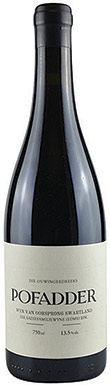

Perfumed bouquet with strawberry and cherry, spice and white pepper. Medium-bodied with linear, tense and thrilling acidity, textured tannins and a lovely earthy minerality behind....
2016
The Sadie Family

De Martino, Viejas Tinajas Cinsault, Itata Valley, Chile, 2016
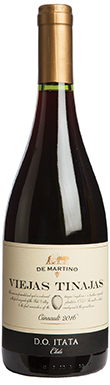
Complex, spiced red fruit, elegant cherry blossom and dry leather notes with some sweet sultana thrown in. Plenty of freshness and vibrancy. This is a...
2016
De Martino
Lukas van Loggerenberg, Geronimo, Stellenbosch, South Africa, 2016
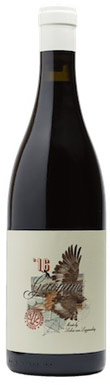
Oz Clarke: Full style, with mature, rich red fruit. Scented strawberry and redcurrant notes with a flutter of icing sugar and a suggestion of herbs...
2016
Lukas van Loggerenberg
Domaine des Tourelles, Vieilles Vignes Cinsault, Bekaa Valley, Lebanon, 2015
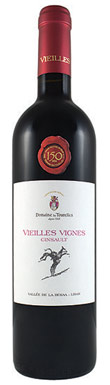
From vines planted 1,000m above sea level. Brooding, dusty nose with dark cherry. Lovely textural chalky tannins, with dusty notes and sweet ripe cherry and...
2015
Domaine des Tourelles
Mas des Chimères, Oeillade Coteaux du Salagou, Pays d'Hérault, Languedoc-Roussillon, France, 2015
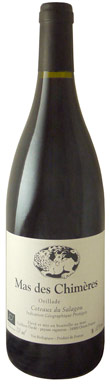
Raspberry, redcurrant and dried herbs jump out of the glass. This is the light side of medium-bodied, with a nervy, delicate palate of soft tannins,...
2015
Mas des ChimèresPays d'Hérault
Natte Valleij, Cinsault, Swartland, South Africa, 2016
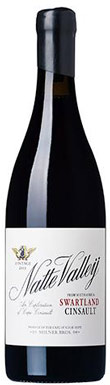
Part of the fantastic Cinsault Collective. This has beautiful blueberry fruit and wild garrigue herbal aromatics. Medium-bodied, with a saline mineral palate, red cherries and...
2016
Natte Valleij
Rogue Vine, Grand Itata Tinto, Itata Valley, Chile, 2015
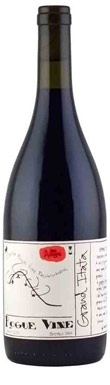
Around 5% of País goes into this superb field blend. Brimming full of lively red fruit with dusty notes. There’s a lovely mineral, saline character...
2015
Rogue Vine
Craven Wines, Cinsault, Stellenbosch, South Africa, 2016
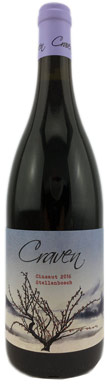
Mick and Jeanine Craven focus purely on individual vineyard sites. This is a wonderfully subtle, fresh, wild red fruit-led Cinsault style. Vibrant, a hint of...
2016
Craven Wines
Flotsam & Jetsam, Stalwart Cinsault, Western Cape, South Africa, 2016
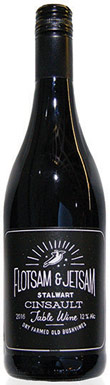
Very pale in colour, but there’s a lovely sappy and perfumed nose, showing subtle rose petal and crunchy red fruits. Zippy and lively on the...
2016
Flotsam & Jetsam
Parra y Familia, Imaginador, Itata Valley, Chile, 2016
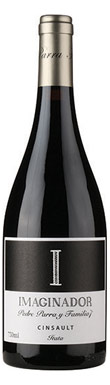
A field blend sourced from four growers in Itata. With around 10% País, the nose is a wonderful blend of herbs and mulberry fruit, then...
2016
Parra y Familia
Birichino, Bechtold Vineyard Cinsault, Lodi, California, USA, 2015
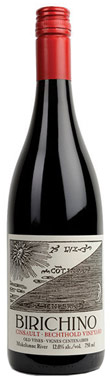
Produced from what is reputedly the oldest Cinsault vineyard in the world, planted in 1886. Delicious sweet and perfumed berry fruit, with notes of damp...
2015
BirichinoLodi
C&J Grieco, Domaine de la Biscarelle Début d’une Histoire, Vin de France, Rhône, France, 2015
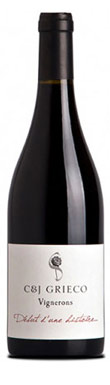
Grown in vineyards between Orange to the north and Châteauneuf-du-Pape, but 100% Cinsault so it’s labelled as Vin de France. Dark fruits infused with spice,...
2015
C&J GriecoVin de France
De Kleine Wijn Koöp, Ou Treffer Cinsault, Stellenbosch, South Africa, 2016
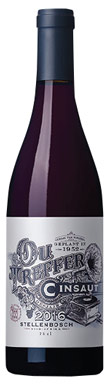
Made by a small collaborative headed by JD Pretorius. Perfumed nose with candied cherry, redcurrant and subtle earthiness. Light-bodied with cranberry notes on the palate,...
2016
De Kleine Wijn Koöp
Montes, Outer Limits Old Roots Cinsault, Itata Valley, Chile, 2016
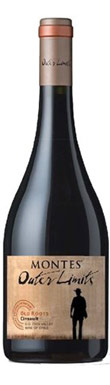
A ripe, dark fruit-led nose, with hints of pepper and tobacco spice. Chewy tannins need a little time to integrate, but there are intriguing layers...
2016
Montes
Silwervis, Red, Swartland, South Africa, 2015
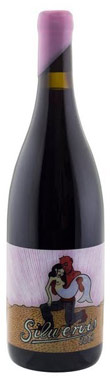
Has a very delicate nose, showing mulberry and geranium aromas and some earthy notes. The palate has a lovely lift of rose petal, with gentle,...
2015
Silwervis
