Le Macchiole
(Image credit: Credit Unknown)

D’Agata’s estate to watch – Le Macchiole

One of Italy’s most important wine estates, Le Macchiole holds the distinction of making Paleo, the country’s best 100% Cabernet Franc. Founded in the early 1980s by husband and wife team Eugenio Campolmi and Cinzia Merli, the estate is located in Bolgheri, in a cool, well-draining part of the Tuscan coast.


See below for Ian D’Agata’s top Italian Cabernet Franc


Soils here are roughly 30% clay and very gravelly with varying percentages of sand and loam. They can be excessively fertile, so low-vigour rootstocks only are used.

In the beginning, Paleo was not 100% Cabernet Franc, starting out in 1983 as a blend of Sangiovese and Cabernet Sauvignon.‘That was typical back then: everyone planted Sangiovese because it is Tuscany’s main grape, and Cabernet Sauvignon because it was considered the most important red grape,’ says Merli. ‘However, we soon realised that Cabernet Franc performed better here. Nowadays, Cab Franc wines are springing up all the time, while practically nobody here makes a 100% Cabernet Sauvignon anymore.’

In 1993, Le Macchiole started vinifying each parcel separately: ‘It was a ton of work, but necessary to figure out what each grape and vineyard was capable of,’ Merli recalls.

The 2001 Paleo was the first vintage to be 100% Cab Franc, made from grapes grown in the Contessine vineyard (planted in 1984) and Pignone (planted in 1993). The grapes are usually harvested around 10 September.

Campolmi passed away many years ago, leaving Merli to turn Le Macchiole into a world-class winery on her own. ‘Paleo was Eugenio’s favourite, and it is mine too. So I am especially happy when people say they like it.’


‘Cab Franc wines are springing up all the time, while practically nobody here makes a 100% Cabernet Sauvignon anymore’ – Cinzia Merli

D’Agata’s top Italian Cabernet Franc wines:

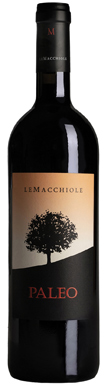
Le Macchiole, Paleo Rosso, Bolgheri, Superiore, Tuscany, Italy, 2001

My wines

97

From a shorter-than usual harvest, half this wine spent 16 months in 225-litre barriques, half in 112-litre oak containers. It’s an unforgettable wine: a strawberry fruit cocktail with harmonious acidity and velvety smooth tannins.

2001

TuscanyItaly

Le MacchioleBolgheri

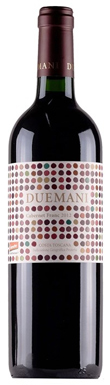
Duemani, Cabernet Franc, Tuscany, Italy, 2010
My wines

95

Suave, creamy and rich, with minerally red berry fruits, great structure and length. Irresistible! 6.000 bottles

2010

TuscanyItaly

Duemani

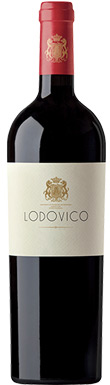
Tenuta di Biserno, Lodovico, Tuscany, Italy, 2008
My wines
Locked score

2008 had plenty of rain in May and June. The summer days were warm but not excessively hot, with a swing of 10°C providing cool...

2008

TuscanyItaly

Tenuta di Biserno

Decanter Premium logo

Join Decanter Premium to unlock all our wines tastings and notes

Join Now

Caiarossa, Essenza di Caiarossa, Tuscany, Italy, 2012

My wines

93

After years of blending Cab Franc with other varieties, Essenza showcases the estate’s extremely high-quality Cab Franc. Minerals and violets linger long on the aftertaste. Biodynamic viticulture.

2012

TuscanyItaly

Caiarossa

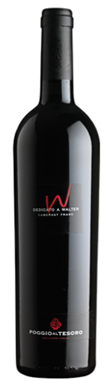
Poggio al Tesoro, W Dedicato a Walter, Tuscany, Italy, 2008
My wines

92

Rich, ripe and velvety with decadent strawberry and raspberry liqueur notes, very typical of Cab Franc on the Tuscan coast. The estate is owned by Allegrini.

2008

TuscanyItaly

Poggio al Tesoro

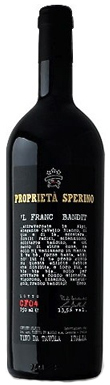
Proprieta Sperino, L’Franc Bandit, Piedmont, Italy, 2009
My wines

91

Made from only 0.4ha of vines in Lessona on sandy gravelly soils that are better known for outstanding Nebbiolo. 50% new wood and lots of perfume and power.

2009

PiedmontItaly

Proprieta Sperino

Ian D'Agata
Decanter Magazine, Wine Writer
Ian D’Agata is one of Italy’s most well-known wine experts and was named Italy’s best wine journalist 2012 by the Comitato Grandi Crus d’Italia. A regular Decanter contributor, D’Agata also writes on the wines of Italy, Alsace, Bordeaux and Canada for Stephen Tanzer’s International Wine Cellar, and is an award winning author. He has written The Ecco Guide to the Best Wines of Italy and the upcoming The Native Wine Grapes of Italy, edited by University of California Press. In addition to his writing, D’Agata is the scientific advisor of Vinitaly International, the director of the Vinitaly Academy, and lectures on Italian food and wine cultural history for New York University’s Food Sciences Master’s program. He is regularly invited to present on wine and health at international wine conferences. Prior to his wine career, D’Agata studied medicine, graduating in paediatric gastroenterology and nutrition.