
What is a SuperTuscan wine?
They're highly sought after, but what is the definition of a SuperTuscan wine? Plus see some of our top scorers reviewed by Decanter experts...


You may have seen the term ‘SuperTuscan’ before, and that’s because it’s used to describe some of Tuscany’s top red wines, such as Tignanello, Sassicaia and Ornellaia.
They are high quality red and white wines, normally with a price to match, made from non-indigenous varieties or using blends not allowed under Tuscan appellation law.
SuperTuscan wines: A background
Back in the 1960s, some Tuscan producers began experimenting with non-indigenous varieties from Bordeaux, such as Cabernet Sauvignon, Cabernet Franc and Merlot.
Sassicaia is considered the first SuperTuscan: Marchese Mario Incisa della Rochetta had been making the wine for private consumption since 1948 from Cabernet Sauvignon and Cabernet Franc vines planted in Bolgheri on the Tuscan coast, which was not previously considered particularly worthwhile wine country, but proved ideal for the French varieties.
The first commercial release was the 1968 vintage, but due to Tuscany’s strict appellation laws the wine had to be labelled as Vina da Tavola or ‘table wine’.
These laws not only restricted the use of non-indigenous varieties, they even prescribed a Chianti recipe that was detrimental to the wine’s quality: the blend had to include certain lower quality varieties, including at least 10% white varieties.
The SuperTuscan movement really took off with some of those quality-minded Chianti producers. One of the first was Antinori, whose 1971 Tignanello was a Sangiovese and Cabernet Sauvignon blend from the Chianti Classico subzone, but declassified to Vino da Tavola.
As these wines from within and beyond Chianti punched well above their lowly Vino da Tavola status, they collectively became known as SuperTuscans. The term became synonymous with adventurous winemaking, with producers experimenting with international varieties, French barriques and new viticultural methods.
Changes
Nowadays, SuperTuscans can have IGT, DOC or DOCG status. For instance, Sassicaia has its own sub-appellation, Bolgheri Sassicaia DOC, and the IGT classification itself was created in 1992 specifically to recognise the quality of these ‘outsider’ wines.
Chianti and Chianti Classico regulations have since changed as efforts have been made to improve quality, and in 2006, Chianti Classico finally banned the inclusion of white grapes completely.
Some top SuperTuscan wines reviewed by Decanter’s experts:
You may also like:
Chianti Classico new releases: A buyer’s guide
Il Poggione: Tasting four decades of Brunello
Best Italian wines: A selection of the greatest
Ornellaia, Bolgheri, Superiore, Tuscany, Italy, 1998
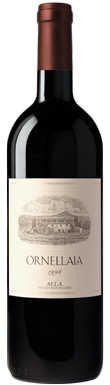

The wine of the flight, this 1998 is a wonderful wine, and it's hard to believe this is 25 years old. It has aromatic notes...
1998
OrnellaiaBolgheri

Tua Rita, Redigaffi, Toscana, Tuscany, Italy, 2019
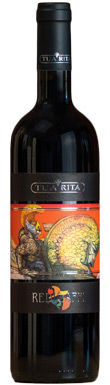
Owner Stefano Frascolla describes 2019 as 'a dream vintage' and describes how the vines 'underwent all the stages of their phenolic development at the optimum...
2019
Tua RitaToscana
Masseto, Toscana, Tuscany, Italy, 2001
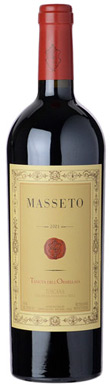
Dense garnet in colour, this vintage of Masseto is restrained with a lavish elegance on the nose, displaying mint, milk, wild fennel (typical along the...
2001
MassetoToscana
Tenuta San Guido, Sassicaia, Bolgheri, Sassicaia, Tuscany, Italy, 2016
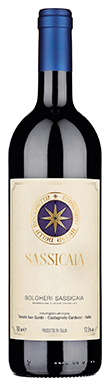
One of the secret of Bolgheri’s mediterranean and windy climate is to turn pyrazines from the Cabernets into extra-dimensional scents of citron and leafy aromas....
2016
Tenuta San GuidoBolgheri
Bibi Graetz, Colore, Toscana, Tuscany, Italy, 2021
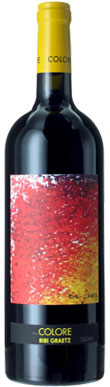
Production of Colore in 2021, like Testamatta, was down slightly on 2020, with around 30,000 bottles produced, due to the decision to drop 20% of...
2021
Bibi GraetzToscana
Antinori, Solaia, Toscana, Tuscany, Italy, 2018
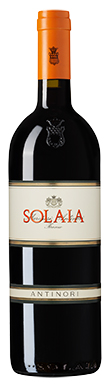
Produced since 1978, Solaia comes from a 20-hectare vineyard with a southwestern exposure at around 350-400 metres above sea level. The soil is the typical...
2018
AntinoriToscana
San Felice, Vigorello, Toscana, Tuscany, Italy, 1985
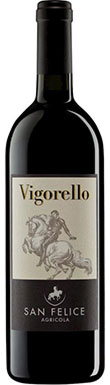
In Tuscany the celebrated 1985 vintage was extremely cold during the winter as well as hot (for that time) during the summer. The new winery...
1985
San FeliceToscana
Tenuta di Arceno, Arcanum, Toscana, Tuscany, Italy, 2016
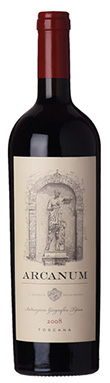
Today covering almost 17 hectares, the estate's Cabernet Franc is subject to a broad as much as a severe selection, which has improved the wines....
2016
Tenuta di ArcenoToscana
Isole e Olena, Cepparello, Toscana, Tuscany, Italy, 2016
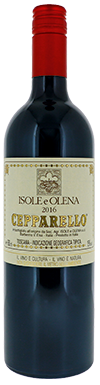
Paolo de Marchi's 'study in Sangiovese' is a selection of the vintage's finest grapes from Isole e Olena's oldest vineyards, high up in Chianti Classico's...
2016
Isole e OlenaToscana
Fontodi, Flaccianello della Pieve, Colli della Toscana Centrale, Tuscany, Italy, 2006
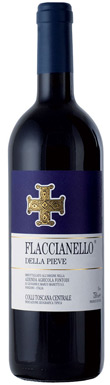
2006 was a hot year but one with significant thermal amplitude. It fluctuated between 30°C in the day and 10°C at night from late August...
2006
FontodiColli della Toscana Centrale
Montevertine, Le Pergole Torte, Toscana, Tuscany, Italy, 2016
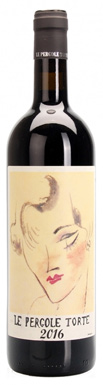
I tried this at a preview tasting co-hosted by Monteraponi and Montevertine at Florence's Four Seasons hotel and haven't been able to get it off...
2016
MontevertineToscana
Castello di Ama, L'Apparita, Toscana, Tuscany, Italy, 2016
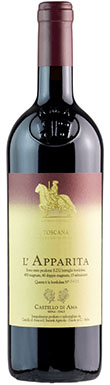
This 100% Merlot from Gaiole in Chianti was Tuscany's first, back in 1985. This 2016 benefited from naturally low yields. Clay scented with blue fruits...
2016
Castello di AmaToscana
Antinori, Tignanello, Toscana, Tuscany, Italy, 2018
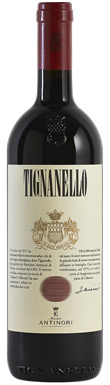
Today producing 300,000 bottles annually, Tignanello was refined and refined through the years: blended with Cabernet Sauvignon since 1975, aged using less obvious oak management...
2018
AntinoriToscana
