
Top-value red Burgundy: hidden gems in the Côte de Nuits


The realities of the market now put the best Burgundy Pinot Noir beyond the reach of most wine lovers. But, argues Andy Howard MW, some great examples can still be found at relatively affordable prices. He recommends the names to look out for – and selects a dozen excellent wines to try...
The announcement of the sale of world-famous grand cru Clos de Tart in October 2017 confirmed the dizzying values to which top Burgundian terroirs can now aspire. The 7.53ha vineyard was sold (it is believed) for somewhere between €250-€280 million (more than €33m per hectare).
This followed the earlier, high-profile sales of Domaine des Lambrays to LVMH in 2014 for €101m, and of Bonneau du Martray in 2017 for €200m. Such stratospheric prices are a clear indication of the value seen in top Burgundy sites, with the shockwaves being felt throughout the region.
Scroll down for Andy Howard MW’s top Côte de Nuits alternatives
Against this backdrop, consumer demand for Burgundy wines continues to increase.
It seems that the beauty and history of the region, allied with the mystery of the complex terroirs and higher quality levels, is driving demand for Pinot Noir and Chardonnay to new levels.
This inevitably has a consequential effect on prices, whether they be for grand cru, premier cru, village wines or generic AP wines. Other key factors such as climactic effect and exchange rate are also influential.
The ‘state of the market’ was emphasised during the traditional week of Burgundy tastings held in London in January, with (in-bond) prices for premier cru wines from top Côte d’Or villages frequently breaching the £50-£60 per bottle price bracket.
Given that there is little sign of a weakening in demand, this upward price trajectory looks set to continue. So, what are the implications for lovers of Burgundy and, perhaps more importantly, what are the opportunities for buying delicious, typical, good value Pinot Noir at prices that consumers can afford?
High achievers
These were the questions posed during a recent visit to the Côte de Nuits. Stretching from just outside the city of Beaune in the south to the southern suburbs of Dijon in the north, the Côte de Nuits encompasses a veritable ‘who’s who’ of some of the most famous names in the wine world.
The Côte includes top producers (Dujac, Romanée-Conti, Roumier, Rousseau to name but a few); revered sites such as Clos de Vougeot, Le Musigny or Clos de Bèze; and the worldrenowned villages of Vosne-Romanée, Chambolle-Musigny and Gevrey-Chambertin (running south to north).
When considering alternatives to the wines that command the highest prices, perhaps it is timely to focus on villages which are adjacent to their more famous neighbours, but share many similar characters – Morey-St-Denis, Fixin and Marsannay.
Canny buyers should also consider the increasingly quality-focused appellations of Bourgogne Hautes Côtes de Nuits and Bourgogne Rouge.
Wines from the Hautes Côtes de Nuits are undoubtedly ‘under the radar’. Vineyards are located at significantly higher elevations (300m-400m above sea level) than the top sites of the Côte de Nuits, which perhaps contributed in the past to a reputation for slightly weedy, sometimes acidic wines whose main advantages were their lower prices.
However, recent top-quality vintages (particularly 2015 and 2016) have played into the hands of a new generation of winemakers in the Hautes Côtes, with many wines displaying classic Pinot colours, acidity and silky tannins, combined with ripe, leafy, red fruit flavours, and balanced with the freshness gained from extra height.
Hautes Côtes de Nuits is predominantly a red wine appellation with a complex network of different vineyard expositions and varied soil structures. The proximity to far more prestigious APs is striking, with many adjacent to Nuits-St-Georges and Vosne-Romanée. At Domaine Thévenot Le Brun et Fils, sited in the village of Marey-lès-Fussey, young winemaker Nicolas Thévenot took over from his father in 2009.
He is convinced that quality levels have never been higher in the Hautes Côtes, and a tasting of 50 AP wines from 2015 and 2016 certainly backed this up.
Names to look out for are Domaine Parigot, Clos de la Perrière; de L’Arlot, Le Mont; Dominique Guyon, Les Dames de Vergy; the monopole of Michel Gros, Fontaine St Martin; Cruchandeau, Les Valançons; and Thibault Liger-Belair, Le Clos du Prieuré. Domaine Thévenot’s top Pinot (Clos du Vignon La Cabotte) is an object lesson in purity, focus and restrained elegance, and well worth seeking out.
Broader view
Less geographically constrained, Bourgogne Rouge continues to be a worthy source of good value, approachable and enjoyable Pinot Noir.
Within the Burgundy region, 91 communes have the right to produce Bourgogne Rouge, but the key here is to look for wines produced by a top domaine/winemaker.
These examples of Bourgogne Rouge are often vinified from younger vines, or from tracts of land that may lie just a few metres away from those receiving a much grander quality designation.
Designed for relatively early drinking, Bourgogne Rouge can offer an insight into the style of a leading estate, at much easier price-points.
Burgundy lovers should also be on the lookout for the arrival early next year of a new appellation, Bourgogne Côte-d’Or.
Although approved by the regulatory body INAO in November 2017, work on this new AP has been underway for 20 years, led by visionary winemaker Philippe Charlopin at Gevrey-Chambertin.
Charlopin explains the philosophy behind the new AP: ‘The requirements for yields are the same as for village-level wines, with a minimum planting density of 9,000 vines per hectare.’
The position of the climats is also key, with Charlopin noting that the vineyards are required to ‘face the Orient’ (east).
As a result, vines planted in many of the small, north-south orientated valleys of the Côte d’Or do not qualify for the new appellation.
Although close to 1,000ha of land are suitable for the new AP, at this stage only 300ha have produced wine that is sitting in barrels, awaiting the official launch in February 2019.
Based on the 2016 vintage wines I tasted at Domaine Charlopin, this new arrival could be well worth following.
Good neighbours
With the pressure on prices (not to mention challenges in securing allocations) for wines from the famous villages of Vosne-Romanée, Chambolle-Musigny and Gevrey-Chambertin, Burgundy fans should also consider alternatives from neighbouring, less fashionable villages. In this respect, the Côte de Nuits has many options, with Morey-StDenis, Fixin and Marsannay all producing classic, terroir-driven Pinot Noir.
Morey-St-Denis lives in the shadow of its two famous neighbours – Chambolle to the south and Gevrey to the north – yet in terms of position, and the density of grand cru and premier cru vineyards, it should not be underestimated.
Morey lost out in the pre-appellation years with much of its wine sold as Gevrey or Chambolle, yet a village including such famous names as Clos de la Roche, Clos de Tart, Clos des Lambrays and Clos St-Denis, clearly warrants attention.
In terms of style, Morey is sometimes (perhaps simplistically) described as a less tannic version of Gevrey, or less feminine than Chambolle.
While there may be some merit in such a description, what is more important is the quality of the terroir and of its producers – in both cases, Morey ticks many boxes.
Famous names such as Arlaud, Dujac, Michel Magnien and Taupenot-Merme are all based in Morey-St-Denis. Frédéric Magnien is at the forefront of innovation in the area, with a modernist approach to all aspects of his fine Pinot Noirs.
Magnien has heavily invested in concrete eggs – not to replace traditional barriques, foudres or demi-muids, but to use in conjunction with more traditional methods to accentuate vineyard and village style.
Within Magnien’s extensive selection of wines, which range from grand cru to Coteaux Bourguignons, his village-level Morey, Fixin and Marsannay represent great quality for the price.
Offering a rather less glitzy experience, the pristine wines of Domaine Pierre Amiot exhibit finesse, balance and are very terroir-oriented. Look out for both red and white village Moreys from this top-quality, but less well-known domaine.
Rising reputations
Lying to the north of Gevrey, Fixin is a much under-appreciated appellation, perhaps suffering from the lack of an easily definable style in the same way that Morey does.
Fixin is a quarter of the size of Gevrey, with just 100ha of vineyards in production, yet quality is very high with both premier cru and village-level wines produced.
While tannins can be a little firm when young, after a few years in bottle Fixin can combine elegance and power in a way reminiscent of Vosne. Fixin has few well-known names, but the understated approach of many of the smaller, family-owned domaines makes a visit here both educational and highly enjoyable.
At Domaine Berthaut, Amélie (daughter of Denis) took over the winemaking in 2013 and has now also established Domaine Berthaut-Gerbet, having inherited her mother’s share of the Gerbet vineyards. Amélie’s wines are fresh, pure and achingly elegant – definitely a Fixin winemaker to follow.
Domaine Joliet’s Clos de la Perrière is the leading cru in the appellation – a premier cru that commanded prices equal to the grands crus of Vosne-Romanée a hundred years ago.
The northerly extreme of the Côte d’Or has village appellation designation for white, rosé and red wines. Marsannay was late to apply for its own AP, only receiving this designation in 1987, but the quality of its climats has led to a push for elevation of 30% of vineyard sites to premier cru.
Although such a move is a few years from approval, there is no shortage of quality from domaines such as Bart, Bouvier (both Régis and René), Bruno Clair, Huguenot, Jean Fournier and Sylvain Pataille.
Red wines are undoubtedly Marsannay’s biggest strength, with Champs Perdrix (in the south, adjacent to Fixin), Les Grasses Têtes, Longeroies and Clos du Roy (to the north in the commune of Chenove), leading the push for elevation to premier cru.
The differences between these climats has been confirmed through a detailed geological investigation carried out over the past 10 years, headed up by Françoise Vannier. She observes some of the key differences between two of the most revered sites: ‘Clos du Roy sits on a subsoil of scree deposits; Les Longeroies lies on limestone in the upper part, marl on the lower part.’ As is always the case in Burgundy, the devil is in the detail and nothing is simple.
Without doubt, there are a range of intriguing alternatives to the more famous and fashionable names of Burgundy’s Côte de Nuits.
Wine lovers should feel confident to explore wines from less fashionable villages such as Morey, Fixin and Marsannay. Overall standards have never been higher, and the wines have benefited from a succession of very fine recent vintages.
Don’t underestimate the quality of Hautes Côtes and Bourgogne wines either. They may provide some of the best bargains for Pinot Noir around the world.
See Andy Howard MW’s pick of top value wines from the Côte de Nuits
You might also like:
Côte de Beaune reds: Panel tasting results
Read more articles from Decanter magazine’s August 2018 issue online
How to join Decanter Premium
Domaine Joliet, Fixin, 1er Cru Clos de la Perrière, Burgundy, France, 2013
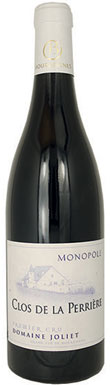

Fixin’s leading cru: a very refined and serious example of Côte de Nuits Pinot: richness, velvet tannins, finesse, classic aromas. Intriguing notes of spice evident...
2013
Domaine JolietFixin

Domaine René Bouvier, Longeroies, Marsannay, Burgundy, France, 2015
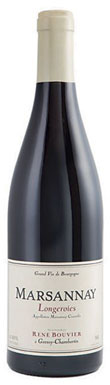
The fleshiness of the vintage shines through, with ripe, sweet red fruits and a pronounced floral note. Hard not to like now but, with fine...
2015
Domaine René BouvierMarsannay
Domaine Taupenot-Merme, Morey-St-Denis, Burgundy, France, 2014
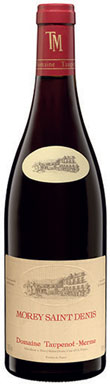
The charming Romain Taupenot represents the family’s seventh generation here, and he is a strong advocate of allowing terroir to shine through. Owning premier cru...
2014
Domaine Taupenot-MermeMorey-St-Denis
Domaine Berthaut, Les Crais, Fixin, Burgundy, France, 2014
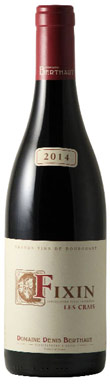
Young star winemaker Amélie Berthaut’s first vintage was only in 2013, but she has now taken over from her parents and is making some of...
2014
Domaine BerthautFixin
Domaine Coillot, Les Boivins, Marsannay, Burgundy, France, 2014
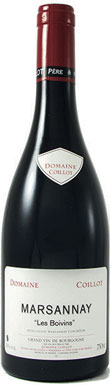
Beautifully elegant, lots of structure and the ability to age very well. Bottled unfined and unfiltered following modest use of oak, the emphasis here is...
2014
Domaine CoillotMarsannay
Huguenot Pere & Fils, Petits Crais, Fixin, Burgundy, France, 2015
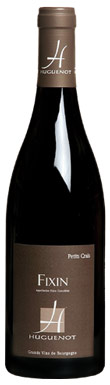
Quite a solid, chunky style, partly due to the predominance of clay soil, interspersed with calcareous rocks, this has plenty of dark fruit and concentration...
2015
Huguenot Pere & FilsFixin
Domaine Jean Fournier, Cuvée St-Urbain, Marsannay, Burgundy, France, 2015
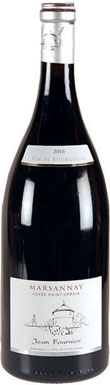
A Marsannay specialist, Laurent Fournier produces his Cuvée St-Urbain from a blend of village vineyards and younger vines. The 2015 has fine tannins, red berry...
2015
Domaine Jean FournierMarsannay
Domaine Stéphane Magnien, Morey-St-Denis, Burgundy, France, 2013
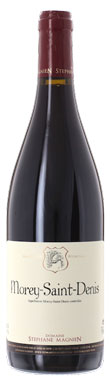
A young producer with a small 4.5ha estate in Morey, Magnien’s wines are focused, ethereal and show very restrained use of oak. Subtlety is the...
2013
Domaine Stéphane MagnienMorey-St-Denis
Thévenot Le Brun, Clos du Vignon, Bourgogne, Burgundy, France, 2015
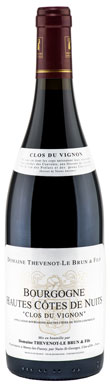
Thévenot Le Brun’s best vineyard, Clos du Vignon is a 7ha monopole sitting on chalky, rock soil and located in the commune of Marey-lès-Fussey. With...
2015
Thévenot Le BrunBourgogne
Domaine Michel Gros, Fontaine St-Martin, Bourgogne, Burgundy, France, 2015
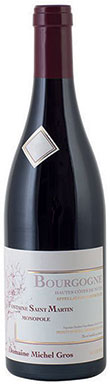
This is a lighter, paler style of Pinot Noir but it has plenty of potential for ageing too. Grown on a 4ha monopole (where the...
2015
Domaine Michel GrosBourgogne
Domaine Thibault Liger-Belair, Le Clos du Prieuré, Bourgogne, Burgundy, France, 2014
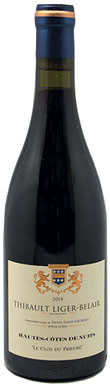
From 20- to 30-year-old vines lying on a steep, south-facing, 1.1ha site, this is a delicious example of Hautes Côtes de Nuits. Using 100% destemmed...
2014
Domaine Thibault Liger-BelairBourgogne
Domaine Arlaud, Roncevie, Bourgogne, Burgundy, France, 2014
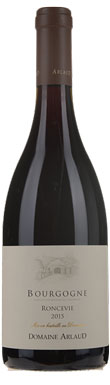
From a vineyard that was classified as Gevrey-Chambertin until 1964, this is an elegant, sweet Pinot from a top Morey producer: Domaine Arlaud is a...
2014
Domaine ArlaudBourgogne
