
Traditional Method Italian sparkling wines: Panel tasting results
Our judges enjoyed the quality and consistency of these excellent sparkling wines from around Italy, though there was a measure of frustration at a lack of availability...


Andrea Briccarello, Michael Garner and Anthony Rose tasted 95 wines with two outstanding and 44 highly recommended.
Entry criteria: producers and agents were invited to submit sparkling wines made by the traditional method from specified regions in Piedmont, Lombardy, Veneto, Trentino, Emilia Romagna, Puglia and Sicily
The verdict
The wines tasted were sent in from as far north as Trentino-Alto Adige, and as far south as Sicily. Despite the words ‘metodo classico’ evoking images of the classic Champagne varieties, just under one third of the wines were made using indigenous grapes, such as Aglianico, Bombino Bianco, Glera, Susumaniello and Turbiana. The fact that nearly half of the wines achieved scores of 90 points and above was a fantastic result for such a varied collection.
‘I was very pleasantly surprised by the diversity of style and quality across a number of regions,’ Anthony Rose began. ‘Mostly, the wines were based on traditional Champagne varieties, but where there were indigenous varieties, as in Prosecco and Lambrusco, quality was no lower.’
Ten of the top 12 wines (92pts and above) were indeed based on Pinot Noir or Chardonnay, but to what extent can this be put down to stylistic aspirations rather than a quality advantage? ‘Champagne is the mecca for sparkling wine and we drink quite a lot of it in Italy,’ explained Andrea Briccarello. ‘I know a lot of producers, particularly from the Langhe, who are very keen to produce sparkling wines stylistically very close to Champagne.’
The most widely known of Italy’s metodo classico wines, certainly in the UK, is Franciacorta. On this occasion, however, with only six wines scoring 90pts or more, it was outgunned by Alta Langa (13) and Trento (14). There were fewer Franciacorta wines on show, and Michael Garner pointed out that: ‘If you approach something with too high an aspiration, it can struggle as a result.’ Briccarello added: ‘There were some good examples, but I was expecting a tiny bit more intensity and maybe more character.’
Trento was singled out for its freshness, thanks to the altitude of the region’s vineyards in Italy’s northeast, while Piedmont’s Alta Langa in the northwest was dubbed by Garner as ‘a region to watch’. Away from these metodo classico-only denominations, Emilia Romagna performed very well, notably with two 2016 Lambrusco wines being the only ones in the top 12 not from the aforementioned DOC/Gs. ‘I thought the best Proseccos and Lambruscos came through extremely well,’ said Rose. ‘In particular, there was a trio of Lambruscos that knocked my socks off.’
Garner backed up Rose’s view on Lambrusco, noting that ‘when it’s made in that way – refermentation in bottle and the lowest levels of residual sugar – you’ve got one of the great wines of Italy’. Briccarello agreed with the other judges, but was dismayed by the lack of availability outside Italy: ‘I don’t think in the UK we get the best of the Lambruscos. Today we saw that the quality is on a par with the best rosé sparkling wines – I’m talking about Champagne and so on.’
Garner declared his preference for drier styles, reasoning that lower sugar levels allow more character to come through: ‘I consistently gave higher marks to the zero dosage and extra brut styles,’ he said.
‘I think Italy is becoming a very good source of some of the best sparkling wines,’ Briccarello noted. ‘Obviously bubbles are very fashionable at the moment – and Prosecco is really driving this trend in the UK. But I think there is room for other wines, things like Lambrusco, Trento DOC, and especially Franciacorta.’ Concluding, Rose added: ‘It’s the old Italian story isn’t it, really: massive potential, massive diversity, but without the single message that the Champagne region has.’
Discussion copy by James Button
The scores
95 wines tasted
Exceptional 0
Outstanding 2
Highly Recommended 44
Recommended 47
Commended 2
Fair 0
Poor 0
Faulty 0
About top-tier Italian regions
There is a lot of fizzy wine made and drunk in Italy, but for the best quality, bottle-fermented styles, four regions across the north dominate. Michael Garner outlines the history and the key factors
Bubbles – bollicine! Italians can’t get enough of them: any excuse will do to open a bottle of fizz. Despite a long-standing tradition of producing sparkling wine in Italy, until relatively recently consumers were probably more familiar with the frizzante (lightly sparkling) styles represented by Lambrusco and Prosecco.
Nowadays, more and more spumante (fully sparkling) wine is made by the ‘metodo classico’ (traditional method, refermented in the bottle), even though, rather ironically, the Charmat or tank method used by many frizzante producers was pioneered by an Italian, Federico Martinotti, at the end of the 19th century.
In 1902 in Trento, Giulio Ferrari first used the metodo classico to convert local Chardonnay grapes into Italy’s original Champagne lookalike. Since then, increasing numbers of wineries have taken to finishing off the fermentation process in bottle à la Champagne, to allow the wine to develop greater finesse with bottle age.
Trento DOC remains one of Italy’s most important denominations for metodo classico wines and is outstripped in terms of production numbers only by Franciacorta DOCG. Often referred to as Trentodoc, the denomination, created in 1993, covers the mountainous area surrounding the city of Trento in the northeast.
Franciacorta, from the foothills south of Lake Iseo in the province of Brescia in Lombardy (northwest), has only produced metodo classico wines on a regular basis since the 1960s, despite achieving DOC status before Trento in 1967 – it was upgraded to DOCG in 1995.
The other two principal metodo classico denominations (both now DOCG) are significantly smaller: also in Lombardy, Oltrepò Pavese lies close to Pavia; while in Piedmont, Alta Langa covers the hills east of Alba which skirt the border with the Liguria region.
Regional flavour
Common to all four is the use of classic Champagne varieties, in particular Chardonnay and Pinot Nero (Pinot Noir). Trentodoc focuses on the three classics of Chardonnay, Pinot Nero and Pinot Meunier, but also allows an unspecified proportion of Pinot Bianco in the final blend. Franciacorta specifies a minimum 50% of either Chardonnay or Pinot Nero, up to 50% Pinot Bianco, and a possible 10% of local variety Erbamat. Oltrepò Pavese DOCG calls for at least 70% Pinot Nero, to which can be added Chardonnay, Pinot Bianco and/or Pinot Grigio; and Alta Langa stays fairly true to the Chardonnay/Pinot Nero theme, but in theory, allows up to 10% from a long list of other permitted varieties.
All four denominations have different salient characteristics, largely determined by growing conditions. Trentodoc is produced in Alpine vineyards where the higher altitudes give the wines a fresher, slightly leaner style. Alta Langa is also produced from higher altitude vineyards (a minimum elevation of 250m), hence the crisp and lively, aromatic style.
The wines of Franciacorta are fuller-bodied, but with evident balance and finesse. And while the Oltrepò Pavese wines depend mainly on Pinot Nero, the area lags behind as yet in terms of quality and consistency.
Beyond these ‘dedicated’ metodo classico denominations, many other DOC/Gs embrace the production of metodo classico alongside still wines, often using indigenous grapes as permitted under local DOC rules: for example, the DOCs for Verdicchio (Marche region) and Etna Bianco (Sicily). Similarly, individual houses will make their own proprietary blends, often using metodo classico.
For now, the little-known and underrated metodo classico wines from the Lessini Durello Riserva DOC near Verona in Veneto point in an interesting new direction. Made mainly from the local, high-acid Durella variety (locally called Durello), its inimitable style is based on at least 36 months of ageing on the lees. Quantities are tiny so far and it is rarely seen beyond its production area, hence the reason no bottles made it to this panel tasting. Nonetheless, it is well worth seeking out.
Traditional-method sparkling: Italy’s top-tier regions
Franciacorta 2,902ha; nearly 18 million bottles; DOC since 1967, promoted to DOCG in 1995
Trento 1,012ha; almost 9m bottles; DOC since 1993
Oltrepò Pavese 122ha; less than 500,000 bottles; DOC since 1970, promoted to DOCG in 2007
Alta Langa 106ha; a little more than 500,000 bottles; DOC since 2002, promoted to DOCG in 2011
Top scoring traditional method Italian sparkling wines
The judges
Andrea Briccarello
Briccarello is business development manager at specialist on-trade wine merchant Jascots. Formerly head sommelier and wine buyer for the Galvin restaurant group, he also worked previously as a brand manager for Bisol Prosecco, and has been a regular DWWA judge since 2010.
Michael Garner
Garner has worked in the wine business for 40 years, mostly specialising in the wines of Italy. He is co-owner of Italian wine specialist Tria Wines, and is a DWWA Regional Chair for northern Italy. Garner is author of Amarone and the Fine Wines of Verona, and co-author of Barolo: Tar and Roses
Anthony Rose
Rose is a widely published journalist and author, a founder member of The Wine Gang, and the DWWA Regional Chair for southern Italy. He is currently working on a new book, Fizz! Champagne and the Sparkling Wines of the World (Infinite Ideas), and he publishes his own blog at www.anthonyrosewine.com
Deltetto, Brut, Alta Langa, Piedmont, Italy, 2016
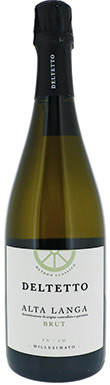

Established in 1953 in the heart of the Roero region by Carlo and Catterina Deltetto, the estate initially produced still red and white wines. When...
2016
DeltettoAlta Langa

Marcalberto, Millesimato, Alta Langa, Piedmont, Italy, 2016
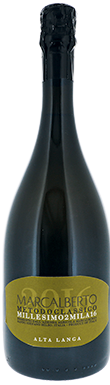
With six hectares of vineyards located in the Santo Stefano Belbo, Cossano Belbo, Calosso and Laozzolo regions of Langhe, this small, family run winery focusses...
2016
MarcalbertoAlta Langa
Cesarini Sforza, Brut, Trento, Trentino-Alto Adige, Italy
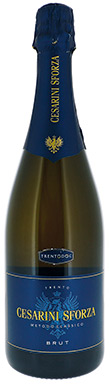
Impressive biscuity notes intertwined with lush ripe peaches and apples; smoky and toasty with a mouthwatering freshness and perfect acidity.
Cesarini SforzaTrento
Ghione Anna, La Reine, Alta Langa, Piedmont, Italy, 2016
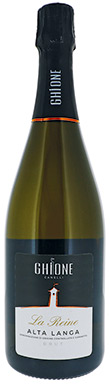
Great finesse and intensity of quince, lime and aromatic herbs; superbly viscous and creamy with a lifted freshness and persistent finish.
2016
Ghione AnnaAlta Langa
Letrari, 976 Riserva del Fondatore, Trento, Trentino-Alto Adige, Italy, 2009
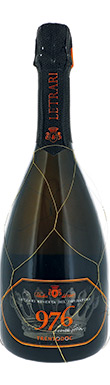
Luscious ripe apricot, melon and baked citrus with a soft, supple, evolved character and a long, poised finish.
2009
LetrariTrento
Maso Martis, Brut Riserva, Trento, Trentino-Alto Adige, Italy, 2009
An abundance of toasty, biscuity warmth combined with lots of vibrant fresh peach and apple fruits; long and delicious.
2009
Maso MartisTrento
Ettore Germano, Extra Brut, Alta Langa, Piedmont, Italy, 2016
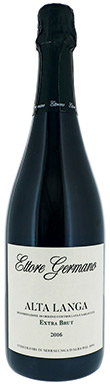
A showcase of juicy red berries with an explosion of raspberry bubbles, a tangy cranberry acidity and a vibrant finish.
2016
Ettore GermanoAlta Langa
Ferrari, Riserva del Fondatore, Trento, Trentino-Alto Adige, Italy, 2007
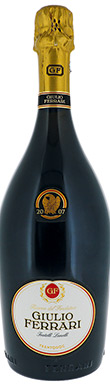
In incredibly good shape for its age, lots of warming toasty butterscotch and nutty characters and a jammy lemon core.
2007
FerrariTrento
Castello Bonomi, Cru Perdu, Franciacorta, Lombardy, Italy, 2011
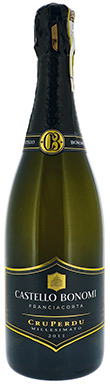
Hugely complex savoury cardamon and paprika spice on nutty brioche and hints of ripe rich fruit. Mature and decadent.
2011
Castello BonomiFranciacorta
Zucchi, Metodo Classico, Lambrusco, di Sorbara, Emilia Romagna, Italy, 2016
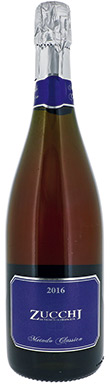
Sumptuous raspberries, violets and cranberries with an energetic fizz and a lifted, tangy twist on the long, fresh finish.
2016
ZucchiLambrusco
Cavicchioli, Rosè del Cristo, Lambrusco, di Sorbara, Emilia Romagna, Italy, 2016
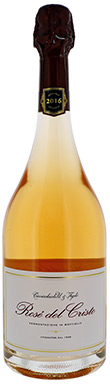
Vivacious sloe fruit and crunchy red berries with a gorgeous frothy, creamy texture and a zingy, fresh finish.
2016
CavicchioliLambrusco
Rotari, Flavio Riserva, Trento, Trentino-Alto Adige, Italy, 2011
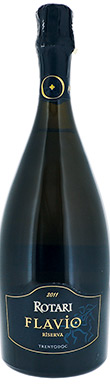
Plush peaches and apples with citrus inflections, a lush, creamy texture and a smoky, savoury character on the finish.
2011
RotariTrento
Il Cascinone, Alasia Brut Riserva, Alta Langa, Piedmont, Italy, 2010
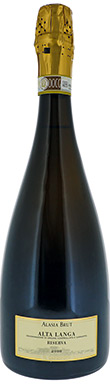
An explosion of ripe figs, preserved lemons and honeyed biscuits; plump and generous with a rounded, intense finish.
2010
Il CascinoneAlta Langa
Vite Colte, Alta Langa, Piedmont, Italy, 2016
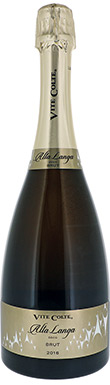
A warmth of nutty figs on the nose with a finely textured ripe peachy mousse and a fresh lemony finish.
2016
Vite ColteAlta Langa
Frescobaldi, Brut, Trento, Trentino-Alto Adige, Italy
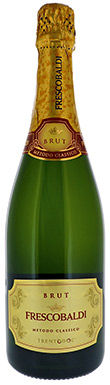
Opulent stone fruit, flinty notes and an underlying lime zesty core; vibrant and fresh with lots of elegance and poise.
FrescobaldiTrento
Lantieri, Arcadia, Franciacorta, Lombardy, Italy, 2015
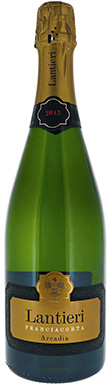
Beguiling yellow citrus flower, ripe nectarine and melon with a persistent, fresh mousse and a long, tantalising finish.
2015
LantieriFranciacorta
Madonna delle Vittorie, Brut, Trento, Trentino-Alto Adige, Italy, 2015
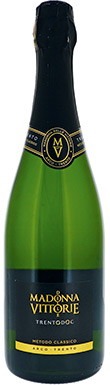
Bursting with white florals, watermelon and ripe lemons with a lovely rounded, mellow palate and a complex stone fruit finish.
2015
Madonna delle VittorieTrento
Pisoni, Erminia Segalla Riserva Millesimato Extra Brut, Trento, Trentino-Alto Adige, Italy, 2010
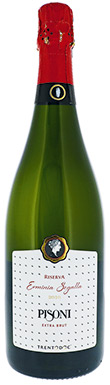
Intriguing aromas of ripe guava and lychees with hints of custard cream; full and rounded with a spiced apple finish.
2010
PisoniTrento
Villa di Corlo, Elettra, Lambrusco, di Sorbara, Emilia Romagna, Italy, 2018
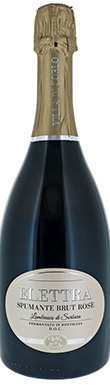
Packed with vivacious summer fruits and smoky liquorice; youthful and brisk with a piercing bite of cranberry acidity.
2018
Villa di CorloLambrusco
Tesco, Finest Extra Brut, Franciacorta, Lombardy, Italy
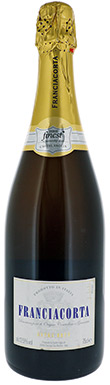
A lovely purity of plump melon and pineapple with stewed apple characters; ripe, rounded and full of charisma.
TescoFranciacorta
Gancia, Cuvée 60 Mesi Brut Riserva, Alta Langa, Piedmont, Italy, 2010
Beautifully evolved with a complexity of mellow lemons, honeyed yellow fruits, praline and cashew nuts and a lush, buttery texture.
2010
GanciaAlta Langa
Cantina della Volta, Rosé, Lambrusco, di Sorbara, Emilia Romagna, Italy, 2015
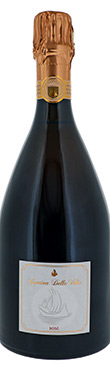
Lavish red berries on a zingy, smoky core; very fresh and lively with a super dose of zippy acidity.
2015
Cantina della VoltaLambrusco
Roberto Garbarino, Extra Brut, Alta Langa, Piedmont, Italy, 2016
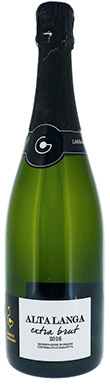
An appealing red berry fruit tanginess and a chalky fresh zing nicely balanced by a nutty, biscuity complexity.
2016
Roberto GarbarinoAlta Langa
Ferro 13, Link Brut Rosé, Modena, Emilia Romagna, Italy, 2018
Lovely raspberry ripple flavours with notes of blueberry and spicy, sweet cherry; crunchy and juicy with firm underlying tannins.
2018
Ferro 13Modena
Cleto Chiarli, Quinto Passo Rosé Brut, Modena, Emilia Romagna, Italy, 2015
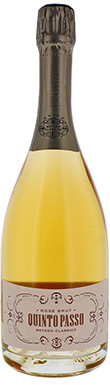
Fleshy berries and savoury, smoky undertones with an energetic verve of fresh acidity and a firm structure.
2015
Cleto ChiarliModena
Paltrinieri, Grosso Metodo Classico, Lambrusco, di Sorbara, Emilia Romagna, Italy, 2016
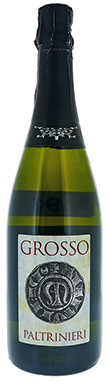
Pomegranate, violets and deep forest fruits combine with a ripe cherry crush and a rounded complex toastiness. Firm and full.
2016
PaltrinieriLambrusco
Tosti 1820, Riserva Giulio I, Alta Langa, Piedmont, Italy, 2012
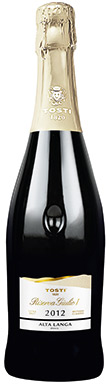
Alive with lemon biscuits and a zingy marmalade acidity; mellow, mature and rounded with a figgy, nutty warmth.
2012
Tosti 1820Alta Langa
Ferghettina, Pas Dosé Riserva 33, Franciacorta, Lombardy, Italy, 2012
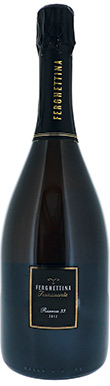
Alluring fresh cut white stone fruit and citrus with a flinty, chalky edge and an attractively textured peachy froth.
2012
FerghettinaFranciacorta
Coppo, Riserva Coppo, Alta Langa, Piedmont, Italy, 2014
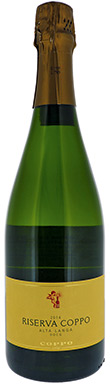
Charming plump peach and nectarine with a zesty lemon freshness; lightly toasted and nutty with finely textured bubbles.
2014
CoppoAlta Langa
Ferrari, Perlé Bianco Riserva, Trento, Trentino-Alto Adige, Italy, 2011
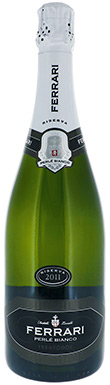
A luxury of crème pâtissière on ripe, rich fruit and cashew nuts and a limey streak of zesty acidity.
2011
FerrariTrento
