Trefethen: Profile and wine ratings


Californian wine expert Elin McCoy charts the ascension of Napa's Trefethen Family Vineyards and shares her tasting notes from their wine collection, including Library Selection Chardonnay and Cabernet Sauvignons from 1979-2015...
In 2014, when a major earthquake shook the Napa Valley, the Trefethen Family Vineyards’ pumpkin coloured 19th century wooden winery almost collapsed.
That kind of determination is one reason the family’s wine estate in Napa’s Oak Knoll District has prospered since its founding 50 years ago.
Only 25 wineries existed in Napa when Eugene Trefethen and his wife bought a dilapidated 440-acre ghost winery in 1968 and began planting vines on the gravelly soils of their main ranch. Their son John and his wife Janet released the first commercial wine, a Chardonnay, in 1973.
‘We used Bourbon barrels because we’d read that we should age chardonnay in oak,’ said Janet, as we sampled several older vintages of their famous white.
Cabernet Sauvignon, Napa’s prime grape, has always been part of the Trefethen vineyard varietal mix, which now includes Malbec, Pinot Noir, and Riesling.Their first Cabernet Sauvignon vintage was 1974, but it was their Chardonnay that first gained a reputation.
At Gault-Millau’s 1979 World Wine Olympics in Paris, the 1976 was proclaimed the ‘best Chardonnay in the world.’
I first tasted it at a California barrel tasting held at the Four Seasons restaurant in New York, where we applauded its streamlined elegance. Key to the Trefethens’ philosophy from the beginning has been their commitment to using only grapes from their own vineyards.
Lying toward the southern end of the Napa Valley, the Oak Knoll District is one of Napa’s coolest AVAs. Wind and morning fog blowing up from San Pablo Bay help create the longest growing season in the valley.
Since 2004, viticulturist Jon Ruel, now CEO, has overseen a push to ‘green’ initiatives like solar power and biodiesel tractors, more precision farming and very limited irrigation.
As Cabernet Sauvignons in Napa verged toward increasingly powerful styles, Trefethen’s Cabernets consistently remained balanced, even as they evolved from a Cabernet Sauvignon-Merlot blend aged in American oak to cuvées with Malbec and Petit Verdot, sometimes Cabernet Franc, aged in oak from France and Hungary.
‘The Oak Knoll climate keeps us from making over ripe wines,’ said Ruel. Early vintages could be quite herbaceous, but for the past 30-odd years the wines have combined brightness, minty aromas, rich, intense fruit and firm structure.
Recently they’ve shown more weight and density. They’re satisfying rather than stunning, often underestimated when young, and they age surprisingly well.
The revamped barn now holds ageing barrels and a public tasting space, but Janet Trefethen and her daughter Hailey walked me to the restored tile-roofed craftsman-style villa on the property where we sampled seven of the winery’s Cabernets from 1979 to 2015 in an antique-panelled room.
The standouts? 1986, 1999 Library selection, 2011, and 2015.
A selection of Elin’s top wines from this tasting
The vintages below are listed in the following order:
Cabernet Sauvignons – 2015, 2011, 2008, 2006, 1999, 1986, 1979
Chardonnays – 2011, 1991, 1985
Trefethen Family Vineyards, Trefethen Family Vineyards Cabernet Sauvignon, Napa Valley, Oak Knoll, California, USA, 2011
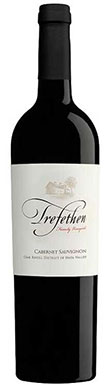

Critics wrote off many Cabernet Sauvignons from this uncharacteristically cold and rainy vintage. But this Trefethen vintage is elegant and expressive, pretty rather than powerful, with a floral nose, followed by juicy red berry and mineral flavours. Trefethen’s viticulturist and CEO, Jon Ruel, opted to drop fruit to reduce yields and waited out the rain. He also reduced the amount of Cabernet Sauvignon in the blend to 79%, including 18% Malbec (an early ripener) and 3% Petit Verdot to boost texture and colour.
2011
Trefethen Family VineyardsNapa Valley

Trefethen Family Vineyards, Trefethen Family Vineyards Cabernet Sauvignon, Napa Valley, Oak Knoll, California, USA, 2008
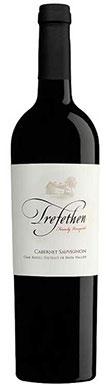
Drought, frost, and low yields defined Napa’s 2008 vintage, but this wine shows plenty of verve, as well as a sense of balance and harmony. It tastes surprisingly young, almost swashbuckling, with suave tannins. Plus aromas of liquorice, mint, earth, blackberry, completed by a herb and chocolate elegance. The blend is 91% Cabernet Sauvignon, 6% Merlot, and 1% of Cabernet Franc, Malbec, and Petit Verdot, with 17 months in mostly French oak, about 60% new.
2008
Trefethen Family VineyardsNapa Valley
Trefethen Family Vineyards, Trefethen Family Vineyards Cabernet Sauvignon, Napa Valley, Oak Knoll, California, USA, 2006
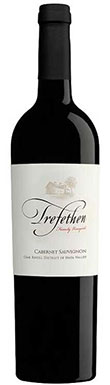
This wine is marked by one of the longest growing seasons in Trefethen’s history, with harvest lasting until November 1. In 2001 the Trefethens had started shifting the blend; this is 91% Cabernet Sauvignon, 4% Malbec, 3% Merlot, and 2% Petit Verdot, with 17 months in half-American, half-French barrels, about two-thirds new. Deeply coloured, the wine is powerful and structured, showing sun-kissed Napa fruit and cigar box aromas as well as freshness.
2006
Trefethen Family VineyardsNapa Valley
Trefethen Family Vineyards, Trefethen Vineyards Library Selection Cabernet Sauvignon, Napa Valley, Oak Knoll, California, USA, 1979
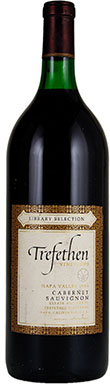
This red is very alive, with pleasant herbal aromas and flavours, plus soft tannins — although it’s a bit beyond mature now. An under-appreciated vintage in Napa, 1979 had a cool growing season until a 10-day heat wave pushed ripening, resulting in long-lived Cabernet Sauvignon wines. The grapes for this, still intense, cuvée were harvested in mid-October and the wine then spent 12 months in American oak, which was typical in the 1970s.
1979
Trefethen Family VineyardsNapa Valley
Trefethen Family Vineyards, Trefethen Vineyards Library Selection Cabernet Sauvignon, Napa Valley, Oak Knoll, California, USA, 1999
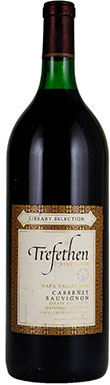
A cool summer followed by a warm and dry autumn, with a later than usual harvest in October, produced perfectly balanced wines. This wine is deeply coloured, plummy blend of 90 % Cabernet and 10% Merlot. Aged for 16 months in predominantly French oak (55% new), this shows plenty of gorgeous, yet restrained, dark fruit with smoky, spicy notes along with a silky and supple texture. It’s immensely elegant and drinkable now.
1999
Trefethen Family VineyardsNapa Valley
Trefethen Family Vineyards, Trefethen Vineyards Cabernet Sauvignon, Napa Valley, Oak Knoll, California, USA, 1986
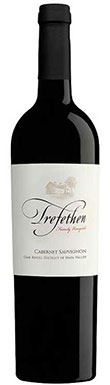
Soft and pretty, the nose is classic cassis fruit and herbs, with a wild mint spiciness on the finish. The generous palate has good concentration and velvety richness. This lush cuvée, of 85% Cabernet Sauvignon and 15% Merlot, spent 12 months in a mix of American (59%) and French (41%) oak. After an idyllically cool season, harvest was early — 4 September through to 1 October — with good yields.
1986
Trefethen Family VineyardsNapa Valley
Trefethen Family Vineyards, Trefethen Family Vineyards Chardonnay, Napa Valley, Oak Knoll, California, USA, 2011
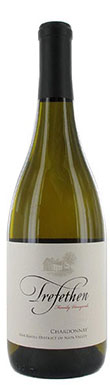
Intensely crisp and fresh, this has plenty of citrussy zing overlaid with spiciness. With its zesty minerality, this lively white reflects Trefethen’s winemaking developments, which began in the later 1990s. Barrel fermentation had become de rigueur, and a percentage of the wine went through malolactic fermentation, before spending time in French and Hungarian oak.
2011
Trefethen Family VineyardsNapa Valley
Trefethen Family Vineyards, Trefethen Vineyards Library Selection Chardonnay, Napa Valley, Oak Knoll, California, USA, 1991

Very direct and lemony, this wine has some ripe opulence and crème brûlée notes, as well as mineral and earth nuances, which may come from both the cool growing season and long hang time for the grapes. The harvest spanned from 30 September to 18 October. A tiny percentage was barrel fermented.
1991
Trefethen Family VineyardsNapa Valley
Trefethen Family Vineyards, Trefethen Vineyards Library Selection Chardonnay, Napa Valley, Oak Knoll, California, USA, 1985
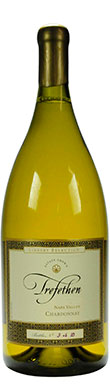
A brilliant gold colour, this 33-year-old Chardonnay is still round, intense, and brightly refreshing, with a tangy lemon-lime marmalade taste but not much complexity. It’s from an almost perfect growing season, when the grapes were harvested between 28 August and 25 September. Trefethen used no barrel fermentation or malolactic fermentation, but about 50% was aged in French oak for eight months.
1985
Trefethen Family VineyardsNapa Valley
