
Top Uco Valley sub-regions: Panel tasting results
A tasting of Altamira and Gualtallary reds saw both subregions come up trumps: Altamira showing its pedigree and Gualtallary an exciting sense of experimentation.


Phil Crozier, Paz Levinson and Patricio Tapia tasted 99 wines from the Uco Valley sub-regions of Altamira and Gualtallary, with 12 Outstanding and 37 Highly Recommended.
Originally published in the October 2017 issue of Decanter magazine
Entry Criteria: Producers and UK agents were invited to submit their latest-release reds from Altamira and Gualtallary in Argentina’s Uco Valley, in which 85% of the grapes must be sourced from a single sub-region.
The verdict
The rationale for grouping these two micro-regions of the Uco Valley together for this panel tasting was that both are producing some of Argentina’s most exciting Malbecs and other reds. That fact is confirmed by a fantastic set of results – no fewer than 12 wines rated Outstanding, and a further 37 Highly Recommended.
Both regions won their fair share of the accolades (with Gualtallary having the edge at Highly Recommended level), but in the post-tasting discussion our experts emphasised the differences between them.Altamira is a long-established wine region with older vines and a distinguished pedigree, while Gualtallary is an emerging region without a fully established identity. ‘More experimentation, less history,’ quipped Paz Levinson. ‘We found an “Altamira style” far more than we did a “Gualtallary style” – Altamira was definitely more consistent stylistically.’
Quick link See all tasting notes & scores from this panel tasting
Regional character
That said, the tasters were able to make some general observations about regional characters. Levinson described the wines of Gualtallary as having ‘wildness’ and being more herbal. ‘It’s not the fruit bomb, but more about bones, you know – about structure and texture.’
Phil Crozier agreed with the ‘wildness’ descriptor for the Gualtallary reds: ‘I get black fruit from here, and flowers mixed in with that – lavender, roses, violets. There’s a real delicacy, a wildness. Altamira is more red fruit, austerity, medicinal chalk, eucalyptus, menthol. The Altamira wines have a seriousness about them – they appeal to, for example, Burgundy lovers.’
For Patricio Tapia, the difference is about structure. ‘The Altamira wines are better for cellaring, probably because of the structure of the tannins,’ he observed. He found the Altamira style more austere, and the Gualtallary style generally ‘lighter, fresher and vibrant’, though he complained about some ‘soupy, flat wines’. It figures, he said: ‘There’s massive variation in styles because they’re still discovering themselves.’
One major drawback for wine lovers, Crozier pointed out, is that producers are not currently allowed to use the word Gualtallary on the front label, as the rights to use that name are privately owned. Hopefully that situation will change, but in the meantime some producers use ‘Gualta’ on the label, as an alternative.
‘It’s the biggest stumbling block for Gualtallary at the moment,’ added a frustrated Crozier.
Talk then turned to vintages. ‘The 2013s are drinking very nicely – it was a beautiful vintage,’ enthused Crozier. ‘And some of the 2014s were very good too; they’re beginning to come into their own. I was surprised at how good the 2015s are, but it was a disaster for Cabernet Sauvignon – don’t even go there,’ he warned.
In general, buyers who want a change from Malbec are better going to Altamira for Cabernet Sauvignon and Gualtallary for Cabernet Franc, felt Tapia. ‘Malbec works everywhere!’ he added.
All three tasters were keen to convey their genuine enthusiasm for these wines. ‘It was an amazing tasting – there were some absolutely staggeringly beautiful wines,’ said Crozier. And most are approachable now.
‘That’s the strength of Argentinian reds – especially now that the winemakers are managing the oak and tannins more skilfully,’ said Levinson. ‘You can drink them now with pleasure, or happily cellar them for a decade or more if you want to.’
The scores
99 wines tasted
Exceptional 0
Outstanding 12
Highly Recommended 37
Recommended 31
Commended 6
Fair 8
Poor 3
Faulty 2
See all 99 wines from this panel tasting
Gualtallary & Altamira
These high-altitude Uco Valley regions share similar topographies but their history of winemaking, and the reds themselves, are quite different, as Patricio Tapia reports…
Malbec and Argentina are inextricably linked. The country’s producers know that and have profited from it. But as Italian consultant Alberto Antonini – a key player in the evolution of Argentinian wine – observes: ‘The next step is to sell less Malbec and more Argentinian terroir.’
In this context, regionality begins to play a key role in how we understand Argentinian wines today. There are many regions making excellent wines (Malbec or not), but two garner the most attention for the quality and character they deliver. Both are in the heights of the Uco Valley, at the foot of the Andes: Gualtallary and Altamira, south of the city of Mendoza.
Altamira has a long tradition in wine, and some of its vineyards are more than a century old, while Gualtallary is a new area that was only planted in 1994 thanks to the Chandon winery and its sparkling wines.
In geographical terms, Gualtallary is located north of the Uco Valley, in the department of Tupungato, at an altitude of 1,200m to 1,550m, while Altamira is in the centre of the valley, in the department of Tunuyán, at a height ranging from 1,080m to 1,100m.
The geographical boundaries of Altamira were legally established in 2013 (revisited in 2017) and today it has its own IG (geographical indication), while Gualtallary is still in the process of legalising its borders.
Both share similar topographies: Altamira has alluvial soils that millions of years ago formed the bed of the Tunuyán river, and Gualtallary is on an alluvial cone – the old Las Tunas bed. The soils are rich in sand, gravel and mainly chalk, which imparts mineral notes as well as tense, tight textures in the wines, a detail that separates them from the soft, round tannins of other lower areas.
The character of Gualtallary wines versus Altamira’s is still to be clearly identified, mainly – as Eduardo del Popolo, winemaker at Susana Balbo Winery, says – because both areas are very disparate. But to generalise, del Popolo says the Gualtallary wines are more herbal and light, while Altamira’s are more austere and robust.
The dominant grape is Malbec, but Matías Michelini, owner of Passionate Wine, says Cabernet Franc has also produced very good results in Gualtallary, as well as Sauvignon Blanc. For Sebastián Zuccardi, of Bodega Zuccardi, Bonarda has many possibilities in Altamira.
These Uco Valley sub-regions already produce some of the best wines in Argentina but are still a work in progress.
Uco Valley: Know your vintages
2016 A cold year, giving fresh, light wines; great for those seeking finesse. One of the best vintages of the decade.
2015 Those who picked before the April rains got fresh wines with rich, aromatic, vivid character. Later heatwaves gave riper, voluptuous reds.
2014 A year of finesse and freshness. Low yields, but rich acidity and fruit flavours. The best will age for several years.
2013 Not much concentration, but rich in acidity and fruit notes.
2012 Frost cut yields by up to 40%. A year of moderate heat and very ripe fruit. Drink now.
2011 Concentration and strength, with intense, tannic wines.
2010 Refined and delicate reds. Time to broach but will continue to age well in bottle.
2009 Fat, velvety, ripe reds to drink now.
Gualtallary
Area 5,245ha
Area under vine 2,249ha
Main grapes planted Malbec 1,119ha, Chardonnay 335ha, Cabernet Sauvignon 270ha, Pinot Noir 177ha, Merlot 86ha, Sauvignon Blanc 70ha, Cabernet Franc 55ha
Altamira
Area 9,290ha
Area under vine 2,786ha
Main grapes planted Malbec 1,712ha, Cabernet Sauvignon 434ha, Chardonnay 169ha, Pinot Noir 120ha, Syrah 112ha, Sauvignon Blanc 45ha, Cabernet Franc 43ha
The judges
Phil Crozier
Crozier is wine director for the Gaucho restaurant group, responsible for the wine list, including its 200 Argentinian wines. He also runs the Gaucho-owned Malbec vineyard in Lulunta in Mendoza, which produces Viña Patricia. Crozier is also involved with the production of the Corte G range of wines.
Paz Levinson
Levinson is currently head sommelier at Virtus in Paris and works between France and Argentina as a consultant and educator. She was the first Argentinian to pass the Court of Master Sommeliers’ advanced sommelier certificate, and won the ASI and APAS Best Sommelier of the Americas in 2015.
Patricio Tapia
Tapia is Regional Chair for Argentina at the Decanter World Wine Awards. He is the South American wine critic for Wine & Spirits, and also writes the annual Descorchados bilingual wine guide to Argentinian, Chilean and Uruguayan wine, published in both Spanish and English.
Top-rated wines from the panel tasting:
You may also like:
Premium South American red blends: Panel tasting results
Tasting Catena’s Flagship wines
Italian varieties in Australia: setting down roots
Gen del Alma, Crua Chan Gualta Malbec, Uco Valley, Gualtallary, Mendoza, Argentina, 2016
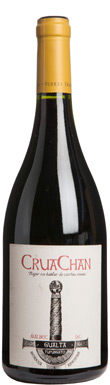

Gen del Alma is the project of Gerardo Michelini and his wife (and fellow winemaker) Andrea Muffato. Set up in 2012, the 7ha estate is...
2016
Gen del AlmaUco Valley

Los Clop, Reserva Cabernet Sauvignon, Uco Valley, Altamira, Mendoza, Argentina, 2015
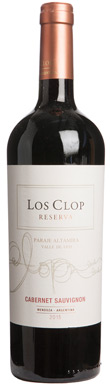
José Clop, a Spanish immigrant, founded Los Clop back in 1880, and today the estate is run by his great-grandchildren. In total this encompasses 350ha...
2015
Los ClopUco Valley
Susana Balbo, Signature Malbec, Uco Valley, Altamira, Mendoza, Argentina, 2015
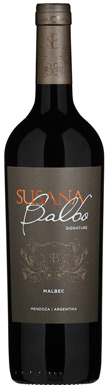
One of the most recognisable names in South America’s wine industry, Susana Balbo was the first woman in Argentina to receive an oenology degree when...
2015
Susana BalboUco Valley
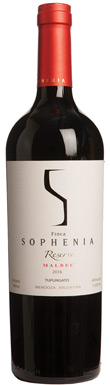
Finca Sophenia, Reserve Malbec, Uco Valley, Gualtallary, Mendoza, Argentina, 2016
96
Finca Sophenia is the creation of Roberto Luka, sometime president of Wines of Argentina, its name from an amalgam of daughters Sophie and Eugenia. Rogelio Rabino is head winemaker, with Matías Michelini in a consulting role. The vines are spread over 130ha of sandy and rocky soils at an altitude of 1,200m. Among their most treasured holdings here are the plantings of low-yielding Malbec clones. Following fermentation, the grapes are macerated with the skins for 10 days, after which the wines spend around a year in oak. Phil Crozier: Very deep and dark aromas unfold onto a palate flaunting a breathtaking concentration of fruit. Looks, feels and tastes expensive. Paz Levinson: Intense aromas of floral-tinged black cherry and blueberry fruit, with a beautiful length and elegance of herbal and floral black fruit on the palate. Patricio Tapia: This is absolutely what Gualtallary should deliver: a feast of fruit and flowers, bright acidity and bags of tension.
2016
Finca SopheniaUco Valley
Passionate Wine, Micheliniwine Parcela 84 Malbec, Uco Valley, Gualtallary, Mendoza, Argentina, 2014
As well as his involvement in various other projects, including Finca Sophenia and Zorzal, Matías Michelini runs Passionate Wine, where his enthusiasm and creativity are...
2014
Passionate WineUco Valley
Rutini, Single Vineyard Cabernet Franc, Uco Valley, Gualtallary, Mendoza, Argentina, 2014
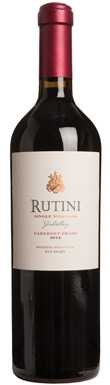
Felipe Rutini, an agro-engineer from Le Marche in Italy, established this bodega in 1885 with ‘Labour and Perseverance’ as its motto. The intervening years have...
2014
RutiniUco Valley
Zuccardi, Aluvional, Uco Valley, Altamira, Mendoza, Argentina, 2014
Founded in 1963 by engineer Alberto Zuccardi, this family estate is now run by second-generation José Alberto and his son Sebastián. Given its 16 million-litre...
2014
ZuccardiUco Valley
Zuccardi, Poligonos Malbec, Uco Valley, Altamira, Mendoza, Argentina, 2015
Zuccardi’s other outstanding wine here is another 100% Malbec from selected plots of its own vines in Altamira, again grown on alluvial soils but in...
2015
ZuccardiUco Valley
Escorihuela Gascón, Organic Vineyard Malbec, Uco Valley, Altamira, Mendoza, Argentina, 2016
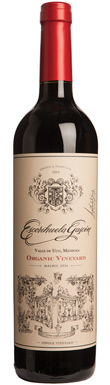
As its name suggests, this bodega was founded in 1884 by a certain Señor Miguel Escorihuela Gascón, at the tender age of 23, having arrived...
2016
Escorihuela GascónUco Valley
Gen del Alma, A Merced de Gualta La Cautiva Malbec, Uco Valley, Gualtallary, Mendoza, Argentina, 2015
The second Outstanding wine at this tasting from Gerardo Michelini and Andrea Muffato; this is a new addition to their range, and is also from...
2015
Gen del AlmaUco Valley
Solocontigo, Affaire, Uco Valley, Altamira, Mendoza, Argentina, 2015
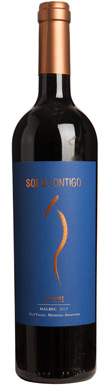
The grapes for this Malbec come from two different micro-regions within the Uco Valley: 85% from Altamira, and 15% from SoloContingo’s vineyard in Los Chacayes....
2015
SolocontigoUco Valley
Zorzal, Eggo Franco Cabernet Franc, Uco Valley, Tupungato, Mendoza, Argentina, 2015
Another Michelini Brothers production. This time it’s the turn of Juan Pablo as winemaker. He shares with Gerardo and Matías (who acts as consultant here)...
2015
ZorzalUco Valley
