
A Vertical of d’Arenberg’s The Dead Arm
Winemaker Chester Osborn explains the changes he’s made to his icon Shiraz during Sarah Ahmed’s recent visit to McLaren Vale


A famous wine merchant memorably described d’Arenberg’s range as having ‘more gold medals than a long-distance Kenyan runner’.
During my stint selling wine at said merchant 15 years ago, our shop’s allocation of the South Australian producer’s most glittering label, The Dead Arm Shiraz, sold out well before it hit the shelves.
While d’Arenberg traces its history back four generations, to 1912, The Dead Arm only surfaced in 1993.
As Australian Shiraz soared in popularity, ‘it just made sense’, said Osborn, to make a premium, icon example, primarily from d’Arenberg’s 50- to 100-year-old vines.
The winemaker initially experimented with a best-barrel Cabernet-Shiraz blend, before switching to 100% Shiraz – ‘the first release of the true Dead Arm’ – in 1994.
Osborn’s sister was not a fan of the name but, aside from being unforgettable, it highlighted a celebrated quality of the wine. Dead Arm, a vine disease caused by the fungus Eutypa lata, slowly reduces a vine arm to dead wood while the remaining arm profits in concentration.
‘Now biodynamics suits our wines quite well’ Chester Osborn
Decades of change
Concentration, especially fruit power, was the name of the game for Australian Shiraz in the 1990s and, said Osborn, ‘we were picking riper then, with less earthiness, less minerality and maybe not quite as good acidity as today’.
Reminiscent of Port, The Dead Arm 2001 has retained generous sweet fruit. Subsequent developments have tempered fruit expression and sweetness, producing a grittier wine, with more balance and personality – earth, old-vine spice and sinew. Freshness too. I suspect the resulting more nuanced, structured wines will age better.
The obvious difference is shifting, in 2005, from French and American oak to exclusively French oak (6% to 8% new) with low toast, not the medium-plus toast that imparts boot polish and a charred, dry note to the 2001 vintage.
From 2001, Osborn stopped racking a few barrels (off the lees) and, in 2004, stopped racking altogether which, he observes, produces ‘fresher wines with better oak integration, longer length fragrance and minerality’.
He believes that, since 2009, minerality and fragrance has been heightened by a gentler crusher which, in turn, encouraged him to return to biodynamic cultivation (d’Arenberg claims to be the largest biodynamic grower in Australia).
Trialled in three vineyards between 2005 and 2007, Osborn initially found that the resulting roundness and pronounced mushroom and earth characters of biodynamic farming distracted from minerality, ‘but now biodynamics suits our wines quite well’.
The Dead Arm Vertical
d'Arenberg, The Dead Arm Shiraz, McLaren Vale, South Australia, Australia, 2017
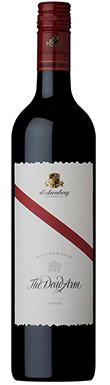

<p>A very dry but mild growing season with many cool nights has produced a lifted Shiraz of good intensity and detail. Bright blackberry fruit is...
2017
d'ArenbergMcLaren Vale

d'Arenberg, The Dead Arm Shiraz, McLaren Vale, South Australia, Australia, 2015
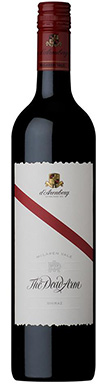
<p>Osborn describes 2015 as the gutsiest vintage of recent years. The grapes were picked between 10 February and 25 March. Imposing tannins frame a concentrated...
2015
d'ArenbergMcLaren Vale
d'Arenberg, The Dead Arm Shiraz, McLaren Vale, South Australia, Australia, 2013
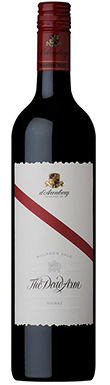
A very dry spring and summer. Osborn dubs the 2013 vintage ‘the Barolo year’ for its prodigious tannins. They are plentiful but fine and savoury,...
2013
d'ArenbergMcLaren Vale
d'Arenberg, The Dead Arm Shiraz, McLaren Vale, South Australia, Australia, 2012
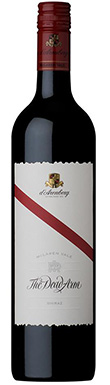
A dry spring and summer resulted in lower yields than usual. Grapes were harvested between 20 February and 5 April. More fruit-driven, opening with sweet,...
2012
d'ArenbergMcLaren Vale
d'Arenberg, The Dead Arm Shiraz, McLaren Vale, South Australia, Australia, 2009
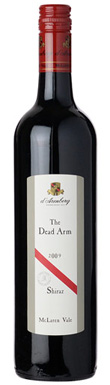
Regarded as one of the best Shiraz vintages of the noughties, the grapes were picked between 3 February and 16 April and benefited from a...
2009
d'ArenbergMcLaren Vale
d'Arenberg, The Dead Arm Shiraz, McLaren Vale, South Australia, Australia, 2001
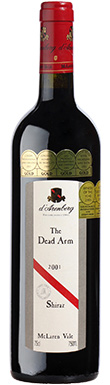
The first foot-trodden vintage. Harvested 28 February to 28 March following a hot January, dry summer and autumn. Of its era: blackcurrant fruit gums and...
2001
d'ArenbergMcLaren Vale
